Saudi money has reshaped boxing but how do we justify the human cost?
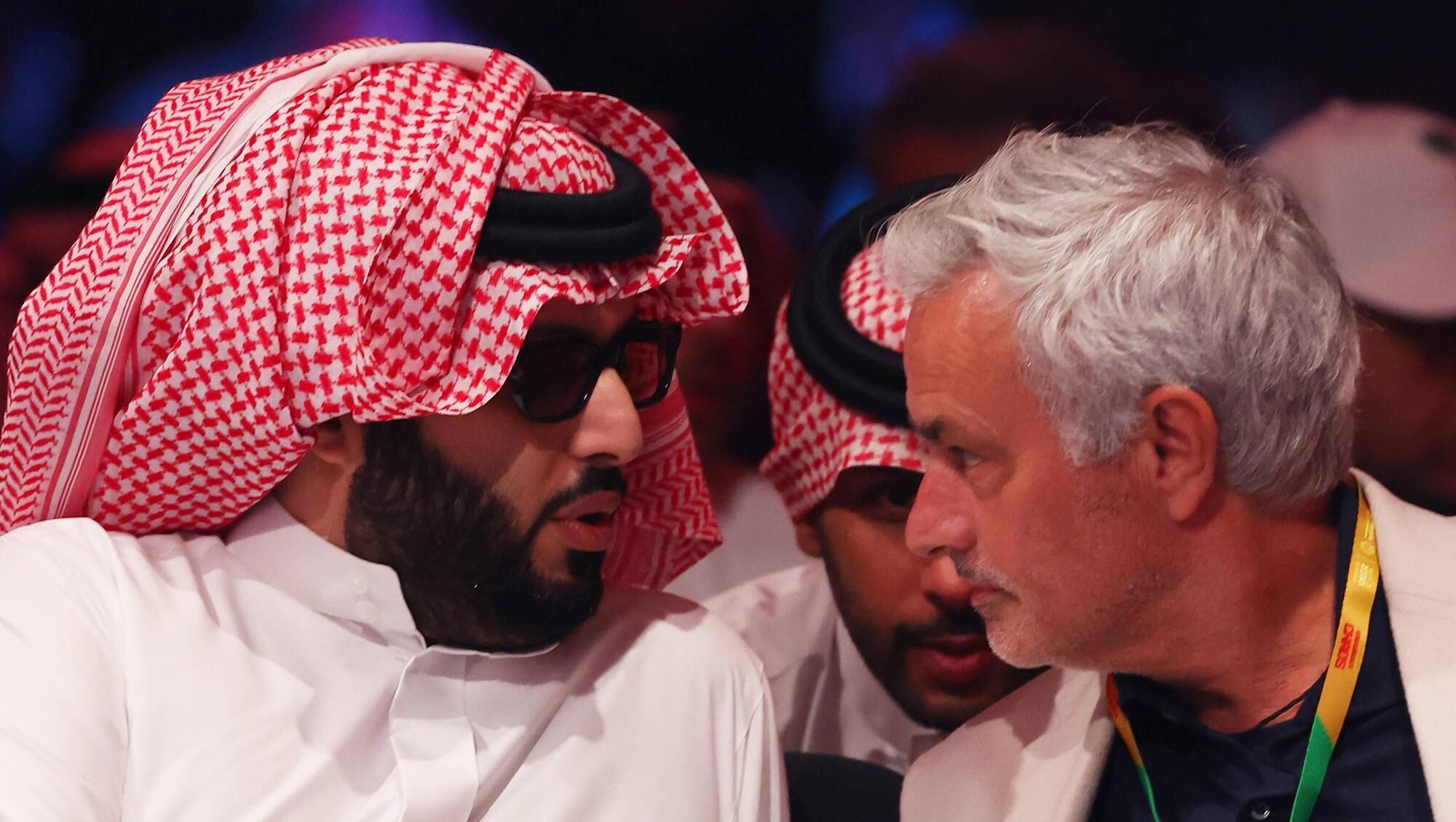
AGENT OF CHANGE? Turki Alalshikh, Chairman of the Saudi General Authority for Entertainment with Jose Mourinho in Riyadh.
Just after five o’clock on Monday morning, at the very start of fight week in Riyadh, a beautiful and hauntingly insistent call to prayer rang out across this corner of the city. Tyson Fury and Oleksandr Usyk may still have been asleep, allowing themselves to rest a little longer before a defining fight for the undisputed heavyweight championship of the world late on Saturday night.
It would take another seven hours for the temperature to climb to a high of 42C and so, in the calm stillness, there was time to think of more than the glory and pain of heavyweight boxing. A few days earlier I had asked Dr Saeed bin Nasser al-Ghamdi if he still carried hope that his brother Mohammad bin Nasser al-Ghamdi, a retired schoolteacher, could be saved after he had been sentenced to death for a series of seemingly innocuous posts on social media.
“It is part of our Islamic religion not to despair and to submit to God’s will,” al-Ghamdi, a Saudi academic and political dissident now living in exile in Britain, told me. “If [execution] happens we are prepared.” Last week, too, when reflecting on her 29-year-old sister Manahel being jailed in Riyadh for 11 years by an anti-terrorism court, after being arrested for “her choice of clothing and support for women’s rights” in a series of online posts, Fawzia al-Otaibi told the Guardian that, when hearing the shattering news, “the world became dark before my eyes”.
Al-Otaibi, who also lives in political exile in Britain, added: “For the first time, I hated the fact that I was created a woman in my country. A country that had destroyed me and my family and turned our lives into an unbearable hell for the crime that we are women who want our right to life.” During the 35 years I have written about boxing I have sometimes felt embarrassed by my lingering obsession with a business where men and women are paid to hurt each other. But the courage and skill, the resolve and resilience, of the best fighters is often inspirational and moving. It also helps that boxers are usually the friendliest and most open of all sportsmen and women when articulating their doubts and fears, hopes and dreams.
These reflections now seem as redundant as they are romantic. It feels more urgent to try to understand how boxing is changing because of its lucrative and tangled relationship with the Saudis. When Saudi Arabia first began to show sustained interest in boxing it seemed natural to protest against the alliance between two such contrasting entities. Concern about state repression merged with despair of boxing’s residual chaos. Yet the unlikely partnership has sparked some surprising developments.
Turki Alalshikh, the chairman of the General Entertainment Authority that has vast resources in bankrolling these plans, is a serious and committed fan. He has the will and the economic might to force boxing to change. For too long bitter rivalries between promoters, and the greed of sanctioning bodies, had prevented the best fights from being made. The idea that Frank Warren and Eddie Hearn could be persuaded to talk to each other, and then engage enthusiastically in joint promotions, would have been dismissed as outlandish last year. Alalshikh smoothed away their feud, just as he ignored the IBF, WBA, WBC and WBO to produce a series of enticing and interesting fight cards. The most significant of these is the first world heavyweight title unification contest this century – between Fury and Usyk.
Alalshikh has also indicated a willingness to tackle boxing’s insidious problem with doping. Thomas Hauser, the esteemed boxing writer and Muhammad Ali’s biographer, wrote a feature in the Guardian that resembled an open letter to Alalshikh. Hauser urged him to leave a legacy in which he made “enormous strides in cleansing boxing of illegal performance enhancing drugs”.
The response from Alalshikh on X was positive. After thanking Hauser for his article he stressed that “I am ready to listen to all of your suggestions in the future”.
Yet, in Riyadh, I cannot shake thoughts of so many Saudi men and women who are either on death row or in prison for expressing their belief in freedom on social media. Last week, I spoke to Dana Ahmed of Amnesty International in Lebanon. Ahmed documents oppression in Saudi Arabia and, first, she acknowledged that “there have been positive steps to give women more freedom … but there is still a long way for Saudi Arabia to go when it comes to women’s rights”.
Ahmed said, up to January, Amnesty “has documented the cases of 69 individuals prosecuted solely for exercising their rights to freedom of expression in Saudi Arabia. At least 32 were prosecuted for peacefully expressing their opinions on social media. In light of fears of reprisals, people are afraid of reporting cases of prosecutions or interrogations for their expression publicly. Therefore, the number of such prosecutions is likely much higher.”
The case of al-Otaibi is harrowing. When Mohammed bin Salman, the crown prince of Saudi Arabia, came to power in 2017, he was praised publicly by al-Otaibi who was already an activist for women’s rights. She proclaimed that, under Bin Salman, she felt free to dress and express herself how she liked. Her view soon darkened.
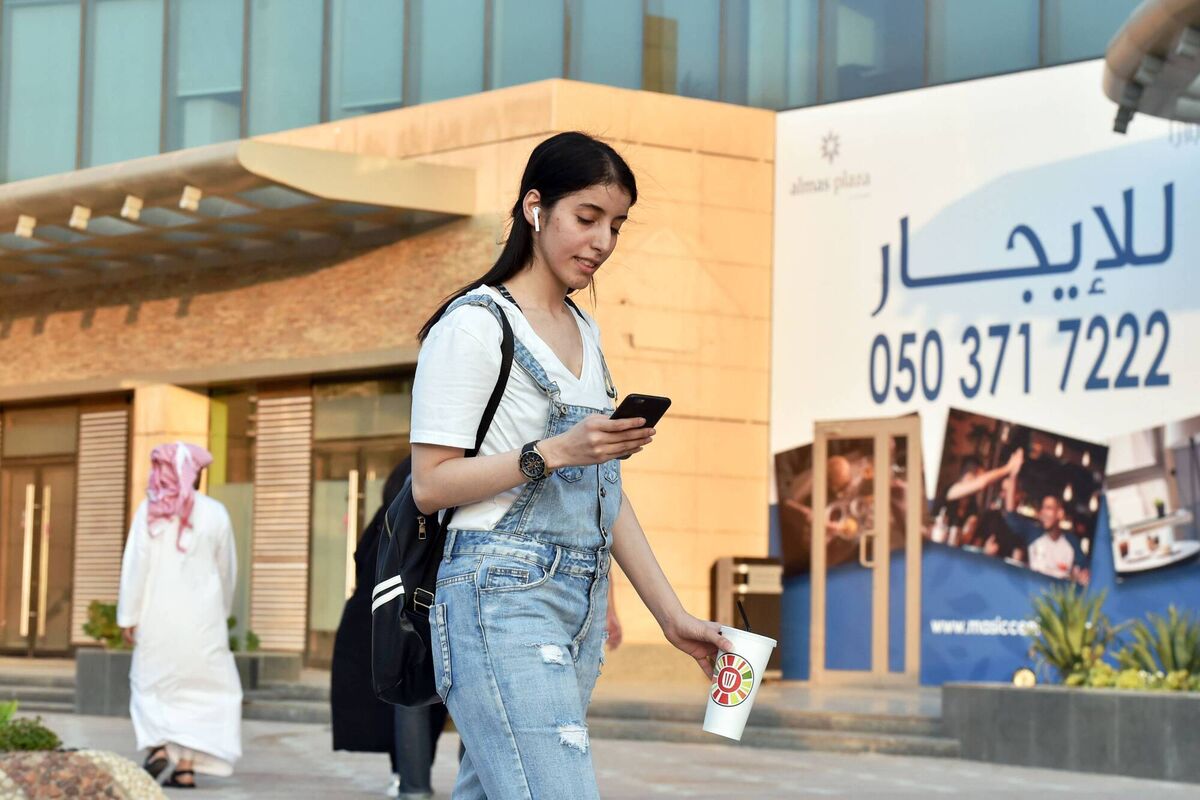
Sixteen months ago, al-Otaibi was charged on a number of “criminal” counts that included expressing support of women’s rights on social media and posting Snapchat photos of herself shopping while wearing dungarees rather than the traditional abaya. The situation worsened when the case was moved to a court specialising in terrorism-related offences.
Al-Otaibi’s fate only became known this month when Saudi officials confirmed to the UN that she had been sentenced to 11 years for “terrorist offences”. Her eldest sister, Maryam, who is serving a travel ban, lives in fear of her own arrest. Fawzia, the third al-Otaibi sister, fled Saudi after being asked to go alone to a prison in Riyadh in September 2022.
On May 1, Fawzia al-Otabi, responding on X to her sister’s imprisonment, said: “Can you believe that they have imprisoned her, tortured her, broken her foot, terrorized her, and accused her of terrorism? Just because she is a woman advocating for women’s rights. Why have my rights become terrorism, and why is the world silent?” Manahel al-Otaibi is being held in al-Malaz prison, less than 10 miles from the luxurious hotel where some of the key figures in the Fury-Usyk fight promotion are staying this week in Riyadh. The hotel is 40 miles from al-Ha’ir prison where Mohammad al-Ghamdi was incarcerated after he had been sentenced to death by the specialised criminal court on 10 July 2023. His brother told me last week that al-Ghamdi is now held at Dhahban prison in Jeddah. He was found guilty of terrorism for posts on two different X accounts. The first account had eight followers, while the second was followed by two people. While he was critical of the crown prince, most of his posts apparently focused on the need for economic reforms and complaints about rising prices and lengthening queues in supermarkets.
For Saeed al-Ghamdi, “the worst thing is that he was arrested for a few tweets, which were barely seen by the police officers, and they were tweets criticizing the increase in milk prices”.
The Guardian approached a representative of the Saudi Arabian government for comment but had not received a reply by the time of publication.
Asked to describe his brother before his arrest, Saeed al-Ghamdi said: “He was a very peaceful person who was generally unconcerned with the [political] situation because he was busy with his home, his family, and the illnesses that have accompanied him since his childhood.” He added: “We hope that his health is fine, especially after he received a pillow and a quilt after a previous prisoner had left them in Dhahban prison. But he went through solitary confinement for several months, and medical neglect, with his family prevented from bringing him the bedding he needs. For rational, free people this is torture and so my brother was exposed to all of these things that violate human rights.” Saeed al-Ghamdi is far more politically outspoken than his brother and he argues that “repression in Saudi Arabia has not diminished. It’s increasing. Manahel al-Otaibi was sentenced to 11 years in prison for charges that the authorities say are related to ‘terrorism’. Most of the peaceful detainees are charged with terrorism. The so-called terrorism law is written in a way that is not Islamically or legally correct because it is broad and vague.”
Asked for his thoughts on the boxing this weekend, al-Ghamdi said: “If it happens that some of them [involved in the promotion] did not know about the oppressive situation of the regime, or were tempted by money, they can claim their humanity by abandoning the participation while they are in Saudi Arabia – or by publicly demanding that the state abolish the security trials and these imprisonments.”
Of course the undisputed heavyweight championship of the world will not be derailed by a sudden fit of political conscience. There is too much money and personal glory at stake. But, in the heat and tumult of fight week, the grim and mostly silent fate of Mohammad al-Ghamdi, Manahel al-Otaibi and other political prisoners in Saudi Arabia remains unchanged.

CONNECT WITH US TODAY



Be the first to know the latest news and updates