Rising relay tide could change Ireland's Olympic podium prospects
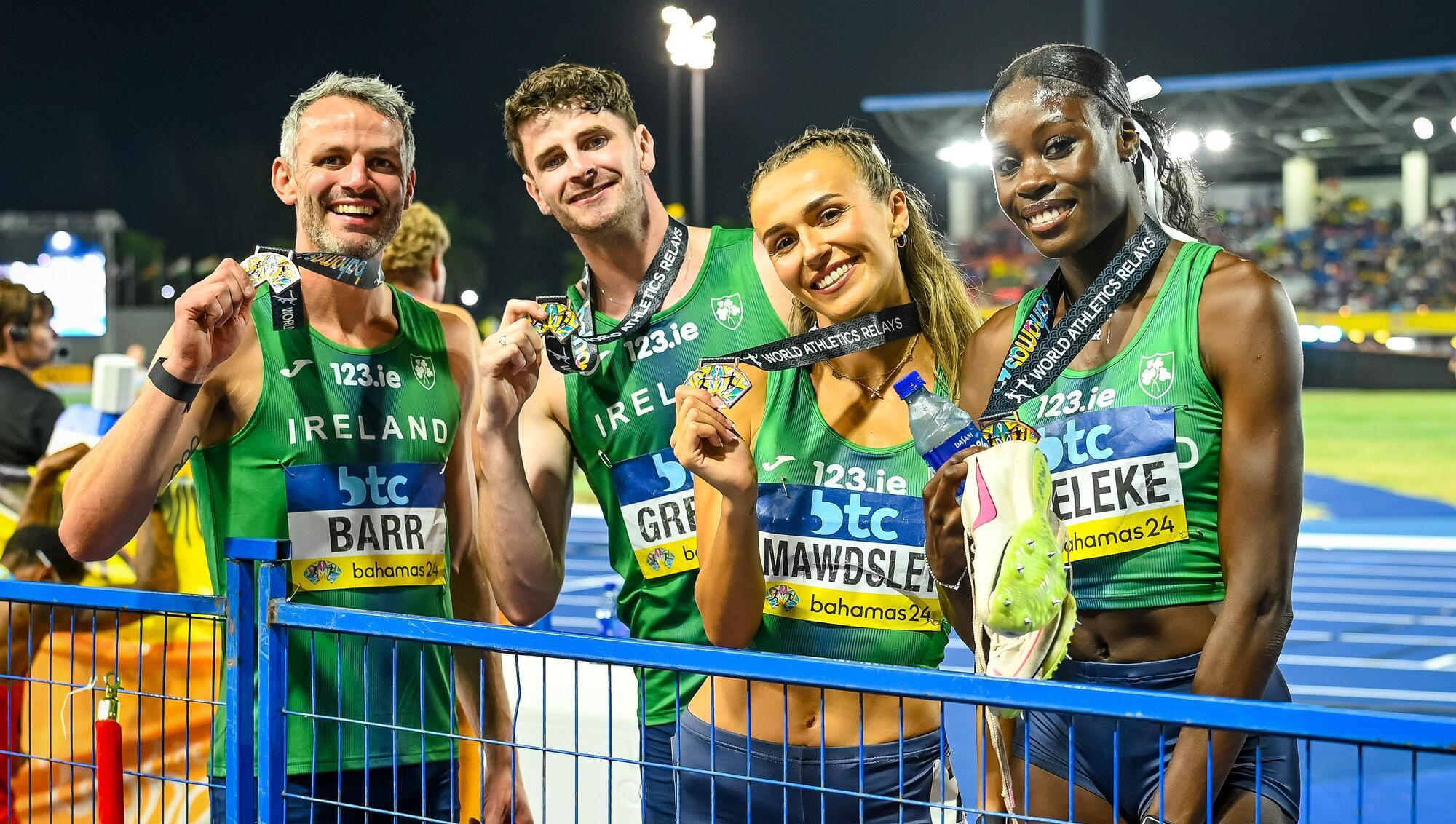
Ireland’s Thomas Barr, Sharlene Mawdsley, Cillín Greene and Rhasidat Adeleke with their bronze medals. Picture: ©INPHO/Warren Grant
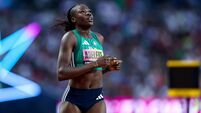
Shortly after walking off the track in the Bahamas on Saturday night, having helped Ireland into two finals at the World Relays, thereby securing Olympic qualification, Rhasidat Adeleke offered a window into the changing mindset in Irish athletics.
“We’ve shown everyone we’re the best in the world, one of the teams to be recognised,” she told Citius Mag. “We’re top of the food chain now.”
The Dubliner is just 21 but has been around the sport long enough to know this wasn’t often the case. After all, the last time Ireland won a medal at the Olympics or World Championships – Rob Heffernan’s race walk gold in 2013 – she was just 10. Adeleke grew up in a period when Irish athletes making global finals was a massive success, so it’s only natural that as she stepped out on the global stage over the last two years, she felt a certain impression from other nations about the Irish vest.
“We were always kind of looked (down) upon and kind of minimised,” she said. “But now we’re showing every single time: we can be the best.”
Adeleke has never been one to trumpet her own achievements, as impressive as they are, but whether it’s all those records, her three years in the US with its why-not-me mentality, or just the natural transition through adolescence, the shy teenage girl from Tallaght has grown into a confident young woman who seems utterly at home, entirely unafraid, on the sport’s biggest stage.
“We know what we can do, we’re very talented, we’ve trained for this,” she said after helping Ireland to victory in the mixed 4x400m heats and women’s 4x400m heats, splitting 49.64 and 49.48 for her legs. With just 30 minutes between finals on Sunday night, the Irish wisely targeted just one instead of asking Adeleke or compatriot Sharlene Mawdsley, the other ace in their pack, to try something superhuman. Their strongest artillery was fired at the mixed relay, with Barr and Cillín Greene offering reliable backup.
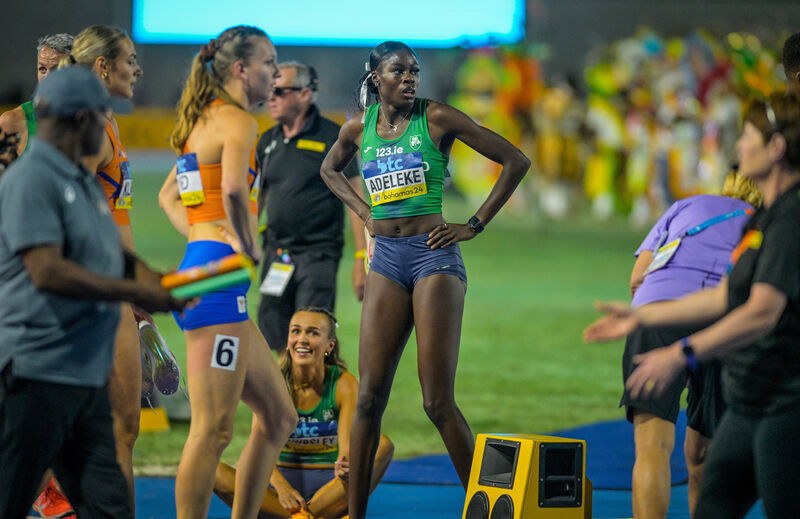
Adeleke took the baton in fourth, but handed it off in second, illustrating everything about her influence – turning a team from also-rans to genuine contenders. Ireland finished third behind USA and the Netherlands in a national record of 3:11.53, Adeleke’s split an astonishing 48.45, the quickest female leg ever run at the World Relays, which have been going since 2014.
Yes, she had a rolling start and yes, this wasn’t a head-to-head race against her biggest competitors for Olympic medals, but several of them were also competing, from reigning world champion Marileidy Paulino to reigning Olympic champion Shaunae Miller-Uibo. Neither got close to 48.45.
The signs had been there, Adeleke blasting a wind-assisted 10.84-second 100m the previous weekend, her turnover and technique hitting a level she’d long worked towards.
“My coach has been helping me work on my weaknesses and getting fourth at worlds, we didn’t want that to happen again,” she said.
“My speed has definitely been up so it’s going to make going through the first 200m significantly easier. I’m getting way stronger at practice. Me and my coach have a plan: the goal is to keep going, keep pushing. Every race I’m building confidence.”
It was Adeleke’s first senior medal for Ireland, also the case for Mawdsley and Greene. “I’ll be making the most of this,” said Mawdsley. “It’s a great start to the Olympic season.” Greene said it was the “stuff of dreams” while Barr recalled his first visit to the World Relays in 2015 and said: “Look at what we’ve built in nine years.”
Without Adeleke and Mawdsley, the Irish women’s 4x400m team of Phil Healy, Róisín Harrison, Lauren Cadden and Sophie Becker finished seventh in the subsequent final in 3:30.95, a solid performance that showed the growing depth in their ranks, which will be vital if Ireland is to reach an Olympic final in Paris, given Adeleke will likely be unavailable for the heats of either relay due to her individual commitments.
There’s no doubt that across the board, the tide has risen, and while Ireland has had its share of European medal winners over the past decade, they’ve come up short of podium finishes at the biggest events of all. That could change this summer.

CONNECT WITH US TODAY



Be the first to know the latest news and updates