Sport Ireland says massive cost of anti-doping system is worth it
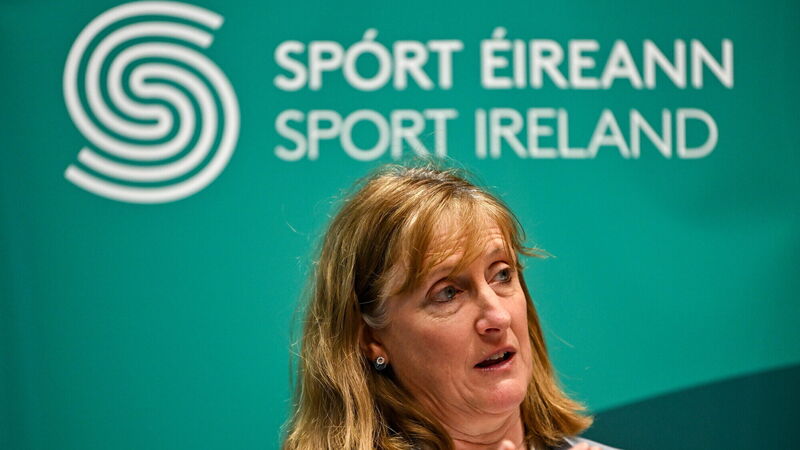
Sport Ireland chief executive Dr Una May. Pic: Sam Barnes, Sportsfile
Ireland’s anti-doping system is regarded as one of the best in the world, according to an expert from the World Anti-Doping Agency (Wada), but it is coming at a massive cost.
Sport Ireland spent €2.44m on it last year, collecting a record 1,826 samples and testing 1,595 of them. It resulted in only two adverse findings.
A tug-of-war competitor got a four-year ban for having cocaine in their system and the second case, still pending, was for an athlete in an unnamed sport either ‘evading, refusing, or failing to submit to a sample collection’.
Some €1.3m went to testing and close to €400,000 for salaries, while €596,477 was attributed to “legal advice, consultancy fees, travel and subsistence, advertising, printing, insurance, and other related costs in administering the programme”.
Sport Ireland chief executive Una May stood over the figures, saying they have had to rise to keep pace with the Government’s increased investment in high-performance sport.
“It depends what you consider good value for money but, from our point of view, protecting Irish sport, protecting the reputation of our athletes, and our (Sport Ireland’s) investment in sport is,” said May.
“As our investment has grown it’s really important that we protect that. We’ve always considered the anti-doping programme as almost an insurance policy against the investment we make.
“While our athletes’ performances are improving, it’s very important we continue to invest in that and don’t just decide we can sit back.”
Male inter-county GAA players are the fourth most tested group in the system (180 tests collected in 2023) after senior rugby players (284), track and field (252), rowers (230), and cyclists (192), but they are currently only tested at team training or after matches.
Asked if she is worried that the new split-season leaves county GAA players completely untested for almost half of the year, May said: “In an ideal world, you would be testing a lot more in some sports but if we tested more in the GAA then maybe we’d be testing less in other sports that people would expect us to be testing more. We have to find a balance at all times.
“It is important, as the (GAA) seasons are changing, that we do take that into consideration and we have the ability to test the players throughout the year,” said May.
“For the GAA we’ve started introducing the dry-blood spot testing (a pin-prick on the finger which is a lot quicker than venous blood extraction) and that is going to allow us potentially to grow the number of tests we carry out in team sports where it is really hard to reach all the athletes.
“We have always retained the right to test GAA players (outside of matches/training) if we have received information on our hotline that would leave us to believe there was significant information that we could act upon,” May added.
Almost three-quarters (72%) of Ireland’s testing is now out of competition and, in 2023, Sport Ireland only approved nine therapeutic use exemption (TUEs), which allows athletes with a medical condition to use a prohibited substance.
Sport Ireland are keen for more people to use their reporting hotline if they have any knowledge or suspicion of anyone taking performance enhancing drugs (PEDs).
Tuesday’s announcement was attended by Gunter Younger, the director of intelligence and investigations at Wada, who stressed how whistleblowing is playing an increasing role in detection and can net people without testing.
He was part of the operation, prompted by Russian whistleblower Grigory Rodchenkov, that proved Russia was systematically doping their athletes.
He said Ireland was ahead of many countries in appointing Michael Heffernan as their intelligence and investigations officer five years ago and who has since helped to train others internationally.
CONNECT WITH US TODAY
Be the first to know the latest news and updates