Podiums in Paris: what can Ireland expect from the Olympic Games?
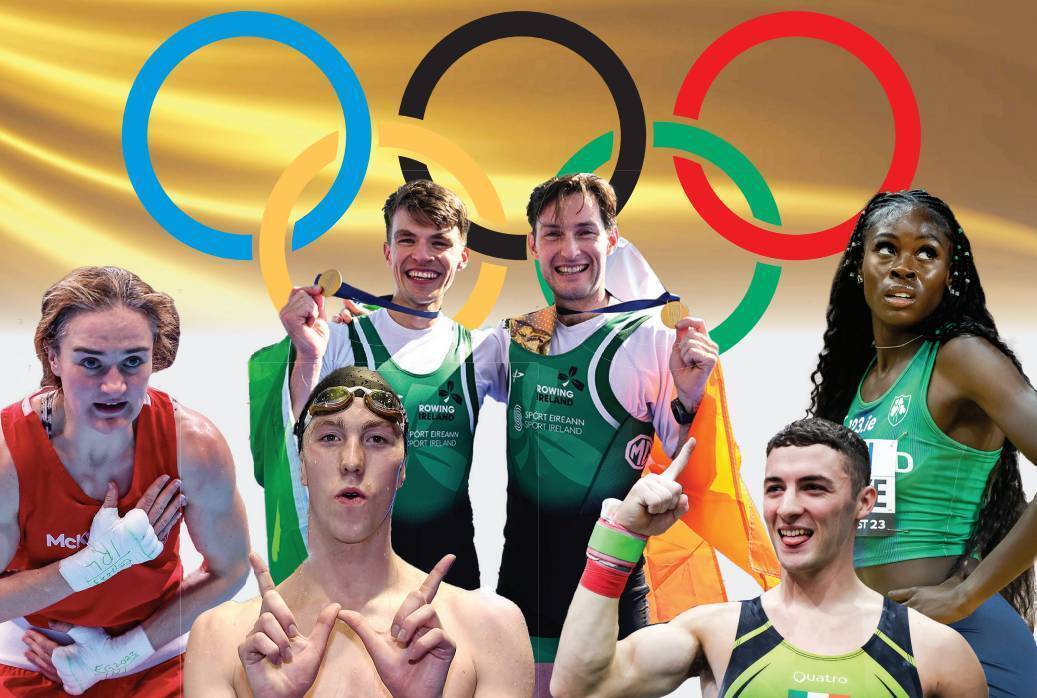
Irish Olympic sports looks in a better place than it was before Tokyo 2020 or Rio 2016, but what’s a realistic medal haul for next summer’s Games in Paris? In Sport Ireland’s High Performance Strategy 2021-2032, the goal for the Paris Olympics is 5-7 medals. For Los Angeles 2028, it’s 8-10, writes Cathal Dennehy.
Podiums in Paris: what can Ireland expect from the Olympic Games?

BIG HOPES: The below will lead the Irish medal charge in Paris.
SOMETHING had to change. Those working in the boardrooms of Irish sport knew it, just as the coaches out there at the coalface knew it. Adapt or become extinct. Fund high-performance sport properly or risk becoming an irrelevance on the world stage.

Yes, there was talent in the country, lots of it, but where was the system? For years, decades, many had beaten that drum across the breadth of Olympic sports, only to be met with a disinterested shrug from government buildings.

Oh, you need more money? Well so does everyone else.

The year was 2017, and in the wake of the previous year’s Olympic Games came the Rio Review, a 236-page post-mortem into what went right and wrong — the hows and whys and shoulda-woulda-couldas. It ripped open the curtains of Irish Olympic sports, revealing the true lay of the land and marking out the path ahead.

Ireland had won six medals at the London Games in 2012, its biggest-ever haul. Four years later in Rio, they claimed just two, which was about the average across the previous 10 Olympic cycles. Granted, the number of top-10s and top-20s was rising, but where were the medals? There was a relatively simple answer: Ireland still funded high-performance sport like a hobby, with ministers behaving like the rich uncle who slips you a fiver at Christmas, telling you not to spend it all in one place.

Meanwhile, nations of a similar size that funded sport in a serious way were racing ahead. Denmark, with a population of 5.7m, won 15 medals at the Rio Games. New Zealand, with the same population as Ireland at the time — 4.7m — won 18 medals.

New Zealand invested €152.1m in high-performance sport during the Rio Olympic cycle. Denmark invested €74.9m. Ireland? €37.6m.

Funding isn’t everything in high-performance sport, but it remains the biggest thing. Yes, grassroot structures and underage participation numbers are critical, talent ID schemes essential, while facilities, coaching and culture all play a huge role. But when it comes to getting those right, nothing speaks so loud as the almighty dollar.

THE link between money and medals is well established at Olympic level and it’s a causative relationship. Pump in the funding and, once it’s sent to the right places, medals will come out. It’s the difference between an aspiring Olympian training full-time or having to juggle full-time work with twice-daily sessions. It’s the difference between warm-weather camps abroad or gritting it out through the Irish winter. It’s what allows Irish coaches to take the time to upskill themselves among the world’s best and commit fully to the cause, rather than coaching being what it so often is: an expensive hobby.

These things have long been known, of course, but only recently did the Irish government truly do something about it. As it says in the Rio Review: “It would seem clear that to achieve more medals, more funds must be found for high performance sport.”

Ahead of the 10-year National Sports Policy in 2018, Sport Ireland presented a convincing case for increased investment that would “elevate Ireland to the top of the table globally for both participation in sport and high performance.”

They got what they wanted. Under the plan, the Government’s investment in sport will double from €111m annually to €220m, with the amount funnelled into high performance tripling. In 2016, that figure was €11m. This year, it’s €24m. Next year it’ll be €25m.

“We’re closing the gap on international competitors,” says Paul McDermott, director of high performance with Sport Ireland. “We were closer to Denmark (this year) but Denmark were at it for 10 or 20 years before us, so we’re playing catch-up. It’s (about) consistent investment over a period of time into strong programmes; you see a return on that when the athletes emerge.”

And in recent years, a slew of gifted athletes has emerged.

At the Tokyo Games, Ireland claimed four medals — two gold, two bronze — but such barometers, given the rarity of Olympic medals, are unreliable ways to do a state-of-the-nation health check. A better gauge is the medal haul across sports outside of Olympic years, accounting for European and World Championships, junior to senior.

On that front, Ireland has never been stronger.

“The data would back that up,” says McDermott. “There’s several factors that feed into it. The talent was always there. The system just wasn’t in place to catch them. What we have to do, as the high-performance community, is capture that (talent) and put that on the right path, to honour that potential at every level.”

Several areas have improved due to better financing, with the carding scheme now a multi-annual approach — athletes able to commit to their sport without the threat of the guillotine dropping on their funding after one bad season. There’s also far more facilities and service providers at their disposal, from physios to psychologists to nutritionists.

One area where Ireland long trailed behind rival countries — and still does — is coaching, which in many sports relies on volunteerism to keep things ticking. In 2021, Stephen Maguire was recruited as Sport Ireland’s Head of High Performance Coaching, spending 18 months in that role before returning to the UK. Since March this year, Ciarán Ward, a two-time Olympian in Judo, has taken the baton.

Given the scarcity of full-time coaching jobs, many have found other nations more willing to reward their expertise. Billy Walsh built Irish amateur boxing into the medal factory it is, aided by coaching guru Zaur Antia, but the Wexford man has spent the last eight years working for USA boxing. John Coghlan spent many years trying, and failing, to make a living coaching Irish athletes before he gave up and moved abroad. In 2021 the Dubliner — now based in Florida — coached Puerto Rico’s Jasmine Camacho-Quinn to Olympic gold in the 100m hurdles.

When it comes to supporting Irish coaches, there is a distance left to run.

“It’s identified as a gap and we’ve begun the work of addressing that gap with individual governing bodies,” says McDermott. “The issue was not resolving itself organically within the sports. What programmes can we put in place to fill this gap? We’ve started that now, but it’s a 10-year programme and we’re into year two.”

The challenges are different in every sport. While rowing and boxing have centralised setups, with Ireland’s best working together under Dominic Casey in Skibbereen or Zaur Antia in Dublin, the same system isn’t possible in athletics, given the diversity of events and volume of international athletes. As such, it’s about supporting the web of coaches who keep the show running and last year an additional pot of €200,000 was given to Athletics Ireland for that purpose. About €80,000 was shared among 10 contracted coaches. It’s not much, but it’s something.

“Athletics will present a different challenge over a number of years,” admits McDermott. “How do you generate a market that pays for the services of coaches over the long term?”

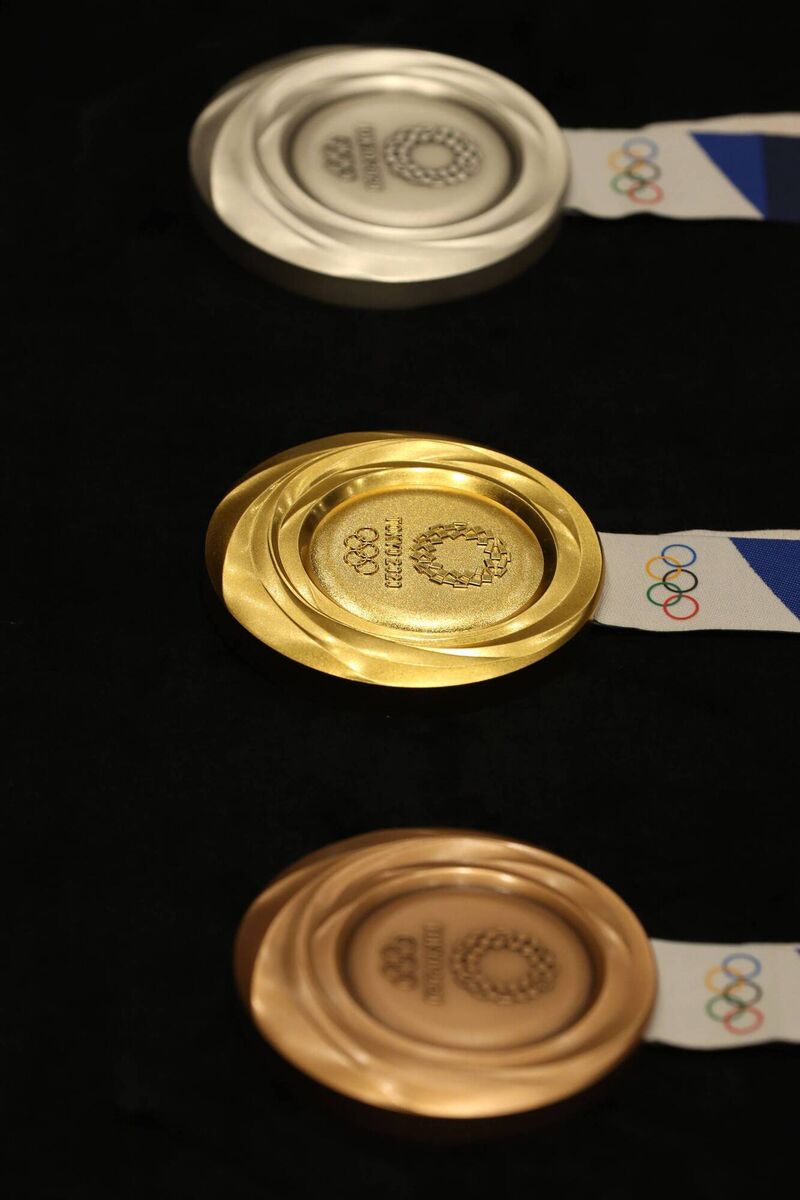
Medals for the Tokyo 2020 Olympic Games. Pic: Behrouz, AFP

ANSWERING that will be key to nurturing the next generation and, scanning the landscape of Irish sport, it looks a special one.

From Rhasidat Adeleke in athletics to Lara Gillespie in cycling, from Mona McSharry and Daniel Wiffen in swimming to Dean Clancy and Jack Marley in boxing, there’s a wave of young, gifted athletes who look capable of filling the void that Kellie Harrington, Paul O’Donovan and co will leave behind. The same is true for para sport, with 18-year-old swimmer Róisín Ní Ríain one of its shooting stars, her world title in the 100m backstroke proof that she can conquer all at the Paralympics in Paris next August.

The Olympics will begin a month earlier — on Friday, July 26 — and it should be a cracking edition. After poor crowds at Rio 2016, the result of exorbitant ticket prices and scaremongering in the media about the Zika virus, there were no crowds at all at Tokyo 2020. Paris, then, should restore the Games to their former glory: 10,500 athletes, 32 sports, and 17 days of superb sporting theatre.

It’s 100 years since Ireland first competed at the Games as a free state and at those 1924 Olympics — also held in Paris — their 48-strong team claimed zero medals in sport. They did, however, win a couple elsewhere, with Jack B. Yeats winning silver in the open painting event and Oliver St. John Gogarty winning bronze in open literature.

This time around, we can expect a much better return.

Irish sport looks in a far better place than it was before Tokyo 2020 or Rio 2016, but what’s a realistic medal haul? In Sport Ireland’s High Performance Strategy 2021-2032, the goal for the Paris Olympics is 5-7 medals. For Los Angeles 2028, it’s 8-10.

McDermott says those targets were put together with a “high degree of meticulous attention to describe what high performance should look like at a specific moment.”

Does he feel Ireland is on track to hit them? “We stand by them but we’re not really going to speak to them until September next year. Athletes have to go and deliver on their own terms. They don’t need the likes of me speaking about performances in advance.”

What’s certain is that with just over six months to go, five to seven medals look realistic, and those who set that target are adamant it will be done the right way. After all, the Olympics have always had their dark side. From China to Russia, the UK to the US, a high medal target is so often accompanied by a win-at-all-costs mentality. Maybe it’s systematic doping. Maybe it’s putting performance directors under so much pressure that they create cultures where athlete abuse is rife. Or maybe it’s a slight blurring of ethical boundaries, operating in the medical grey area.

McDermott is adamant that the Irish system won’t stoop to such methods.

“We’re very explicit about that,” he says. “If you go back to when the Irish Sports Council established Sport Ireland in 1999, we had an anti-doping programme before we had a high-performance programme.” That anti-doping system remains one of the most stringent in the world, costing about €2m each year – a huge outlay for a nation this size.

As part of its 10-year strategy, Sport Ireland also developed the Culture Evolution Programme to “protect and maximise the experience of athletes, coaches and support staff”, with John Donnelly working with national governing bodies to implement it.

“When you set lofty medal targets, you can create pressures so you have to be careful,” says McDermott. “There were changes. The athletes need a role and a voice. We have to avoid people getting into negative behaviours. High-performance sport is tough. You need to be tough people, people who work hard, train hard — they operate on an edge. The critical thing is that the hardness is on the track or water, but when people aren’t training, they’re treated with respect, dignity and given welfare programmes, financial and educational support. We are aware of that and it’s one of the benefits of doing all these programmes after other countries.”

Irish Olympic sport is also now in a much better place when it comes to governance. Under the stewardship of Sarah Keane and Peter Sherrard, the Olympic Federation of Ireland has shed the stench that lingered long after the Rio Olympics, where former OCI president Pat Hickey was arrested on charges relating to larceny, money laundering and criminal association, which he denies.

The Irish Athletic Boxing Association, meanwhile, had to stare down the barrel of a severe funding cut in recent years before committing to major governance reforms. The worst of that storm seems to have passed. “The current board is very good,” says McDermott. “It’s the ongoing journey, but we’ve been through that with other sports and we’ll continue to work with them.”

A bigger concern is the state of the International Boxing Association, with the sport still not assured of its place at the 2028 Los Angeles Games due to its continued failure to address governance issues. “Hopefully that will resolve itself because from an Irish point of view it’d be a big miss if boxing wasn’t at the Olympic Games as boxing itself is on a positive trajectory,” says McDermott.

Five Irish boxers have already qualified for the Paris Games and more will likely join them in the months ahead. They look capable of claiming multiple medals, as they did in Tokyo. Same goes for rowing, led by the indomitable Paul O’Donovan and Fintan McCarthy. Swimming could well be in line for its first Irish medal since you-know-who in 1996, while in athletics, Rhasidat Adeleke and Ciara Mageean could join Sonia O’Sullivan as the only female athletes to win Olympic medals for Ireland. It will come as no surprise if an equestrian medal comes Ireland’s way, while Taekwondo, golf, rugby 7s or hockey could also spring a surprise.

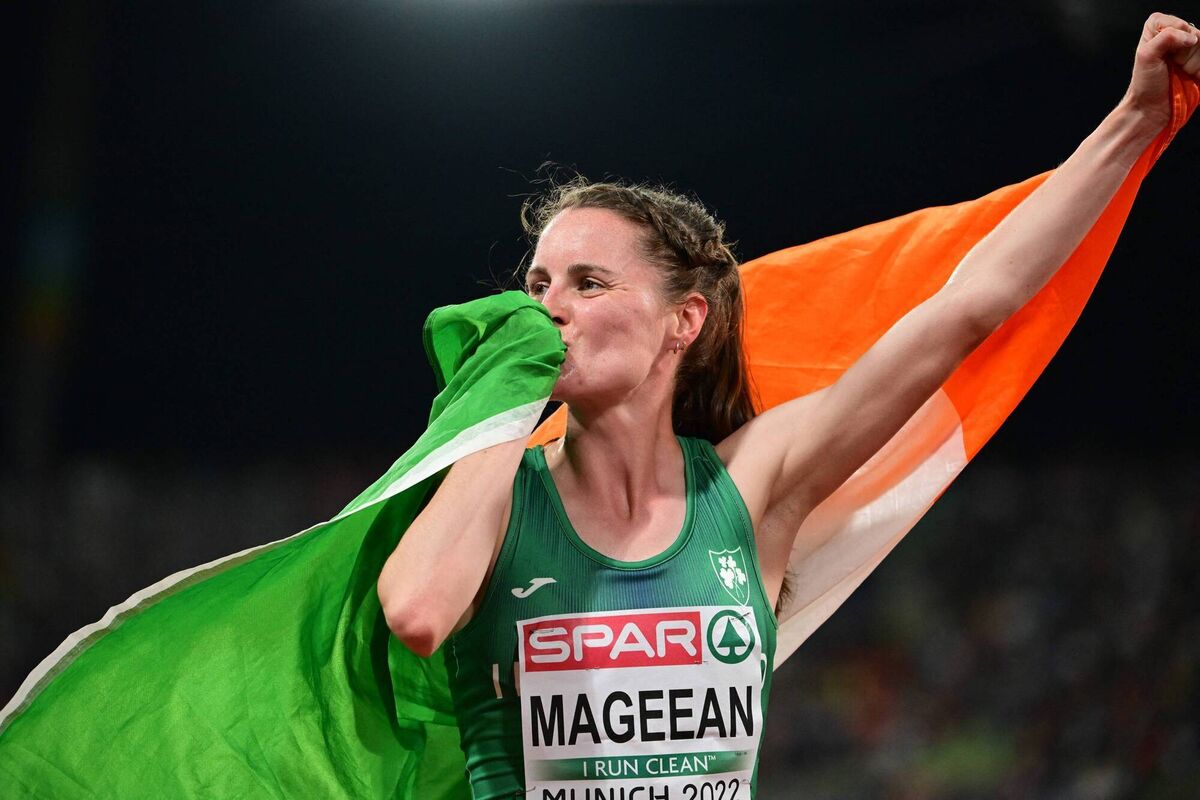
Ireland’s Ciara Mageean celebrates after winning the silver medal in the women’s 1500m final during the European Athletics Championships in Munich in 2022. Pic: Ina Fassbender, AFP via Getty Images

On the build-up, many of Ireland’s top performers like Wiffen, Mageean and Adeleke will be based abroad, flourishing in their own high-performance setups, but many more such as Kellie Harrington, Rhys McClenaghan or Paul O’Donovan will do so from a home base. Ireland will likely have 10 to 12 medal contenders in total. Some will flourish on that stage. Others will fall short, but in their attempts to get there, they’ll carry the nation along with them on every jab, every stride, every stroke.

The proof will be there to see, the nation starting to reap what was sown several years before. Still many rivers yet to cross on that journey, of course, but as the final countdown begins we can say this: Irish Olympic sport looks stronger than ever. Paris will be their chance to show it.

Famous Five: the best Irish medal chances in Paris?

RHYS McCLENAGHAN:  Two and a half years ago in Tokyo, the Newtownards gymnast stood in the mixed zone after the worst moment of his career and made a vow. “I’ll be walking away from this a more dangerous man, because with disappointment comes an incredible amount of motivation and inspiration,” said McClenaghan, who fell off the pommel horse during that Olympic final, a finger catching the handle and ruining his medal chance. In 2022 and 2023, he’s been good to his word, winning back-to-back world titles to break new ground for Irish gymnastics. In Tokyo, he became the first-ever Irish gymnast to make an Olympic final. In Paris, he looks poised to become the first medallist.

KELLIE HARRINGTON: For much of 2023, the reigning Olympic champion has looked out of sorts, her motivation waning, her skills apparently fading. But that was until the European Games in Poland where the Dubliner put a bleak few months behind her – in and out of the ring – by winning gold, thereby securing her spot at the Paris Games. “The last one was for my country, this one was for me,” said Harrington, who admitted she felt the weight of public expectation in Tokyo. In Paris, the 34-year-old will feel it once again, but that’s the price to pay for such high achievement. It’ll take a big effort to stop her.

PAUL O’DONOVAN AND FINTAN McCARTHY: The Skibbereen pair will likely head to the Paris Games as the ultimate Irish medal banker, with anything less than gold likely seen as a letdown – to them and everyone else. Not that it’s fair, but such a burden is a result of their brilliance. They’ve been unbeatable in the lightweight double sculls since Tokyo, winning back-to-back world titles. Many rivers to cross, of course, before they get to that Olympic final in peak shape, and get to that final 500 metres in contention. But if they’re towards the front at that point, they’re usually lethal.
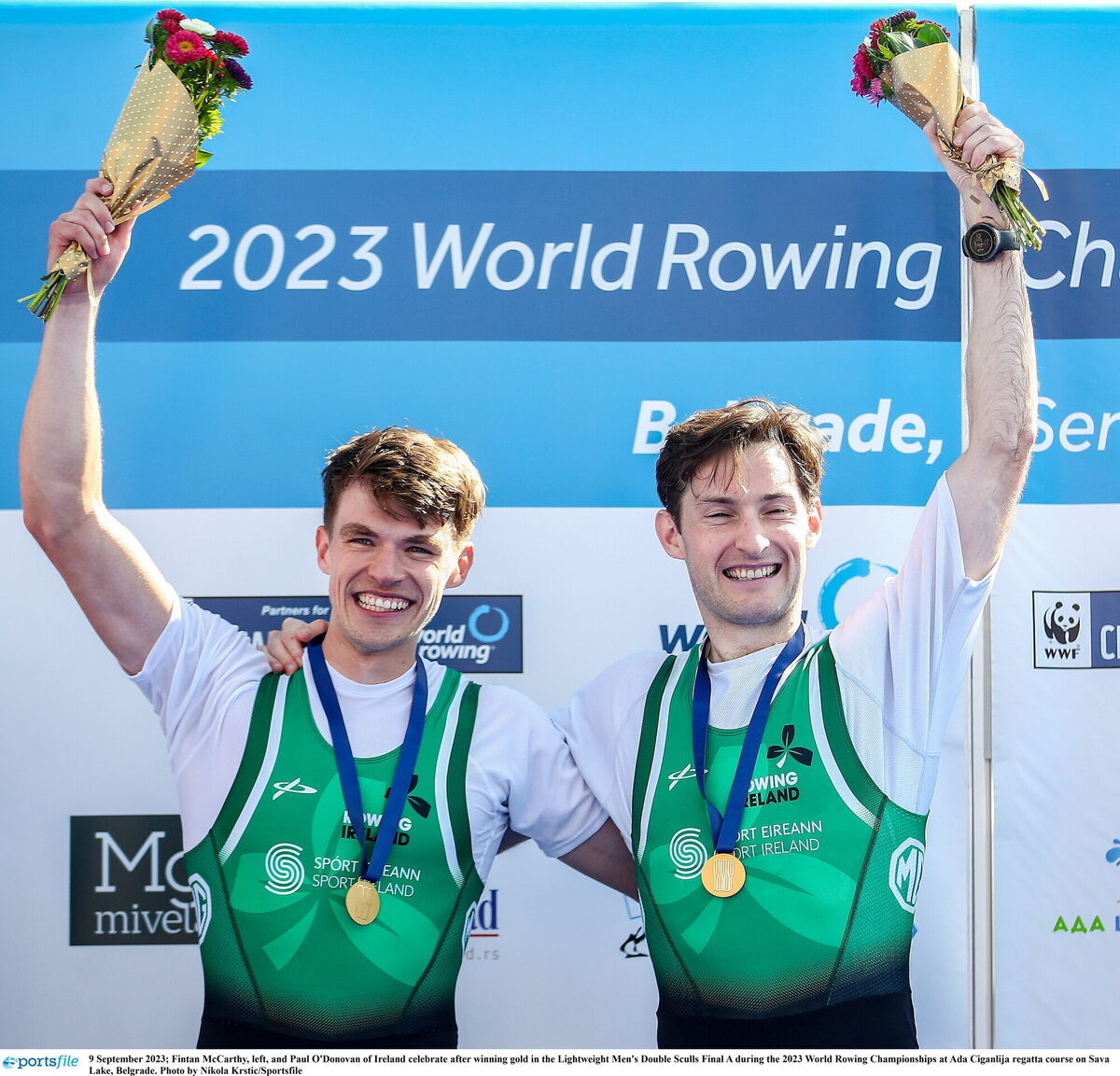
PROVEN WINNERS: Fintan McCarthy, left, and Paul O'Donovan of Ireland celebrate after winning gold in the Lightweight Men's Double Sculls Final A during the 2023 World Rowing Championships. Pic: Nikola Krstic, Sportsfile

RHASIDAT ADELEKE:  The Dubliner will be just 21 at the Paris Games, and while that’s worth keeping in mind to temper expectations, it’s worth noting too that the last Irish Olympic champion in athletics, Ronnie Delany, was 21 when kicking to 1500m glory in Melbourne 1956. For Adeleke, getting on a podium will be astonishingly hard, with the standard likely to rise from this year’s world final, where she finished fourth. Still, the 49.20 she ran to win the NCAA 400m title this year makes her a contender. If she can find a few tenths of a second next year, now that she’s training as a full-time athlete, anything is possible.

DANIEL WIFFEN: For years, the Down native has been talked about in Irish swimming as a name to follow. In 2023, he started to become well-known in Irish sport. But 2024 could be the year when the 22-year-old becomes a household name in Irish society. He finished fourth in two world finals this year and went on a golden spree at the European Short Course Championships, breaking the 800m freestyle world record. He’ll have to be great to get on the podium in Paris. But Wiffen is shaping up to be exactly that.

x

More in this section

Sport

Newsletter

Latest news from the world of sport, along with the best in opinion from our outstanding team of sports writers. and reporters

Cookie Policy Privacy Policy Brand Safety FAQ Help Contact Us Terms and Conditions

© Examiner Echo Group Limited