Why is an Irish rink still on ice?
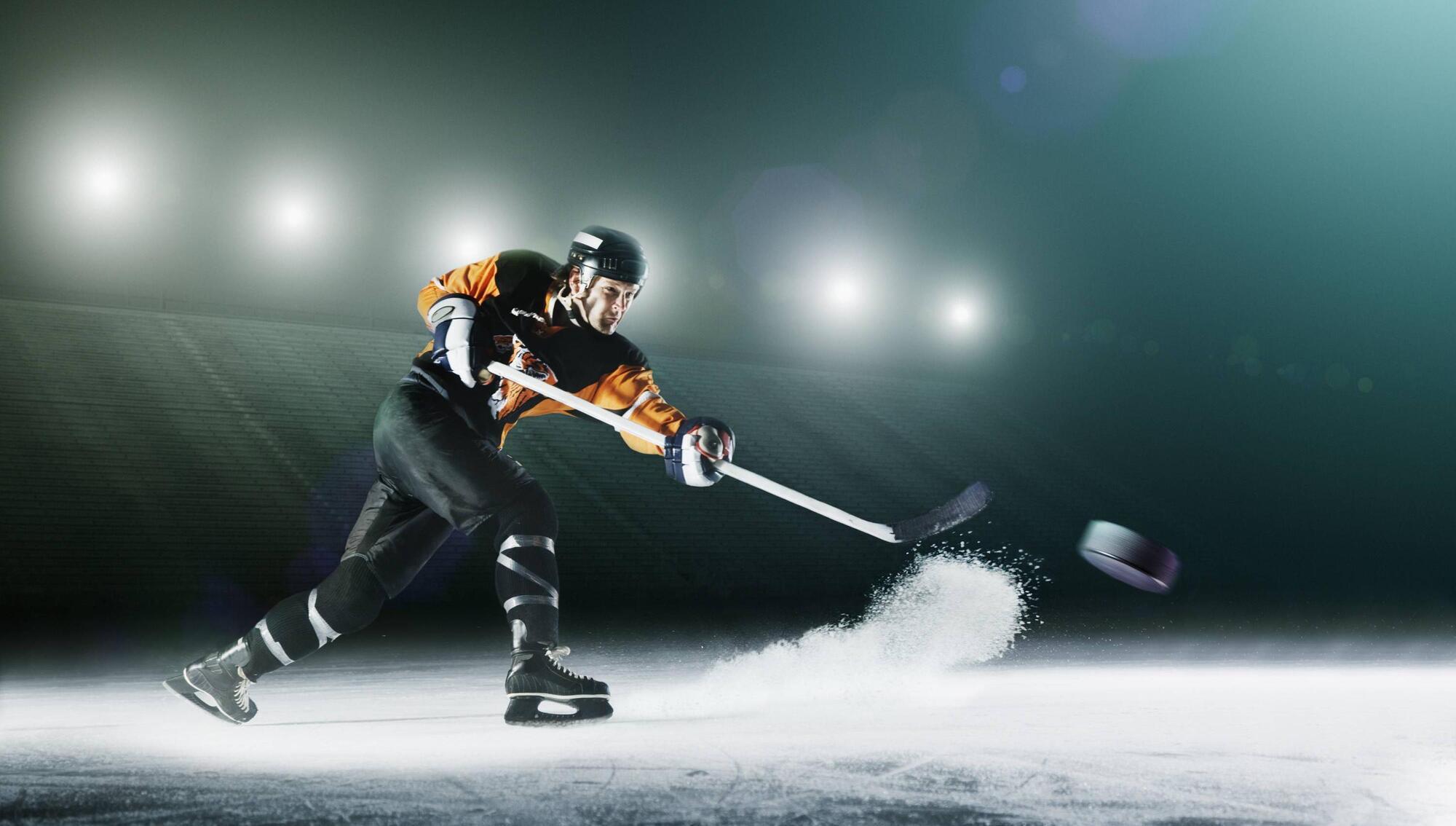
Stadium, cold, ice, ice hockey stick, light flare, skates, sports clothing, protective clothing, competition, ice rink, skates, ice spray, green.
Hallie Cummins is 16 years old and six years into a cycle of seven-hour round trips from her home in Kilkenny to Dundonald in Co. Down. Why? Because this town due east of Belfast happens to be the nearest place she can indulge her sporting passion and pursue her dreams.
Two of her brothers, Zac (22) and Bryce (18), are currently making that same trek north. Their dad Paul is a former pro kickboxer who first played ice hockey in 2006 and now runs a Kilkenny Storm club somehow surviving the inconvenient fact that it exists three hours distant from the island’s only permanent Olympic-sized rink.
“The ice is all in Belfast,” Paul explains. “For national team training we would be travelling up every week. It takes seven hours for a round trip with a little bit of a break each way and they might be on the ice for an hour-and-a-half. It’s getting home at all hours of the morning but it’s the only ice available.”
The Republic doesn’t have a full-time ice facility, of any shape or size. Not since the Dundalk Ice Dome shut down in 2010. So this is what the Cummins family considers normal. And Sophia Tkacheva, a Leaving Cert student and junior skater from Gorey in Co. Wexford who negotiates her own long path up and down the east coast every weekend.
That’s 275 kilometres there and the same back again.
“Her peers in other countries get mum or dad to drop them maybe 15-20 minutes or whatever,” says Sean Gillis, president of the Ice Skating Association of Ireland (ISAI). “That’s five days a week. “She has the few hours Saturday and Sunday and then she is off ice the rest of the week and that is very challenging, particularly for figure skating.”
This is how it is.
***
Maybe you’re wondering why Ireland even needs an ice rink. Could be there’s an easy joke to make here about the very notion. Or, in that very Irish way, notions. Imagine: a winter sports facility with rinks and curling lanes and starting ramps for sled sports in a country where the rain chases away the small bit of snow we get like a dog would a cat.
So consider this. When the dome in Dundalk operated there were 26 adult ice hockey teams on the go in Ireland and the association had over 1,000 members. The national side was making strides. And the pop-up rinks you see every winter in the cities? People can’t get enough of those.
An estimated half-a-million young and old avail of them for the two to three months they are assembled each year. Learn-to-skate lessons set up by the ISAI are booked solid without any need to advertise. Disappointed parents and offspring are redirected to long waiting lists for another 12 months.
The demand is there but the supply is non-existent. Top skaters like Tkacheva have to snatch time in Dundonald, or on the pop-rinks after the public get first dibs, and the latter just aren’t big enough. Gillis compares it to a GAA team making do with a pitch one-third the regulation size and for just three months of the calendar.
Remember when Ireland didn’t have a 50m pool? This is that all over again.
New Zealand has half-a-dozen rinks. Kuwait has one and another, a 5,000-seater, planned. Kuwait! There are indoor rinks in the Philippines and Thailand. Mongolia spent €15m on one. The recent opening of a facility in Portugal leaves Ireland, Albania, Greece and Liechtenstein as the odd ones out in all of Europe.
“They are a huge draw,” says Gillis. “Most of them are situated next to a shopping centre and they bring footfall. In other countries, like in Southeast Asia or the Middle East, they are located in big shopping centres. Places like Dubai, Abu Dhabi, Singapore, Malaysia, Indonesia: they all have permanent ice facilities.”
The strongest argument lies closer to home.
There are over 60 rinks dotted around the UK. Northern Ireland has two in the forms of the Dundonald rink and the SSE Arena. The latter is a near-11,000-capacity venue which, in 2024, will host everything from the resident Belfast Giants ice hockey team to Rick Astley, Ja Rule, WWE wrestling and the Belfast International Tattoo.
Dundonald’s success is less visible down south but just as admirable. Built almost 40 years ago - in itself a strong argument for something similar here - it is run by Lisburn & Castlereagh City Council and they have just green-lit a £52m refurb that will include the rink, a 24-lane bowling alley, a gymnasium and food facilities.
“And that’s a council doing that, not an investor,” says Aaron Gulli. “They’re thinking, ‘this makes us money’. So two hours up the road, outside Belfast, they have a council-run ice rink that is hugely successful. Yet everyone here scratches their head like I’m talking about trying to land on Mars or something.”
***
Gulli is president of the Irish Ice Hockey Association. Born and reared in New York, he has been on ice since the age of four and jokes that he can skate better than he can walk. Ireland was meant to be a stop-off on a global journey of discovery after finishing university but a Kerry woman put paid to that. This was back in the late 90s.
There is plenty to Ireland that he gets, like the idea of still being considered a blow-in after 25 years. Other peculiarities confound. There were nine ice rinks within a 45-minute drive when he lived for a bit back in Massachusetts. He has spent the best part of a decade trying to get just one up and running here and the effort is, to put it mildly, starting to wear.
“I don’t know how you get things built in this country,” he says at one point. “I really don’t.”
It started with the modest goal of a small rink and evolved into the idea of getting the vacant Dundalk Ice Dome back up and running. That involved three years of fruitless negotiations with Dundalk Institute of Technology for a building that has been sitting idle for years while racking up thousands of euros in annual rates bills for the owners.
But that was just the start of the frustrations.
Finding the money has not been the problem. The main thing lacking in Ireland is the will. Two US-based investor groups had expressed an interest. One designs and builds multi-purpose arenas. The other was a New England-based group of Irish ex-pats and Irish-Americans with ties to both ice hockey and the old country.
Investors were on hand late in 2022 when an Irish Winter Sports Strategy Coordination Group made up of the Olympic Federation of Ireland (OFI) and six of our winter sports bodies went about utilising a feasibility study into a €60m privately-funded ice facility that would ask next to nothing of the public purse other than assistance in securing the land.
Also on board were some of the most important administrators from the global winter sports movement – from ice hockey, curling and luge – as a series of presentations were held for a range of stakeholders that included local authorities, Sport Ireland and the then Minister of State for Sport Jack Chambers.
The figures were eye-opening.
An economic impact for Ireland of €111 million. A projected gross profit of over €3m in year one and mushrooming to over €8m by year five. All told, a project offering two Olympic-sized rinks, 6,000 seats, and scope for all forms of sport and entertainment that could add an extra €8.9 million annual spend in the Greater Dublin area.
“Hundreds of new jobs will be created,” said Peter Sherrard, CEO of the OFI, when the study was unveiled and with a location adjacent to the M50 in mind. “Ireland will benefit from an investment of over €60m and our sports will at last have permanent facilities akin to almost every other country in the EU.”
The size and capacity were targeted. A means of filling the gap in the capital’s market between a 3Arena that can hold up to 13,000 people and an Olympia that can cater for a tenth of that. A host for Rick Astley, Les Misérables and Premier League Darts, and with an ice hockey team as anchor tenant 34 weeks a year.
Even the environmental impact would be positive. Gulli has visited arenas in Oslo and Zurich that are basically carbon-neutral. The Norwegian rink generates 90% of its own energy through heat exchange, solar panels, a rooftop eco-system and geothermal walls. Zurich generates so much energy it sells it back to the grid.
And since then … tumbleweed.
***
Go back nine months and Gulli was speaking in the future tense. The ripple effects ‘will be’ huge and rapid once one is built, he said. It ‘will’ take off like a rocket once it happens. Build one and another ‘will’ follow. That was then. His sentences now come haltingly and on the back of long pauses, deep breaths or the type of laugh that is a proxy for tears.
Sport Ireland has been supportive but the option of siting the project on the Sport Ireland Campus in Abbotstown is hindered by the fact that facilities there are run in-house, and on the unwillingness of private investors to pour so much money into the bricks and mortar and then have little to no say in its operation once the doors open.
“The facility will be considered as part of the long-term development of the Campus Master Plan which was announced by Government in 2022,” said Sport Ireland in a statement. “With regards to the operations of the Campus, the facilities are funded and developed by exchequer funds and to date have been broadly run by Sport Ireland’s operations company.”
Other possibilities have been mooted.
The same consultants, CHL, since finished another feasibility study, this one for Limerick City and County Council. That was back in late July but there has been no white smoke since and Sinn Fein councillor Sharon Benson, a vocal proponent of the proposal, has since been told that other matters have precedence for now.
“I’m very disappointed with it at the moment, to be honest,” says Benson who feels a city centre location would be a major boon to the area in terms of tourism and business. “It’s an absolute no-brainer for Limerick. This is exactly what Limerick needs. It ticks every box you can tick.”
Gulli is at a point now where disillusionment is sinking in. One of the original investor groups has already stepped away. Money doesn’t make more money by sitting in pockets. Another, new, potential investor may yet bite but what will that matter if the appetite to proceed is so lacking in the halls of government, both national and local?
“I could go to another country and offer the same thing and you would probably get the red carpet,” says Gulli. “Here, I don’t know. It’s really hard to put my finger on the pulse of this. It seems like they would be doing you a favour by letting you do it, as opposed to it being fantastic for their community.”
His sense of exasperation is expressed in other, related ways.
The governing body received €28,000 in core funding via Sport Ireland in 2023, and another €8,000 through the Women In Sport initiative. It all helps but that’s slim pickings when you have teams competing everywhere from South Korea to Iceland and Spain, and yet another reason why a facility here would be such a boon.
Colleagues abroad constantly ask where the rinks are in Ireland. He gets emails from people transferring here for work and want to bring their puck and sticks, but he feels the reality of this new, multi-cultural Ireland and the desire for greater choice is not reflected in the way public funding is doled out.
“As I have always said, I’m sure if I wanted to invest €100m in a state-of-the-art GAA facility it would probably be open by now. It’s hard for a lot of people to see beyond the likes of the GAA and see the concept of winter sports in Ireland because people here say, ‘sure Ireland isn’t a winter sports country’ all the time.
“Yeah, we’re not because there is literally nowhere to train for people so they all go abroad.”


CONNECT WITH US TODAY



Be the first to know the latest news and updates