Irish Olympic boss confident boxing will remain part of Games
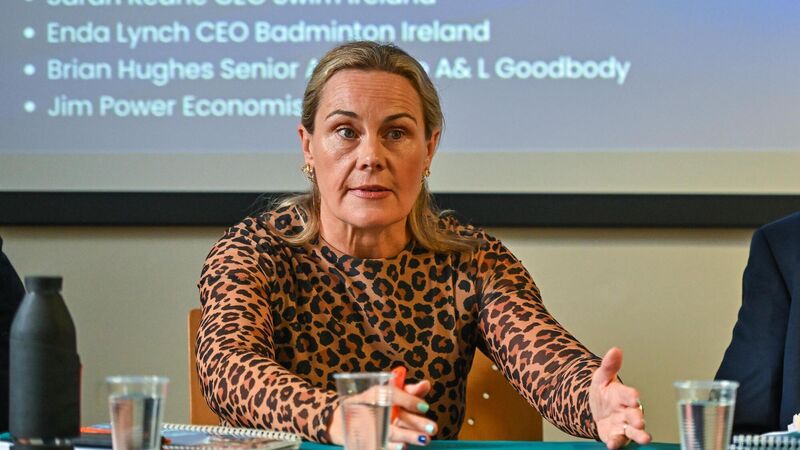
Irish Olympic chief Sarah Keane. Pic: Sam Barnes/Sportsfile
Irish Olympic chief Sarah Keane remains optimistic that boxing will appear on the Olympic programme come the Los Angeles Games in 2028.
A record figure of €4.7m is being used to fund the Irish effort through this latest Olympic cycle. That’s €1.4m more than the Tokyo Games. Up to €30,000 alone of that is being set aside for air conditioning units in the Village next summer.
Nothing is being left to chance and boxing, as always, is a key player in meeting the team’s targets.
Over half of Ireland’s Olympic medal haul – 18 of 35 won to date – has come in the ring so the loss of the sport to the world’s biggest event would be a catastrophic blow to the country as it seeks to extend its footprint on the podium every four years.
Boxing’s problem stem back to the 2016 Games when it was tarnished by controversial judging decisions.
The International Boxing Association (IBA) was suspended by the IOC three years later due to governance and financial issues.
The IBA had no part in Tokyo and relations between the bodies bottomed out this summer when the IOC withdrew recognition of the sport’s body. It was the first time in Olympic history that it had taken such action but boxing is pencilled in for Paris.
LA 2028 chairman Casey Wasserman has praised boxing’s Olympic heritage and, while some assurances have been given by the power brokers, a decision on what happens come California has effectively been postponed.
“I’m optimistic in the sense that the IOC has not made its decision at this point, despite the fact that maybe things aren’t going as fast as they would like. They do see the value of boxing, its diversity and the fact that it has been part of the movement for so long.
“It is a waiting game and that’s the challenge: how long everyone is going to be able to wait,” said Keane, president of the Olympic Federation of Ireland.
“And our guys will just have to keep doing what they’re doing.”
A body called World Boxing, spearheaded by the United States federation, was established as a rival to the controversial IBA in April but it still only has a dozen members ahead of its first Congress in November.
The Irish Athletic Boxing Association (IABA) put forward a special resolution to amend its constitution at an EGM in August. Had it passed it would have allowed the governing body to throw its lot in with the new movement but it fell four votes shy of the 75% needed.
Keane has expressed the belief that another vote will follow.
It is, she said, “a waiting game” as much as anything else.
The position of Russian and Belorussian athletes in Paris next summer continues to cause even wider discomfort, even after the International Paralympic Committee decided that athletes from those nations could compete under conditions of neutrality.
Their IOC counterparts haven’t made any sort of confirmed decision. They have supported the idea of making qualification opportunities available but different sports have adopted different stances.
Swimming’s experience goes even deeper with the European federation deciding not to invite athletes from the countries concerned to competitions while the global body has taken the opposite view.
“As a national Olympic committee, we obviously line up with the IOC,” said Keane who is also CEO of Swim Ireland.
“I feel like there is a healthy democracy about different positions at the moment and, certainly, on the world aquatic side, their criteria is very strict.
“They are hiring an investigation unit who will actually look into the background of Russian and Belarussian athletes in terms of what’s on their social media platforms, their military background, all that kind of stuff so it’s quite intense.”
Ukrainian athletes are currently competing at events alongside Russian and Belorussian colleagues. This has allayed fears over potential safety issues and IOC president Thomas Bach is a strong driver in the push to invite all-comers.
A gold medallist in fencing in 1976, he was against Germany’s decision to boycott Moscow four years later when he would have competed for another, and Keane has seen this view take further root into the various Olympic constitutions too.
“It’s not just in the [Olympic] Charter now. Different congresses are taking it, including the European one, so for me it is very much going in the direction that everyone is going to be involved. Otherwise you will end up with a massive split in the whole movement.
“And the Olympic Games are so special because everyone is there for a lot of the sports. Also, they talk about 80 conflicts happening across the world at the moment. I’m not an expert in international relations but they are the figures they are talking about.”
CONNECT WITH US TODAY



Be the first to know the latest news and updates