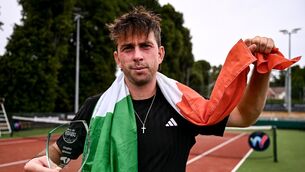
Rhasidat Adeleke and Ciara Mageean could join Ireland's elite pantheon in the coming days
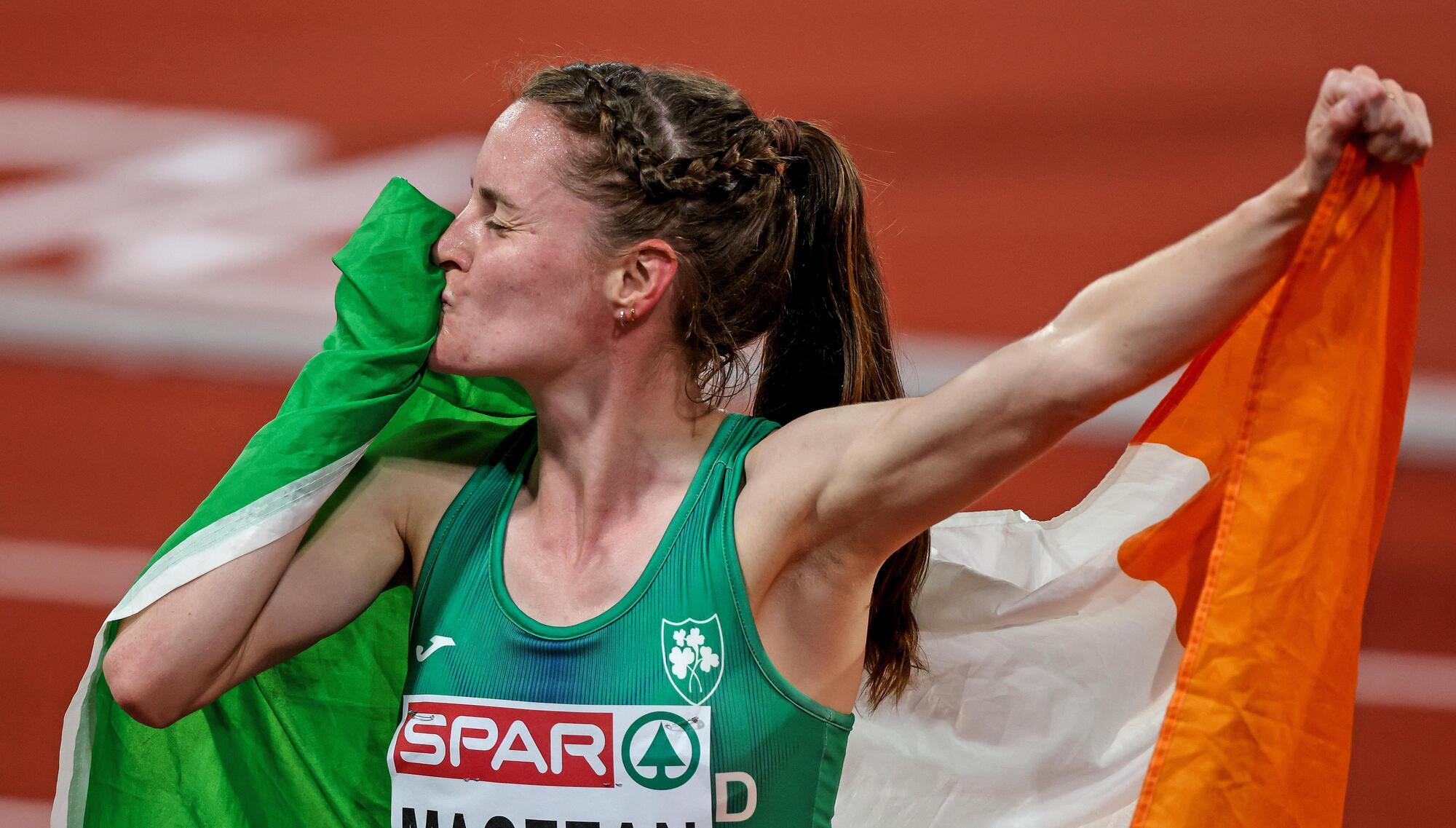
MAGNIFICENT MAGEEAN: Ireland’s Ciara Mageean. Pic Credit ©INPHO/Morgan Treacy
The stage is set, the stadium resplendent, shining bright along the banks of the Danube. Over the next nine days, Budapest plays host to over 2000 of the world’s best athletes from 202 nations.
With a capacity of 35,000, the National Athletics Centre should be fairly packed most evenings, with more than 300,000 tickets sold.
Irish fans are among the leading nations for travelling supporters, according to organisers, and the reason is obvious: beyond the architectural and cultural beauty of Budapest. This could be a huge week for those in green.
Trace the event’s 40-year history and you’ll find just five Irish athletes who’ve won medals, three of them race walkers – Rob Heffernan, Olive Loughnane and Gillian O’Sullivan.
Just two reached the podium on the track – Eamonn Coghlan and Sonia O’Sullivan – but Rhasidat Adeleke and Ciara Mageean could possibly join that elite pantheon in the coming days.

Athletics has long been the biggest sport at the biggest sporting event there is – an easy rebuke to those prone to writing it off as a minority pursuit. Still, there’s no denying it’s got issues.
The ubiquity of live streaming has allowed sports fans today to dine a la carte, gorging themselves on their chosen obsession, with athletics among the biggest losers of that – unable to draw in the floating TV voter the way it once did.
Its eternal issue is getting sufficient oxygen outside of the Olympics to sustain a fanbase. Once, maybe twice a year, it rises out of its bunker, piercing public consciousness to become part of water-cooler conversations.
Last year it happened during the Europeans in Munich, the taxi drivers and barbers of Dublin chatting about the likes of Adeleke and Mageean. The same will likely unfold in the days ahead.
Still, ask the average sports fan to name the biggest stars of the sport right now and many will come up empty, but no event outside of the Olympics familiarises the public with such athletes like the World Championships.
With that in mind, here’s a crash course on what’s ahead, with five key storylines to follow.
Let’s not sugarcoat this. The fastest women in the world don’t like each other. Like, not at all. USA and Jamaica look at one another in sprinting the way Brazil and Argentina do in soccer, the way Dublin and Kerry do in football, whereby it’s hard to know what’s more satisfying for fans: witnessing their own success or their rivals’ demise.
The US challenge is spearheaded by Sha’Carri Richardson, a trash-talking 23-year-old Texan who tends to lacerate those who mis-pronounce her name (it’s Sha-Kerry). Her undoubted star quality looked all set to go supernova at Tokyo Olympics, but then she got high – a positive test for cannabis causing her to miss the Games.
After returning, she was thrashed over 100m by Olympic champion Elaine Thompson-Herah of Jamaica and, live on NBC, she told the world: “Talk all the shit you want, I’m the sixth-fastest woman in this game – ever.”
In the background, laughing at Richardson, were Shelly-Ann Fraser-Pryce and Shericka Jackson. The Jamaican duo stand between Richardson and her first major title, though NCAA star Julien Alfred of Saint Lucia and Marie-Josee Ta Lou of the Ivory Coast might have something to say about that.
Jackson is the quickest this year with 10.65, while Richardson’s best is 10.71. Fraser-Pryce has a season’s best of 10.82, but the 36-year-old ‘mommy rocket’ has won this title five times. A sixth would be utterly incredible.
If form is to be believed, it will take a tactical mistake, illness, injury and maybe a gunshot wound on top of it to stop Jakob Ingebrigtsen or Faith Kipyegon winning 1500m gold.
Both will double back and chase 5000m titles later in the week, where each is slightly more vulnerable, if still by far the most likely winners.
Kipyegon is the best female middle-distance runner of all time, hands down, having smashed the world 1500m, mile and 5000m records this year, with two Olympic golds and two world titles – and counting.
Tactically astute, gifted with oceans of endurance and a lethal injection of speed, she cannot, will not, lose either race if she’s her usual self.
Ingebrigtsen isn’t quite so bombproof, his raw speed not at the level of some 1500m rivals if the final turns into a dawdle, but by now the 22-year-old Norwegian has mastered the art of slowly suffocating his competitors with a gradual wind-up over the last two laps. Expect the same again.
It was the greatest race of the Tokyo Olympics, maybe of any Olympics, and Norway’s Karsten Warholm and USA’s Rai Benjamin are primed for the rematch in Budapest.
Warholm edged their epic duel in Japan, taking the world record into the stratosphere with 45.94, but Benjamin wasn’t far behind with 46.17.
Both were below their best last summer due to injury, which allowed Brazil’s Alison Dos Santos to shine brightest, winning in 46.29. The fastest trio in history will be back at it in Budapest.
Dos Santos is returning from injury, meaning this will likely be what it was in Tokyo – Warholm and Benjamin duelling to the final hurdle. Warholm’s best this year is 46.51. Benjamin’s is 46.62. Just watch them fly.
This is athletics, so of course there’s a scandal, the cloud of suspicion always within sniffing distance at an event like this.
Nigeria’s Tobi Amusan, who shook up the sprint hurdles world in Oregon last year, winning gold in a mind-boggling 12.06, was charged with three anti-doping whereabouts failures last month, but a disciplinary tribunal cleared her this week, freeing her up to defend her title.
A release by the Athletics Integrity Unit, which handles anti-doping at the sport’s top tier, said its head Brett Clothier was “disappointed” by the decision and they may appeal it to the Court of Arbitration for Sport.
That wouldn’t happen until after the World Championships, meaning the case will continue to run, as will Amusan. She could well win gold in Thursday’s final, but questions will await once she steps off the track.
It was one of the sport’s best rivalries in recent years: USA’s Athing Mu and Britain’s Keely Hodgkinson.
They went 1-2 in that order at the Tokyo Olympics, both only 19 years of age, and there was far less between them as they repeated those placings in last year’s world 800m final, a thriller that went right to the line.
Hodgkinson, now 21, clocked a sizzling world lead of 1:55.77 in Paris in June, while Mu has raced just three times this year, with her coach Bobby Kersee suggesting that if she isn’t at peak fitness before Budapest, she’ll bypass it and continue training for the Paris Olympics.
It was a bizarre statement, given competing in Budapest is, for 99.99% of athletes, not mutually exclusive to preparing for Paris. A source close to Kersee’s camp suggests Mu will be on the line next week, her form clicking in time, but she’s still more vulnerable than ever to her greatest rival.
Kenya’s Mary Moraa could well spoil the entire party, but if Mu and Hodgkinson bring their best, expect them to turn for home together – with one almighty dust-up for gold.
CONNECT WITH US TODAY



Be the first to know the latest news and updates