On a country road: Appreciating and understanding road bowling
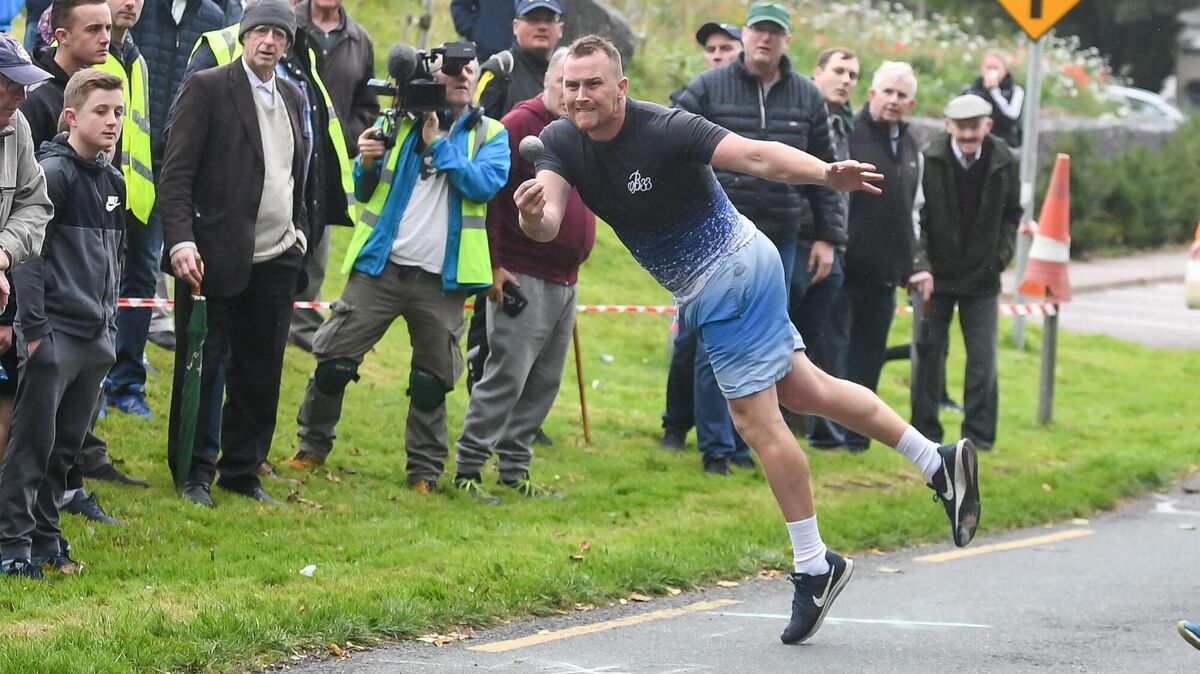
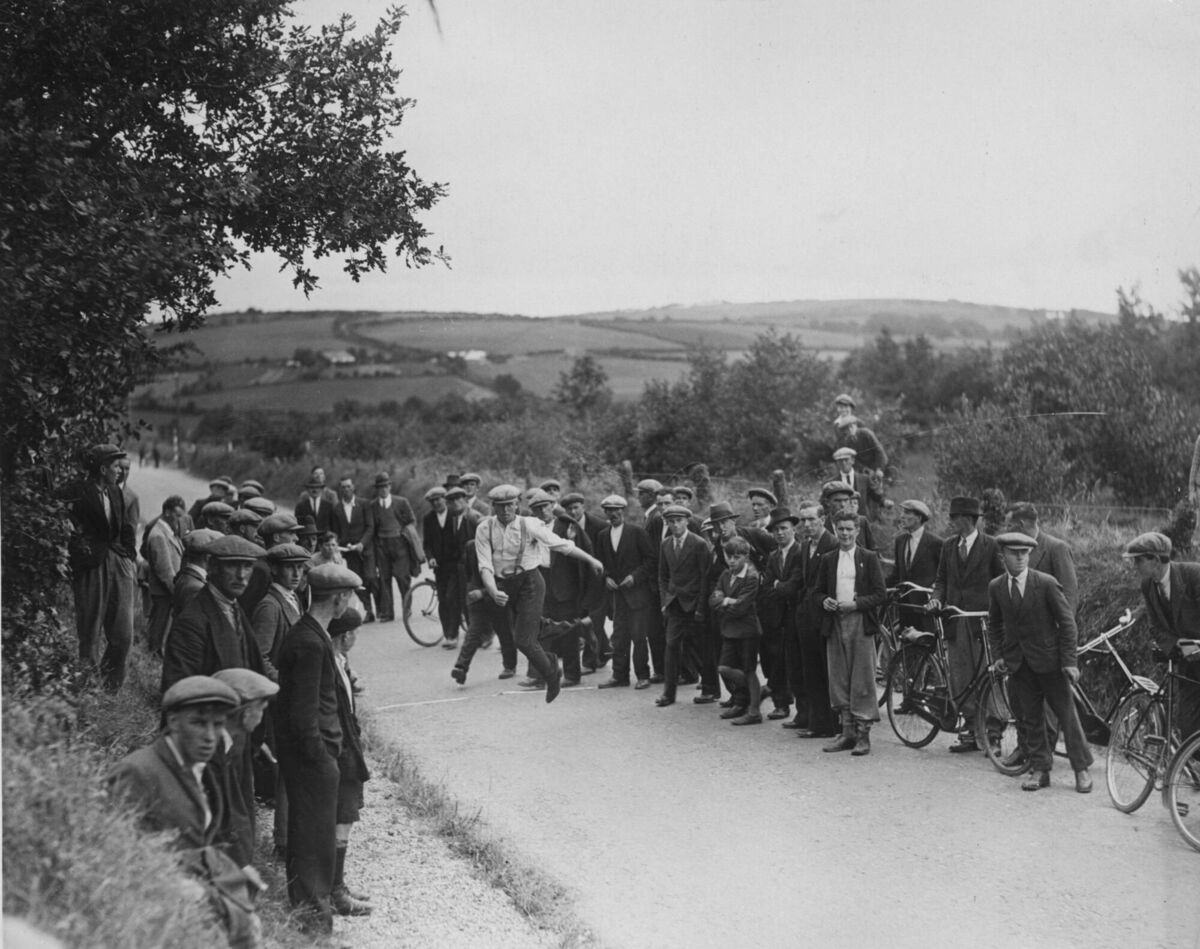
TRADITION: A view from behind a bowler. Pic: INPHO/Tom Honan
Road bowling is, at once, perhaps the most public of sports and the most inscrutable. Being played on public roads means that sooner or later almost everyone - in Cork, at least - encounters a bowling match by accident or design. However, while many casually or at times impatiently observe the sport, the specialised terminology or indeed the very premises of the sport may be a little hazy.
No sports aficionados are more keen to share their insights, so the next time you happen across road bowling, find a convenient parking spot and tag along. The best advice would be to site yourself behind the play. You will get a better view and also a chance to see it up close and personal.
Knowing some basic terms will give you a better chance to appreciate the sport, not just on these pages, but when you find yourself on a bowling road.
To begin with the object of the game is similar to very many sports. The premise is to get from the start line to the finish line in the least number of throws. As you may discover if you get a bowl in your hand, while the basic premise is simple, the execution is less so. A high-ranking player not only throws the bowl at high velocity and accuracy, but they can also spin it to negotiate curves, cambers and other road challenges and indeed throw it over fences, trees and even bridges and rivers if needs be.
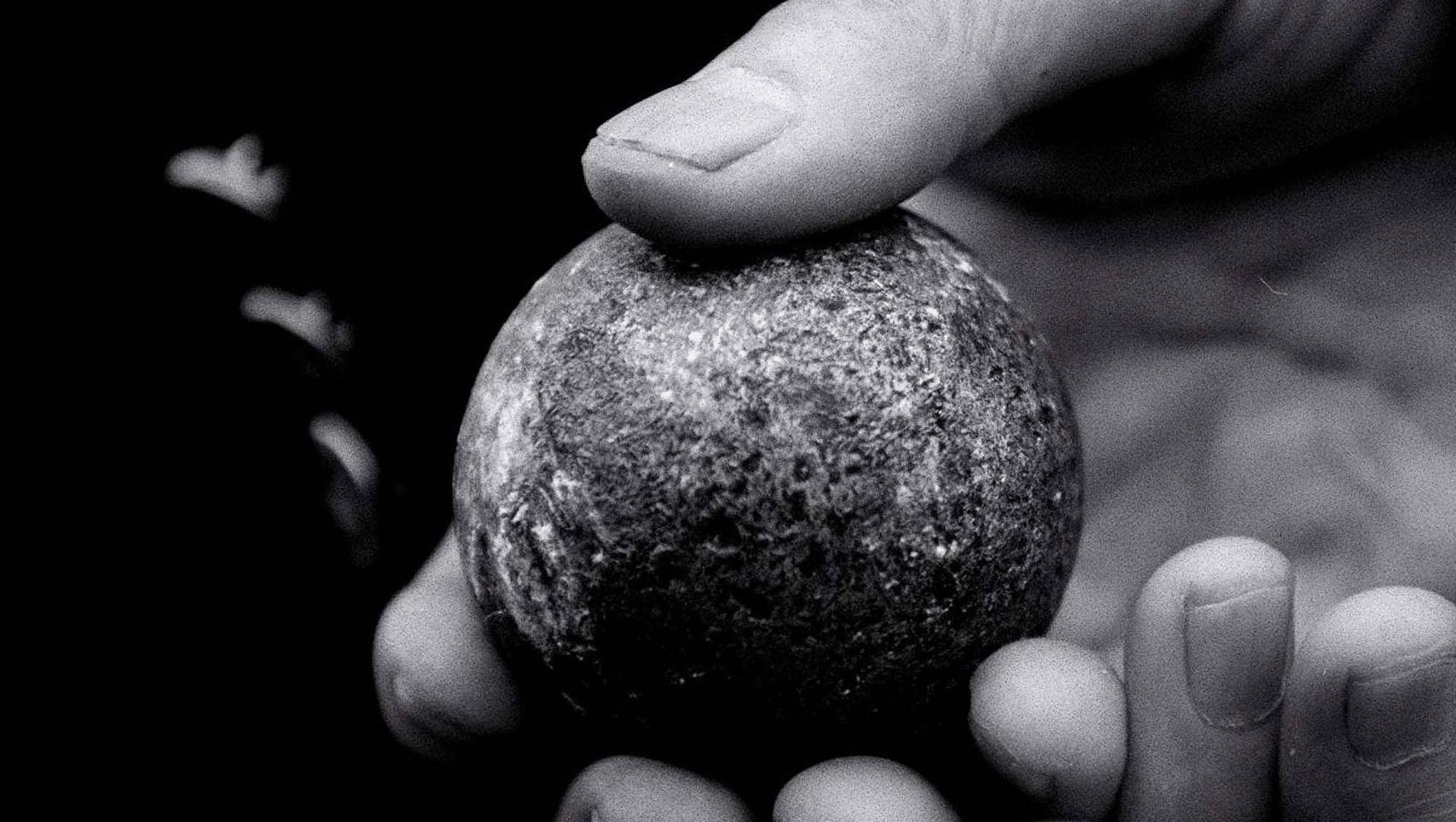
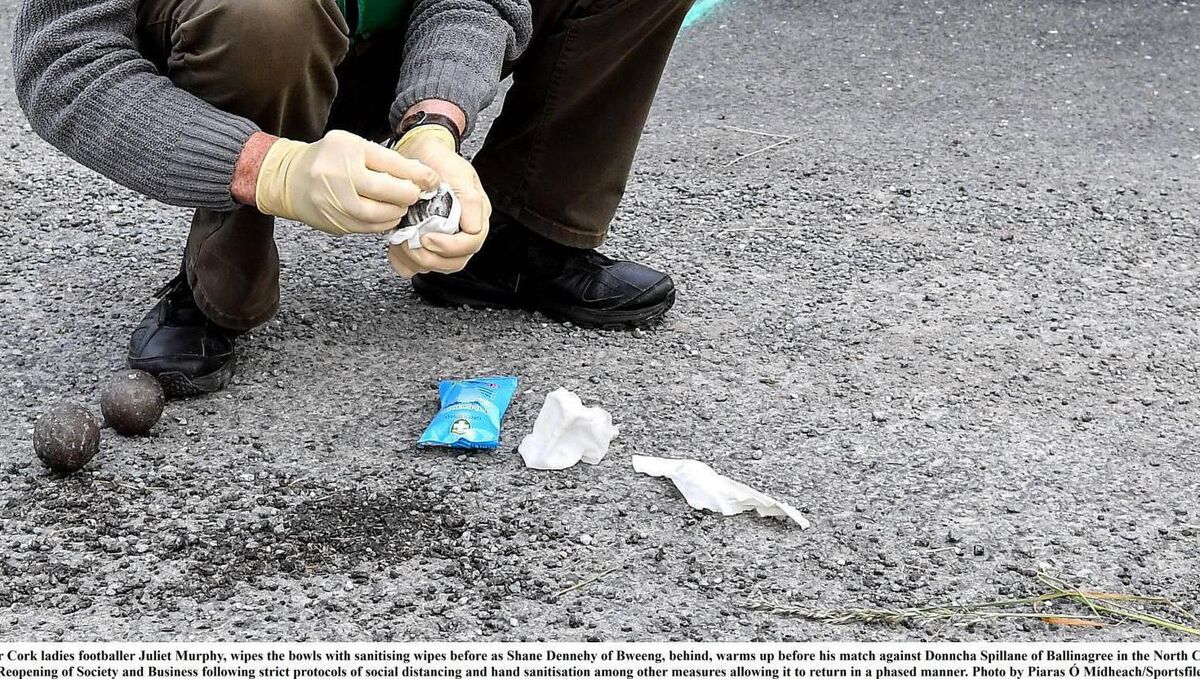
Adult competitions are played using a 28-ounce cast-iron bowl. The game is traditionally called ‘bullets’ in Ulster and ‘bulleting’ in Connacht, which speaks to the use of a bullet or cannonball. These were most likely adopted as they perform better and never break. Today the bowls are made using electronic lathes, they are perfectly spherical and absolutely the regulation weight. In the past they were mostly made in local foundries and the quality often varied. Underage competitions use lighter regulation bowls, depending on age, mostly 24-ounce and 16-ounce bowls.
So here are some terms that will allow you to both understand and converse on road bowling.
This is when one player leads the other by a single shot. It is technically only a bowl of odds when the bowl of the player who has taken the extra throw is behind that of the player in front.
(Munster) or (Ulster): A mark, usually a chalk line (traditionally a ‘sop’ - tuft of grass) placed on the road to indicate the finishing point of one shot and the position from which a player must throw the next shot. When both tips or butts or marks are level during a contest it is called level tips/butts or even bowls.
: This is when a player is penalised by the referee for over-stepping their tip/butt/mark before delivering the bowl. This is indicated by shouting the word “call” or the phrase “bring it back”. A valid call must be made before the bowl hits the road and if valid will nullify the shot. Their opponent may also call on the first attempt from a tip, but the referee alone has the right to adjudicate if it is a valid call.
This is when a player's bowl passes a point reached by their opponent, the number of throws by each contestant being equal.
Is a bowl that is behind the leading bowl after each player has thrown the same number of shots.
(sometimes also Make Sight) or : Effectively get your bowl around a bend on a road so that your next shot will be on straight road.
This is when the bowl is close to, but not quite at light.
This is the official course, normally only the paved or tarred road, between the start and finish line. Certain areas will be designated out of play and/or cannot be run upon as the player plays a bowl.
(Munster) or (Ulster): When a bowl cannons off a kerb, wall, raised road margin etc.
: The term used to describe a match. A relic from when competitions were decided over a defined number of shots rather than a defined distance. Twenty was the normal number of throws for such competitions, hence the term 'score of bowls’ (now archaic) or simply a ‘score’.
: The full forward distance travelled by a bowl from the player's tip or butt or mark.
To launch the bowl into the air, normally to get past a bend. The loft is the entire airborne distance from the player’s hand to the point at which the bowl lands.
A shot that’s played softly and deftly, usually in an arc at a bend.
: This is when a player loses a shot because their bowl has lodged on a fence, wall, tree, etc. following a loft. A bowl must reach or traverse the actual road of play or it will be declared a “stuck” or “dead” bowl.
To spin a bowl on its axis in an anti-clockwise direction in order to curve it to the left. Left-handed players predominantly have a natural tendency to spin bowls.
: To spin a bowl on its axis in a clockwise direction in order to curve it to the right. Right-handed players predominantly have a natural tendency to screw bowls.
: A tuft of grass placed on the road to guide the player on where they should play the bowl. It is effectively a target, placed to identify the potentially most advantageous point where the bowl should land.
This is where the bowl hits or runs through the sop i.e. the bowl has been delivered according to plan.
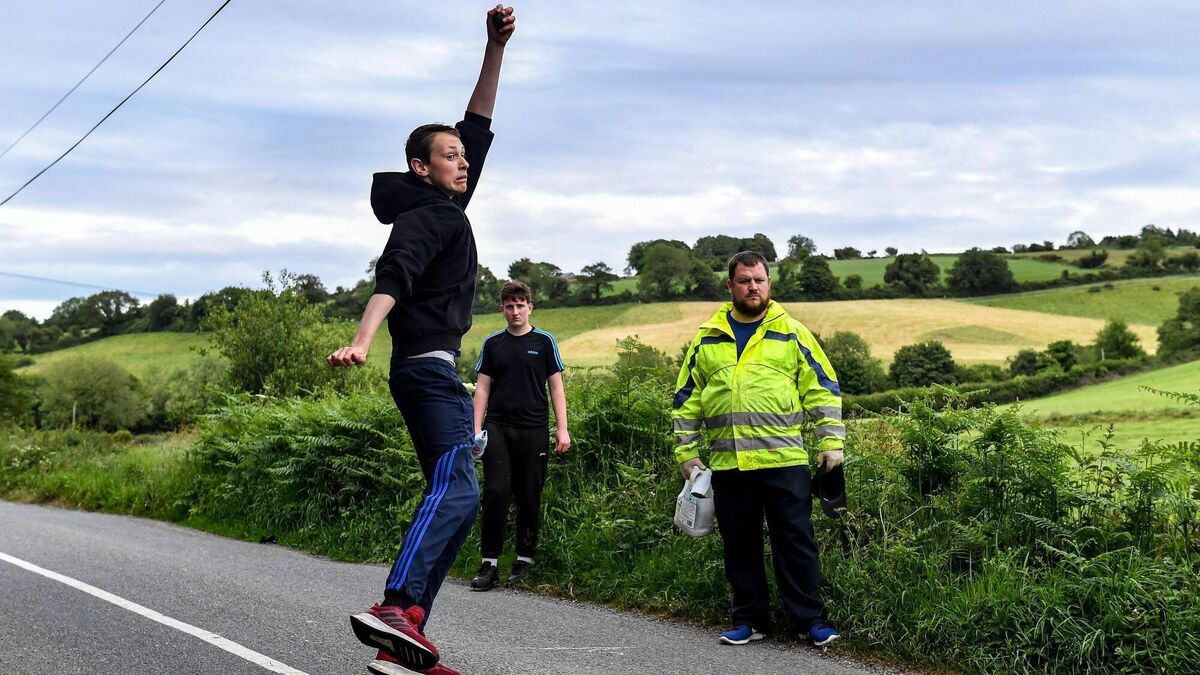
: The road-shower is similar to a caddy in golf. They advise the player on the optimal strategy for each shot. The road-shower places the “sop” and advises on where the player ought to run and deliver the bowl to gain maximum distance. In most serious competitions a player will have at least two road-showers, one who stands with them to survey the road ahead of a throw and the other who places the sop on the road.
or This is the normal technique adopted by Munster and Connaught players. It is windmill style action in which the arm is rotated through a complete 360 degrees and the player normally elevates off the road and swivels in the process.
This is the normal technique adopted by Ulster players, in this case the player does not complete a full rotation of the arm, but delivers the bowl with a straight arm action, harnessing power from their legs via an upward surge.
Stakes or books are where the supporters of a player pool their bets to create a “book” or “stake”. Opposing players’ stakes must be equal. The stakes are held by the referee and the combined amount is paid to the winning player at the end, minus a levy of 5% which goes to the organising committee.
This is similar to a dead ball line in rugby, the bowl is out of play once it passes the line and will be brought forward or back to another line (play line). This normally occurs at junctions, where the road goes at a sharp angle or where throwing a bowl might cause danger or nuisance.
CONNECT WITH US TODAY



Be the first to know the latest news and updates