When pain is all relative: Courtney McGuire's inspirational rise from the depths
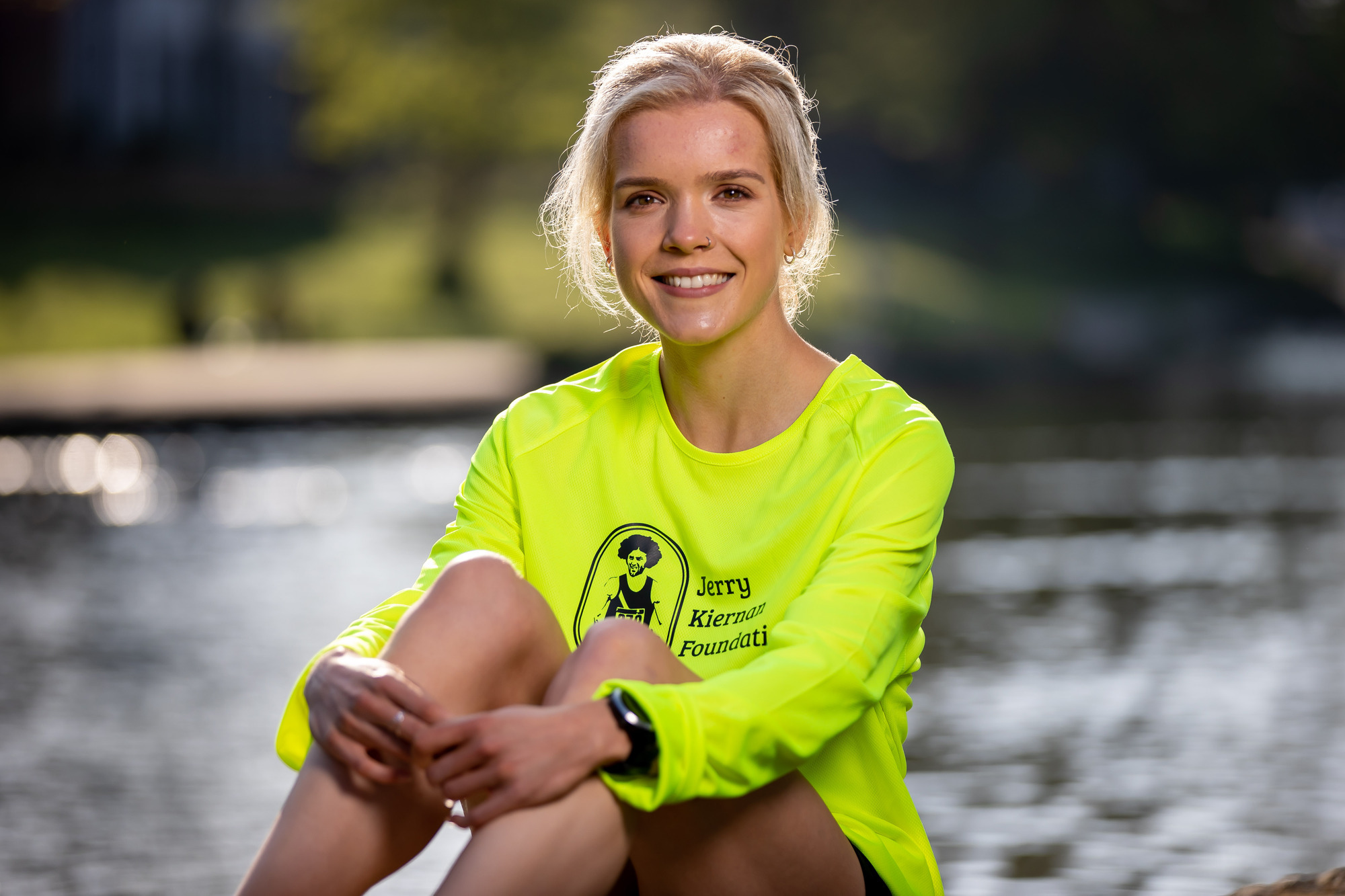
IMPOSSIBLE IS NOTHING: Courtney McGuire. Pic: ©INPHO/Morgan Treacy
Sometimes in races, when the pain is at its peak, Courtney McGuire will tell herself, ‘This is nothing.’
When you’ve dealt with what she has, it brings about a certain realisation – that a marathon can’t really hurt you.
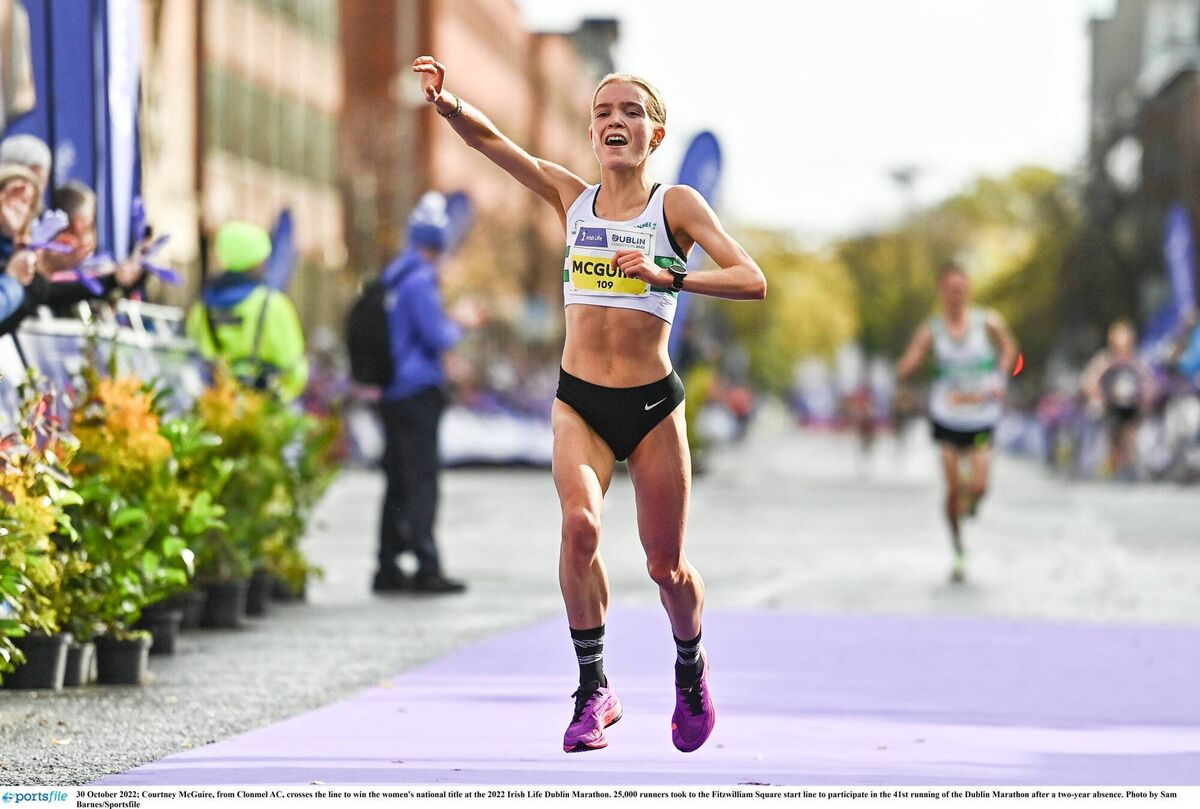
Last October, the 23-year-old shocked everyone to finish third in Dublin, winning the national title in 2:32:52. When she met her training partner at the finish, she cried, and those tears, and that pain, were of a very different kind to what she’d once been used to.
Why tell her story now? “If it helps someone, I’d rather put it out there,” she says.
It starts in Clonmel. McGuire’s mother got pregnant with her at just 14, gave birth to her at 15. At 16, she gave birth again, this time to a boy. As McGuire takes you through her childhood, there’s no scorn in her words, no judgment, just an understanding of what it must have been like for a girl with two kids to care for in her mid-teens.
“Her way of dealing with it was using substances, trying to take her mind off things,” she says.
There were house parties at home where drugs were passed around like popcorn, the Guards called countless times. As a kid, McGuire thought it was “great craic” to have so many people around, but she didn’t know the consequences – how her mother was sliding deeper into the throes of addiction, moving from cocaine and ecstasy to something even more dangerous.
“It was heroin,” she says. “It still is.”
McGuire and her younger brother spent years going back and forth to their grandparents, until their mother’s addiction meant being in her care was no longer possible, the attempts to get clean always failing.
McGuire remembers how angry it would make her when her mother, in a methadone-induced trance, would fall asleep mid-conversation. The anger she felt over the situation lasted years, and running was one way to channel it. At Presentation Secondary School in Clonmel, David Kenneally introduced her to the sport and she loved it – the fresh air and open road working wonders to clear her mind.
Was her talent obvious then? “Oh Jesus, no,” laughs McGuire. “I don’t think I even had a watch until my second year of college; I was just going for jogs.”
She studied psychology at the University of Limerick, where she hit a pivotal crossroads. In her first year McGuire was “naïve” about drug use among students, but while living in College Court in second year, that changed.
“Everyone was on stuff. I was absolutely determined: ‘I’ll never, ever take anything.’ But I wouldn’t give out to people or try not to be around people who were, because it was just absolutely everywhere.”
Her evenings were spent in the library or at the gym while so many of her peers were out socialising. “People were probably calling me a bit of a freak, but I was determined to stay away for my own sake as I knew if I took something, it was more likely I’d be addicted to it as the family link was there.”
Her younger brother fell into addiction in his teens but managed to recover before doing an apprenticeship as an electrician. “He did a complete 180,” says McGuire. “I’m wicked proud of him.”
Her mother suffers a different fate. “It got worse. I meet her every now and again, ask her how she’s getting on. Where she’s living – I’m not really sure. She’s still struggling, but hopefully she comes out of it eventually.”
McGuire was the first in her family to go to college, graduating from UL last year after doing her thesis on substance addiction. “It was a huge day. My grandparents had never been to anything like a graduation and the night before they were panicking: ‘What do we wear?’”
Since last year she’s been coached by her clubmate at Clonmel AC, Sean Tobin, who’s one of Ireland’s best distance runners. Before she’d done her own thing, training 'arseways', running 10 miles every day and often getting injured. But Tobin brought planning, structure, professionalism.
She didn’t plan to do a marathon for “10 years” but when Tobin suggested Dublin last September, she decided to give it a go and did an eight-week training block. To avoid injury, she ran just four days a week, totalling about 60 miles, with the rest of her endurance work done on an elliptical.
At the Dublin Marathon, she ran with Irish international Ann Marie McGlynn for much of the race, and couldn’t believe how easy it felt, as if she was “jogging.” She hit the finish in third, behind two Ethiopians, and McGuire was the headline story in the coverage that day.
At a pub in Clonmel that night, she was lauded after arriving in her tracksuit, and six months on it hasn’t fully abated, with two elderly women at her gym congratulating her last week. “I’m milking it a bit now,” she laughs.
That run showed her the Paris Olympics are possible, and McGuire must put down two strong marathons over the next 12 months to qualify. She’s all in on that dream now, training full time despite the lack of funding for those at her level. It’s why support like that of The Jerry Kiernan Foundation is critical.
McGuire is among the dozen athletes who’ll get a bursary this year from the foundation, which will make a huge difference. She’d never been on a plane until January when she did her first warm-weather training camp in Portugal. She’s hoping to do an altitude camp in the summer to prepare for the Dublin Marathon in October, and then likely the Valencia Marathon in December.
Down the line, she wants to go into addiction counselling or else become a teacher, though McGuire is also weighing up a masters in exercise and performance psychology. She has many options now, having made all she could of the hand she was dealt, turning it into a winner.
CONNECT WITH US TODAY



Be the first to know the latest news and updates