Clare's world champion who united Ireland for a few hours
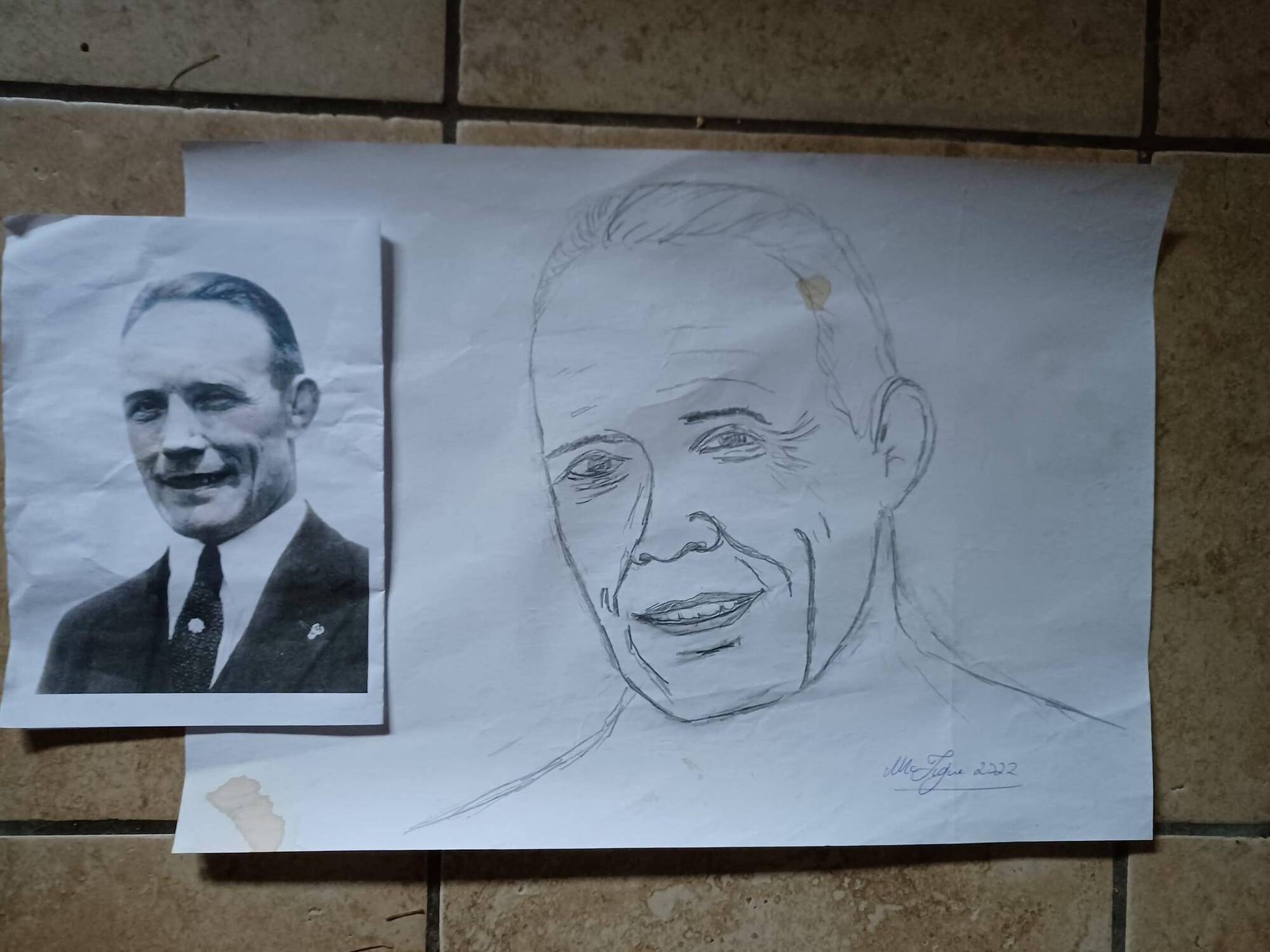
SCULPTING IN TIME: Michael McTigue's sketch for the memorial stone
Lives get shaped in two main ways.
Footwork and punch, boxing terms. The wearing down and the executive force. Some lives take the tilt of decades, a slow gravity’s pull. Some lives decisively alter in a moment, made by a single decision’s axe.
Mike McTigue found the second kind of change. There he is in New York, working for meat wholesalers, hefting sides of beef in Harlem and The Bronx. 1914 or so. Tough job, every sense of the term. Day came when a big decision came.
The young Irishman’s supervisor is being hassled over money by another worker. Words turn to blows. As McTigue later summarised that experience: “Says I to myself: ‘You’ll get fired if you don’t do something, and you’ll get a beating if you do.’ So I sailed into the trucker.”
The County Clare native hailed from serious stock. He waded through hardship and flattened that opponent. His reward? Not merely gratitude and stable work but a life-changing offer. “Mike, you are too fine a fighter for this business,” his supervisor stated. “You ought to be in the ring. I’ll back you and be your manager.”
That promise held beyond nightfall. McTigue got sent to influential trainers. No ease of path, though. ‘We only want winners,’ he was told. ‘And you are probably starting too old.’
McTigue ignored useless wisdom. A knockout delivered victory in his first fight. He once told a sportswriter: “The people who advised me forgot that we Irishmen have a hardy, healthy open air life. When I was 22, the age at which I began boxing, I was actually a younger man, physically, than ninety per cent of city-bred chaps of 18.”
Why the journalistic interest? Because Michael ‘Bould Mike’ McTigue from Kilnamona, County Clare became Light Heavyweight World Champion on March 17, 1923. He was born on November 26, 1892.
Bare hand, gloved hand. This man pressed that change, fighter to boxer. “His gloves are in there,” Nicholas Rynne said to me, as we passed the Clare Museum, walking through Temple Gate in Ennis last week.
“The World Championship ones?”
Nicholas nods. “They were left to Mikey Rynne, a nephew”, he notes. “And Mikey donated them. They are on display in there, for anyone who wants to see them.”
The day is monochrome rain, quintessential inland West of Ireland. We are glad to get seated in a hotel. Yes, a TG4 documentary was broadcast in 2008. There have been print articles. Plus Andrew Gallimore’s book on the subject, (2007). But Nicholas Rynne, maternal grandnephew, offers a truly intimate account.
He is Chairman of a Memorial Committee. Other members include Kevin Rynne and Antoinette McCormack, two first cousins, and Michael McTigue, a more distant cousin. Today, they will unveil the long awaited work at Kilnamona Cross. The champion was buried in New York but his tribute stone will weather under a familiar sky.
Nicholas sketches: “When we were younger, he was rarely spoken about. The old people were very… Didn’t want to be boasting, or giving any chance to people to be saying: ‘Oh, they are talking about the boxer again.’ But when my uncles were home from England, or when anyone would visit from America, Mike would be brought up.”
He continues: “Then there was a bar opened in Ennis in the 1970s. ‘Flan’s Bar’, owned by Flan Talty. He came home, after years in America. And he got a painting of Mike, and he hung it in his bar. That was the first kind of public touch. Discussion opened up a bit.”
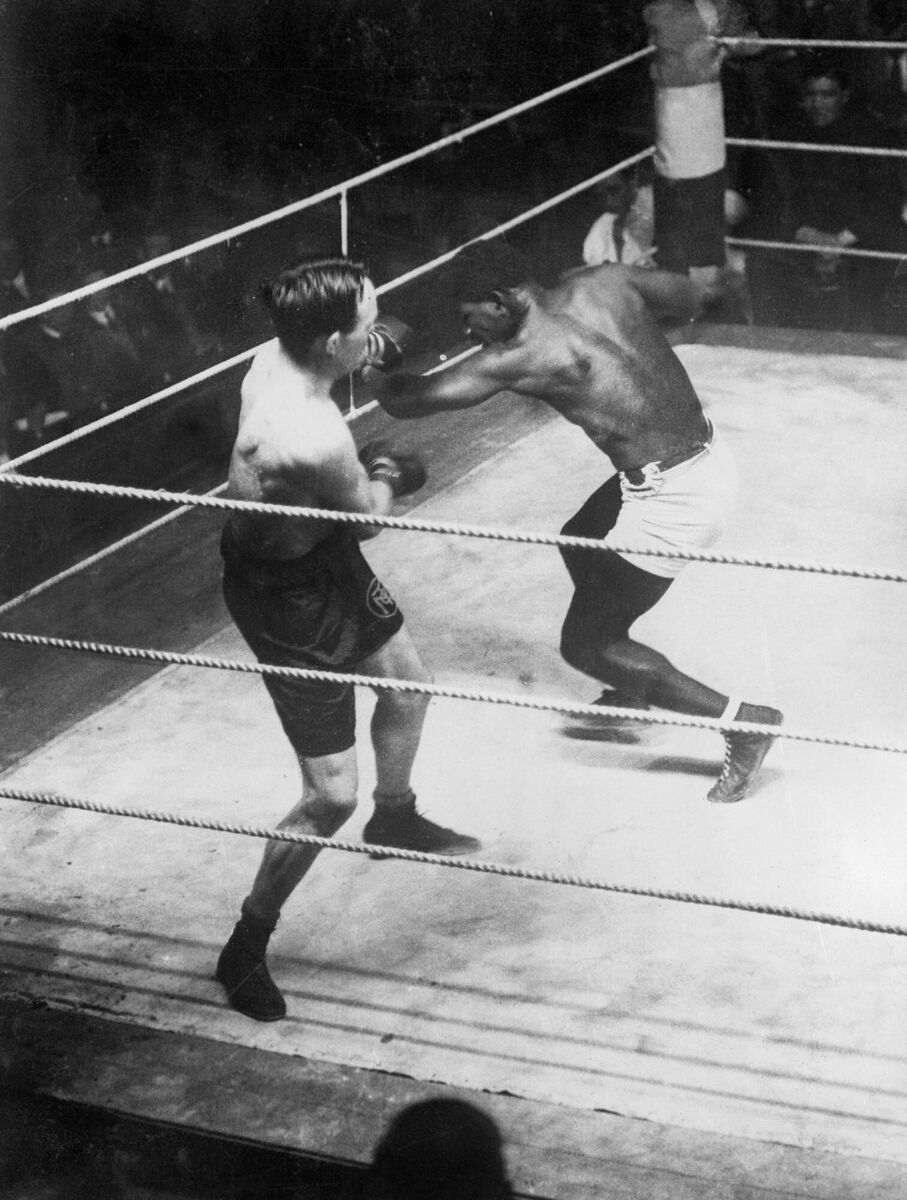
Happenstance just knotted, a century ago. Louis Mbarick Fall (known as ‘Battling Siki’) was from French Senegal. He unexpectedly beat Georges Carpentier, the World Champion, on September 24, 1922. The challenger had agreed to take a fall but became enraged by Carpentier’s needlessly violent blows and racist slurs.
Anger changed his mind. That same anger pulverised the champion.
Victory left the new champion persona non grata in France. Mike McTigue had meanwhile come to England for a few routine fights. The guiding idea? To use this itinerary as a means of getting home.
No thought of a title shot hovered. But a promoter named Tom Singleton saw McTigue fight in London and sensed an opportunity. Singleton’s canniness eventually put Siki and McTeague in the La Scala Theatre, just off Sackville Street in Dublin’s city centre, on St Patrick’s Day.
As Nicholas Rynne outlines: “There was no way the British were going to allow a black man to come into their country and beat one of their fighters. They thought a victory for Siki would encourage anti-colonialism.
“Singleton thought: ‘He can’t fight in France again and he can’t fight in England. Not too many in America want him either.’ Racism was massive at the time. The only go was Ireland.”
The problem lay in this country being clenched in Civil War. But the Free State Government coveted a display of normality, as later with the Tailteann Games in 1924 and 1928. Their representatives agreed to host the occasion.
Nicholas Rynne glosses bitter context: “The Anti Treaty side wanted to shut down the country. Didn’t want it to seem like it was working. But anyway, the night of the McTigue-Siki fight, the guns fell silent. In a way, they united the people, even if only for a few hours. And then the Irishman won.”
A triumph in no way preordained. As his grandnephew explains: “How he got over to New York was that my grandmother, Mary McTigue, went before him. And she came back to Clare from America, which was rare. She gave him the fare.
“So he went off to America, and became World Champion. She got married in her home parish, in her home house. They would have had a party in the McTigue house, and she would have walked two fields down to the Rynne house, down to her new life. They swapped places, herself and the boxer.”
The contrast survived in family memory: “He went off to the other side of the world, and became very famous, and she lived out her life in East Clare. You could imagine her going down with her suitcase, down along the boreen, with her new husband.”
Now we are off to home ground, heading out of Ennis for Kilnamona Cross. We rendezvous with other committee members as planned at the Cross. Fergal Hegarty’s house is across the road, up the incline. “Fergal is our local hero,” his clubmate emphasises. “He was pure great for Clare in the 1990s. He is going to unveil the memorial for us.”
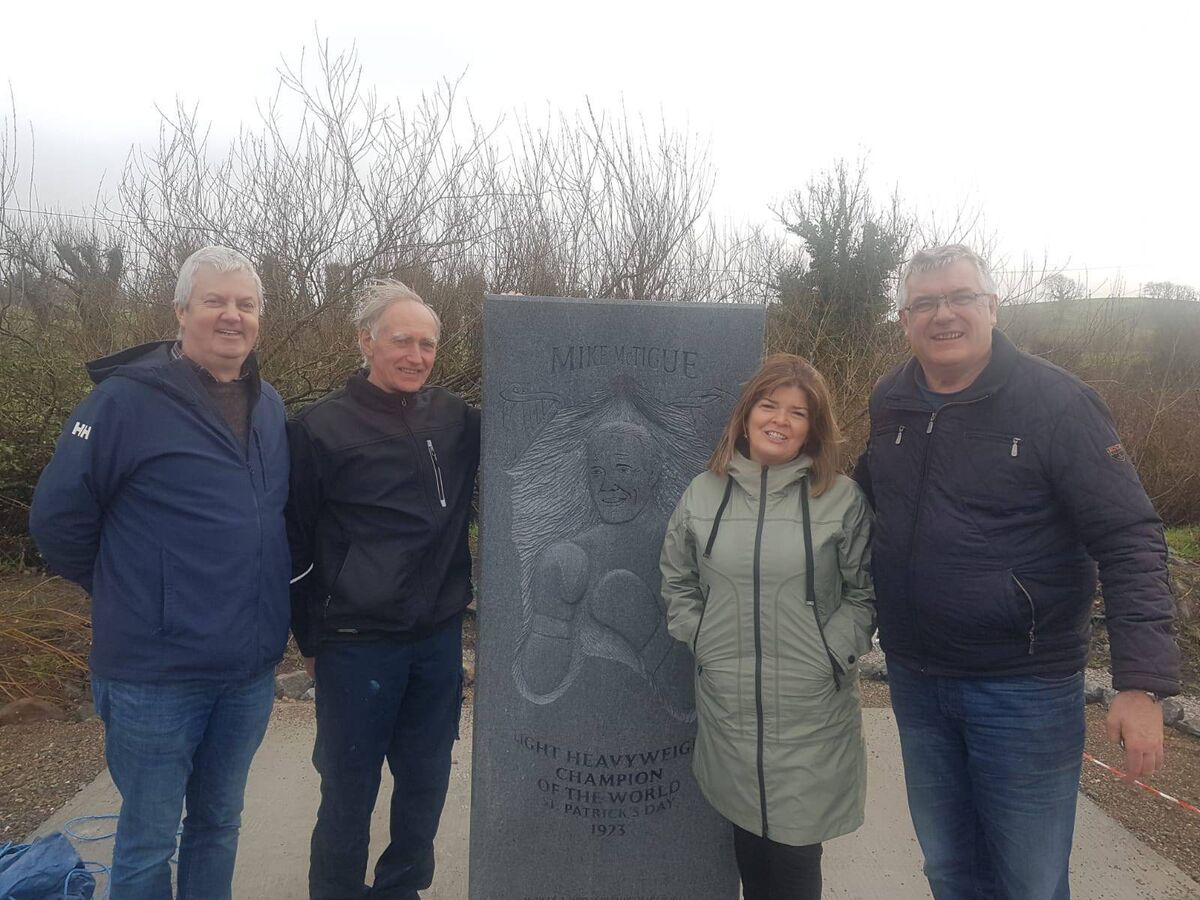
I am shown the stone, a beautifully understated piece of work by Michael McTigue, a master sculptor. He is enjoyably self-deprecating: “My biggest claim to fame is that I made Charlie Haughey’s headstone!”
We stay pleasant minutes and take some photographs. The group is naturally pleased to behold their project’s success so close at hand. Then we adjourn to the sculptor’s workshop.
Clare Colleran Molloy is the current Mayor of Ennis. She has a particular compliment: “Putting the two flags on the stone is wonderful, Michael. That’s Ireland and the United States joined. There are such strong links between Clare and America, especially in my own family.
“I think the memorial is a tremendous act of respect. It’s so positive for the area. It’s emotional almost. I just did my little bit along the way, a very little bit, to help.”
Nicholas Rynne italicises local generosity: “Only for the people of Kilnamona, we wouldn’t be able to do this. They came up with fierce donations and help. And obviously we had the benefit of Michael’s craftsmanship.”
The artist details an intriguing challenge. He takes out a photograph of his subject: “There is Mike McTigue, in a suit. Most photographs, he is in a boxing pose, and you can’t really get a handle for what he looked like. He was quite a handsome fella. Ten years of fighting and there isn’t a mark on him.
“Anyway, the drawing was done from that image. I had to make up the rest of him, because he is in a suit there. The memorial’s boxing pose was made up, as I went along.”
There is the boxer and there is the man. Can they be separated? Kevin Rynne observes: “Siki used walk down the Champs d’Elysses with two lions on a lead. He was killed in New York in late 1925. Shot in an attempted robbery, in Hell’s Kitchen. He bled out before he was found. A tragedy.”
Back to his granduncle: “Mike was a world superstar at that stage, in 1923. Boxing was sport in the world. I talked to old people when I was early twenties myself, bars around Dublin and Cork. When Mike McTigue got mentioned, their eyes would light up.
“He was a hero for a particular generation. Internationally, we didn’t have athletes. We didn’t have soccer players.”
Michael concurs: “I remember starting in [St] Flannan’s [College] in 1966, the year Mike died. In First Year, you had to introduce yourself. As soon as I said ‘Michael McTigue from Kilnamona’, after standing up, someone said: ‘Are you related to the boxer?’ It came from every teacher, one after the other.”
Nicholas flicks a jab: “They were all afraid of you, then.”
Michael counters: “I didn’t get bullied!”
Clare requests a local map: “Where was his birthplace?”
Michael: “A mile back the road. Nicholas’ homeplace. The townland is Lickaune.”
Clare: “That house is no longer inhabited?”
Nicholas: “Oh no. It’s in ruins since I was a child. But the sheds are still there, and the gable end. You can see where the house was. It would only have been modest, even for those days. A thatched cottage.”
Clare: “And how many family members?
Nicholas: “11 children.” Clare turns topical: “You could almost make a movie out of it. Look at !” Cue laughter when I mention the film rights as my fee.
Kevin, a scholar of boxing, restarts. He enjoys analysis of the fight’s specifics: “Mike dislocated his right thumb in the 13th round. Basically, for the last seven rounds, he was boxing with one hand. He went to knock out Siki, who ducked his head, and Mike did his thumb.
“He fought for the next couple of years, as champion, with very limited use of his right hand. Only after he lost the title did he have the operation. Then he went on to be a strong competitor for Heavyweight Champion of the world.”
Kevin elaborates: “He actually lost a box off, when leading in the twelfth round, against Jack Sharkey, when a blood vessel burst in his mouth. There was a danger of him bleeding out. So they had to stop the fight.
“From then on, gumshields became popular, and then mandatory. Only for that burst blood vessel, he would have fought Jack Dempsey for the Heavyweight title. Before that box off, a bit like when hurling helmets first came in, gumshields were supposedly only for cowards.”
Michael runs the same analytical groove: “I showed the fight with Siki to Colm Flynn, the man who trained the Clare hurlers to two All-Irelands under Ger Loughnane. Boxing is actually Colm’s number one sport. His first remark was that the ring was way smaller than nowadays. So it was harder, in a smaller ring, for Mike to box the way he wanted.
“Colm remarked as well how lively Mike was on his feet. Whereas Siki arrived in the ring and he was plodding along and sat down.” Nicholas augments: “Colm said the same to me. He said: ‘This man was way ahead of his time.’ His feet and his footwork were so quick. Siki wanted a bloodbath. But it’s a scientific sport, boxing.”
Then he speculates on that style’s source: “Starting off in New York, he would have met the toughest of the tough. Not even boxers. Just sluggers.
“So he probably developed a style, a defensive stance, safety first, and he’d use his feet and his jab. That’s actually why he beat Siki, because Siki depended on power. McTigue stayed away from Siki until Siki got tired.”
Kevin agrees: “He wanted to tire out Siki and then go in for the kill. He wasn’t that big of a man. Maybe five foot nine. And not that heavy either. Nearly all of his opponents were bigger and heavier.”
The same man finishes with a telling anecdote about his granduncle’s nature: “After he won the World title, Mike agreed to an exhibition fight in Ennis. His opponent thought he’d make a name for himself, beating a world champion. He started getting saucy, and Mike warned him.
“He didn’t listen. So Mike knocked him out. Seemingly your man was taken away in a wheelbarrow. You had a recently widowed woman at the time in Ennis. Mike donated that prize money to her.”
There are searing lines in Robert Frost’s ‘Provide, Provide’: “No memory of having starred/Atones for later disregard/Or keeps the end from being hard.”
Too many boxers find that poetry a haunt. Mike McTigue’s license was revoked in 1930, which meant enforced retirement. Much of his money evaporated in the 1929 stock market crash.
He had married Cecilia Manning and they raised three daughters. McTigue initially did well, into the 1940s, as the owner of a bar. But the 1950s and 1960s proved anything but easy. He tried, without much fortune, boxing management. He eventually had to accept low level jobs. There was alcohol. There were fights, court appearances. The marriage struggled. He died in New York on August 12, 1966.
Nicholas Rynne afterwards drives us from his cousin’s workshop to Lickaune. He shows me their shared ground, the tangle of private boundaries. He brings us down the boreen where his grandmother walked into marriage.
I remark on the lovely stone walls. “Yes, they are holding well,” he allows. “Anyway, you couldn’t touch them now, even if you wanted. They are preserved.”
His sister Lorraine, Secretary of Inagh-Kilnamona GAA Club, gives us tea in her house, scarcely a ring’s width from where her granduncle grew up. We are sitting, talking about hurling, as the afternoon deepens its greys. Nicholas suddenly clasps a thought. The world of boxers, luck and blood.
“Mike McTigue paid for Siki’s funeral,” he says, more than wry.


CONNECT WITH US TODAY



Be the first to know the latest news and updates