Faults instead of Aces? Why Ireland has failed to make a mark on the tennis world
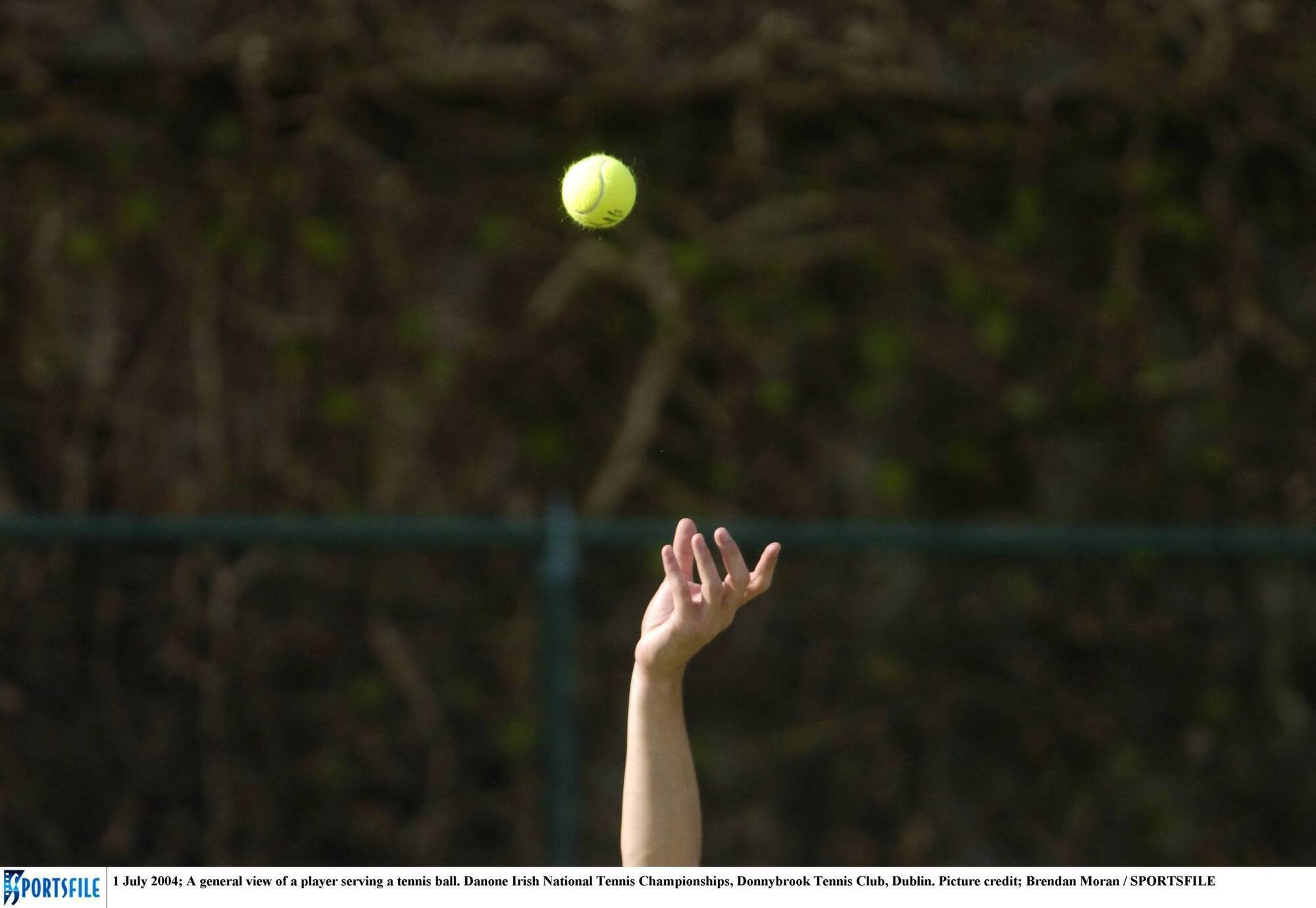
Conor Niland and Louk Sorensen brought the number of Irish players, male or female, who had made a Slam in the professional era to just eight. And eight it remains.
If it isn't Dublin buses then it's Irish tennis players. Ireland had waited a quarter of a century for someone to make another Grand Slam when Louk Sorensen and Conor Niland went and qualified for four between them inside two seasons. They even made it to the same US Open stage when pitching up together at Flushing Meadows in 2011.
Neither would complete their first-round games. Niland had to retire ill when a set and 5-1 down to world number one Novak Djokovic on the Arthur Ashe court. Sorensen followed suit, injury stalling his challenge against Rogerio Dutra Silva with the Brazilian 2-1 up in sets and 1-0 to the good in the fourth.
Sorensen, whose father Sean had reached Wimbledon and the French Open two decades before him, had come through the German tennis system before declaring for Ireland, and Niland looks back now and says quite bluntly that their achievements at the time were merely papering over the cracks back home.
Still, though, two Irish guys in one Slam? This was a feast after times of famine.
Matt Doyle had been the last Irish player to make one of the Big Four. That was in 1985 when he went one-and-done at the Australian Open. Niland and Sorensen brought the number of Irish players, male or female, who had made a Slam in the professional era to just eight. And eight it remains.
James McGee hit the bar eight years ago when losing 6-4 in the final set of a final US Open qualifier to China’s Zhang Ze but Irish tennis looks as far away now as it ever was from producing players who can make it to the starting line of a Slam. And as for someone who could maybe crack the top 100 on the WTA or ATP tours? Don’t hold your breath.
You don’t have to scan the runners and riders at the big meets to see it. Go beyond the entries, the scorelines and the trophies and sporting progress, or the lack of it, can be measured in eyeballs, in participation levels, in annual accounts, or in social media numbers. Funding tends to give you a pretty bald progress report too.
There were obvious headlines when Sport Ireland announced who was getting what for their high-performance (HP) programmes a few months ago. Boxing had its pipeline squeezed until it sorted out its latest internal mess. Rowing’s success in Tokyo rippled into an enormous increase and one that saw it slip past athletics in terms of contributions.
Most of the 21 governing bodies listed on the glossy brochure had their high-performance budgets increased, and significantly, but two had them discontinued.
The Irish Clay Target Association was one. The other was Tennis Ireland which had taken in €745,000 via that same avenue through the Tokyo Olympic cycle.
And you know what? It didn’t merit a peep in the media.
When it comes to high-performance, the sport here hasn’t just been excused from the conversation, it has slipped unnoticed from the room.
Judo, taekwondo and canoeing have all been recognised by Sport Ireland as bodies with legitimate HP programmes recently. Tennis won’t receive a cent in that department between now and the Paris Games.
How can this be?
How can a sport that has over 180 clubs spread across every one of the 32 counties, a community with thousands of playing members and a history on this island stretching back to the 19th century, not be deemed eligible for grants from a high-performance purse that is open wider now than ever before?
Why are we still unmapped on the world stage?
**************
This is a strange old summer. The World Cup has been shunted back to the end of the year and the two All-Ireland Championships dragged forwards to within a chocolate overdose of Easter, but one of the season’s enduring traditions kicks in again today when Wimbledon opens its doors at 10.30am.
Add up everyone in the men’s and women’s ranks and over 250 players will walk onto those manicured grass courts to contest games over the fortnight that follows. And that’s just the singles.
Among them will be high-end competitors from previously obscure outposts. Norwegians, Danes, Poles and Tunisians.
It’s not just that Ireland hasn’t had a player in any of the Slams since 2011, it’s the fact that we’re going on half a decade since we even had any interest in the Junior equivalents. Georgia Drummy was the last, when reaching three of them, in 2018. Simon Carr managed the same number a year earlier.
Carr is Ireland’s highest-ranked player but still sits outside the top 600. He had climbed up to the low 500s but hasn’t been helped by a six-month back injury that kept him out until the late spring. Drummy is the wrong side of the one-thousand mark and there is nothing to suggest that those coming up behind them will fare any better.
“We’re miles off where we need to be, unfortunately” says Niland.
Let’s start with the obvious. Breaking that glass ceiling isn’t easy. On average, only seven new players push into the top hundred every year. The odd freak like Andrey Rublev aside, the vast majority won’t manage it until they’re well into their 20s and close to two decades on from when they first lifted a racquet.
That’s a lot of backhands and a fair few sweatbands.
Kids really need to be swinging at a red ball when they are five or six. Make it through orange and green and up to a provincial or national level by the time you’re 12 and you’ll need to be training for up to four hours a day and five days a week. And all that is only the foundation before you can think about laying a brick or choosing the wallpaper.
*****************
This is probably the point where we should draw breath and list all those familiar laments. No clay courts. Not enough indoor courts. And in a climate that has a default setting of wet and windy. Too expensive. Too removed from the continental core of Junior and Futures events. Too little competition domestically. Tennis Ireland. The Gah.
Dave Miley has heard them all.
A former Irish international who played US college tennis and on the professional satellite circuit, Miley spent 25 years with the International Tennis Federation. He ran, unsuccessfully, for its top role and for that of Tennis Ireland CEO and he’s now tennis director with Kazakhstan. If anyone can judge Ireland by global standards its him.
“Everybody thinks the other side is better but they all have their challenges. In Moscow, it is $80-90 an hour for an indoor court. It is really hard for players to get enough court time. They are training maybe 12 o’clock at night to get courts. You’ve got to use limited resources effectively.
“You have limited courts, coaches, tournaments, budgets and just do the best you can and find a way. The weather is pretty bad in Kazakhstan in the winter, minus 37. You can’t play outdoors six months of the year. Dubai is the same six months of the year but because it is too hot. So, there are challenges everywhere.”
That is all true, not least the last part, but Ireland’s infrastructure shortfall can’t be ignored. The indoor stock is painfully small with the long and the short of it covering mere pockets in Dublin and Belfast and two domes in Castlebar and in Galway. There isn’t a single indoor court in the entire province of Munster.
Remember when we had no 50-metre swimming pools? Same thing.
Tied to all that is the fact that there are hardly any clay courts on the island and the only few at a Roland Garros level are the three in the County Tipperary Lawn Tennis Club. Artificial grass is the norm here: perfect for the sopping weather conditions, hopeless for developing your game if you’ve moved beyond fourth class in primary school.
Every player, coach, parent and administrator will say as much. Artificial grass is just too fast, the rallies too quick. Slower surfaces allow longer points and all different manner of spins and if a kid isn’t being moulded on clay by the time they are ten then they are already falling off the back of the peloton.
Changing that, and so much else, takes money.
Tennis isn’t a prohibitively expensive game for many on a recreational scale but striving for a higher level, building and housing courts and establishing the kind of support structure and pathways that would slingshot our best and brightest to the game’s summit is another thing entirely. Now we’re talking serious cash.
Your budding young hopeful could really do with playing up to a dozen tournaments abroad by the time he or she is 12. That may work out at up to €1,000 per trip, all things considered, and the volume of events at home and abroad only multiplies as the candles are added to the birthday cake and that young star approaches voting age.
Tennis Ireland estimated over a decade ago that it took €75,000 to keep a player on the pro tour for 12 months. Add in inflation and the regular services of a coach and that figure jumps to at least €120,000. The likes of Carr are doing it for far less than that on a budget stitched together by family, some governing body assistance and sponsors.
Basically, if Mam and Dad don’t have a few spare bucks then you can forget about it regardless of talent and drive. And these are just the basics. The UK and US fling money at their best young talent, the sort that makes Tennis Ireland’s contributions look like chump change, and neither is anywhere near the desired return of investment.
“In countries where there is more money you have a better chance but then you still need to have the right programmes,” says Garry Cahill who spent 13 years as Tennis Ireland’s performance director before stepping away in 2019 and setting up the Prodigy Tennis academy for aspiring youngsters. The money is no guarantee because there are very wealthy countries out there that are still not producing tennis players. It’s not just the money but the first thing you need to decide is what you are trying to do and match it with some investment.”
That’s a Tennis Ireland debate which we’ll get to again but the point stands.
Wimbledon brings in over €50m a year for the LTA and yet the UK’s biggest success story in modern times remains Andy Murray whose finishing school was an 18-month stint at an academy in Barcelona.
Britain’s top juniors and pros are supported with eye-watering amounts of money and other support but they need more Emma Raducanus.
Other countries see tournaments rather than individuals as the key to success.
French, Spanish and Italian kids can be driven to high-class junior competitions week after week and, when they start maturing, get behind the wheel themselves for a relatively short hop to a Futures event here, there or wherever.
The bigger nations boast hundreds of these things. More again are dotted liberally all over the continent.
Casper Ruud, Norway’s world number five and a finalist at last month’s French Open, played what Miley describes as 81 ‘competitive’ matches between the junior and pro games when he was just 16. That spiked to an even hundred contests two years later. Rublev’s competition chart looks pretty much the same.
Irish players might bank a third of that in game time.
For kids like Carr, who grew up in Mullingar and at a remove from the big Dublin clubs, accessing the level of competition required is a headache from day one. Even worse are the migraines induced by the difficulties in sourcing enough opportunities for Ireland’s best young players against their counterparts on the continent.
This is a huge issue. Monumental. Feeding into it is the fact that a mushrooming coaching industry here at home has all but colonised club courts, producing players who aren’t playing enough actual games and, as a result, failing to develop the tactical proficiency needed to have even an outside shot of making it big.
“Coaching is not a sport,” says Miley at one point. “Tennis is a sport.”
Bottom line? We’re not producing top pros because we aren’t producing top juniors and you can take your pick from any number of reasons as to why we’re not producing top juniors.
Too hard? Unrealistic? Well, Estonia has a population of 1.3m and they have Anett Kontaveit sitting one rung off the top of the WTA ladder.
Iga Swiatek, the player keeping her off the summit is a Pole. Ons Jabeur, the woman just behind her in the list is Tunisian. Neither country, as Micheal Ó Muircheartaigh might say, is a traditional tennis stronghold. Switzerland has just eight million souls and 20 of them will be at Wimbledon this next two weeks, either as juniors or fully-fledged pros.
Why not Ireland?


CONNECT WITH US TODAY



Be the first to know the latest news and updates