The gender gap — where are all the female coaches?
Why are so many women either unable or unwilling to commit to top-level coaching? For Lilly-Ann O’Hora, Athletics Ireland’s women in sport officer, there are two main reasons
The gender gap — where are all the female coaches?

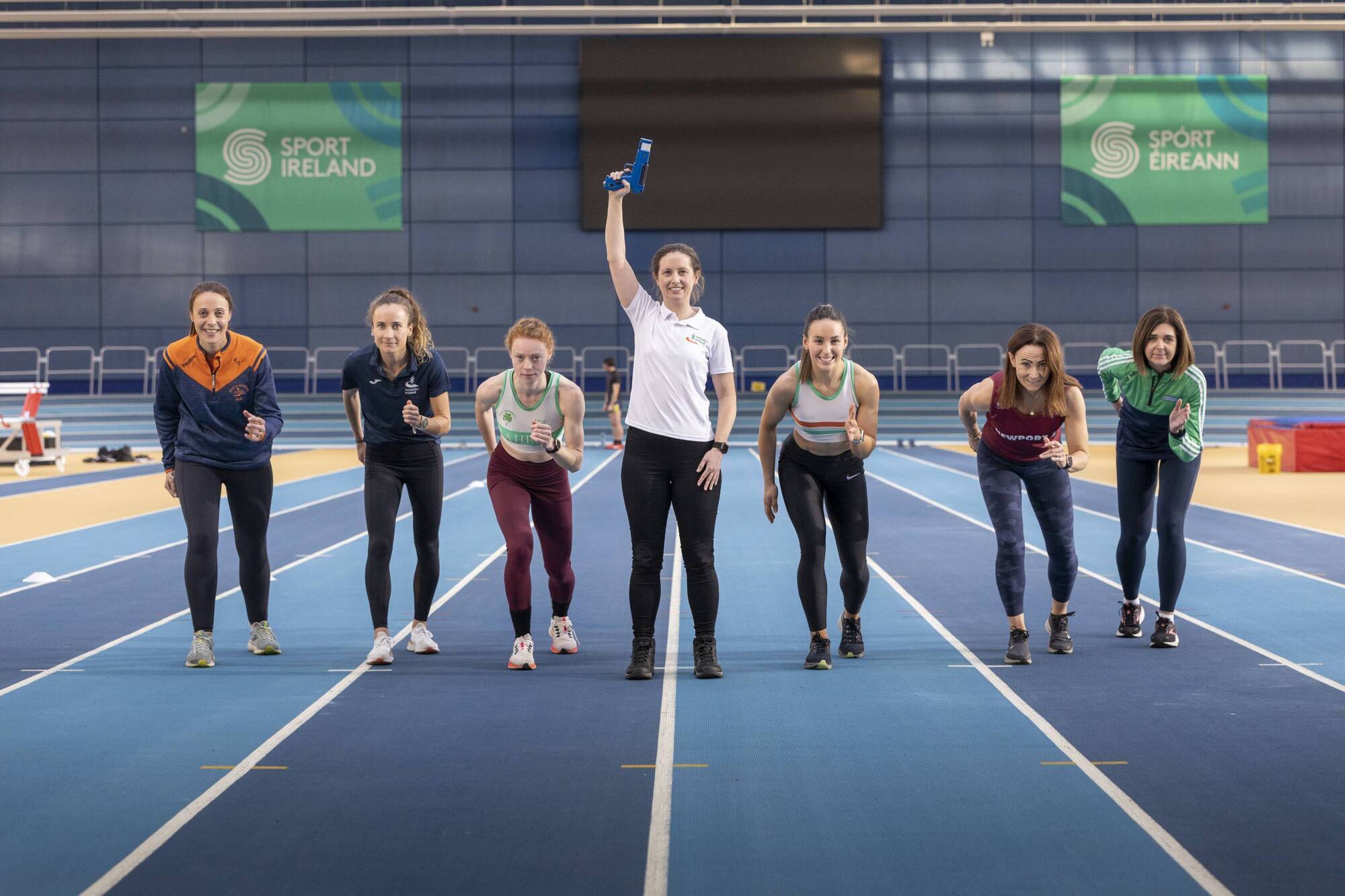
At the launch of Athletics Ireland’s Women in Sport Strategic Plan 2021-2024 were: Nuala Quigg, Star of the Laune AC; Michelle Finn, Leevale AC; Iseult O’Donnell, Raheny Shamrock AC; Jacqui Mulhall, MSB AC; Saragh Buggy, St Abban’s; Fiona Kelly, Newport AC; Mary Behan, St Pat’s Tullow AC.

It’s a curious quirk of the coaching landscape, one that raises a question as you ascend up the levels of the sporting ladder: Where are all the women?

From schools to clubs, tracks to pitches, it’s clear there’s a scarcity of female coaches. Even in athletics, one of the most equal of sports, the balance between genders at a participatory level isn’t replicated in coaching, and the further up the levels you go the worse that discrepancy becomes.

For proof of that, look at the breakdown of those taking part in Athletics Ireland’s various coaching courses last year.

At the basic introductory level, requiring a one-day course, 46% of participants were women. For level one (a two-day course), it drops to 40%. At level two (a two-weekend course) it’s just 29%.

But at level three, the top tier — which requires participants to commit to five weekends of 9-5 work and one weekend of assessment — the current course has just three female participants out of 39 coaches, or 7%.

So why are so many women either unable or unwilling to commit to top-level coaching? For Lilly-Ann O’Hora, Athletics Ireland’s women in sport officer, the two main reasons are “time and family”.

One of those who juggled those demands with great success is Noelle Morrissey, who balances full-time work and family life with several days a week coaching at Emerald AC, where she guides Irish internationals Sarah Lavin and Ciara Neville, among many others.

At a gathering of Athletics Ireland’s Forerunners programme in November — an initiative aimed at building a pathway for female leadership — Morrissey spoke emotionally about the challenges she faced along the path. The Nenagh native was among the 13% of female coaches accredited for the Tokyo Olympics, a figure that has risen slightly from the 10% average at summer and winter Games over the past decade.

But to offer her athletes the commitment she does means making substantial sacrifices with family life. A few years ago Morrissey came close to walking away for that reason, though her husband and children encouraged her to stay the course in athletics.

“I’ve a fierce loyalty to it,” she said. “I really like the people I coach, I’m emotionally involved. I had this thing that you didn’t abandon athletes. If you’re bringing someone to a certain point, you better be there for them.”

Over the past year, Athletics Ireland teamed up with DCU researcher Áine McNamara to get an idea of the roadblocks preventing more female coaches progressing to the top level, with feedback received from over 300 respondents.

“What a person wants at athletics leader or level 3 is the same,” says O’Hora. “Mentoring, support, to be part of a network. It’s a whole sport thing, not just (athletics). There’s a better representation (of female coaches) in individual sports, but it doesn’t mean those numbers are right.”

To help correct the imbalance, Athletics Ireland launched its Women in Sport Strategic Plan, which aims to increase by 10% the number of level-2 and level-3 accredited female coaches each year until 2024, which will be done through identification, recruitment and development.

The document goes beyond coaching, and will also target participation levels with the goal of getting 1500 participants in its ‘Girls Squad’ programme, which is aimed chiefly at transition year students. The 6-8-week programme offers teachers and students various resources on how to get involved in athletics, with tips on everything from warmups to strength training to handling their menstrual cycle, and Irish internationals Katie Kirk, Orna Murray and Ciara Neville are among the contributors.

x

More in this section

Sport

Newsletter

Latest news from the world of sport, along with the best in opinion from our outstanding team of sports writers. and reporters

Cookie Policy Privacy Policy Brand Safety FAQ Help Contact Us Terms and Conditions

© Examiner Echo Group Limited