Why bums on seats may no longer be the key driver for women’s sport

Irish fans in the stands show their support during the Women's FIFA World Cup Qualifying - Group A match between the Republic of Ireland and Georgia at Tallaght Stadium. Picture: Niall Carson
Even after all the gongs had been given out for this stellar year for Irish female athletes, they managed to squeeze in a few more mnásome moments.
While the rest of us were gleefully contemplating full sloth mode for Christmas, Dubliner Ellen Walshe was becoming the first Irish woman (and only second Irish swimmer) to win a medal at the World Short-Course Swimming Championships.
Two days later Mona McSharry followed her and, significantly, both of their medals came in Olympic events, adding an extra bit of tinsel on a year of marvellous firsts for Irish women.
Throw in the rollercoaster ride of watching the national soccer team pursue a first World Cup qualification, Katie Taylor’s still undefeated 20-0 run in pro boxing, the hockey team qualifying for their second World Cup, and Galway sensationally capturing their second senior camogie title in three years, and we were never short of utterly compelling female action in 2021.
What was just as striking was their visibility, something that women’s team sports in particular has historically lacked.
TG4 deserves further kudos for snapping up new opportunities to show women’s Aussie rules, national league soccer, basketball internationals, and rugby friendlies — and it’s not alone in getting eyeballs to repay their faith.
Improved television coverage and multiple new streaming platforms, run by TV companies and international and national governing bodies themselves, meant we could see much of this success live, from the comfort of our own sofas, arguably the most febrile breeding ground for sports fans during two years of lockdowns.
Barclays has just coughed up a whopping £30m (€35.4m) three-year sponsorship (2022-2025) for the Women’s Super League (WSL) in what is believed to be the biggest ever commercial investment in women’s sport in Britain.
That’s double the last WSL deal and it also now includes the second tier Championship, plus an increased contribution to grass-roots and girls’ soccer.
That the WSL was able to double its price reflects its burgeoning TV audience.
Data specialists Nielsen estimated that it had an average of 114,000 viewers per match on Sky Sports compared to its previous 37,000 average on BT Sport.
Over on free-to-air BBC, its live games get 501,000 averages and its weekly highlights package has attracted more than 1m viewers at times.
If those figures continue to hold, the WSL is on track to surpass the total audience figures for men’s Premiership Rugby and Rugby League in Britain.
The influential relationship nowadays between sponsorship, promotion, and media coverage is undeniable and was underlined in Ireland by the success of the Lidl Ladies’ Gaelic Football Association (LGFA) and 20x20 campaigns.
Few understand how symbiotic these partnerships are as well as Sue Anstiss. She started out in sports marketing and quotes the golden rule of sponsorship — it only succeeds if you invest double the original investment to activate it properly through publicity campaigns and promotion.
Anstiss is one of the most informed and influential voices on women’s sport in Britain, where she has been a powerful advocate for over 30 years.
She is a founding trustee of the UK’s Women’s Sport Trust advocacy group since 2013, hosts an award-winning podcast (The Game Changers) about trailblazing women in sport, and received an MBE four years ago for her services to grass-roots and women’s sport.
Her recent book, Game On – The Unstoppable Rise of Women’s Sport, made the longlist for the 2021 William Hill sports book of the year and details much of the progress made locally and globally in the past decade.
As the title suggests, she believes women’s sports (especially team sports) is now reaching a tipping point in terms of visibility and sponsorship that will continue to grow it exponentially. Her book is loaded with facts, figures and first-person testimony that underpins her optimism.
The new Barclay’s deal, in the time of Covid restrictions, suggests to her that physically getting bums on seats may no longer be the key driver towards the monetisation of women’s sport.
“I don’t know if it is all about the numbers going to regular games anymore,” Anstiss says.
“Of course, the gate is part of it and, in the past, I would have thought broadcasters won’t film it unless it’s got a great crowd and creates good content.
“But Covid has shown us that we can have fantastic coverage behind closed doors.
“Clearly it’s better for players and broadcasters if crowds are there, but the WSL has shown that doesn’t have to happen for people to engage.”
It is a paradox to grow TV audiences so substantially while spectator numbers remain low, but it’s an exciting trend.
Traditional media (broadcast and print) wouldn’t cover sports that didn’t attract large spectator numbers, which has always been a stumbling block for women’s sport.
British WSL clubs had only grown their average weekly audiences from 1,000 to a paltry 3,500 pre-Covid, a trend equally prevalent here, where only marquee women’s events attract significant crowds and income at the stiles.
Only 3,013 supporters went to the recent women’s FAI Cup final, yet it attracted 318,00 views on television.
When Ireland trounced Georgia 11-0 earlier this month, there were only 3,552 spectators in Tallaght for their World Cup qualifier, but RTÉ 2 got a record TV audience, peaking at 340,000 with an average of 209,000.

“Is that because people are wary of Covid or because of the great coverage, which means you no longer need to go to stadia if you want to watch women’s football?” Anstiss wonders. “I’m a massive fan of women’s rugby, but I can see great quality now on the BBC iPlayer so I might choose to stay at home with a cup of tea and watch it from the couch with amazing pundits and commentary.”
Could the rise of digital and streaming services create consistent audiences with the potential to really change the financial game for women’s sport?
The LGFA created its own ‘player’ this year, which showed all NFL and championship games. This means it can showcase the players and engage more with fans, but also collate and use that data to attract more sponsors and mainstream coverage.
Anstiss is keen to warn that ‘over-the-top’ platforms like this (where content is streamed directly to consumers by sports organisations) tend to serve an existing audience, not create new fans, so you need to mix it with mainstream media to ensure ongoing growth.
She also cautions about the side-effects of poor quality TV and streaming packages.
“It’s important for people to know that something mightn’t have looked good because the event only had five cameras at it, whereas the men’s game had 15 cameras and huge build-up and knowledgeable punditry before and after.”
She accepts there’s still a world of change needed for female athletes to achieve more parity of support and opportunity. With visibility and finance starting to improve (however glacially) she feels governance represents the next big challenge.
She cites “homologous reproduction” (the tendency, subconscious or otherwise, for people to hire or appoint those who replicate their own gender and race) as the biggest barrier to the recruitment of women into more coaching and governance roles.
As a member of Sport England’s Women in Coaching task force, she squirms at the “exceptionality” created around female ground-breakers of any kind, which perpetuates the myth that the men’s game (in any sport) is the pinnacle of aspiration and achievement.
Progress still constantly throws up gender imbalances and anomalies because sport, largely, was designed and is still run by men.
Nothing showed that better than when a pitch invader at Chelsea’s Champions League game against Juventus two weeks ago couldn’t be prosecuted and fined because Britain’s 1991 Football (Offences) Act only covers designated events in men’s soccer. The WSL and women’s Champions League are not ‘designated’ — yet.
“There’s lots of things like that that sit behind the scenes. Like the PFA [Professional Footballers’ Association] over here doesn’t represent women playing in the championship, only the WSL.
“There’s no union for them, but the PFA represents boys in the academies — 16- and 17-year-old boys.
“There’s lots of anomalies that make people go: ‘Oh, how can that be? Let’s change it.’”
Ireland’s women’s rugby players, currently battling the IRFU for better engagement and pathways, may cast envious glances over at their English counterparts’ professional contracts.
However, Anstiss points out that they have only just formed their first union, the Women’s Rugby Association: “Up until now, Premier 15s players had no one to represent them in terms of rights and representation and health care.”
She feels London 2012 was the impetus for much of Britain’s recent progress and, like many advocates, believes sport is important not just for empowering women but can change society long term by changing the status and power of women in communities.
“It’s easy to get bogged down in the negativity and injustice sometimes, but I really believe things are changing and changing with momentum now,” she enthuses.
“I love sport and I’m passionate about women’s sport, but the bigger piece for me is about society and what it means for my daughters, and women and girls across the world, to see these amazing athletes being celebrated as strong, fearless women.
“That’s what keeps driving me.”
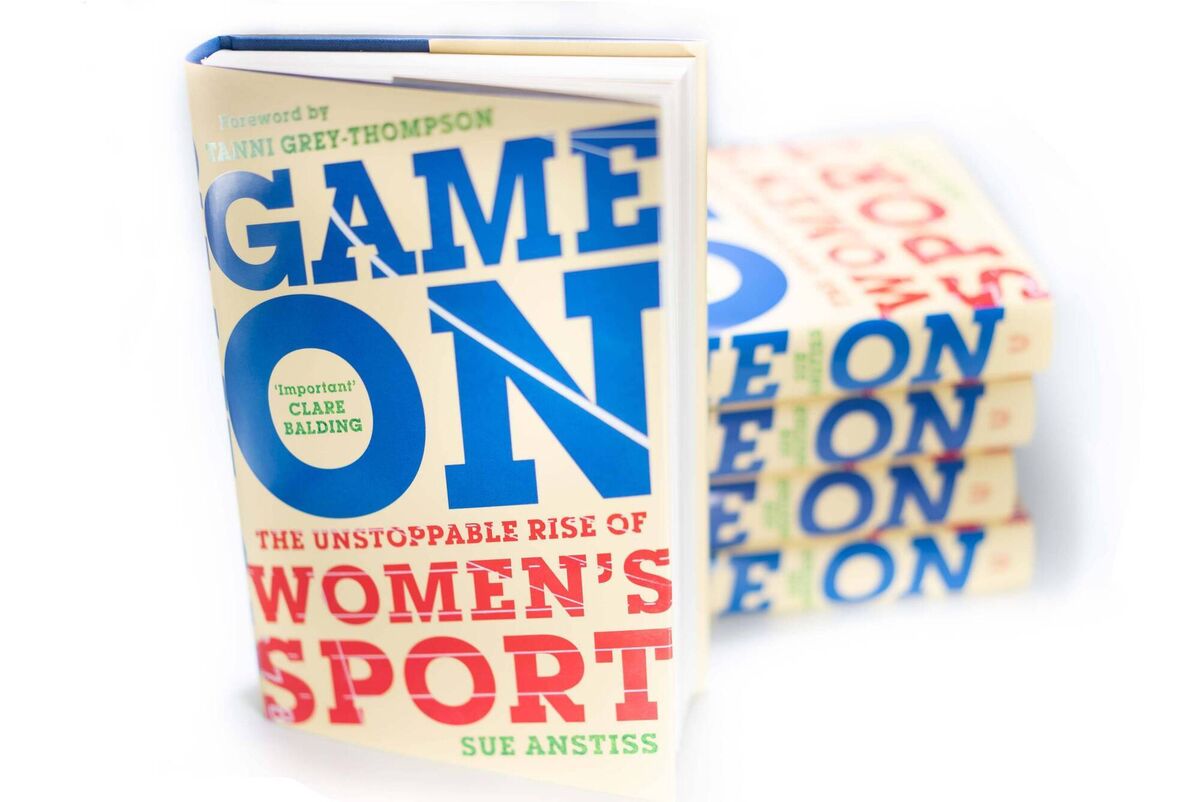
- ‘Game On – The Unstoppable Rise of Women’s Sport’ (£20) is available from www.unbound.com.
CONNECT WITH US TODAY



Be the first to know the latest news and updates