Arthur Lanigan-O’Keeffe: 'I cried for like two hours. It hit me really hard'
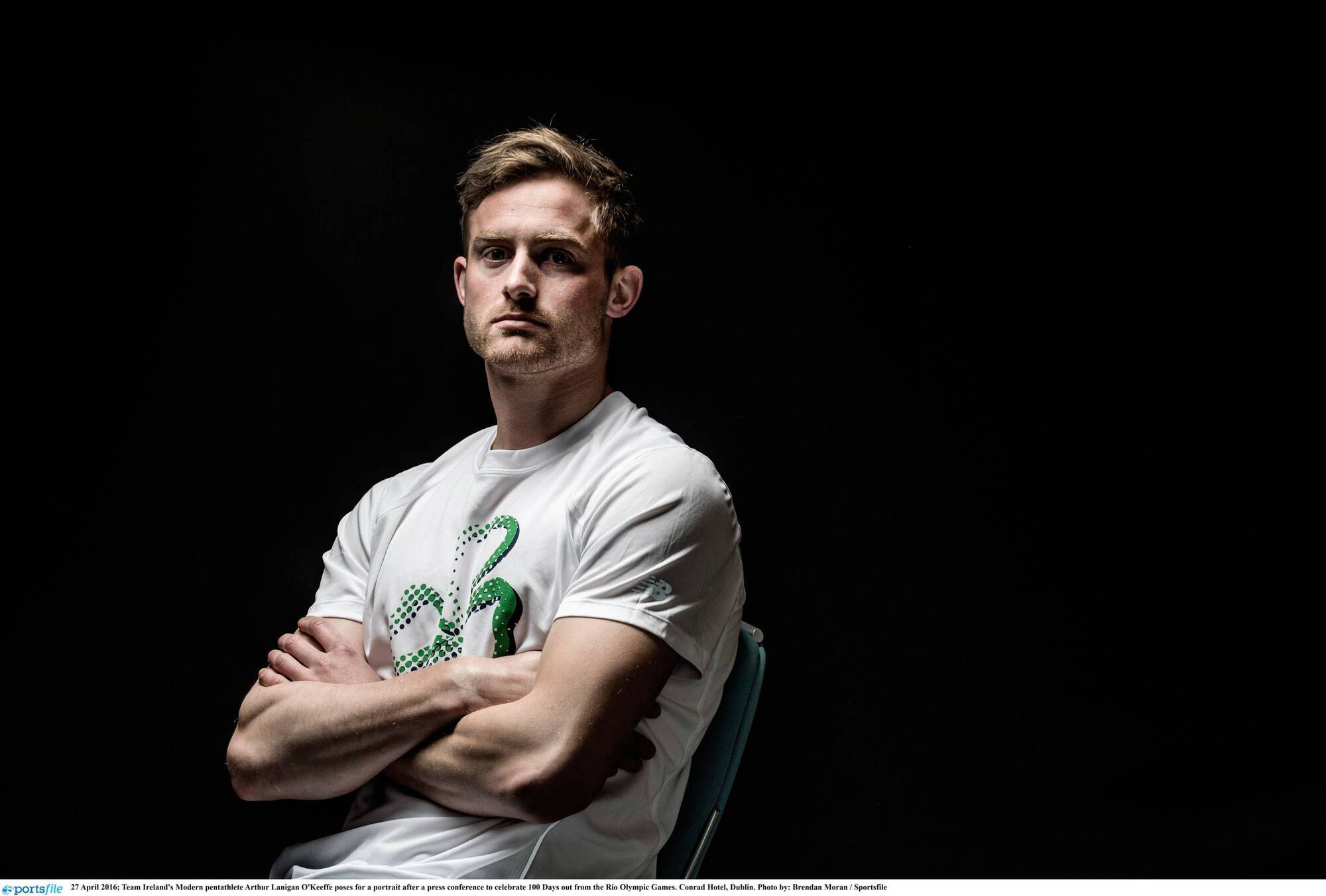
Injury prevented Arthur Lanigan O’Keeffe from competing at the Tokyo Olympics. Now retired, he has begun a masters in filmmaking at the London Film Academy. Picture: Brendan Moran
Sometimes you retire from the sport. Sometimes the sport retires you.
In the latter case, you can rage all you want against the dying of the light, but when your body cries its last surrender, all the willpower in the world won’t change a damn thing.
In mid-June, Arthur Lanigan-O’Keeffe was sitting in the Sports Surgery Clinic in Santry when a hip surgeon brought the guillotine down on his career. He was six weeks out from the Tokyo Olympics, but as his rivals tweaked their fitness, reaching their physical peak, his health lay in the gutter.
“He said, ‘you should never run again, never fence again, you should find new hobbies,’” recalls Lanigan-O’Keeffe.
“I said, ‘this is it for me.’ I called my team and they all agreed. From then on, I knew I was going to retire.”
This is the side to the Olympic dream not many want to see: the broken and beaten-down dreamers, quietly discarded in the shadows long before the stage lights were turned on in Tokyo.
Having blown his chance in Rio, the fault of a psychological glitch that haunted him for five years, Tokyo was the Games that would offer him redemption — a final chance to sign off his career with the medal he’d long viewed as his destiny. But the sporting world doesn’t bend to your will, its concept of fairness no more than a lofty ideal, a laughable illusion.
On Saturday morning, August 7, Lanigan-O’Keeffe sat alone in his home in Meath to watch the men’s modern pentathlon in Tokyo. He’d held it together through the first three events, but when he watched Britain’s Joe Choong sprint to the line in the concluding laser run, grabbing the finishing tape and holding it aloft, it set off something in him.
“That’s what I had in my head for so many years, through all the training,” he says. “I cried for like two hours. It hit me really hard. I called my mum after and was like, ‘f***, that was dark.’ I didn’t think I’d find it hard to watch but, Jesus, I did.”
Part of what he was dealing with envy. Part of what he was dealing with was pain. His hip was still throbbing, his energy non-existent — an auto-immune condition leaving him utterly wiped and on medication he’d have to take for the rest of his life.
He was 29 years old and, speaking of the rest of his life, Lanigan-O’Keeffe had a question to confront. If he was no longer an Olympic athlete, then what was he?
Rewind 17 years, back to the kid who arrived for boarding school at Glenstal Abbey in Limerick.
Back then, Lanigan-O’Keeffe was a product of the sport he’d spent his childhood years entrenched in: swimming. He was driven, dedicated, and able to endure daily suffering and mind-numbing monotony.
At the age of eight, his parents identified that he had issues with coordination and they were advised to get him into swimming. For years he hated it, then one good coach ignited a spark and he began to apply himself rigorously. But the love began to wane in those first few months at Glenstal, the 4.30am wake-up calls and taxis back and forth to UL becoming an almighty drag.
He began to focus more on rugby, and his coach — aware of his athleticism — took him along to a triathlon club in Limerick. At the time, Triathlon Ireland were investing in Talent ID, and attending a testing day showed Lanigan-O’Keeffe he had the attributes to go far in that sport.
But his mother was queasy at the thought of him cycling alone on country roads, and he began to focus instead on tetrathlon, a sport involving running, swimming, shooting, and horse riding. The one sport missing from the modern pentathlon line-up was fencing, and Lanigan-O’Keeffe soon got his first taste of pentathlon at an event in the UK, faring well in everything but fencing.
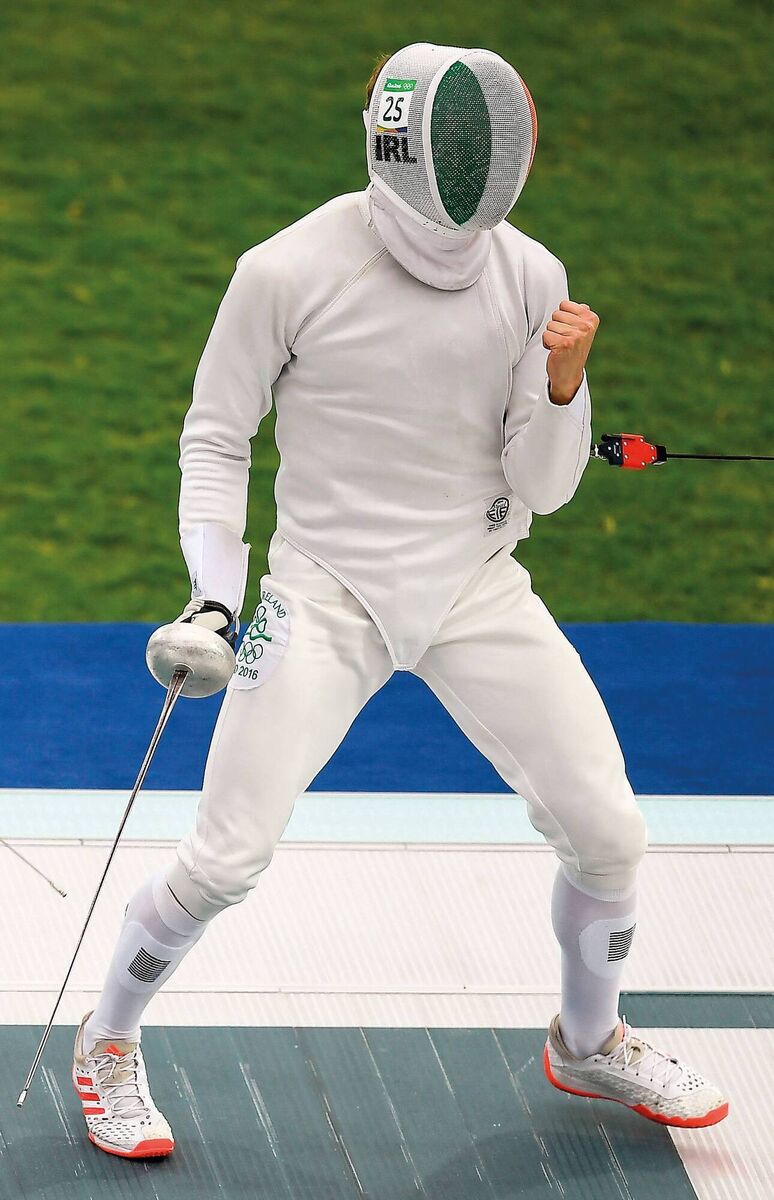
It was held at Millfield, a boarding school in Somerset that blew Lanigan-O’Keeffe’s mind once he saw its facilities. After returning to Glenstal, he told his parents he wanted to study at Millfield and applied for a scholarship. Turning his back on rugby brought much vitriol from his friends, but Lanigan-O’Keeffe blocked it out. He started training before and after school, passing the school’s monks on his dawn runs as they made their way to morning prayer.
On his next visit to Millfield, he met Drew Wilsher, the modern pentathlon coach at the school, who asked him his best time for 2000 metres, which was “something shit like 6:30.” Wilsher told him if he ran under six minutes he’d give him the scholarship, but on a day of high winds and driving rain that was an impossible ask.
Lanigan-O’Keeffe didn’t flinch, though, and told Wilsher he’d do it. He gave it his all but fell well short of his best. He was heartbroken, but then the coach came over, telling him he didn’t care what time he ran; what he really wanted to see was how he’d respond to the challenge. Lanigan-O’Keeffe was soon offered the scholarship.
He left Glenstal midway through transition year and moved to Millfield, rapidly progressing into a world-class modern pentathlete in the years that followed. In 2010, he came 37th in the U18 European Championships but two years later he was third in the U21 World Championships.
In 2012, he thought his chance to compete at the London Olympics had elapsed after his horse refused in a qualifying event, but weeks later, he was offered a place after a Polish competitor was busted for doping. His first Olympics was as dazzling an experience as you’d imagine, and he finished a solid 25th in the modern pentathlon.
After that his commitment was total, and his big breakthrough arrived in 2015, Lanigan-O’Keeffe winning gold at the European Championships — and winning it well.
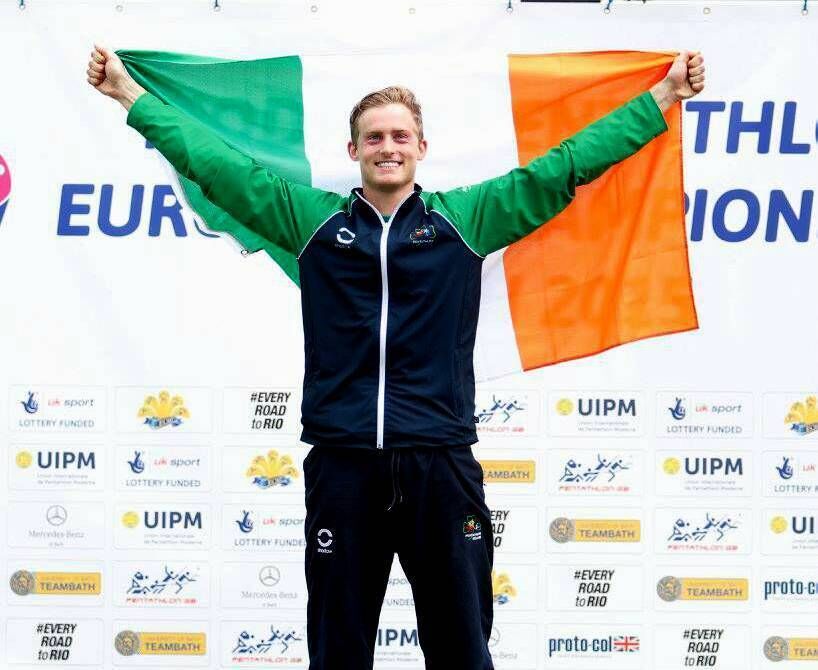
“It was a perfect day,” he says. “My whole family was there, my granddad nearly had a heart attack.”
One year out from the Rio Olympics, in a sport Europe dominates, he was the king of that domain. “It was like, ‘holy shit, this Olympics, I’m here to win.’”
There are many ways to sum up what happened in Rio, but Lanigan-O’Keefe does so with four simple words: “I completely bottled it.”

The way he was running and swimming, he just needed a respectable fencing performance and to avoid disaster in horse riding to reach the podium. Things began in promising fashion, with Lanigan-O’Keeffe winning eight of his first 10 fencing contests, but one mistimed attack against a British opponent sowed doubt in his mind.
“I stared hesitating and I didn’t have a psychological plan for what happens if it goes wrong,” he says. “I believed I was going to win and nothing could change my mind. I couldn’t recover it.”
The rest of the ranking round went to pot, and with it Lanigan-O’Keeffe’s chance at a medal. What followed were “two of the worst days” of his life before he got back in the pool where, weighed down by his inner turmoil, he clocked 2:03 for the 200m freestyle, four seconds outside what he’d expected.
Back in the changing room, he punched a water machine in frustration. On his way to the horse riding venue that afternoon he realised he’d left his riding jacket in the Olympic village, which would result in a penalty if he didn’t retrieve it in time.
“I was like, ‘ah for f*** sake, you’re going to embarrass yourself. You’ll be a laughing stock.’” As he muddled through his warm-up, bluffing officials with excuses that it was too hot to wear until the competition, a member of the Irish team rushed to the village, the jacket arriving moments before he entered the ring. What followed was a perfect round, which Lanigan-O’Keeffe can only attribute to the distraction allowing him to finally stop overthinking his performances.
He finished with a strong combined event to move up to eighth place overall, Lanigan-O’Keeffe left to rue what might have been were it not for that lapse in the fencing and the full-blown meltdown that followed.
“Everyone was saying ‘well done’ but it was one of the big disappointments in my career,” he says. “I hated Rio.”
In the years after, he worked closely with sports psychologist Kate Kirby to bulletproof his mindset, the effect showing in his fencing performances, with Lanigan-O’Keeffe winning the World Cup in Bulgaria in 2018 and finishing third at the World Cup final in Kazakhstan.
Before the world went into shutdown in March last year, he’d just secured another podium finish at a World Cup in Cairo, and through the long months of lockdown what sustained him was the thought of doing the same in Tokyo.
He put in his longest ever block of consistent training heading into 2021 but at his first competition in late March, he realised something was amiss, his legs starting to give way an hour into the fencing competition. Two weeks later, he competed at an event in Bulgaria and by then the tiredness had morphed into full-blown exhaustion.
“I felt like it wasn’t my body,” he says.
Pushing himself in that state inevitably led to injury, with pain popping up in his hips. He underwent a series of blood tests after returning to Ireland, which identified hypothyroidism and that his body wasn’t producing any testosterone.
His medics thought it was a condition called RED-S (relative energy deficiency in sport) and with one more Olympic qualifier on the horizon, he was put on a high-calorie diet, his training split into 10 20-minute sessions each day, Lanigan-O’Keeffe having to refuel after each one. His blood test results were sent to two endocrinologists, who both agreed he had an auto-immune disorder and recommended he start medication for his thyroid issues.
Still, he ploughed on to the World Cup final in May, thinking he needed to go there to secure Olympic qualification (he later found out he didn’t). Dosed up on painkillers, he made it through the fencing but his “whole leg was dead”, his “Achilles was gone” and in the 200m swim, he was a whopping seven seconds off his expected time.
The damage he had done was extensive. There was a cyst growing in the socket of his hip, a stress fracture in the bone. He had cam lesions on the head of his femur, a severe impingement, and his cartilage was badly damaged. Lanigan-O’Keeffe was told it wasn’t a matter of if he’d need a hip replacement. It was when.
The surgeon told him he could conceivably compete in Tokyo, but he wouldn’t be able to train for it. He had no desire to go there to make up the numbers.
The game was up. As Lanigan-O’Keeffe climbed out of that pool in Hungary in May, he looked around, sensing something in an arena he’d got to know well over the previous decade.
“I thought, ‘this is my last time,’” he says. “Take it in now.”
It can be an unfair game, the modern pentathlon.
The world got to see that in grisly detail during the Tokyo Olympics, where Germany’s Annika Schleu and Ireland’s Natalya Coyle saw their medal hopes evaporate in an instant during the horse riding, the luck of the draw seeing them paired with obstinate, uncooperative mounts.
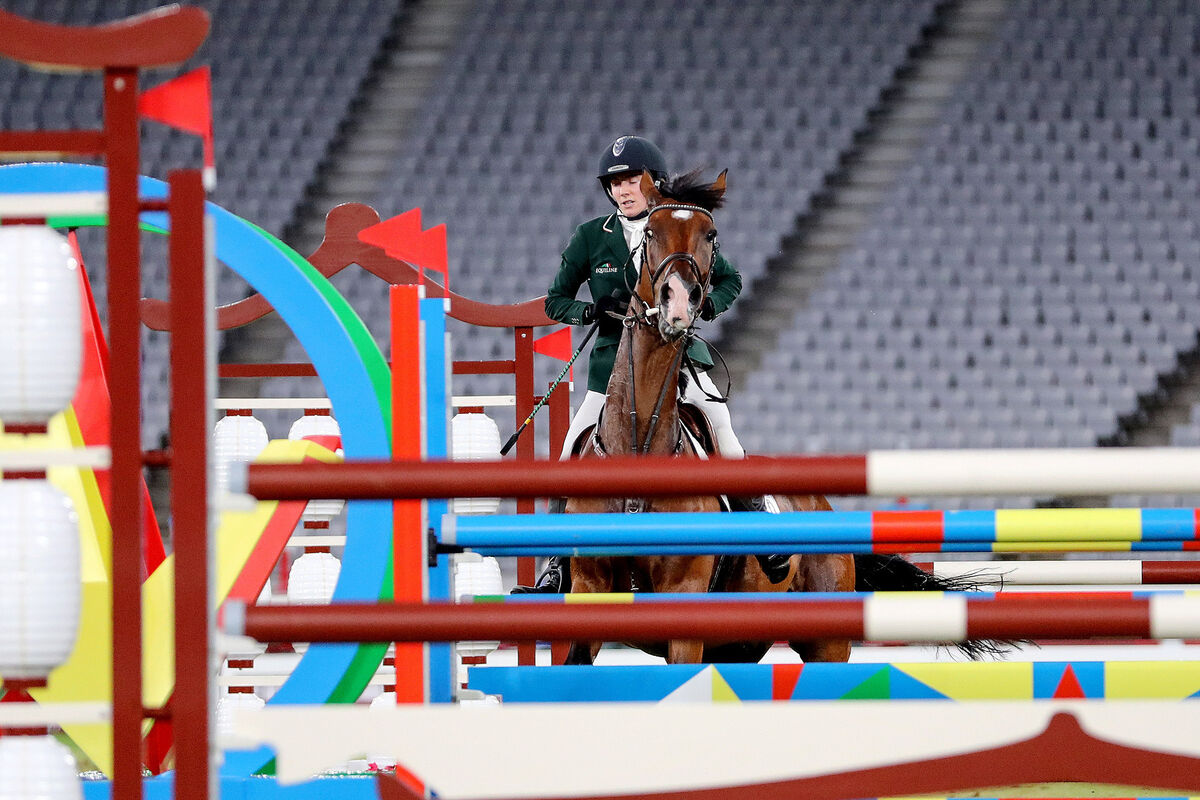
The cruel game of chance is the kind of the essence of the sport, which was conceived by the founder of the modern Olympics to help cavalry riders develop skills needed to survive behind enemy lines (one of which is to ride an unfamiliar horse).
For Lanigan-O’Keeffe, it was tough to watch Coyle being dealt the hand she got. They’ve been a couple since 2016, and have known each other since their mid-teens. He was her swim coach on the build-up to Tokyo, but with team places limited he opted to stay at home, allowing extra fencers to travel to practise with Coyle on the build-up.
Lanigan-O’Keeffe was asked to join the RTÉ panel for Coyle’s competition and figured it’d be the best way to ensure the public understood the intricacies of their sport. What he didn’t know was how wrong it’d all go.
“I wanted her to achieve everything I didn’t,” he says.
When they returned to the studio after her equestrian nightmare, Lanigan-O’Keeffe “wanted to just be swallowed up by a black hole”. He has no recollection of what words he managed to string together.
At the Atlanta Games in 1996, after reigning world champion Sonia O’Sullivan dropped out of the Olympic 5,000m final, her father John stood before the press pack and delivered one of the immortal lines in Irish Olympic history.
“Lads, nobody died tonight.”
In time, Lanigan-O’Keeffe and Coyle were able to find the same perspective. What helped upon her return from Tokyo was they had the most welcome distraction awaiting: their wedding.
The couple tied the knot in late September and have since moved to London, where Coyle is studying a masters at University College London and Lanigan O’Keeffe is doing a masters in filmmaking at the London Film Academy.
When we catch up, Lanigan-O’Keeffe has just finished an intensive two-week spell in which he and his classmates shot 28 short films. “I’m f***ing wrecked!” he laughs.
The decision to go this route came about last year, during those long weeks and months when everybody had too much time on their hands.
“The pandemic gave me time to think: what is life after sport? A lot of people reevaluated their lives: what’s important and what they want to do.”
For him it was filmmaking, for which he has “just about as much passion as I do for sports”.
Since Tokyo, his beloved sport has been through upheaval, with modern pentathlon’s world governing body voting to remove horse riding following distressing scenes at the Olympics, where a horse was punched by a German coach after refusing to jump a fence. Cycling is being lined up as a replacement, with many athletes furious after being omitted from the decision-making process.
Lanigan-O’Keeffe says the governance of the sport is “not great, put it that way” and he’d rather see the rules tweaked to keep horse riding involved.
“Is it acceptable in modern society for someone to meet a horse they don’t know and go over a fence that’s 1.20m? It’s not, and there’s a lot of bad press and negative energy being put towards it. It’d be better for the sport to be altered in a way that’s more accessible and fairer.
“I love the sport and I understand the challenge the rider has in meeting the horse, adapting, needing to be f***ing brave, to think on your feet. It takes a lot of skill but there is also this element of luck that took me a long time to come to terms with. The unjustness of it used to throw me and put me in very dark places.”
But now that he’s removed from it all, he’s starting to see the ways the sport has stood to him.
“It’s the one part of pentathlon that has been the most beneficial for my development as a human being: to accept things that are unjust,” he says. “Things are going to happen to you that are unfair, and it’s about being able to adapt to them, keep positive and keep going.” That’s his career in a nutshell. But now a new journey awaits.
At the age of 30, Lanigan-O’Keeffe is reverting back to that kid he was at Glenstal Abbey: finding his feet, accepting the uncertainty ahead — ready to give it his all.

CONNECT WITH US TODAY



Be the first to know the latest news and updates