The hardest thing in Irish sport: David Gillick on competing with better-resourced nations
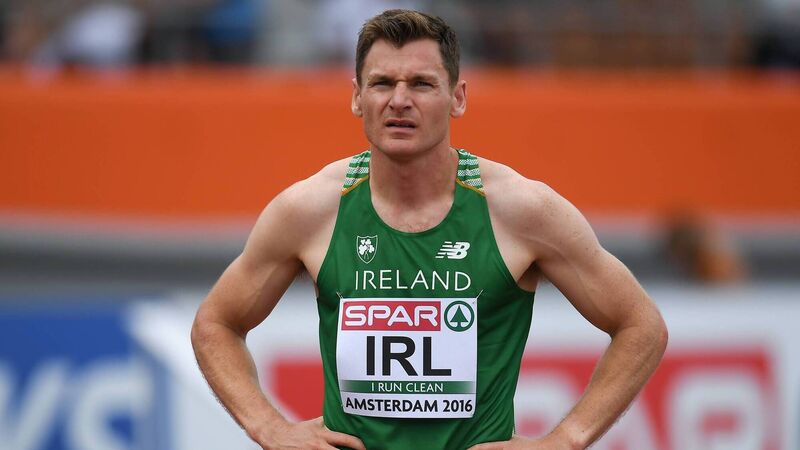
“In a lot of our minority sports, we’re a little behind with coaching structures.”
The hardest thing in Irish sport: David Gillick on competing with better-resourced nations

David Gillick. Photo by Brendan Moran/Sportsfile

David Gillick’s athletics career brought him up against the creme de la creme of international sprinting talent, so it’s no surprise to hear him point to the challenges facing Irish athletes as his Hardest Thing in Irish Sport.

Particularly when they encounter opponents from highly-resourced, well-supported national structures.

“Looking at high performance and competing with other nations, I think that’s difficult.

“In an Olympic year there’s added hype about medals and performance, and one of the hardest things I found when I travelled abroad, and trained in different environments, was that it isn’t a level playing field.

“I’m not talking about anti-doping here as much as the structures in place from country to country, the variation in government support, in sponsorship — all the way down to paid coaches.

“You go to the starting line at an international championship, and when you look left and right you see people who’ve come up in these environments.

“The biggest challenge for some of those people is just to get themselves to a venue to train because everything else is looked after.”

Gillick teases the point out further: “In Ireland, our services are second to none — we’ve invested in the Institute of Sport and it’s fantastic, I’m not knocking that in the slightest.

But I still think in a lot of our minority sports we’re a little behind when it comes to our coaching structures.

“A lot of our athletes would still be spinning a few plates to make ends meet, and our coaches are doing exactly the same.

“We’re still heavily reliant on volunteer coaches, who are the backbone of many of our sports, but that’s not the same in other countries, so there are gaps there.

“It was one of the hardest things I found when I moved to the UK, for instance. When I did that I remember thinking, ‘oh my God this is what they’re doing? We’re years behind’ — and then after all that you’re trying to beat them in international competition.”

There’s also the matter of perspective.

“We’re a sporting nation and Irish people are supportive of sport, but in terms of people watching at home they might understand sport from a GAA perspective, say, but maybe not from an Olympic sport perspective.

“That Olympic athlete, as I say, is spinning plates to keep going a lot of the time. You’re not like a professional rugby or soccer player, with all the supports those sportspeople have.

“I don’t think people realise that, though I think that’s improving, and the media are improving in that regard as well — take the focus on gymnastics and Emma Slevin recently, or the rowing.

“But when we see people represent their country the presumption is they’ve had everything thrown at them to get to that level, and unfortunately it’s not the case.”

There are good examples worth following, which Gillick identifies: “Looking at athletics, and sprinting, the Dutch have put a phenomenal structure in place and are churning out great runners and medal winners.

“The UK always produces good athletes, and while they have the population they also have good structures, the US and the Jamaicans are always good but there’s a history and a tradition there, whereas with the Dutch, you’d be looking at how they’ve changed and improved. What’s their coaching structure, all of that.

“The other country we’re always benchmarking ourselves against is New Zealand.”

Is there a further similarity in that in New Zealand you have another small country which is dominated by a couple of field sports?

“Yes,” says Gillick. “You could say we’re unique in that in Ireland you have such a strong indigenous sport.

“There’s rugby and soccer in a lot of countries but here we have GAA as well, and you could class that as two separate sports, hurling and football.

“It’s after those four, then, that you come to the smaller, niche sports. Hurling and football and soccer and rugby are big glamour sports here, but it’s not just their profile.

“With a team sport there’s the collective, the sense that everyone is in it together. In an individual sport it can be harder to motivate yourself because you’re on your own — there aren’t teammates to push you through a hard training session.

“The same for big sporting decisions. When I went to the UK or Australia to train, those were decisions I made myself, and you’re worrying if you’re making the right call, and what happens if it goes wrong and you lose your funding.

“You can end up thinking ‘what do I have to show for these 10 years at my sport?’ That can wear away at an athlete, who thinks ‘I’m doing well but I’m not going to win a medal and I can’t afford to keep a roof over my head, I’m just going to get a job’.

“That’s a reality for many athletes.”

More in this section

Sport

Newsletter

Sign up to our daily sports bulletin, delivered straight to your inbox at 5pm. Subscribers also receive an exclusive email from our sports desk editors every Friday evening looking forward to the weekend's sporting action.
Cookie Policy Privacy Policy Brand Safety FAQ Help Contact Us Terms and Conditions

© Examiner Echo Group Limited