David Harte on the hardest thing in Irish sport: You have more bad days than good
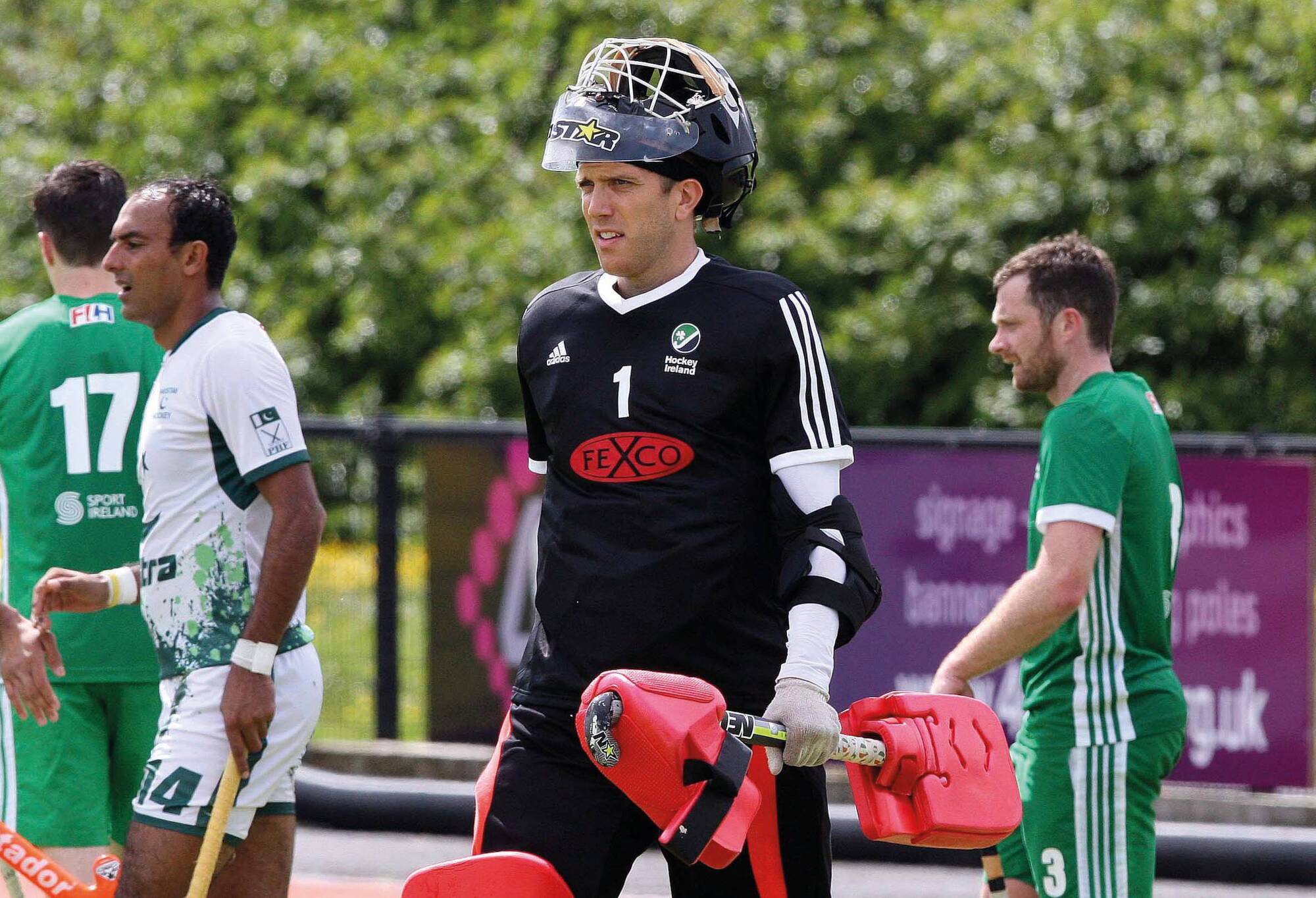
David Harte: The hockey star points to trying to bounce back from losses.
Achievements? Cork native David Harte’s CV has no shortage of entries under that heading.
The hockey star captained his country at the World Cup and the Olympics. Was twice named best in his position by the International Federation of Hockey. Picked up national league titles in three different countries.
His view of the hardest thing in Irish sport?
“There are a lot of things that would come into my head on that score as an international hockey player,” he says.
“But there are also things coming from Courcey Rovers, from athletics, from all of those as well.
“One particular thing that I was thinking about was dealing with adversity, and with losing in particular. Losses, and particularly severe losses, and trying to bounce back from those. And in hockey we had a few of them.”
As a counterpoint there was success - getting to those Olympic Games in Rio - but then came “the bittersweet feeling of going to Canada and losing out in sudden-death penalties in 2019.
“That was something I was thinking applied widely, because it’s an experience that people could identify with outside of sport as well - coming back from defeat or disappointment in various ways.
And that’s why you have to relish the good times so much more, and appreciate them for what they are, because they don’t come around that often.”
True: balancing disappointment and moving on is a lesson applicable on the field of play and off, but Harte and his teammates faced some losses that were particularly hard to take.
“Since I got my first cap with Ireland in 2006, and winning 225 caps altogether, there have been incredible highs, like reaching the Olympics for the first time.
“But there have also been gut-wrenching defeats, like the time we had the qualifier for the (2012) Olympics, when Korea got the winner with seven seconds left on the clock. Or when we got to Canada in 2019 to try to qualify for the Tokyo Olympics, and the game went to a video referral - again, a goal in the last few seconds.
“The ability to cope with those kinds of losses, to see the wood for the trees . . . it can be quite difficult.”
Different people cope in different ways. How does he deal with a loss?
“I’d probably struggle later on - or so my wife would tell me - when it starts to sink in and you process what’s happened.
“Everyone handles defeat differently. The Dutch have an expression, ‘topsport’, and that’s what it is, it’s based on one thing and one thing only, and that’s winning. It’s not something that I’d be teaching my daughter when it comes to sport, but at the highest level it’s all about results.”
Is it too facile to try to flip the experience - to see what can be taken out of a loss, to mine it for positives?
“You often hear the clichés about sport - ‘sometimes you win and sometimes you learn’ after a defeat. To a certain extent that can be true, insofar as winning a game often sweeps certain things under the carpet - ‘well done lads, ye won, that’s the important thing’.
“And the opposite can happen when you lose. You end up over-analysing everything, even though you may have almost won the game.
“Finding that balance is the key - I’d often say to myself, either with personal performance or team performance, not to have the highs too high or the lows too low. That’s something I’d always try to find, that consistent level.”
Maturity helps to put a defeat in context, of course. “It’s going to sound a bit cringeworthy, maybe, but since we had our daughter, Georgia, it’s given me a changed view on my sporting career - it’s given me more perspective than I could have imagined.
“My hockey might have seemed the be-all and end-all, but coming home to this beautiful child, it puts things in perspective.
“Age is a help too, no doubt about it. That’s not to say the drive and the determination and the will to win don’t exist any more, they certainly do, but it’s how you use those and where you place them in your life.
“I think for those reasons I handle defeat better now than I did when I was younger. No doubt about that.”
CONNECT WITH US TODAY



Be the first to know the latest news and updates