Colin Judge: 'I wanted to find a sport, I just wanted to be like my friends'
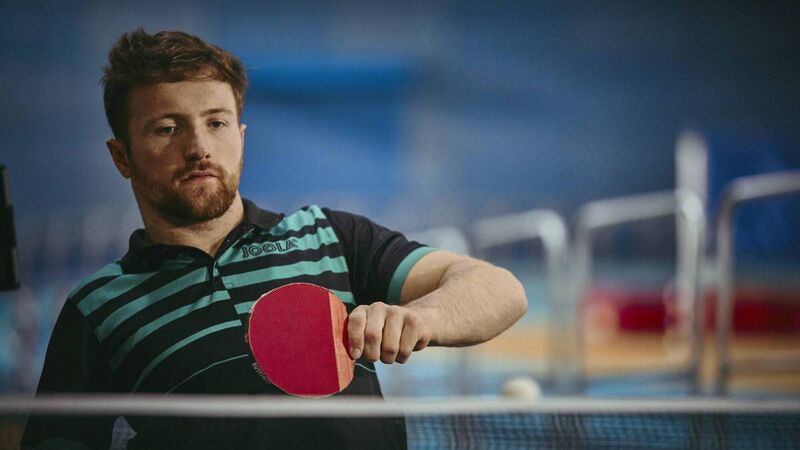
Born without three limbs, it was only when he saw his new classmates absorb themselves into the school’s famed rugby programme that he began to face up to the fact that there would be things in life that he could never hope to do. It hit him hard.
Colin Judge: 'I wanted to find a sport, I just wanted to be like my friends'

Colin Judge: 'I wanted to find a sport. It was sort of a simplistic approach that I had but I just wanted to be like my friends so I tried out a lot of sports'

Childhood is roll call of deep breath moments. Few are more daunting or potentially disorientating than the crossover from primary school to secondary when a kid’s status flips from that of big dog to timid puppy in the space of a summer.

It was a threshold that proved particularly problematic for Colin Judge. It was around this time, as he began attending St Michael’s in South Dublin, when awareness of his disability and what it meant for him first began to dawn.

Born without three limbs, it was only when he saw his new classmates absorb themselves into the school’s famed rugby programme that he began to face up to the fact that there would be things in life that he could never hope to do.

It hit him hard.

Michael’s wasn’t just playing at rugby, the game was, and is, hooked into the school’s veins. The proof of this is evident every time Leinster or Ireland take to the field and a good chunk of their graduates inevitably play a leading role.

Ross Byrne, Ross Molony, Cian Kelleher and Nick McCarthy are all of Judge’s vintage, James Ryan was good friends with his brother, but there is no need to employ all six degrees of separation if you went to Michael’s.

Leinster will have six of their old boys in a squad of 23 when they face Munster in Saturday's Guinness PRO14 Grand Final. If you went to school on Ailesbury Road then chances are you borrowed a pen or took maths with someone who is a household name by now.

“I didn’t really have much confidence in myself. I wasn’t dealing with my disability very well in my teenage years.

I wanted to find a sport. It was sort of a simplistic approach that I had but I just wanted to be like my friends so I tried out a lot of sports.

It was hardly a coincidence that wheelchair rugby was his first port of call but nothing fit until he tried table tennis and found that it was one sport in which he could get the better of his brother. A powerful sales pitch for any sibling.

“It was something that made me realise that, for all the things I couldn’t do, I could use what I had to my advantage in table tennis,” he says when speaking to support ‘The Next Level’, Paralympics Ireland’s fundraising campaign. “It’s a very complicated sport, there are lots of different ways of playing.

“So just because you don’t have a really strong forehand topspin you can still have a very good backhand, or be very quick and close to the table with good feeling and good spin. It’s a sport I can play with no limits and that’s why I was drawn to it.”

Judge had no role model when he began, and no designs on playing competitively, but his horizons widened and he was European champion in 2017 after narrowly missing out on the Rio Paralympics the year before.

A subsequent reclassification has made for an entirely tougher road to Tokyo but he has a last chance to qualify at an event in Slovenia in a few months’ time. There is a wild card route but it’s not one he’d like to be leaning on.

“There is no room for error,” he says.

Judge has taken a two-year sabbatical from his work as an actuarial analyst with KPMG to try and make it to Japan but table tennis has been good to him regardless of what comes next, its influence having burst the banks of mere sport and into the wider basin of his life.

A poor sleeper since birth, the mental and physical exertions of a complicated, pulsating game and the training required have helped him at night and his early attachment to the game coincided with a major upswing in his performance academically too.

He is 13 years down the road with it now and wonders how different things would have been had he not picked up a bat and ball. Or had he not pitched up in a school environment that made plain life’s limitations and possibilities.

“Absolutely. Sport is very much encouraged in St Michael’s. I can’t speak for other schools but I feel it isn’t so prominent in some. You couldn’t really get away from rugby in St Michael’s. It was the big thing and it definitely worked in my favour.

“A lot of them play for Leinster and Ireland now and being around that culture… I didn’t have a role model in Paralympics so that was the only reason I started to play sport and I was very much encouraged by my friends. Yeah, that ethos stood to me.”

More in this section

Sport

Newsletter

Latest news from the world of sport, along with the best in opinion from our outstanding team of sports writers. and reporters

Cookie Policy Privacy Policy Brand Safety FAQ Help Contact Us Terms and Conditions

© Examiner Echo Group Limited