Covid prompts Paralympics Ireland to look even further outside the box
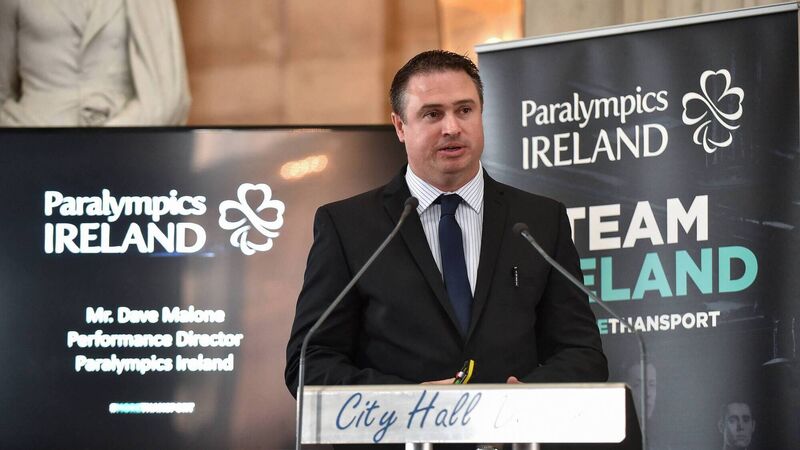
Dave Malone's role as Paralympics Ireland performance director was an all-encompassing affair long before Covid added layers of complications to the brief
Covid prompts Paralympics Ireland to look even further outside the box

Dave Malone: ‘There’s no doubt it’s going to be a very different Games.’

Dave Malone cherishes those moments when he stands on the pool deck and just coaches. 

The role of performance director with Paralympics Ireland was an all-encompassing affair long before Covid added layers of complications to the brief, but hours snatched with the elite swimmers under his watch tend to offer a respite from the tide of tasks that never seems to recede.

But even here, at the National Aquatic Centre, there is no real escape from it all. The phone calls and texts still buzz like bees and the practicalities of pushing ahead with their preparations for the Tokyo Games are all too obvious in the otherwise empty arena, the stringent health and safety protocols they must follow and the very manner in which coaches and athletes communicate.

“A lot of the cues have been through your eyes, particularly when you are communicating maybe 25 or 50 metres away,” Malone explains. “You could normally carry your voice but with the quality of masks we are wearing for protection it requires a new skill.

I find myself over-exaggerating things, like an actor, raising your eyebrows like Roger Moore. It’s not ideal but you either come out of this whole thing ahead or you come out of it behind. It’s up to us how we respond to it.”

If any sporting body was already accustomed to overcoming obstacles then it was Paralympics Ireland.

Some organisations produce leaflets and five-year plans dripping with aspirational language and fine sentiments. Overcoming adversity is written into the very DNA of Paralympics Ireland (PI). It is in the very fibre of the athletes it sends to the Games.

Tokyo will be Malone’s seventh Paralympics. He has won medals in the pool, served as the head of the swimming department, held the post of team manager for London 2012, and then there is his current brief. There isn’t much he hasn’t seen, or dealt with. Until this time last year, that is, when everyone’s cards were shuffled and the house rules changed overnight.

PI had two athletics teams poised for events in Dubai and Tenerife, and two up-and-coming swimmers two days out from a crucial trip of their own, when it was announced that everything was shutting down and sport went into cold storage.

Cue Operation Mad Scramble.

“The next thing was how do we get gym equipment to peoples’ homes? You have visual impairments, you have Ellen Keane, an arm amputee. How do we set this up? We’ve seen pictures and heard stories of all that the last year but add in the complexities of impairments. How do I set up if I am missing an arm?

You really have to think that bit further outside the box and everyone jumped to the cause across all the sports.”

Inevitably, some have adapted better to it all than others but no-one targeting Tokyo has fallen by the wayside because of the pandemic, lockdowns, or the 12-month delay. Malone’s instinct tells him that the coaches and the athletes will be better in many ways for all this but that can’t be any more than a hunch for now. 

Some of the swimmers, cyclists, and the athletics cohort got to taste competitive fare on these shores in 2020, and more recently, but other didn’t. It is the back end of 2019 since most have experienced a competitive international environment.

Schedules have been pieced together from here to the Games, which start six months from today, but all of them are subject to the whims of the virus.

PI and its athletes are approaching all this ‘tentatively’, like animals poking their noses out from a burrow after a winter of hibernation.

Every athlete and every event is to be assessed on its own merits and subject to the approval of Sport Ireland, the HSE and the Department of the Taoiseach. It will be into May and June before the bulk of the targeted events go from trickle to steady stream.

Ireland has 16 athletes qualified for the Paralympics as it stands. Recent Games have been adorned by a team in and around the fortysomething mark but there won’t be any Cerebral Palsy football team this time and sailing’s absence from the programme for this cycle will bring the travelling party closer to the mid-20s.

Qualifying is one thing, getting there another. The recent Australian Open and the rows over quarantine showed that athletes can get on a plane thinking one thing and arrive at their destination and find a very different take on reality. The hope is that TOKOG, the Games organisers, will deliver far more clarity come April.

Internal work groups have been set up here in Ireland to figure out just how the team will travel to Japan. Adding to the challenge is the fact that PI are currently without a chef de mission for Tokyo until a new sporting director is announced in the weeks to come.

“It’s going to be complex in terms of organisation,” Malone admits. “Each athlete will have to have their own 14-day plan issued to the Japanese authorities. That will be different. There will be no sightseeing, there will be no going to the shops, you won’t be able to go to restaurants, coffee shops.

“We’ll have a designated Covid lead assigned to every team, a new role for every country.

“There’s no doubt it’s going to be a very different Games and we are planning for that.”

More in this section

Sport

Newsletter

Latest news from the world of sport, along with the best in opinion from our outstanding team of sports writers. and reporters

Cookie Policy Privacy Policy Brand Safety FAQ Help Contact Us Terms and Conditions

© Examiner Echo Group Limited