A sport-by-sport guide to how grassroots clubs are battling for survival


In the second part of an Irish Examiner deep dive into the impact of Covid-19 lockdowns on grassroots sports our writers discover how organisations are coping with restrictions and counting the cost of collapsing revenue streams
A sport-by-sport guide to how grassroots clubs are battling for survival

You can read part one here: Covid-19: A sport-by-sport look at the cost to grassroots games

Hockey: ‘Three years from now, no one will remember a great training session’

By Stephen Findlater


RIDING on the crest of Olympic qualification, while hockey clubs have been left frustrated with minimal fixtures for 10 months, many have experienced a significant increase in members.

Since March, there were few matches beyond the belated conclusion of 2019/20 cup competitions and a few rounds of the top level EY Hockey League in September.

But the ability to continue youth hockey at grassroots level up until Christmas has produced some interesting benefits. For Waterford Hockey Club president John Earl, he says the club’s response “will leave the club in a better place” in the long run.

“From an organisational point of view, it was a real opportunity and there has been a lot of positives,” Earl said, with the club’s membership increasing significantly in spite of the challenges.

“Hockey has probably benefited where indoor sports have struggled. This current lockdown is the only one where there hasn’t been some form of hockey being played. It’s outdoors on all-weather turf so we didn’t have to cancel sessions where other sports did in the bad rain in the autumn.

“[Club coach] David Quinn reorganised our coaching systems to build a continuity of skills and training techniques throughout the club. Before, you might have each section’s coach using drills and ideas they knew and, by the age of 16, the players might not know how to do a press or something like that. We also built a much wider volunteer base.

“We have about 450 members across 25 squads and about 45 coaches, but we got about 70 Covid supervisors this year.”

Nonetheless, he describes it as “a year of lost experiences”, the beating heart of what it means to be involved in sport.

“Three years from now, no one will remember a great training session. You remember that winner in the last five minutes, a famous cup run. It’s those things we miss.

“There’s one player in particular I really feel for. She went for trials for the South East interpro three times for the Under-16s and Under-18s and didn’t get on. This year, she finally made it, getting what she deserved... and then the interpros were cancelled. There’s people like that you really feel for.”

In Leinster, the regional branch of Hockey Ireland had been planning for the highest entry level in adult leagues in 25 years while many clubs’ youth sections are bulging at the seams.

Three Rock Rovers in Rathfarnham is a case in point, expanding to over 500 youth members — out of 800 in total — for the first time while they had intended to add an extra senior women’s team, before October put the season on hold.

Men’s club captain Peter Hinds cites a similar experience to Waterford’s: “People have really rallied around the club, in particular the parents of the juniors. They now have groups who run the Covid volunteers [with over 150 signing up] which allowed the kids to continue to train up until Christmas. Before, they often just dropped kids up to the clubhouse. Now, they stay to dole out hand sanitiser, take the register of names and there is a buzz, making it so much more club-like.

“In the senior section, people are sticking their hand up to volunteer more than ever before. The really shit side is we haven’t played matches. It will be more than a year at least for 95% of the club between games!”

Covid, though, has left something of a financial limbo. Their Grange Road venue hosts Leinster’s annual St Patrick’s Day festival, an event which has grown to feature six cup finals throughout the day and produces a significant set of bar receipts.

A further 30-odd schools and club finals were also wiped, along with a lucrative veterans’ festivals in the summer.

“In terms of the financial challenge, the true impact of Covid won’t be seen immediately and may not fully reverberate until the years ahead,” says club manager Bernie Keogh, with upwards of €100,000 required each year to refurbish and replace facilities.

“With two water-based artificial astroturfs, you have to forward-plan as they only have a relatively short lifespan and need replacement on a certain schedule.

“Another bulk of the cost is covered by pitch rentals which has crashed during the lockdowns.

“The schedule of refurbishments and replacements that has to be pushed back. It is a case that if we can start up again next season, we can dust ourselves and get back on a schedule but the longer it goes on, the tougher it will be.”

Horse racing: ‘In this business, you have to keep the stock turning over’.

By Tommy Lyons

IN 2016, when former Cheltenham Festival-winning jockey Damian Murphy hung up his riding boots, it wasn’t because he felt it was time or, thankfully, because of injury: it was because of an opportunity to remain deeply rooted in the sport which has consumed his life.

Already experienced with the breaking of young horses, he was offered the opportunity by a leading owner to take that involvement to a much greater level. 

Trevor Hemmings, the three-time Aintree Grand National-winning owner who has had a long association with the racing folk of Cork, and whose group have been interested in taking over Cork City FC, all but filled Murphy’s yard with young horses which he needed to develop to the next stage.

To the average racing enthusiast, it is invisible work, but that certainly does not lessen its importance. It sits firmly in the middle ground between the breeding and racing sector, an important part of the process which binds the two. 

With the addition of training some horses and buying and selling others, Murphy was developing a good post-riding career, but the past year has been a trying time in that development.

“I had no notion of stopping riding,” admits Murphy. “I was pre-training away and had a few of my own horses and some for a few more fellas.

“I had also been breaking horses for Trevor Hemmings for over 20 years, and he came up to the yard one day when I had breakers in and asked how many stables I had and asked if I’d like to pre-train 14 for him for the year. He told me to forget about the riding and concentrate on this.

“After he went to the sales, Trevor sent me 21 horses. I had to think seriously about it then and decided that if I went to the races and got hurt, I’d miss riding out — and it’s difficult to get people to ride out. 

“It just seemed like the right time to stop riding, and to drive on for the next project. I’d break and pre-train horses for the year, and then they’d go off to England. And then he’d go to the sales and buy more, and I’d drive on again.

“But Covid has had a huge impact on that. Trevor bought no three-year-old last year. He rang me on March 17 and said that, from today, the racing is over. There was a shutdown over there and he didn’t know what was going to happen. All his businesses were closed.

“Everything was up in the air. I didn’t know what was happening with the horses I had. Most of them were eventually sent to trainers. I kept eight, and they were all to be run in point to points with the view to being sold. I would love to say, almost a year down the line, things are looking brighter from my business point of view, but the reality is that it is all still up in the air.

“The point to points have been shut down, so that has closed another avenue for us. We really need them back. At this stage, it is a case of trying to be resourceful and looking at all these options, but things are never straightforward.

“I’m fortunate that I have a permit, which means I can run a few of my own on the track, but many point to point handlers don’t, and many can’t afford to put them into training to run them on the track when they can’t do it themselves. I had horses that were ready for point to points, but you have to train them differently if you’re going to the track for a bumper.

“If you can’t get your point to pointers to run and can’t get them sold, it has a huge knock-on effect on everything. In this business, you have to keep the stock turning over. When you lose a season, the horses are a year older, and the older they are, the less valuable they are.

“I also buy foals and try to sell them as three-year-olds but, with the lockdown last year, three-year-olds alone at the sales were way back.

“Anything can happen from the time they’re foals to when they’re three-year-olds, but if you can’t get them sold, you would usually have the option to run them at four and hope to get them away. Bar a spell in the autumn, that hasn’t been the case this past year.

“It’s grand doing pre-training or breaking, but the money just keeps you afloat. Between staff and insurance, feed, and everything else involved, the bills keep coming in. But if you can get a horse to win and get him sold, that’s where you’ll get your profit.

“We’d love to be looking ahead with positivity, but until we are certain that point to points can return and are sure that there will be no further impact on racing, we don’t know where we stand.”
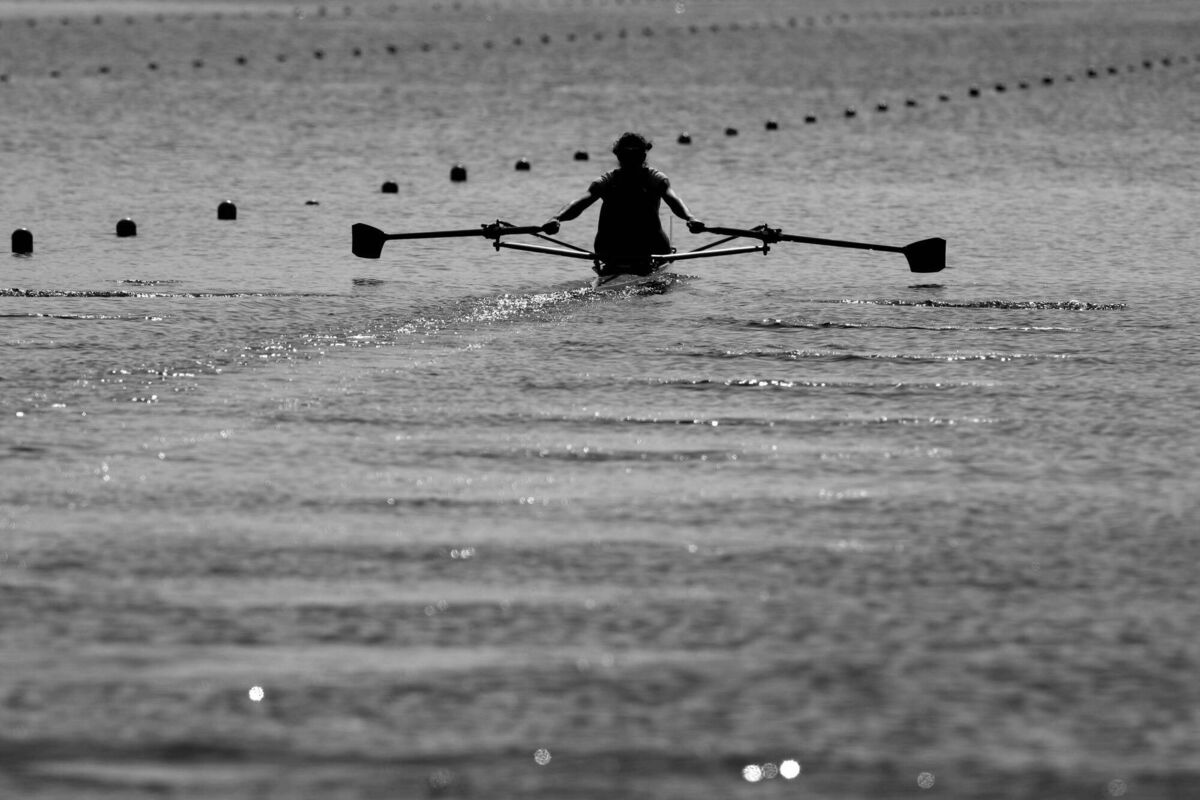
Rowing: ‘The hook of competition is something everyone misses... to train without something to aim towards’

By Colm O’Connor

ALL involved with St Michael’s Rowing Club know more than most about waiting for opportune moments. Working on a tide in Limerick City means that their training sessions and events on the water have always been at the mercy, and timings, of Mother Nature.

Covid-19 tested that patience like never before but club captain Mike McDonagh was delighted with their resolve and adaptability in the face of such a challenge.

“It has been up and down for us over the past 12 months. We closed our doors during the first full lockdown and the river was off limits, but during the summer months, when things eased, we had great numbers and attracted people who might never have considered rowing before. Naturally everything has shut again, but by and large we are in a pretty decent place.”

McDonagh points to a number of factors which has kept clubs like St Michael’s, and the sport of rowing, in such a “decent place”.

He explained: “One of the great things about rowing is that training technology is now so portable. We had ergometers (or rowing machines) and spinning bikes which we could distribute out to members at home. The technology, like Zoom and Webex, meant we could all connect and train together. Rowing Ireland started running some virtual events and that brought another layer to it.”

But McDonagh believes that such connectivity was more than about keeping fit and trim, it also offered people a chance to break from the grinding monotony and mundaneness of that first lockdown without leaving the front door. Even when restrictions eased, ‘the new normal’ came with plenty of terms and conditions. In those early days, clubs were only allowed a maximum of four on the water at one time so in the case of St Michael’s that meant three single sculling boats followed by a safety launch with a coach on board.

“It was limiting to what we could do,” McDonagh explains, “and we had a lot of people disappointed that they couldn’t get out on the water.”

As the country opened up, so too did the places on the water and with increased pods of 15, it meant that St Michael’s could get more people onto the water at any one time. Camps followed shortly after and proved to be an unexpected hit.

“We benefited massively from being an outdoor and non-contact sport. Our summer camps and Learn to Row programmes were oversubscribed this year. We had a lot of kids coming to us as other sports weren’t able to run. In the past, you would spot the kids of members or people who had some connections to the club, but this year there were definitely a lot of new faces about.”

In terms of figures, St Michael’s are in a relatively solid place. They have about 120 active members and another 100 who come and go.

“Our membership is much the same, slightly up if anything with the Learn to Row groups.”

In terms of finance and fundraising, it has been pretty bleak with all their traditional revenue streams like the regatta, road runs, bag packing all lost due to the pandemic.

The club’s weekly lottery and membership is keeping them ticking over while the cancellation of events has been a notable costsaver as well. However, rowing equipment doesn’t come cheaply and McDonagh predicts that this will be the chief headache facing clubs when this chapter of the 21st century eventually closes. What has impressed him most during all of this is the work of the club committee and the coaches who have rolled up the sleeves and adapted.

“We are very fortunate here in terms of the commitment of our committee and coaches. We have about 15 to 20 active coaches who are all volunteers giving up to 20 hours a week. They took things to a different level whether it was adapting to coaching remotely or in terms of upskilling with the Covid protocols. Scheduling and working on the tide in Limerick city is always tough, but it was more challenging this year as we had to also factor in the timings of arrivals and departures of groups plus the cleaning of equipment before and after use.”

Like many others in this series, he admits that: “the hook of competition is something that everyone misses.”

“It is tough to train without having something to aim towards. Hopefully, once the vaccine starts to roll out we can start to plan for regattas and championships again. It may mean doing things differently, like running the national championships over a number of weekends so as to avoid having large crowds, but something is better than nothing.”

Rugby: ‘You don’t realise how much you enjoyed it until you were told you can’t do it anymore’

By Stephen Barry


                            Scarriff RFC’s new indoor facility. The club say it’s about keeping the show on the road until next year with the development so close to finishing.
Scarriff RFC’s new indoor facility. The club say it’s about keeping the show on the road until next year with the development so close to finishing.

Based in a rural East Clare town with a population of 800 people, the club has taken the initiative of developing the county’s first state-of-the-art 4G indoor pitch at their Fossabeg grounds. 

The hall is ready to go, bar the 40x20m surface which will be installed by SIS Pitches, although club chairman Michael Madden says the project would’ve been completed by now but for the untimely onset of the pandemic, which has also kept their teams more or less completely out of action since March.

“Our under-13s and our seniors only got one game this season and other than that, we were just praying and hoping but it’s looking like it’s not going to happen,” says Madden.

“It’s about keeping the show on the road until next year really, and with the development so close to finishing, it’s taken a lot of the resources of the club to finish it so that we’ll be ready to start next year. All clubs are struggling but we were just unlucky to be building this project right in the middle of Covid. We would’ve finished by now only for Covid but it’s nearly there.

“Like everything, you think you need this amount of money when actually you need X more but the committee has been brilliant.

“When we knew we needed more money we ran a 10-year membership for €1,000 and in fairness, we got 30 lads to sign up to that. That was what helped finish the project, that extra €30,000 that had to be budgeted for. People have been very good.”

The club will have an IRFU loan to repay over the next decade but once the hall opens, Madden says “it’ll be a game-changer for us and a game-changer for East Clare”, with the intention to rent it out to other clubs across all sports.

Their club lotto, proudly proclaimed the first in Munster, “saved the club” by paying for the purchase of their grounds in 1991 and the development of a clubhouse which opened in ’96. That brought about a huge revival of interest and this modern-day development hopes to build from a position of strength, after a decade growing an underage structure.

That first day they started an U8s team, Madden remembers eight showing up; five kids and three coaches. Now, every team involved in the East Clare Titans has 15 or 16 kids and their U13s, joined with St Mary’s in Limerick this year, have 13 from Scariff involved.

It all needs money to function and while the lotto was suspended during the first lockdown, it has since restarted on a monthly basis as revenues dried up.

“It’s a struggle because we’d do maybe half our sales on the Sunday night when we’re doing the draws, now that’s all gone. So we’re trying to get people to move online and buy the tickets online but everyone’s got stuff on and it’s very hard to push people to buy when you don’t know what people’s circumstances are. But we’re just trying to keep an income flow coming into the club during this time.”

On the pitch, the club headed into the brief resumption of games in September able to field two senior teams for the first time in over a decade and their first-ever women’s team, set-up by Robyn McKenna at U16 and U18 grades, which had over 30 girls at training.

“It was the brightest start to a season and to end so... we were just ticking over lovely and then, I suppose everyone is the same, we’ve got to play no sport really this year,” says Madden.

When it does return, there’s no guarantee of retaining players, especially with greater overlap between the club GAA and rugby seasons likely in 2021, but Madden is hopeful too.

“I suppose when you’re away from it so long you’re worried that Friday nights there must be more to do but I think we found out that there isn’t actually! There’s nothing like it. 

“I’ve talked to the other coaches and those Friday nights, you don’t realise how much you enjoyed it until you were told you can’t do it anymore. Maybe that’s for the players as well. It’s a big part of your life and with Covid, you just realise how much you miss it.”

The club’s over-35 team were invited to play a tournament in France this May which looks certain to be postponed too. Madden, though, says he’ll be back next Stephen’s Day to play in their traditional charity match; a pandemic not enough to stop a team on the road 20 years now.

“You only quit that when you're put in the box! There's no getting out of that I'm afraid.”
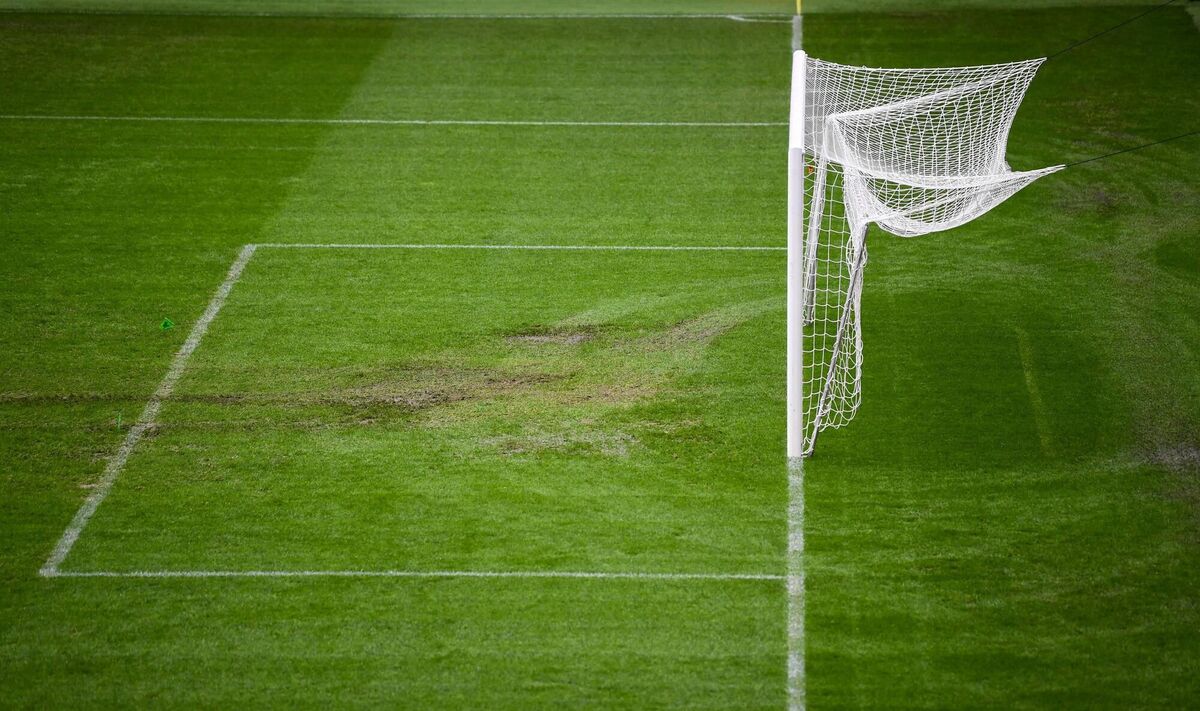
Soccer: ‘When we’re ready to get back playing we will be there, we just have to get through this’

By Brendan O’Brien

TREVOR NULTY’S affection for St Mochta’s FC spills from sentences that treat full stops like insignificant speed bumps. A lifetime of information is crammed into a half-hour chat and this from a man who, at times lately, hasn’t had the energy to answer a phone call.

It’s been three weeks since the club’s chairman was diagnosed with Covid-19 and he is still contending with symptoms as contradictory as fatigue and insomnia. It’s yet another reminder of the threat that has stopped sport and society in their tracks.

“We have a number of people working in the front line, in hospitals, and other places, so we are aware of the bigger picture.” he says.

“Stay safe, stay home. When we’re ready to get back playing we will be there, we just have to get through this. That’s the message we’re driving.”

St Mochta’s is based in Clonsilla on the west side of Dublin. It has been a constant in an area transformed from rural idyll into a vibrant, urban, multicultural piece of Dublin’s expanding jigsaw since its founding in 1949 and they were “flying” when everything stopped.

Their two senior teams (Saturday and Sunday) were in the process of earning promotion to their respective Leinster Senior League (LSL) Major divisions for the first time. A promising FAI Intermediate Cup run picked up again in the summer and ended with a first title.

Mochta’s came from 1-0 down to beat LSL rivals Killester Donnycarney in a near-empty Tallaght Stadium that day, the joy ignited by the cup run and win inevitably diluted by a pandemic that derailed their usual train of supporters.

“It was obviously the first time that we had won it, but there was only a handful of us there,” says Nulty.

“That, to me, definitely did take away from it. I’m not going to lie, I’d love to have had everyone there: the academy kids, the parents.

“I was privileged enough to be at the game in an official capacity, but it would have been a marvellous occasion, not just for the club, but Clonsilla and for the whole of Dublin 15. The upside of it is that we came through it and it was brilliant to bring the cup home.”

Any resumption remains a known unknown.

It may entail a shortened season, or one moved lock and stock down the line, like one of those Aussie houses on stilts. Who can say? Not the FAI, not the LSL, or the Dublin District Schoolboy League (DDSL).

The job for now is to keep everything ticking over until the nets can go up again. At Mochta’s, the coaches have passed some of the time upskilling and taking seminars on anti-bullying. Officers have been poring over regulatory forms and other admin tasks.

Colin Hawkins, long-time League of Ireland stalwart and the club’s director of football, knocked heads with the junior football committee to organise online activities for players to share on social media when the whistle called play to a halt last March.

All of it is admirable work but, oh, for the old headaches: begging parents to serve as coaches, to serve on a committee, or to sell a few lotto tickets; finding the money to pay for the annual insurance; organising the latest influx of academy kids. 

Among the biggest drains on their finances is the thousands of euro normally they pay to various complexes around the area — Castleknock College, Coolmine Sports Complex and others — to provide their 30-plus teams with a pitch on which to train every week.

That’s a task that resumes as soon as the Government gives the green light for amateur sport to recommence and yet St Mochta’s, like so many others, have frozen membership fees and that tap won’t be turned back on until after the restart.

How they get that horse back in front of the cart will be interesting.

Nulty doesn’t sound alarmed by any of this. The nuts and bolts will be fixed, the crises cured. Aren’t they always? His real worry as this lockdown drags on and the gates in Porterstown Road stay shut is that the ties binding the whole thing begin to fray.

It’s not based on anything factual, just a nagging fear that parents separated from the old routines will balk at the resumption of the Saturday morning drop off. Or that the army of coaches training the next generation will lose some officers to the drift.

“It’s not something I would have worried about in the first lockdown because you thought that, ‘we’ll just get through this’, but that would just be my biggest fear now. It looks like the opposite, to be honest. It looks like people are itching to get back if anything.”
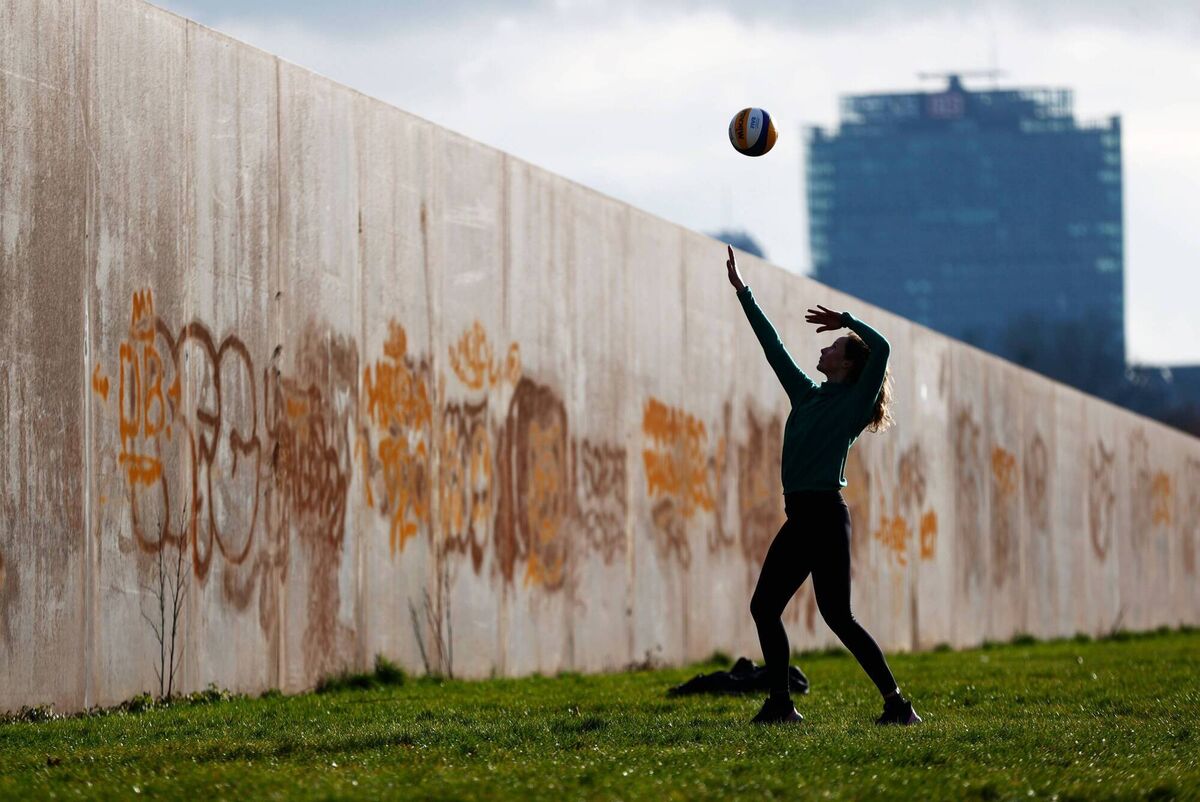
Volleyball: ‘We’re all just looking forward to getting back to training together again’

By Kieran Shannon


ALEX GRAVES wishes it was something she could brag rather than joke about but almost a year into her captaincy and the Irish senior women’s volleyball team are still unbeaten.

Last February, about a year on from her debut for her adopted country, the California-born winger was buzzing from the national trials after which she had been handed the armband.

Since then there have been obviously no international games. The national squad has only been able to squeeze in a combined three collective on-court training sessions between all the various lockdowns. 

Individually they’ve played barely a single competitive game with their clubs, Graves’ UCD facing off against the Munster Thunder in the national league at the end of the September before level five was reintroduced, bringing all indoor sport to a halt.

But a bit like the rest of the volleyball community and its progressive governing body, Graves and her national team colleagues are trying to see the opportunity in Covid and to make the days in lockdown count rather than just count the days.

“Everyone misses being out on the court and travelling to matches and just being around one another because it’s part of who we are,” says Graves, who first came to Dublin nine years ago to work with Facebook where she’s now a partner in learning and development. “But some of the stuff we’ve done with the national squad has been great.”

Every Monday they have a zoom session where they’ve really gone after improving their tactical awareness and mental game. They’ve done video analysis sessions where they’ve taken what they call a ‘player spotlight’ and focused on what makes Morgan Hentz such an exceptional libero with NCAA serial champions Stanford. They’ve had several guest speakers, including Kerri Walsh-Jennings, a three-time Olympic beach volleyball gold medallist.

“She was so inspirational because she was so vulnerable. She was so open about her self-doubt and how that was the biggest challenge she had to overcome more than any defeat. But she learned to cope with it by improving her self-talk. 

“In competition she’d have a word she’d go to under pressure, like ‘Focus’ or ‘Joy’ and spell it out which helped her take a deep breath and transfer her mental energy to where it needed to be. And we’ve worked on a series of mental skills like that over the lockdown, like meditation and setting goals.”

Graves has also had to be adaptable in her personal life. She and her Polish fiancé Marcin were supposed to get married last summer — her UCD teammates threw her a hen party in Lahinch early last year shortly before Covid came along — but they’re rescheduled their wedding for this summer. 

Her sport is also hoping and planning for better, brighter days. Instead of waiting for the halls to reopen, the sport and its schools and clubs are pivoting towards taking over the grass in the late spring and into the summer.

Volleyball Ireland’s progressive CEO, Gary Stewart, and his colleagues envisage up to 10 nets going up in parks in Dublin and around the country where existing players can again play the sport they love and curious onlookers can fall in on some Come-Try-It-Out courts.

Then there’s the sand. Graves is also a member of the national beach volleyball squad. Last summer they’d meet informally every Saturday, just as they did in early December on the freezing strand in Sandymount before all sport ceased once more. 

They never actually got to play a game, for Ireland or even among themselves, but this summer they and everyone else in the sport is hoping there can be some return to hosting domestic tournaments and festivals on the beach again.

“At this stage I think more than anything else we’re all just looking forward to getting back to training together again,” says Graves. Just to be back serving, setting, spiking a ball again. And seeing each other again. In the flesh.

Until then, Graves will keep trying to make the days count.

x

More in this section

Sport

Newsletter

Sign up to our daily sports bulletin, delivered straight to your inbox at 5pm. Subscribers also receive an exclusive email from our sports desk editors every Friday evening looking forward to the weekend's sporting action.

Cookie Policy Privacy Policy Brand Safety FAQ Help Contact Us Terms and Conditions

© Examiner Echo Group Limited