Pinch point: Can an Olympic Games be held without vaccinations?
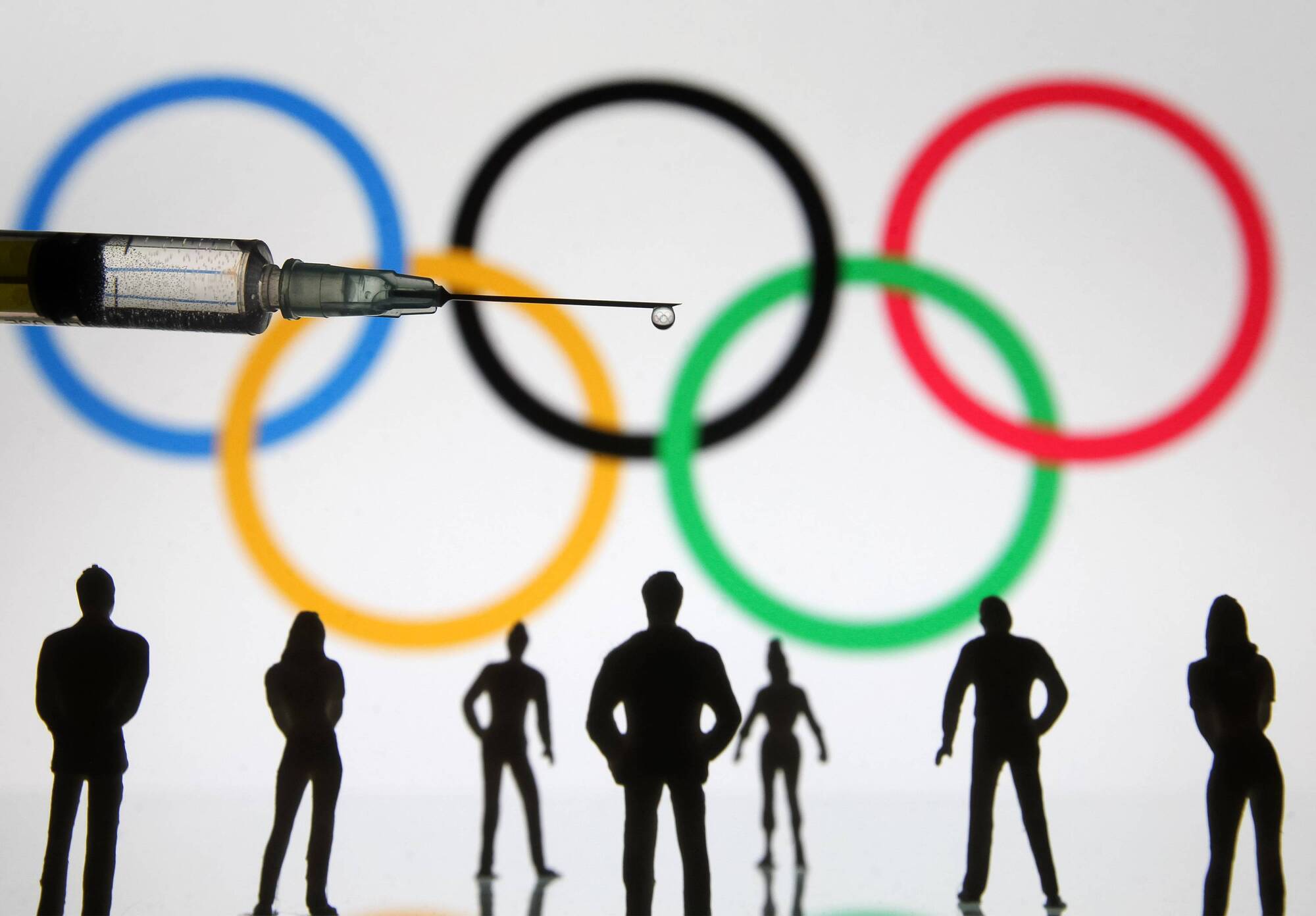
Image via Pavlo Gonchar / Getty
Lost beneath the waves generated by Dick Pound's admission that the Tokyo Olympics may not happen this summer was the case the Canadian made for athletes to be prioritised for Covid-19 vaccinations in the months to come.
It was the Olympic official's opinion last week that this was “the most realistic” means of holding the Games in 2021 and his proposal for prospective participants to jump at least part of the queue for vaccines was framed in the context of his native country's numbers.
“In Canada we might have 300 or 400 athletes,” he told . “To take 300 or 400 vaccines out of several million in order to have Canada represented at an international event of this stature, character and level, I don’t think there would be any kind of a public outcry about that.”
The longest-serving member of the International Olympic Committee (IOC), Pound has described athletes as role models whose willingness to roll up their sleeves would display a "consideration for others" and serve as a powerful message in the battle against the pandemic.
The IOC was taken by surprise by such a forthright take: it understands this is a delicate matter at a time when so many parts of the world are experiencing spikes in numbers, deaths, acute pressure on their health systems and economic chaos.
Athletes from Great Britain and Canada have reacted to Pound's suggestion and the more or less universal starting point – echoed by the IOC – is that healthcare professionals, the elderly and those considered vulnerable must remaing top of the queue for a vaccine.
A number of prospective Irish Olympians contacted this week by the all stressed the same. Phil Doyle, who is battling for a place in the double sculls boat for Tokyo after spending eight months last year as a trainee doctor in two hospitals, put it succinctly.

“We're not any better or more special than anybody else,” he said.
Doyle's hope is that time proves to be on the Olympics' side. The opening ceremony is still over six months away and something will have gone terribly wrong if the vaccination programme has not punctured deep into the general population here in Ireland by then. The global picture, of course, may not be so advanced.
Doyle does believe there is a case for elite athletes to be vaccinated sooner rather than later. Not because of any merit arguments, symbolic or otherwise, but for the fact that this is a cohort for whom foreign travel and mingling with disparate groups of people are pivotal to their jobs.
“The Irish women's hockey team are in Spain at the moment, the Irish cycling team are in Spain at the minute. Athletes are going to travel. For us to work and do our job, essentially, we have to travel to camps: to better weather, to better water, to better roads that aren't minus-four like last week. We're going to be travelling so why not minimise our risk to everybody else so a group of athletes aren't coming back to where I am now, to Ballincollig in Cork, with Covid and going into the SuperValu or the market and bringing it in from Italy and Spain or wherever we were and leaving it behind us?”
It's a fair assessment and a different angle from which to look at an issue which could so easily touch a nerve at a time like this. As if to stress that latter point, Doyle followed it up by noting that many other professions could make the same argument in terms of travel and needs.
Who stands where in the vaccine line? It's a conundrum the whole world must face.
Liam Jegou is based in Pau in France where an 8pm-6am curfew is in place to stem the Covid tide. He too hopes that time will solve some of the Olympic questions but the slalom canoeist, long qualified for Tokyo, ultimately feels that widespread vaccinations are the most obvious means for the Games going ahead.
“In my opinion, that's the easiest and most realistic way to have everybody in Japan,” he reasoned. “I can't see the Japanese people wanting a huge competition with people coming in and not being vaccinated when they are available.”
The host nation has already said as much. Numerous polls have demonstrated a deep unease with that prospect. Only 16% of people surveyed in one poll were in favour of the Olympic Games in a country where numbers are rising and over half the populace is in an effective state of emergency.
IOC president Thomas Bach encouraged athletes to have a vaccination when speaking late last year but insisted it would not be an entry requirement. There are obvious ethical reasons against any mandatory jab, among them the pork-derived gelatin which acts as a stabiliser.
Games organisers have slimmed down and simplified the Games in an attempt to run them off in a world gripped by a pandemic, but it is difficult to see how they can start and succeed come July without widespread vaccinations.
Darragh Greene, all but certain to represent Ireland in the pool should it go ahead, had a glimpse of the logistical effort required to pull off a much smaller sports meet in these Covid times when he took part in the six-week International Swimming League in Budapest late last year.
The event included 500 athletes and 200 support staff, Covid tests on a daily basis, restricted movements and masks worn everywhere apart from their own rooms and in the water. The Olympics spans 15,000 athletes and tens of thousands of volunteers across a city and beyond.
Greene buttresses that example by way of the English Premier League which has recently been hit by a number of Covid-caused postponements despite a no-expenses-spared testing regime and strictly enforced team bubbles.
“It just shows that it needs something like a vaccine to get back to sport being up and running properly again and no postponements,” said the Longford man. “You are trying to be lucky every day and not get it but with Covid you just have to be unlucky one day.”


CONNECT WITH US TODAY



Be the first to know the latest news and updates