The craft and chaos behind the great €2m Mullingar betting coup
The craft and chaos behind the great €2m Mullingar betting coup
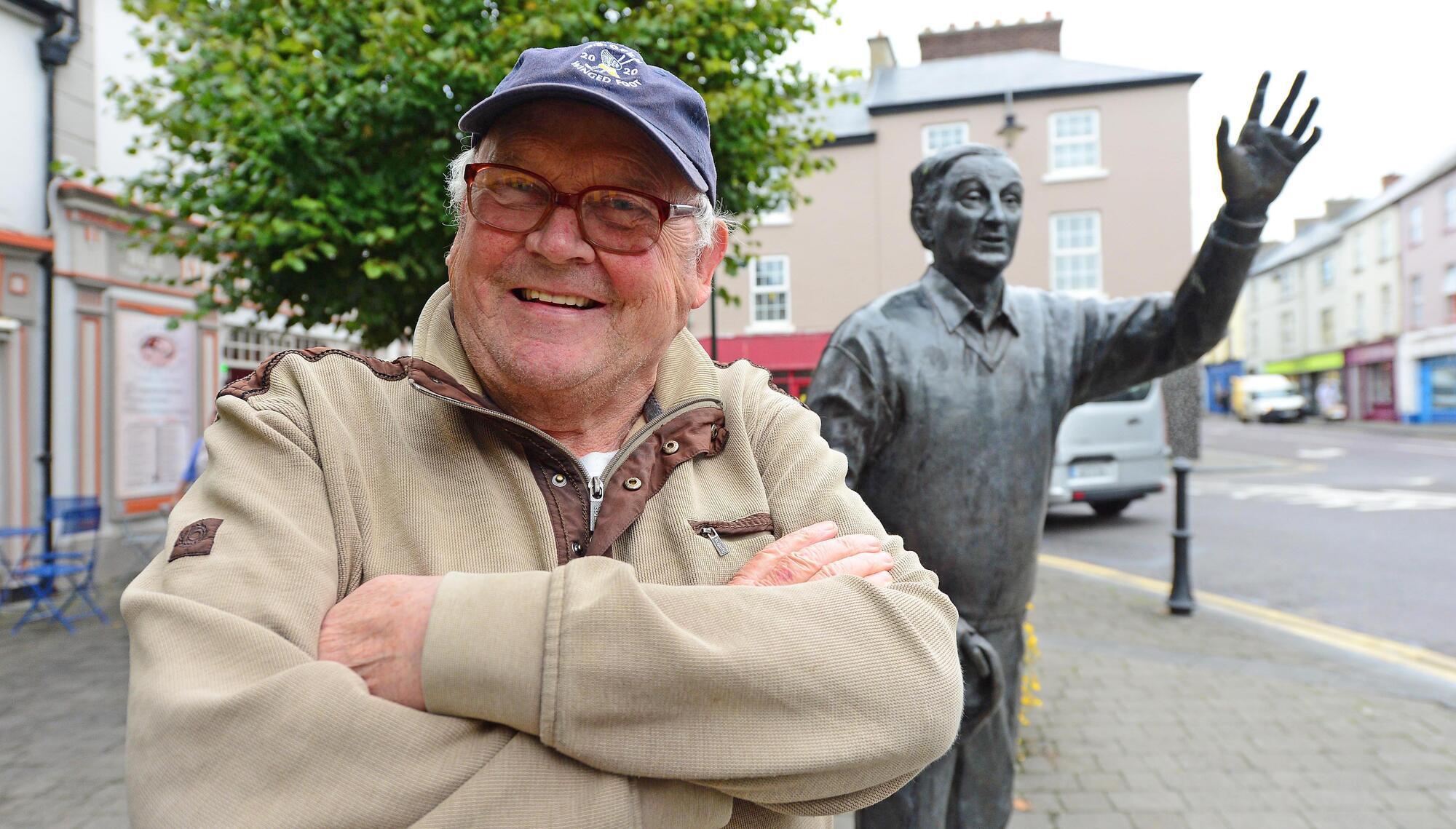
Bookmaker Eric Browne pictured in the small square in Listowel at statue of his long time friend John B Keane.Photo Healy Racing (c)

Conor Keane can remember opening the newspaper that October morning over 40 years ago.

A mysterious group - the ‘South of Ireland gang’ - had caught the bookies in a dazzling betting coup for well over €2 million in today’s money.


“I knew who it was straight away,” says Keane now.

He’s just completed a radio documentary with Donal O’Herlihy, A Very Irish Coup, in which members of that so-called gang, most of them Abbeyfeale and Listowel natives, speak openly for the first time about their scheme.

It’s a fascinating glimpse of a completely different time (and a story crying out for dramatisation) that begins one October Monday in 1978.

A few lads from Abbeyfeale were at the dog track in Limerick when they saw a possibility.

They learned that another friend of theirs had had a winner that evening, but because he’d backed the dog at tote odds with a bookie he had enjoyed a far better return on his bet than anything on offer directly from the bookies.

On the way home from Limerick Con Murphy, one of the crew, piped up: here was an opportunity.

What was it?

“People understand a bookie giving you odds on a bet, but the tote’s a bit like the national lottery,” says Keane.

“The money goes into a pool in the tote from bets and the State takes - at that time - about 20 per cent. The rest of the money is divided among the winners.

“So if there’s €3,000 left in the pot after the percentage comes out then that’s divided among those with a winning bet: if there are three winners then each gets €1,000.

“But it’s purely mathematical, which is important. The tote doesn’t look at the horse or dog’s form, just at how much has been bet on it. That’s crucial.

“It usually reflects the bookies’ odds but there can be outliers and exceptions when it comes to outsiders, and that night in 1978 the lads recognised that if a bookie accepted bets at tote odds, then there was a possibility those tote odds could be manipulated in the punter’s favour.” 

Here the chink in the bookies’ armour came into full view.

In 1978 most bookies would accept bets at tote odds from the courses around the country. It was a reasonable proposition from the bookies unless, for some reason, nobody bet on the favourite at the tote windows at the track.

In that case the tote’s mathematical model clicked into gear. No money being put on the favourite would mean the odds shot up, leaving the bookie exposed.

“These were ordinary lads looking for an angle,” says Keane.

“And they saw one. They developed the idea and came to Eric Browne, who was a family butcher and sometime bookmaker in Listowel.” Browne’s nous was crucial (“My brothers and I worked with him delivering meat as young fellas,” says Keane. “We learned more there than we did in all our years in university,”) but there was a good deal of legwork ahead of the plotters.

They needed a dog: Con Murphy had a very good one, Ballydonnell Sam. They needed a race: Ballydonnell Sam was in the semi-final of the Cesarewitch in Mullingar. They needed time, but not too much time or their plans might leak out: the Cesarewitch was the Saturday evening after the Monday night epiphany in Limerick.

The stars were aligning. But would Mullingar suit them?

“They went up to have a look,” says Keane.

“They saw it had five tote windows, and usually only four were open. They felt that those windows could be blocked off with a concerted effort.” And plenty of footsoldiers.

“Eric Browne reckoned they’d need about 60 people to carry it out. That seems a lot, but they had no problem recruiting people. The attraction was a bit of crack and putting one over on the bookies. ‘A great day out’. A bit of sport.

“It was a different time. You could pull people along on a caper like that. The difference was that the lads couldn’t be told in advance what was afoot, but that didn’t matter. They were willing to go along.” Between Abbeyfeale and Listowel they produced a quorum. Before Mullingar could be invaded, however, there was a huge amount of work involved in putting small bets on Ballydonnell Sam in bookies all over the country.

Mobile betting apps belonged to the realm of science fiction. There was only one way to get the bets down.

“One troop was sent as far as Waterford and Dungarvan,” says Keane.

“Another went down through north Cork into Cork city.

“Some of them went up into Limerick and Galway, another up as far as Monaghan and more of them to Dublin.

“They made small bets, totaling a couple of hundred pounds, all over Ireland, and then a lot of them made for Mullingar.” Having checked that the bookies they visited would accept tote odds, dozens of them converged to the racetrack.

There they caused chaos. They thronged the tote windows, obstructing the civilians trying to place their bets. They queried slips, dawdled at the windows, backed every dog in every race apart from Ballydonnell Sam: anything that could be done to hold up the proceedings was done. And Ballydonnell Sam wasn’t backed.

“We had a map drawn of the place, who would be here and who would be there,” Eric Browne recalls in the documentary.

“We broke their hearts getting change. They ran out of change finishing up, and it couldn’t have been smoother.” Then a last-gasp hitch appeared. Just minutes before the race the visitors began to worry that the fifth, rarely-used window at the track might be used.

“I got one of the lads out of our bunch,” says Browne.

“‘What have I to do?’ he said. ’If that window opens,’ I said, ‘if anyone comes near it, lamp them. Start a row and disappear then, but start a row if that window opens.’” The row wasn’t necessary. They got what they wanted: the tote odds on their dog topped out at almost 1,000 to 1.

“It was still a gamble,” says Keane. “Ballydonnell Sam was a good dog, and hot favourite for the race, but he could have been bumped coming out of the trap, he could have been lame. There were no guarantees he’d win.” What happened next? You'll have to listen to the documentary to find out, but the story takes a twist or two before the end.

“For one or two of them it was about the money,” says Keane.

“But for most of them it was about the fun, and taking money off the bookies - or the big boys as they were seen then, though at the time nobody had an idea what ‘big boys’ would eventually mean when it came to gambling companies, the multinationals that are involved now.” He can still remember the headlines.

“I was in UCD and I remember reading it, and to be honest I was a bit annoyed I wasn’t involved myself. But I knew it had to be a great story.” 

*A Very Irish Coup: narrated by Conor Keane, produced by Conor Keane & Donal O’Herlihy, RTÉ Radio 1, today 1PM  

x

More in this section

Sport

Newsletter

Latest news from the world of sport, along with the best in opinion from our outstanding team of sports writers. and reporters

Cookie Policy Privacy Policy Brand Safety FAQ Help Contact Us Terms and Conditions

© Examiner Echo Group Limited