Christy O'Connor: Hurling’s more palatable alternative to the sin bin?
In early January, shortly after a dressing-room clip appeared online of former Manchester City assistant coach Mikel Arteta telling the players to foul if there is a transition, Pep Guardiola responded to the inevitable question of his stance on the tactic with the speed and slickness of a City attack.

Christy O'Connor: Hurling’s more palatable alternative to the sin bin?

In early January, shortly after a dressing-room clip appeared online of former Manchester City assistant coach Mikel Arteta telling the players to foul if there is a transition, Pep Guardiola responded to the inevitable question of his stance on the tactic with the speed and slickness of a City attack.

“Go to London and ask Mikel (by then Arsenal manager),” said Guardiola.

Ole Gunnar Solskjaer had just raised the issue of tactical fouling for the second time in three Manchester derbies but, not for the first time, Guardiola evaded the question.

Guardiola’s sides have always used possession as the first form of defence, but they also commit huge numbers forward. Their typical 4-3-3 shape looks more like a 2-3-5 formation in attack, with the full-backs either tucking in or pushing up wide.

They murder teams with third man runners, but that formation also leaves City exposed to counter-attacks, which is why every Guardiola side has a tactical fouler sitting at the base of the team’s 4-3-3 shape.

For City, Fernandinho mostly patrols that area in front of the centre-backs, and out wide. If City press high, Fernandinho will move forward to press the central midfield area but much of the pressing is done by the front five.

Fernandinho is there if the press fails but City’s front five tactically foul to stop play developing out wide on the counter-attack, allowing the team to regain their defensive shape.

Cynical or sensible, its systematic application has always allowed Guardiola’s teams to commit so many men forward.

Teams have adopted similar tactical fouling strategies for years, but last year’s data gives more insight into the clinical nature of the top teams.

In the 2018-19 season, 58.84% of City’s 328 fouls were committed inside the opposition half, the third highest in the Premier League. The highest offenders were Liverpool, with 63.17% of their 315 fouls coming in opponents territory.

That doesn’t necessarily mean that Man City and Liverpool are tactical foul experts because both use a high-pressing approach, regardless of whether they have just given the ball away or not.

But if the definition of a tactical foul is one committed soon after giving the ball away, the stats from Opta Index highlight how strategic City and Liverpool are; on average last season, Man City and Liverpool’s fouls after giving away the ball came exactly 8.3 seconds after the ball was turned over.

City and Liverpool were on a totally different level to every other Premiership team in 2018-19 but those stats also show how the best teams are always looking for an edge.

Hurling and football are continually evolving. Players are developing new skills but, despite the increased speed of both games, many of those skills are evolving to counter the game’s physicality and claustrophobia.

Teams are getting cuter in how they tactically foul. In last year’s Munster football final, Kerry conceded 1-6 to Cork from frees but 70% of the frees Kerry conceded were in the Cork half of the field.

In a tweet last summer, Colm Cooper referred to cynical fouling as ‘strategic fouling’ which is how most football teams view that element of the game.

“It’s not just Mayo or Kerry or Dublin, every team does it,” said Cooper in a podcast a few weeks later.

They do it to slow down the play, get themselves back and get a structure set. If the penalty is not severe enough, it will continue to happen.

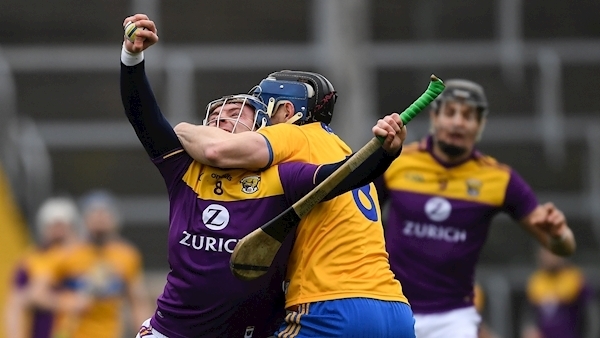
Tactical and strategic fouling is becoming more common in hurling but it’s still less relevant than in football, primarily because free takers can punish a foul from far greater distances.

The GAA still believes that cynical fouling in hurling needs to be addressed, and a decision will be made at Congress in 11 days on the possible introduction of a sin bin for the game.

Hurling has been here before. In 2005 and 2009, the GAA experimented with a series of fouls which would result in a player being effectively black-carded, even though the black-card was light years away from being introduced in football.

Both experiments failed because hurling people didn’t believe the game had an issue with cynical fouling.

That viewpoint has always existed in that grey space between denial and loose regulation, which subsequently granted a loose licence to practise cynical play.

The other side of the debate is perception, especially when perceived football rules are introduced to hurling. Yet punishing certain cynical offences does work when referees have the conviction to apply those rules.

In modern sport, all of the most successful teams know and accept the need to adopt a certain amount of cynicism; the stats on tactical fouling showed the subtle place cynicism occupied in City and Liverpool’s brilliance last season.

In last month’s Spanish Super Cup final between Real Madrid and Atletico Madrid, the game was effectively decided five minutes from normal time when Real’s Federico Valverde chopped Atletico’s Alvaro Morata down as he was straight through on goal. Valverde was sent off for the cynical tackle but Real won the game on penalties.

Valverde was only doing what was expected of him but it’s much more difficult to deter, than punish, players committing professional fouls.

A free-taker’s scoring range means cynical fouling in hurling can always be punished easier than in most sports. But the punishment is seriously watered down when a player is hauled down when straight through on goal with just the keeper to beat.

The sin bin will still always be a hard sell in hurling but there could be another way to try and convince the hurling community of the merits of punishing cynical fouling; if a player commits a cynical foul between the 45 and 20 metre lines, the punishment could be a 20-metre free; if someone is cynically tackled or dragged down inside the 20-metre, but outside the 13-metre line — especially to stop a goal-scoring chance - award a penalty.

With the penalty conversion rates so high now in hurling, that punishment seems a fairer way to cut out cynical fouling than a sin-bin.

Dalo's Hurling Show: The media finally catches up with Brick Walsh

More in this section

Sport

Newsletter

Latest news from the world of sport, along with the best in opinion from our outstanding team of sports writers. and reporters

Cookie Policy Privacy Policy Brand Safety FAQ Help Contact Us Terms and Conditions

© Examiner Echo Group Limited