Colin Sheridan on Bill Simmons: The Boston barman who became a modern-day Citizen Kane
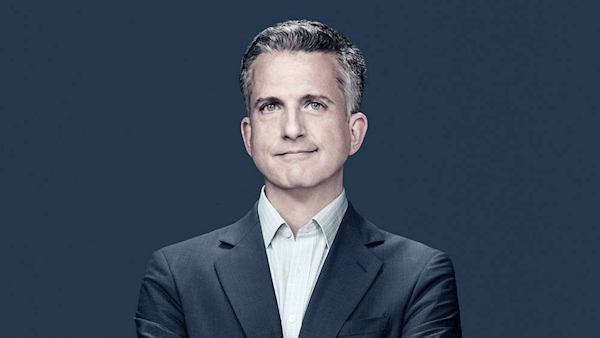
Imagine being the guy at university who was mad about sports, but never any good at it. Crazy about movies but would never be in one.
The guy everybody thought was funny, who wrote the witty emails, conceived the clever sketches, the guy who made the girls laugh.
Imagine finishing college and tending bar, eschewing the conventional wisdom that demanded you pursue the “straight career”, instead going with your gut and writing an online column that committed to print the very voice you so effortlessly articulated to your friends in late night backrooms.
Imagine backing yourself to infiltrate the fourth estate of sportswriters, who, in the early 2000’s, still boasted Red Smith, Frank Deford, and George Kimball amongst their cadre.
Imagine aiming for a job at the Church of Sports, ESPN, and missing out, but being so drenched in chutzpah that, rather than take the rejection as a reflection of your unworthiness, you double down and satirise that holy institution, mocking their lack of self-awareness.
Imagine it is that very satire that makes ESPN take notice.
Imagine they do hire you, and for the next dozen years you fly like Howard Hughes with a keyboard and a mic, before crashing like Icarus, just when your stock was highest, excommunicated by the very missionaries who recruited you.
Imagine you lick your wounds before rising again, this time even higher, so high in fact, that some 20 years after you last served Rolling Rock in a dive bar in Charlestown, you sell your sports and pop culture website, together with your podcasting platform to Spotify for $200m (€184.5m).
You can stop imagining, because this is the story of Bill Simmons, the Boston barman who became a modern-day Citizen Kane.
Bust to boom stories are not unusual, especially in the United States, but Simmons is no Silicon Valley nerd, nor is he a Wall Street savant, his self-made empire is an old school one, built from the ground up, and one — with Spotify’s recent acquisition — that will see him go from Wes Anderson-twee to Jerry Bruckheimer-big in the stroke of a pen.
If you’ve already heard of Bill Simmons, it’s likely you are one of the millions who listen to a couple of the 30 or so podcasts that his website The Ringer — which he started in 2016 after his split from ESPN — churns out. His own weekly eulogy — the Bill Simmons Podcast — drops every Sunday with guests ranging from his cousin Sal, to Matt Damon, to his dad. Some episodes are two hours long, during which he’ll bust balls with his friends about bad bets and ice-cold takes.
Its sound is familiar. Because that’s who Bill Simmons is; he is the dude in the bar who knows his sports, knows where he’s from, but also kind of accidentally knows a lot of famous people.
The everyman; the “bro whisperer”; the self-anointed sports guy. He is you and me, just with an impressive contact list and cajones the size of baseballs.
The road from ‘regular Bill’ to kingmaker has been an eventful one. In the early days of the internet, Simmons wrote a column called the Sports Guy, which was an antidote to the impartial, self-aggrandising work of the doyennes of sports writing.
Simmons wrote unapologetically as a Boston sports fan, just as the city exploded with successes that saw its teams (the Patriots, Celtics, Red Sox and Bruins) win 12 titles since he first published a word. His work caught the eye of ESPN, and between 2001 and 2015, he became the network’s biggest draw, his emergence paralleling that of podcasts and social media.
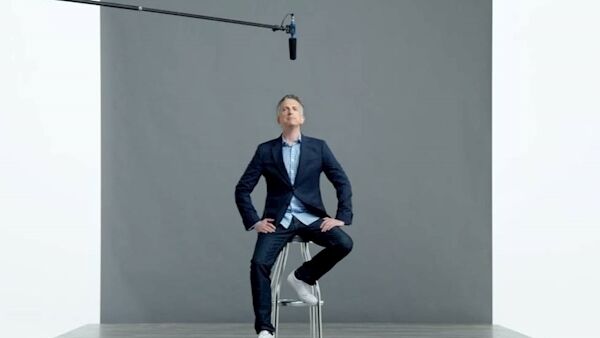
So powerful did he become, ESPN indulged him with a prestige pop-culture off-shoot, Grantland, which began as his indie plaything, but quickly became his labour of love.
With Grantland, Simmons shunned the formula of chasing ex-players and big names as contributors, recruiting some of the best emerging creative talent instead.
As its cult status grew, ESPN bosses began to starve Grantland of the oxygen to survive, seeing it as a commercial vortex and an unnecessary distraction forSimmons, whom they felt was needed elsewhere.
IT was not Grantland that ended Simmons’ at ESPN, but, in a fitting homage to his Boston roots, his mouth.
In September 2014, Simmons told his podcast that the NFL commissioner Roger Goddell was lying over the league’s investigation into the Ray Rice domestic abuse scandal. Given the sensitivity of the case and the specific accusation made by Simmons (he alleged Goddell knew of the existence of graphic CCTV footage of the alleged incident), the outburst earned him a three-week suspension.
By May 2015, he was at it again, this time goading Goddell for lacking “testicular fortitude” in his handling of the Tom Brady ‘deflategate’ debacle. This comment ripped the scab off a barely healed wound.
ESPN had had enough, not least because it did business hand in glove with the NFL. It’s star-man had become its problem child. With a strong whiff of Roy Keane leaving United, Simmons was let go. Five months later, ESPN axed Grantland.
If he was bitter (which he was), he did not wallow. Less than 18 months after his exit, Simmons launched The Ringer, a pop-culture website and podcast platform that has become everything you think he hoped Grantland would be.
What makes The Ringer so popular? It has become an extension of Simmons himself. If we love Bill because he talks to his dad on air about the Red Sox bullpen and Celtics’ bench, we like the self-explanatory Press Box podcast because hosts Bryan Curtis and David Shoemaker literally finish each other’s sentences when they discuss the New Hampshire Primary because they lived together in college.
Likewise, The Watch, where Andy Greenwald and Chris Ryan riff about growing up in Philly, never having enough money for anything other than catching great bands and watching great movies.
On paper, the formula is not special. And, that’s just it. We, as consumers of pop-culture, see ourselves in Simmons and his cast of industry misfits. And if their status as podcast presenters or writers accidentally affords them courtside seats to greatness, they write and talk about it through that prism, rather than coming off all Stephan A Smith and pretending that, just because they — the stars — know your name, they give a damn what you think?
If Simmons has a secret, it is realising his worth and, in a kind of an Italian Irish Catholic way, knowing his place.
Not in the context of the conventional sports media he so positively disrupts, but in the sense of how his voice — and that of those he hires — fits in the lexicon of the sports themselves.
He seems to understand there would be no Bill Simmons Sports Guy without Tom Brady, no Rewatchables pod without Quentin Tarantino, no 30 for 30 (a series he co-created) if there was no Len Bias.
Simmons has always known when to tip the cap to the greatness that gave him his soapbox, he has just never, ever accepted bending the knee to those who employ him.
Now, it is Spotify’s turn to manage his talent. How a behemoth benefactor will affect the snug family dynamic The Ringer has nurtured since its inception remains to be seen. You’d hope they didn’t spend all that money just to keep him quiet.

CONNECT WITH US TODAY



Be the first to know the latest news and updates