Irate county footballers can learn plenty from Thunberg defiance
Some Friday protests are more powerful than others.
Seven days before schoolchildren around the world took to the streets to demonstrate the urgent need for climate action, the GPA issued a statement requesting that the GAAâs Central Council held off approving a proposal for a two-tier football championship to go forward at a special Congress in Cork next month; the fixtures task force would be reporting its recommendations in November, so why rush in some format that could be inconsistent with them?
Central Council paid no heed though, and the following day, just hours before the replayed All-Ireland football final, it proceeded with what Greta Thunberg might describe as âbusiness as usualâ.
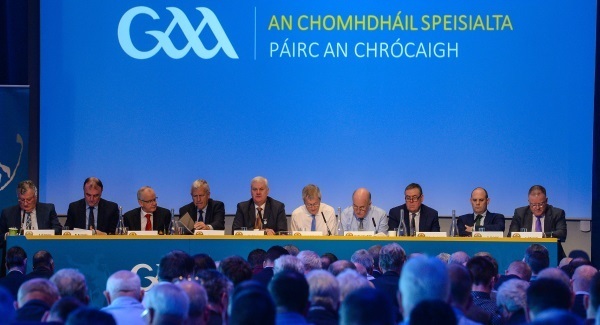
At Special Congress on October 19, a proposal for a two-tier championship, very much along the lines and wishes of president John Horan, will duly be on the ClĂĄr.
Now it goes without saying that a Division Three footballer having an unwanted B championship foisted upon him hardly qualifies on the same scale of injustice and outrage as the climate crisis and the possible extinction of the human race that so alarms Thunberg and her army of followers, but there are some things about her and the movement she has inspired that players could learn from.
Twenty years on from its inception, and over a decade after on from the Cork crises and the threat of strike action over player grants, the GPA, like its more recently-born cousin the CPA, appears to have abandoned any form or spirit of militancy â not least because its various player welfare programmes are handsomely subsidised by finances from its agreement with Croke Park.
In turn, it has been awarded and represented on some of the GAAâs most high-power committees, including seats at Central Council and Congress, and indeed that fixture task group that is due to submit its findings within the next two months.
But theyâre only one seat, one body, in all those settings. They are outnumbered, and consequently, sometimes ignored.
What they, or at least their constituency, needs to remember though, is that they need not be corralled to just the one table.
Often there is an air of resignation among the wider public, players, and media when it comes to some matters such as these B championship proposals.
There is almost an acceptance that because the âpowers that beâ want something to get through, it will inevitably get through.
It was the case with Paraic Duffy and his Super 8 proposals â the director-general of the time wanted them through, and so he duly got his way.
The same now with Horan and these B championship proposals. They are his baby, his wanted legacy, and so, the perceived wisdom is, itâll come to pass and heâll get his way.
It doesnât have to be that way, though.
If 32 counties vote against Central Councilâs motion, then it will be blocked.
All but one of the 32 counties have a senior football panel. There is nothing stopping them convening in the coming days, that bit earlier before theyâd meeting up for the resumption of collective training anyway, and coming to a group decision as to how they want their county board to vote on the matter at Special Congress in Cork.
According to the GPAâs chief executive Paul Flynn, the players arenât necessarily against a two-tier championship per se.
âThere is an appetite for one,â he clarified last week. âNot this one.â
Horan, to use a slogan from many of the placards on display last Friday, has no Plan B on a B championship. His is pure knockout, once more guaranteeing a Wicklow just the two games.
Part of the genius and appeal of Thunberg is how she speaks truth â with conviction â to power.
With or without the GPA, county footballers can do the same to their county board officials.
Tell them that theyâre not interested in business as usual. That their eyes will be upon them. That they will hold them accountable.
It has long been the way of the world, be it that of politics or the GAA, that older people make decisions that hugely affect young people who canât vote directly on the matter.
But what the Friday strike protests have shown is that just because they donât yet have a vote, doesnât mean they canât have a voice.
The players also have another weapon, as another rebel â or at least how he was portrayed in a major film â once pointed out. In Neil Jordanâs Michael Collins, the main character, played by Liam Neeson, is at a rally when he reminds the natives of what weapon is.
âThat weapon,â he says, âis our refusal.â
If players were to make it clear that they would not stick around next summer to participate in some token B championship, what county board could consciously vote for it when, after all, itâs supposed to be for the benefit of the players?
The alternative is that the players do not convene and inform their respective county board about their objection to Horanâs and Central Councilâs proposal.
Should they choose that course, then they then can hardly complain after the fact should Horanâs motion was passed.