Armstrong still has questions to answer
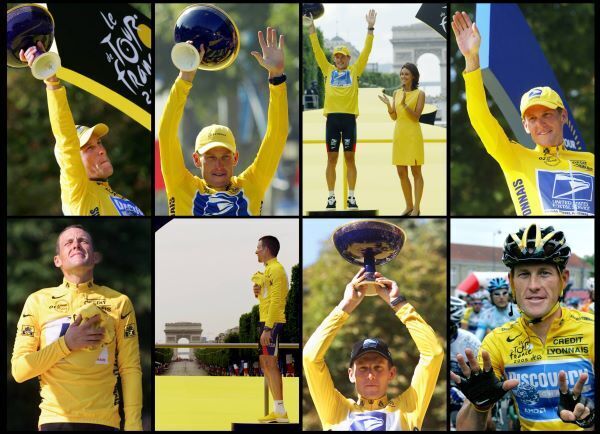
The prospect of co-operation between Lance Armstrong and anti-doping authorities appears remote despite the disgraced cyclist’s long-awaited confession to the use of performance-enhancing drugs.
After years of denials, Armstrong used a television interview with Oprah Winfrey to admit to doping during all seven of his Tour de France victories. He was stripped of all results from August 1, 1998 and banned from sport for life.
The 41-year-old Texan has been told to speak to the World Anti-Doping Agency and the United States Anti-Doping Agency to have any hope of those sanctions being reduced.
But Armstrong insisted USADA, whose investigation led to his downfall and subsequent public admission of drug use, is wrong to claim he doped during his comeback in 2009 and 2010 and was adamant he did not offer a donation to the organisation at the height of its inquiry.
USADA chief executive Travis Tygart told “60 Minutes Sports” last week that Armstrong made the financial offer last year.
In the second part of his television interview with Oprah Winfrey, Armstrong said: “I had no knowledge of that, but I’ve asked around. I think the claim was 250,000 dollars. That’s a lot of money. I would know. That is not true.”
He insisted he had stuck to a pact made with first-wife Kristin that he would not dope during his comeback to cycling.
“I never would have betrayed that with her,” said Armstrong, who maintains the last time he doped was during his 2005 Tour de France win, despite evidence to the contrary in the USADA reasoned decision, published last October.
A USADA spokesperson said in a statement issued to Press Association Sport: “We stand by the facts both in the reasoned decision and in the 60 Minutes interview.”
Armstrong was emotional in the second and final instalment of his interview with talk-show host Winfrey.
He revealed he is undergoing therapy to deal with his demons and expressed a desire to return to competition.
He was tearful when addressing the fact his 13-year-old son Luke defended him. And, he insisted this confessional was not the most challenging time in his life. That was his successful battle with cancer.
He was asked whether he felt his use of drugs contributed to developing testicular cancer and replied no.
The Oprah Winfrey Network insisted Armstrong did not receive a fee for the interview, which was broadcast over two nights, and was not offered one.
In the first 90-minute interview, Armstrong admitted to using performance-enhancing drugs to win seven successive Tours from 1999 to 2005, denied doping during his comeback from retirement in 2009, when he finished third in the Tour, and 2010 and refuted suggestions he paid off cycling’s world governing body, the UCI, to cover up a positive test in 2001.
He expressed that, in hindsight, he wishes he had co-operated with USADA. Co-operation could have meant a lesser penalty, rather than a life-long ban.
Armstrong was competing in triathlons, mountain bike events and marathons before he was sanctioned and believes he deserves that opportunity in the future.
In the second part of the interview, he said: “Frankly, this might not be the most popular answer, but I think I deserve it (to be able to compete again).
“I deserve to be punished. I’m not sure that I deserve a death penalty.”
Eleven of Armstrong’s former team-mates provided evidence against him in exchange for six-month suspensions.
He added: “I got a death penalty. I’m not saying that that’s unfair, necessarily, but I’m saying it’s different.”
Asked whether he believes his life ban should be overturned, he said: “Selfishly, yes. But realistically I don’t think that’s going to happen. And I have to live with that.”
Armstrong admitted he might have escaped sanction had he not returned to cycling in 2009.
He made his comeback believing he could win an eighth Tour – and win it without using drugs – but he finished third in the 2009 race.
He said: “I expected to win, like I always expected. At the end I said to myself ’I just got beat, by two guys that are better’.”
There were questions about his family and the allies who deserted him in the wake of the USADA report.
Sponsors pulled out – 75million US dollars worth of future income disappearing within hours – and even his own Livestrong charity distanced itself from him.
“That was the lowest [moment],” he said. “The foundation is like my sixth child.”
Questions remain. Winfrey asked Armstrong “Did anyone know the whole truth?” He replied “yeah” – but there was no follow-up to ascertain who.
The relationship between the UCI and Armstrong is the subject of an independent commission, while the Texan, considered by many to be the single biggest cheat in sporting history, did not implicate other individuals in his misdemeanours and many believe it was impossible he acted alone.
Whether the whole truth will ever be established is down to Armstrong.

CONNECT WITH US TODAY



Be the first to know the latest news and updates