Gary Keegan: 'High performance is brutal in that sense. It's absolutely brutal'
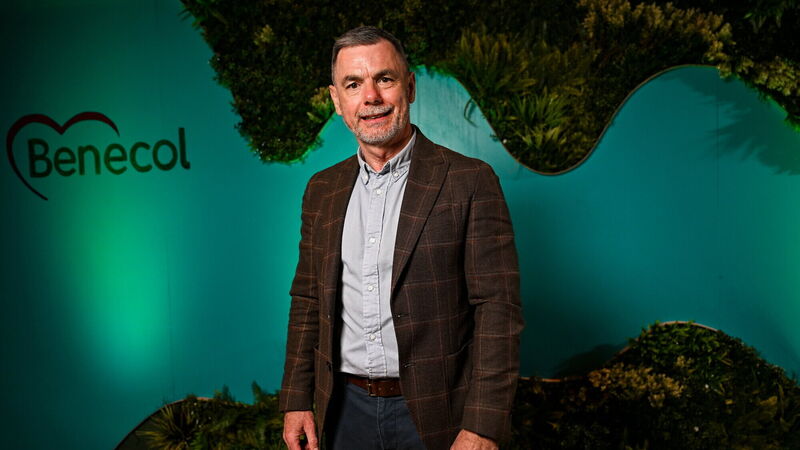
Gary Keegan photographed at today's Habit - stacking with Benecol event in Dublin, where Keegan discussed how small but consistent daily habits can lead to extraordinary long-term results. Pic: David Fitzgerald/Sportsfile
In the aftermath of a devastating All-Ireland final defeat, accusations settle on everyone, like dust after a collapse. No one is spared.Â
Gary Keegan is one of the country’s most respected performance coaches but even he faced the court of public opinion after Cork's loss to Tipperary last July.Â
The accusation: absent.
Keegan’s footprint in the GAA is broad, its outlines defined by success, including stints with the Dublin footballers and Tipperary hurlers, but in the build-up to the All-Ireland hurling final he was living a professional double life, having been based in Australia with the Lions.
The fact that Tipperary psychologist Cathal Sheridan was pitchside in Croke Park while Keegan was half a world away, watching through the small hours of the night, led to pointed criticism.Â
As he sits in Dublin, still part of Andy Farrell’s Irish rugby management team, how does he feel about it now?
“Everyone has their opinion and if you're in this game and you're not able to take a slap in the face, well then you're in the wrong space,” Keegan said.
“But I don't generally go looking for what people are saying about me or whatever.
“Good or bad, I'm not really curious about it. I'm only curious about the context, the team, where I'm at, what needs to happen next. I don't want to sound like a robot because I'm not, but I stay focused on what difference I can make as opposed to what other people think.
“Because everybody's looking from the outside in, everyone has an opinion, everyone has a view, but nobody knows unless you're on the inside. I wouldn't speculate at all with regard to that particular game because I wasn't there.”Â
His professional portfolio is vast. Keegan built Irish boxing’s high-performance programme from the ground up. That sport was his defining passion. Others came calling, he never went looking for work: Rugby, judo, sailing, Gaelic football, the business and commercial sphere. He maintains that when he commits, it is a total immersion. That means relishing the wins and feeling the losses.
“If you don't feel the pain, well then you're not fully invested or committed. It absolutely hurts. And that hurt for longer than some of the other defeats that I've been part of.
“But defeats are part of the journey. You cannot say I want to win, but I don't want to lose. Nobody wants to lose. Everybody wants to win. But to learn to win, you have to fail. Failure is part of it because that's where you learn, that's where you grow.”Â
In his world, the defining difference between managers and leaders is simple: one deals with programmes and plans; the other, people. Leadership stems from skills, desire and responsibility for others. The best coaches he knows are those with absolute clarity around their role, who reflect on a daily basis. He has watched coaches stand in front of a group and hold their hands up: this part of the performance is on me. I didn’t clarify it well enough.
“Success is also important that we respect it to them in a balanced way as opposed to over-emphasising failure. Because people get really obsessed with failure and they'll dive in and try and figure out what it was and we brush over success at times.
“We don't actually go deeper and try and understand what are the factors that influence the success and are they repeatable. You're always trying to incrementally evolve and that evolution has to be deliberate and managed, if that makes sense. Where can we find an edge?”
The story of his life is one of movement and self-education. He left school at 14, worked as an apprentice barman, then an apprentice jockey, joined the merchant navy and travelled the world. It wasn’t a formal schooling; it was an experiential one.
Not that any team or individual he works with would know that. He does not reference it.
“Because it's not about me. It's not about discussing me. It's about understanding what their needs are.
“It's about understanding what the coaching team is trying to achieve. And it's about trying to integrate those two things into the content that you develop or the model that you design or the framework that you put in place. So no, never.
“The story is their story. I don't have to bring stories from the outside. It's not an inspirational talk. The work we do is inspirational anyway. What we're trying to achieve is inspirational.”Â
Still, it qualifies him. It informs much of his practice. Look up a picture of Gary Keegan and chances are you’ll see him holding a GoPro on the pitch, recording a set-piece. Not for optics, but because the analysts need a hand. Put out cones, hold a camera, when the team needs help, you help.
In this environment, rank counts for nothing. You have to add value.
“I think when you're in the trenches, right, you're going to learn how to survive and how to thrive.
“That's what real leadership is. You know, you have to have the scars of war. That's what being a top performer is.
“You can't be a top performer if you're sitting in an ivory tower looking at everybody getting muddy and dirty. You've got to be in the space yourself. You've got to be experiencing, and you've got to earn the right, for people to feel your value, right? And because if you haven't earned the right, you're gone.
“High-performance is brutal in that sense. It's absolutely brutal. And there's a lot of people who haven't survived for long in the space.
“They haven't even got a chance to breathe in it, where they're gone, you know? So you're only in an environment like that for two decades, plus if you're adding value to the space. So when you stop adding value, your time is up, and nobody will miss you.”Â
A collection of the latest sports news, reports and analysis from Cork.