Tackled players in possession are being unfairly punished for overcarrying - refs told
Ahead of the start of the National Leagues this weekend, inter-county match officials have been shown video footage of players in control of the ball
Tackled players in possession are being unfairly punished for overcarrying - refs told

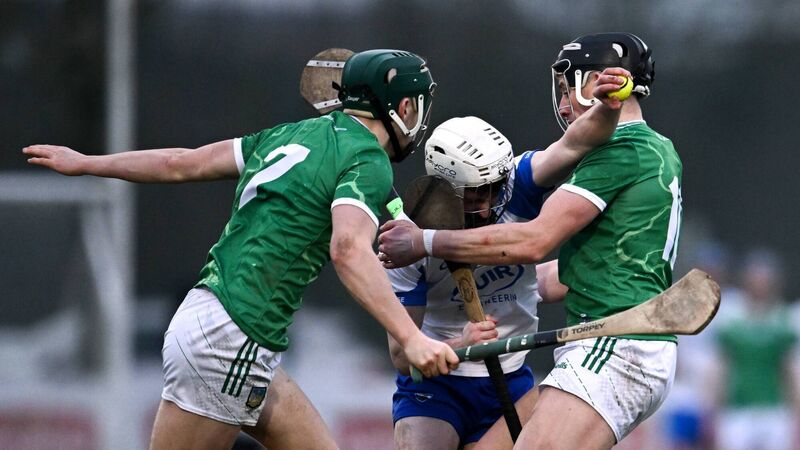
Sean Mackey of Waterford is tackled by Matthew Fitzgerald, left, and Gearoid Hegarty of Limerick during the Co-Op Superstores Munster Senior Hurling League final match between Waterford and Limerick at Mallow GAA Complex in Mallow, Cork. Photo by Ben McShane/Sportsfile

Football and hurling referees have been informed there are too many players in possession being unfairly punished for overcarrying while being tackled.

Ahead of the start of the National Leagues this weekend, inter-county match officials have been shown video footage of players in control of the ball or sliotar who have been fouled before committing a technical foul by fouling the ball or holding onto it too long.


A football or sliotar can be carried in the hand for a maximum of four consecutive steps or or held in it “for no longer than the time needed to take four steps”.

In football, a solo or bounce restarts the count, while in hurling it can be reset by playing the ball on the hurley but can only be brought back to hand once.

Referees have again been told to be vigilant around illegal hand-passes in both codes and hurling match officials have been asked to ensure there is a clear striking action.

The matter of head-high challenges has again been raised. There was consternation in the latter stages of the National Hurling League last month when there was a greater emphasis put on such fouls and four players were sent off in the Kilkenny-Tipperary game in March, three of them for head-high related fouls.

The memo from the national referee authorities to counties reads: “A reminder that if a player strikes or attempts to strike an opponent to the head or face or if they interfere with or apply any form of restraint to the neck or throat area of an opponent, this constitutes behaviour which is dangerous to an opponent and should be treated as a Category III Infraction, as adopted by Central Council on 18 January 2025. Category III infraction results in red card.

“Referees have a responsibility to protect players, and these types of actions will be dealt with firmly. Players are responsible for the contact they make and must be aware of their duty of care to opponents.” 

Guidelines around puck-outs have also been agreed for 2026. If a ball goes wide, it can be pucked out on the second whistle of the referee. The first shrill is to acknowledge the wide. If there is a score, referees must note it before blowing the whistle and allowing play to restart.

In football, teams have been told they will not penalised for a four players back/three players up infringement before the ball is struck from a kick-out, 45 or free.

It has also been noted some footballers are deliberately moving the ball forward from where the free was awarded. Referees have been reminded that it is a foul to do so and they should therefore reverse the free.

More in this section

Cookie Policy Privacy Policy Brand Safety FAQ Help Contact Us Terms and Conditions

© Examiner Echo Group Limited