Public clock/hooter to be used in top two divisions for start of the league
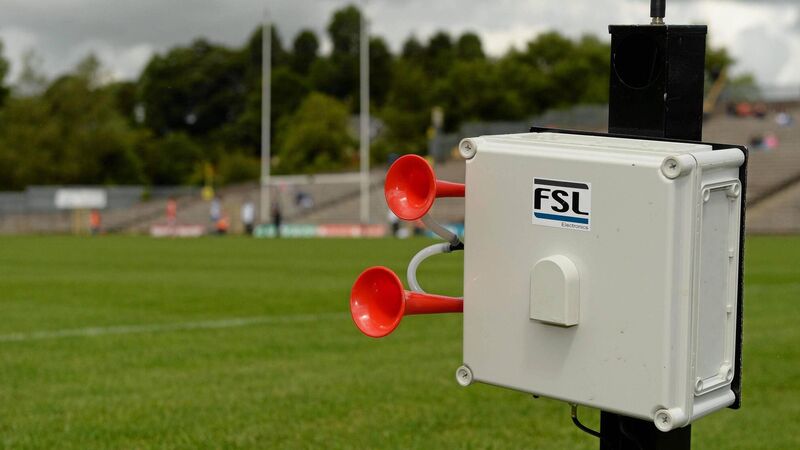
The hooter confirming the end of a half was one of the final proposals by the Football Review Committee. Picture: Piaras Ă“ MĂdheach / SPORTSFILE
The public clock/hooter will initially be in operation for Division 1 and 2 football league games.
The intention is for the technology to be phased in during the latter part of the Division 3 and 4 campaigns but for now it will be confined to the top two divisions for the early part of the competition.
While the clock will count up again, each half will conclude when the hooter sounds unless the ball is in flight and it results in a score, or a free, sideline kick or 45 has been awarded but not yet taken and may directly result in a score. That excludes a “solo and go” move.
A penalty awarded will also be permitted to be struck after the hooter and the score will count even if the opposing goalkeeper has touched the ball in the process.
The hooter confirming the end of a half was one of the final proposals by the Football Review Committee. Accepted by Central Council, it reverts to the original understanding of the clock/hooter at the outset of last year’s National League.
Last March, it was agreed play could continue after the hooter until the ball went dead. That recommendation by the Central Competitions Control Committee (CCCC) followed a number of incidents including Meath’s last-gasp winning goal against Westmeath in Mullingar, which Westmeath claimed was struck after the siren sounded.
The public clock will be stopped for on-field injury treatment, the issuing of yellow, black and red cards, all substitutions, melees, deliberate or incidental delays and consultations with HawkEye score detection technology. The clock runs through kick-outs, free kicks and 45s.
For back-up purposes, the time official, who records the time of a game on the signal of the referee, will keep a record of time on a stopwatch.
Last year, there were hardware issues in the Armagh-Tyrone Division 1 game in the Box-It Athletic Grounds. It was one of several issues encountered as the apparatus was rolled out.
The operation of the clock/hooter in its original form will be followed closely by administrators. Last February, the CCCC successfully lobbied for the hooter to signal the last play as opposed to the end of each half and it was introduced to the league the following month.
Highlighting there were consternation about incidents occurring before or after the hooter in two early league games last year, they argued that the GAA faced the possibility of “reputational damage” if it continued with the hooter signalling the conclusion of each half.