Ulster chief McAvoy: Two-week gap between All-Ireland finals would be promotional boost
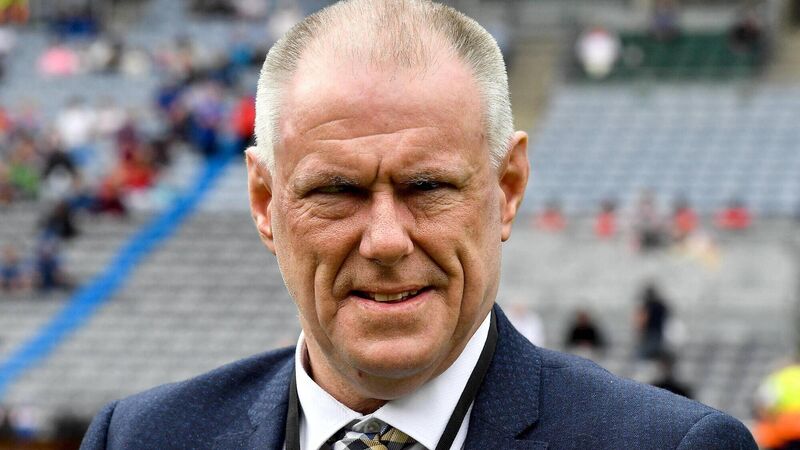
Ulster GAA chief executive Brian McAvoy. Pic: Ray McManus/Sportsfile
A two-week gap between the All-Ireland senior hurling and football finals would be a positive promotional move by the GAA, according to Ulster chief executive Brian McAvoy.
In his annual report to Ulster convention which takes place on January 16, the Down native wrote in favour of the proposal to move the All-Ireland football final to the 32nd Sunday of the year from 2027. It would push the end of the inter-county season into August.
The motion, to be discussed at Congress in February, recommends the hurling championship concludes a week later on the 30th Sunday of the year and the football decider takes place two weeks later.
“This addresses the condensed nature of the inter-county season and will also impact positively on promotional opportunities surrounding All-Ireland finals,” McAvoy claims. “I believe that additional media exposure can be obtained by returning to a fortnight between the finals.
“Since the All-Ireland finals moved to consecutive weekends, the media attention turned to the football final within a couple of days of the hurling final.
“The extra space will allow for greater coverage of the hurling final post-event and will also allow the media longer build-up time ahead of the All-Ireland football final.
“It will also allow all four teams an extra week to prepare for their respective finals and will also give more breathing space for hard working volunteers from competing counties, who have so much unseen preparations to make ahead of an All-Ireland final.
“I appreciate that even an extra two weeks can impact negatively on a county’s championship schedule, particularly for a dual county, but in essence this affects just the All-Ireland finalists, so it seems a sensible proposal to address some of the disadvantages of the split season.
“That said, I believe that the true impact of the split season, and in particular the lack of game-time inter-county players have with the clubs, will become apparent in time. This needs to be closely monitored and in all likelihood revisited in the coming years.”
McEvoy outlined the advantages and disadvantages of the split season. He spoke of the certainty it brings, the end of dualling club and county training commitments and the lesser demanding shorter inter-county season.
However, he also highlighted the lack of time inter-county players have to recover from injuries, the few, if any league matches they play with their clubs and how that has negatively impacted attendances as well as the dearth of downtime for inter-county players.
McEvoy believes there is some give in the split season but only a matter of weeks.
“While many traditionalists still long for a return to September All-Ireland finals in hurling and football, those days are now consigned to history.”
The Páraic Duffy-led committee, who are proposing an August All-Ireland SFC final, also want the pre-season competitions to be disbanded.
As the McKenna Cup returns next month, McEvoy is dubious about getting rid of the January tournaments.
“I’m not convinced that this is the answer. Central Council fixed a return to train date of November 21 2025, ahead of the 2026 inter-county season. Once again, this was widely breached at both senior and U20 levels and some counties even played challenge games ahead of this date – even though they were not permitted until December 1.
“We have to be truly honest with ourselves here – the reality is that county teams are effectively in some form of ‘collective training’ from October each year and if the inter-county season doesn’t commence until the end of January, then players will have been in training for three months, or maybe even four in some cases, prior to that.”
Despite missing out on the McKenna Cup gate receipts last year, Ulster GAA recorded a greater surplus - £121,000 (€138,000) compared to £95,000 (€108,000) in 2024.
Although there remain grave concerns about the proposed scale of Casement Park being realised, McAvoy sounded a positive note on the Belfast venue, claiming the £50m (€57m) funding from the British government for its redevelopment was “the highlight of the year”.
McEvoy commented: “To date, £170.5m has been secured for the project and we are hopeful that an additional inflationary funding allocation can be secured which should bring the overall funding package for the project to circa £220m.”