Mickey Ned on Micko the player: The mental resolve, the focus, the determination
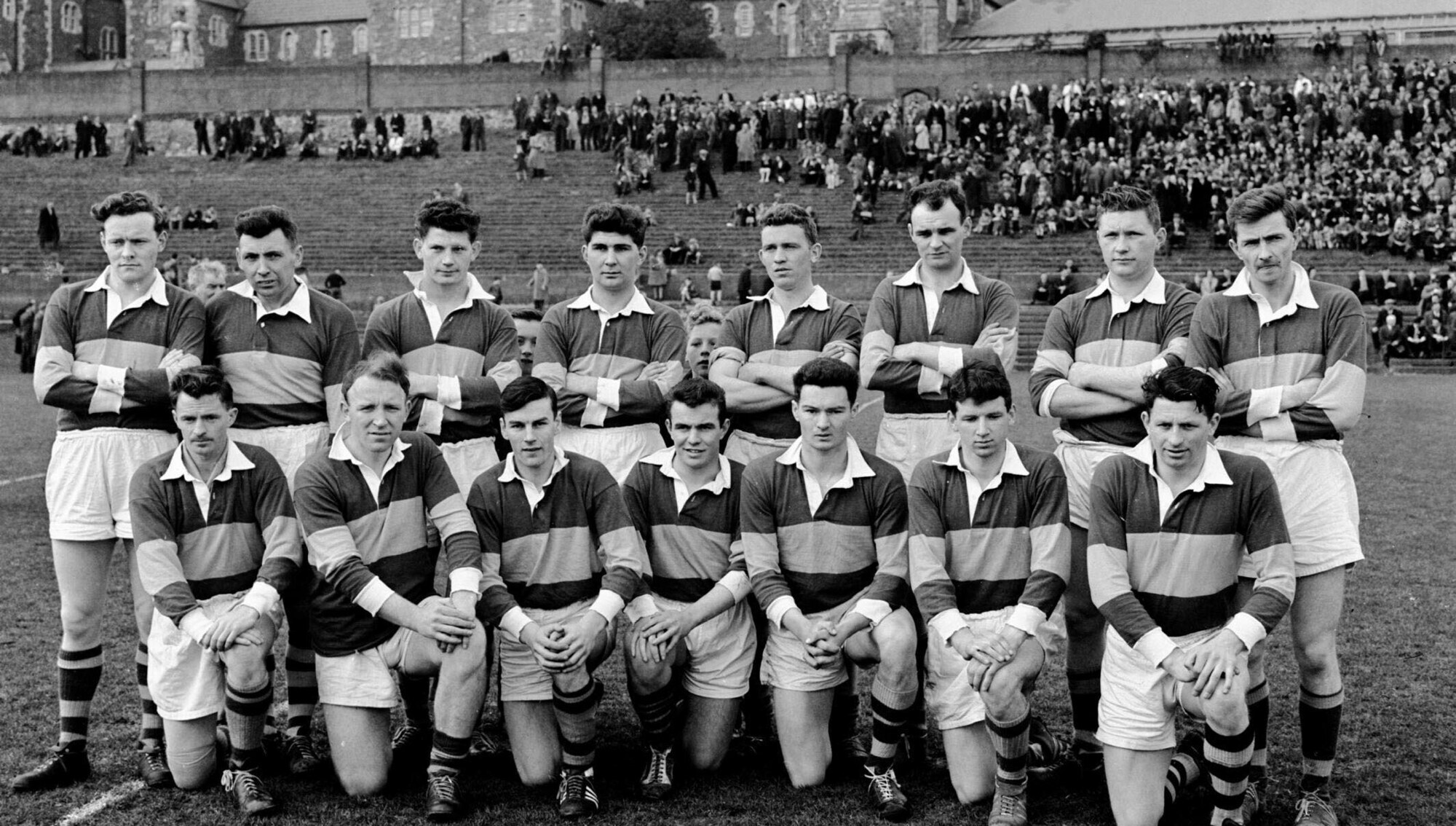
GOLDEN YEARS: Mick O'Dwyer in a Kerry team photograph from the 1950s. Pic: macmonagle archive
Mickey Ned O’Sullivan saw the relentless evolution up close. Mick O’Dwyer’s Kerry debut was as a half-back in 1957. He kept getting better.
Famously, O’Sullivan convinced O’Dwyer to become manager during a road trip to a coaching conference. He would captain the 1975 All-Ireland winners. Before that, they played together.
“He was able to play in any position,” recalled O’Sullivan, speaking on the Irish Examiner’s Gaelic football podcast.
“The first section of his inter-county career was as a wing-back. Then he retired, came back in 1968 as a corner-forward. He actually became the top scorer in the championship as a corner-forward. So he could play in any position. He had retired in mid-60s, I think he broke his leg at the time, but came back under Jackie Lyne. He became the top forward in the country for the next few years.”
How did he do it?
“It was a mindset. It was a determination. He was an exceptionally good free-taker as well. He had only one thing on his mind, to score, when he played as a forward. I never played with him as a back.
“I remember one time we were playing over in Wembley, and he had missed four or five, then he finished scoring four or five more. I said, how did you keep your composure going for the sixth one after missing five?
“He says, ‘I blocked out those five. I was determined to get the sixth. The sixth was my first.’ He had great mental resolve and focus and determination and discipline.”
Kenmare Shamrocks and Waterville had a great rivalry at the time which meant the pair faced against each other too. For Kerry, O’Sullivan would occasionally line out at centre-forward with O’Dwyer inside at full-forward.
“You wouldn’t get too many passes. He had this self-belief that the other guys can’t do as good a job as I can. 99 per cent of the time, he was correct.”
As manager in 1975, his legendary training methods immediately had an impact. Kerry overcame Cork by 10 points in the Munster decider. Five of the six starting forwards, including O’Sullivan, scored.
“Once we beat Cork we knew we were in with a good shout. Mick trained us so hard that mentally we felt we were invincible. We had come through this incredible training process. It was mental and physical strength we possessed. We knew we were going to win.”
In 1989, O’Sullivan had the challenging task of succeeding O’Dwyer as manager. He had previously served as a selector and saw the legend’s greatest strength up close.
“He didn’t tell them how to play. He had confidence in the players to express themselves in the heat of battle. His emphasis was, ‘I’ll make you so fit, it is up to you to interpret the situations as they are. I have total confidence in you to express yourselves.’ His ability to not micro-manage. He stood back and he had confidence in the players. That was probably his greatest gift.”
CONNECT WITH US TODAY



Be the first to know the latest news and updates