Can you plot the perfect time to return for pre-season GAA training?
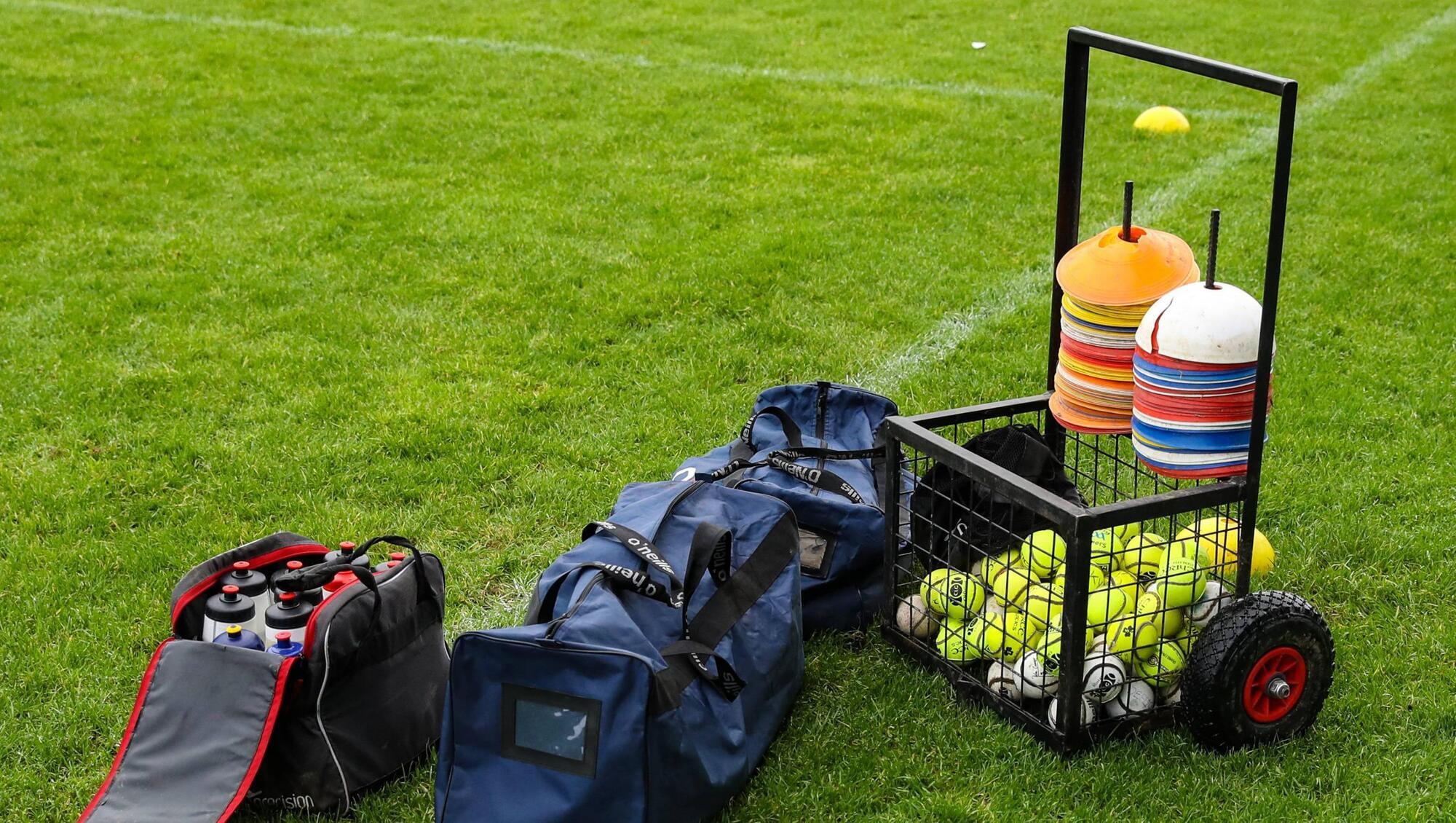
READY TO ROLL: Pre-season routines are changing across the GAA. Pic: Michael P Ryan/Sportsfile
In the closing moments of the North Tipperary final in July, as extra-time appeared on the cards, Kiladangan did what they have made a habit of doing. Similar to the dying seconds of the 2020 county final against Loughmore-Castleiney, Bryan McLoughney came up with the winning goal to sink Toomevara and ensure the Frank McGrath Cup was on its way back to Kiladangan.
It was their third north title in six years but the prize was greater than just silverware as it secured Kiladangan a three-week break before the county quarter-final. And after a long season in 2023, which only ended in late November after a Munster club semi-final defeat, management gave the players ten days off.
“You can argue that it proved to be the wrong decision, because we were beaten (by Moycarkey-Borris),” says John O’Meara, Kiladangan manager. “Or you could say that we blew them away in the first half. We just didn’t score enough.”
Defeat always forces introspection and a more clinical review. Having led by eight points with ten minutes to go, did Kildangan run out of gas? Were the squad fresh enough? After being outscored by 1-6 to 0-0 down the home straight, could the players have been sharper if they had trained more often coming into the match?
O’Meara is convinced that none of those questions were a factor in the loss. Kildangan just weren’t clinical enough on the day.
The search for the formula to be right when it matters most is more complex now than ever because balancing the elements of sports science and athletic development are becoming increasingly fundamental to maximising performance.
The challenges are not as complicated now as they used to be in the past, when the start of the club championship was at the mercy of the county team, and the county manager. The split season has given far more clarity around preparation but getting the timing right is still a challenge when the season is as long as ever.
Just because the club championship starts later doesn’t necessarily mean that every team returns to collective training later in the season. Is the team that goes back earlier stealing a march on everyone else? So how early do you begin a pre-season? Or, how late?
“You could have an eight-, 10-, 12-week pre-season,” says Des Ryan, University of Galway Director of Sport and Physical Wellbeing. “But you don’t have to go every week. That 12 weeks could suddenly turn into nine weeks because you are giving the group time off.
“You have to ease in at the start and gradually build up volume and intensity, and then take a recovery week. And then start again. Your final block is more intense and you’re getting more distance covered. Then you’re stepping into your competition phase, but every county is different.”
Every county has a different start time for their league competitions, but there is more education out there now than ever before for clubs to make better decisions around proper preparation. Ryan is part of the GAA’s Sports Science Working Group, which has spearheaded the development of guidelines in best practice that aim to make sports science accessible to players at every stage of the Gaelic Games Player Pathway.
Much of their vision is around healthy and holistic player development, but that culture has become an integral part of how club players prepare. Most are in the gym all year around. Serious teams with ambition are controlling their lead-in to pre-season in multiple different forms.
“Players do a lot of gym work now but gym work needs to be complemented with other athletic development training,” says Ryan. “I’m not talking about groups of players going to the club and doing 200 metre runs or hard running, it’s more of a social get together, where they may be doing some skill work or focussing on their athletic development.
“It is a more holistic approach, two or three times a week. That should be the mindset of club players. It’s good for their energy. That’s not a tough, dogged, hard pre-season, it’s basic physical activity, where the intensity can increase as you go along.”
That is the culture now because it is the environment that most club teams have grown up in. “I would be encouraging players to be 365 athletes, not that they become professional athletes but that they don’t just stop and do nothing in the off-season,” says Mark Brady, S&C coach with the Dublin footballers for the last three years. “That means you’re not going backwards, which helps players tolerate the re-entry into the preseason a lot better.
“You’re talking about gym work and doing some controlled runs each week. Some players do cross training or play other sports for fun, but you just want to try and preserve your athletic qualities as much as you can for the next season while still promoting recovery and freshness. It’s a tough balancing act because it is such a long season.”
It is but it’s still vastly different to what life was like for the club player before the split-season. When O’Meara managed Sixmilebridge to Clare titles in 2013, 2015 and 2017, the whole structure of the season placed completely different demands on players, coaches and managers.
In 2013, the Bridge played their opening championship match in May before having to wait 20 weeks to play again. Clare winning the All-Ireland after a replay pushed everything back into October, which inevitably led to a manic squeeze, where Sixmilebridge played five matches in six weeks.
They went on to reach the Munster final but Na Piarsaigh hammered them by 18 points in Ennis. It was their seventh match in eight weeks. “There was no gas left in the tank,” says O’Meara. “It was just empty.” The Bridge were on the road a full year by then because they had begun their collective pre-season in December 2012. Their first championship match was just over four months away. And then they hadn’t a clue when they’d play again.
At least teams know now when that first match is likely to take place, but the key challenge is trying to get the balance right. “You’re trying to peak for later in the year, which is hard in itself to do,” says O’Meara. “You’re trying to get it right between doing enough, and not doing too much.”
Being fresh when it matters most is linked to a squad’s principles of training. Planning appropriately with volume and intensity is paramount. A high volume of moderate sessions results in monotony, which can lead to staleness. Are teams then tapering properly before a competition? How much value do they place on recovery?
“After three weeks of high-level work, they should have a de-load week, whether that’s a week off or 20 per cent of their normal volume of training,” says Ryan. “That is key to freshness. You recover, then you go off on another phase.
“If I go around talking to coaches, the first thing I ask them is can I see their plan with volume and intensity. A proportion of coaches don’t plan, which is why education is key. Coaches can sometimes be overwhelmed by what I am asking. I’m not asking for GPS numbers, I just want to know how intense is their session, based on RPE (Rate of perceived exertion) from 0-10.”
Principles of play should guide and inform a squad’s overall goal, while principles of training allows for greater emphasis on the technical and tactical way they want to play. Reviewing sessions is critical to that process, which may often require a coach re-evaluating their plan.
“What’s often missing is recording the acute training variables,” says Ryan. “How many games did you play? What was the size of the pitch? How long was the game? How long was the break in between? A week later, you might do an extra game, maybe over a larger area and gradually overload the players. The coaches need these plans but you need to record volume and intensity in order to manipulate, reduce or increase it.”
Success ultimately defines how long or short a season is now for club players. But, still, how long is an actual season? Context and circumstance define the timing of any return for a pre-season. Most teams with a new management are keen to return earlier. Teams with an older age profile may want to delay that start to ensure greater freshness down the line. Whatever the decision, it should be informed by sports science and smart planning.
“Is it a shorter year at the moment for club players?” asks O’Meara. “It’s not shorter but I don’t think they’re doing as much heavy work earlier in the year. Lads are in good shape because any decent club now are in the gym 12 months of the year. I can guarantee you that the majority of the Kiladangan lads are doing two nights a week in the gym at the minute. That’s just their culture.”
Context around the previous season, or seasons, also defines so much of that strategic planning. For a side that contested four of the previous five Tipperary finals, and five successive semi-finals, O’Meara and his management considered that mileage on the clock before recalibrating the engine again for the 2025 championship.
“At the end of last year, we encouraged the lads to take time off,” says O’Meara. “They tipped away in the gym, but the first time we went on the pitch this year was the Wednesday night before the first league game in late March. And the only reason we did that was so some of the lads wouldn’t get injured.
“We did the same the following week. We played our first two league games basically having no training done, purely because we didn’t want to go back hurling until the start of April. And then we went back one night a week.”
Sports science and education has framed a whole different culture of preparation. It’s a different world now from what it used to be. “Years ago, hurling stopped, you started eating and drinking all round you, you put on the weight and then you had to come back and go through torture to get it off,” says O’Meara. “There’s nobody coming back hurling now that has to go through the torture.”
For decades, the culture of preparation around club teams was hazy and full of untamed variables. Now, it’s governed by greater purpose, clarity and conviction. The next step again for club teams is to make that culture and environment even better again.
The education, ambition and the will is certainly there to do so. And it is also what the players now want. And expect.
CONNECT WITH US TODAY



Be the first to know the latest news and updates