GAA: The fight for all cards to carry into extra-time
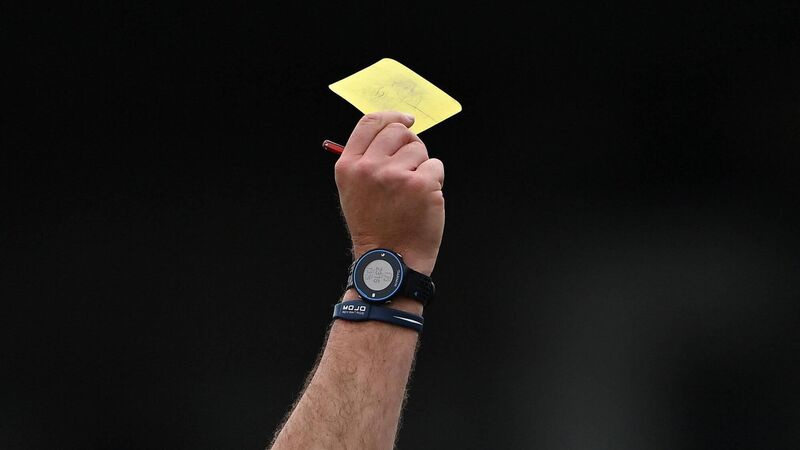
A battle to determine extra-time as the same game as normal time will be played out at Congress next month.
A battle to determine extra-time as the same game as normal time will be played out at Congress next month.
The determination of a number of Central Council delegates for all cards to carry into the additional 10-minute periods will see a motion put forward at the annual gathering in Newry.
Currently, black and yellow cards are annulled in extra-time and while a player sent off in normal time can’t return to the field for it, his team is entitled to replace him and be restored to their full complement of 15.
At Saturday’s Central Council meeting, Longford delegate James "Mel" Clarke was among a number of speakers in favour of the proposal, which appeared to have been put on the long finger.
Initially, the standing playing rules committee had put forward a recommendation that black cards be wiped for extra-time but Central Council rejected it.
“That first came on the agenda of Central Council in November,” explained Clarke. “At that meeting, David Hassan from the standing committee on the playing rules was proposing if a player got a black card and hadn’t spent the full 10 minutes in the sin bin in normal time, his team would have the option of the extra-time with 15 and if he wanted to come on in extra-time he would count as one of the three subs.
“In fairness, the referees had spotted this was coming on the agenda and they weren’t at all happy about it because it was extra work to them. In fairness, David Hassan agreed then that probably the sensible thing to do was for all cards to carry forward and that was unanimously agreed at that meeting.” The standing rules committee were asked to review their motion but when there was no word of a revised proposal coming forward in time for Congress a number of Central Council delegates including Clarke campaigned for it to be discussed this past weekend.
There, the idea of deferring a proposal for all cards to carry was initially floated before Clarke highlighted that as per rule Central Council could only endorse or rescind their earlier decision and delegates chose to support it once more.
The chair of Longford’s competitions control committee, Clarke had come across confusion about the idea of extra-time as a new game during a club game last season. “Before extra-time started, I was with the referee and a member of one of the clubs was adamant that a player who had been suspended could play because it was a new game. A player can’t play in extra-time if he’s suspended.
“Then you have a player who is red carded in normal time and can be replaced for extra-time and the player who is booked and for extra-time the yellow card is scrapped, and the black card is the same.
“If this motion gets through Congress, it will become very clear. The team that picks up a red card in normal time suffers the consequences in extra-time. The player who picks up a yellow or a black card still has it in extra-time. Extra-time is a continuation of the game, it’s not a new game.” There is expected to be opposition to the motion from some quarters who maintain a team who are numerically disadvantaged in normal time shouldn’t be for another 20 minutes plus.
With all provincial and All-Ireland knock-out games with the exception of the All-Ireland finals now being winner-on-the-day fixtures, extra-time has never been more prominent in the GAA inter-county calendar.
Last year, extra-time as well as penalties were applied to Armagh’s Ulster SFC final and All-Ireland SFC quarter-final defeats to Derry and Monaghan as well as New York’s famous Connacht SFC quarter-final win over Leitrim. Louth won through to a Leinster SFC final after beating Offaly following two additional 10-minute periods.
It was also required to decide the Joe McDonagh Cup final where Carlow prevailed against Offaly.


CONNECT WITH US TODAY



Be the first to know the latest news and updates