The never-ending grá for the grassroots
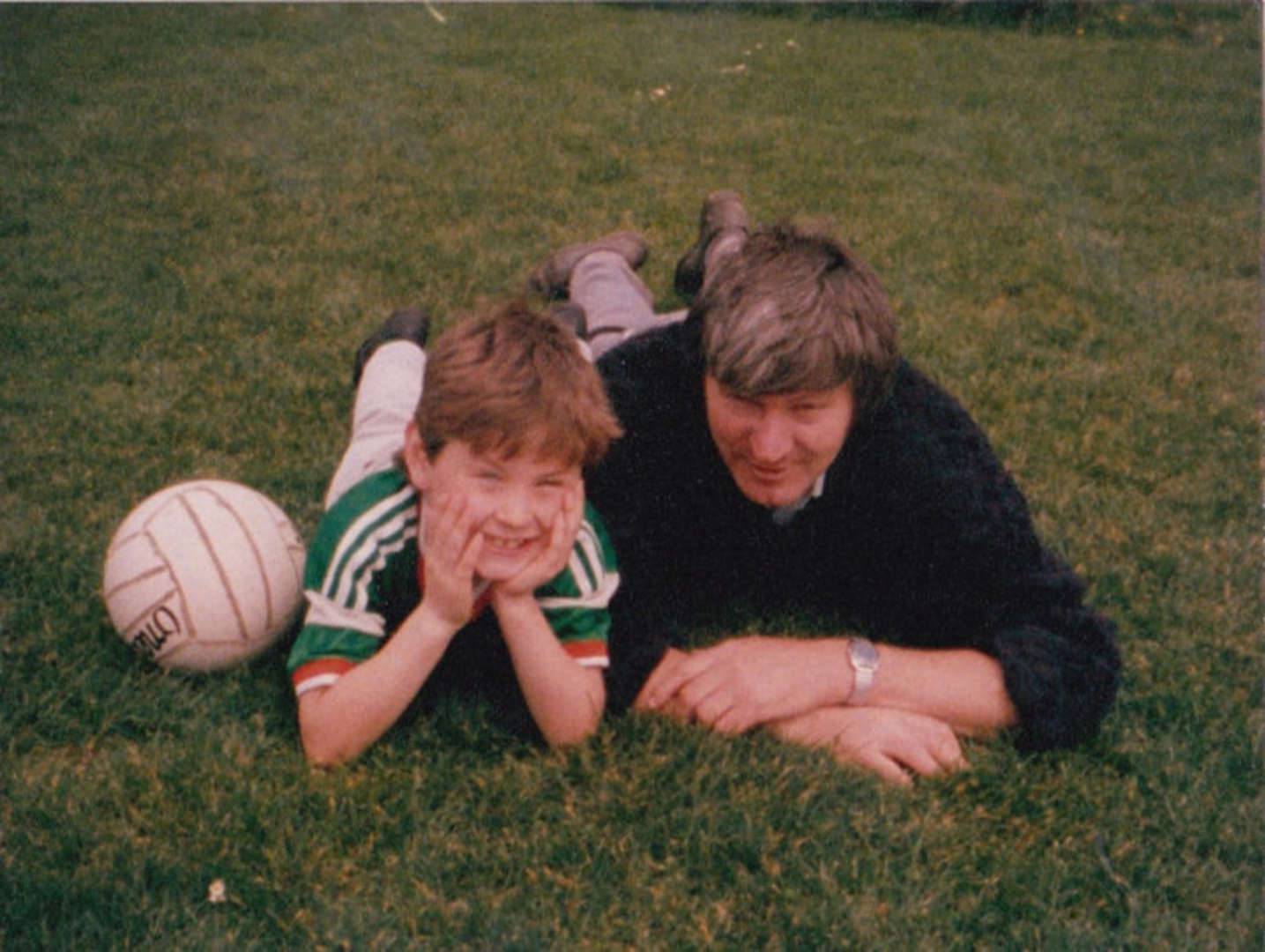
Ciarán Murphy with his dad Tony.
HE doesn’t name names, but certain teams, captains, and managers might come to mind with Ciarán Murphy’s gentle prodding. A debut author, seeks to showcase the 99% of the playing population, the nearly men and women who may not have made it to inter-county football but whose life still revolves around their team.
But why does it feel like a revelation when Murphy, 41, who says he’s broken most of the GAA’s core principles, having played senior club championship football for three different clubs in two different counties, admits that love and fun are two of his main reasons for playing? Why does it seem like the exception rather than the norm to see, for example, Michael Darragh Macauley chuckling along during a sideline interview, like he did in a clip shared on social media over the weekend, explaining that Ballyboden St Enda's win against Castleknock in the Dublin SFC was "good craic”?
“It's so easy to say, 'I gave up everything in my life to play Gaelic football. We gave up everything, everyone put their lives on hold,'” Murphy tells me in the Second Captains office in Dublin - he’s one fifth of the acclaimed sports podcasting team. “I know you put a ton of effort in, but you put a ton of effort in because you love it.”
He posits a winning captain interviewed on TG4 afterwards: “‘Everyone wrote us off. We've suffered for 10 months. We've changed more than everyone else. We've worked harder than everyone else. We've suffered more than everyone else. And now here we are.'
“This is such a weird, negative framing of what should be the happiest day of your life. Like, you did it. It was all your own choice and you had fun and now you're gonna have more fun than you've ever had for four days, surrounded by your own people, having the time of your life. It's fun. It's not this torture that people love talking about.”
Murphy is still having fun playing football, perhaps now more than ever, lining out over the summer for Templeogue Synge Street’s intermediate and junior teams as well as the Dublin Masters. Despite an arm injury and three games in five days at one point recently, there’s no talk of burnout.
“We're talking about bonus territory… Every day you get a chance to play is genuinely a bonus.”
Templeogue-Synger is his third club. Amid injuries and with Dublin calling for a man in his mid-20s, he moved east from Milltown, Co Galway, to St Vincent’s in 2005/06. Such a move is never taken lightly, but Murphy admits to feeling stung by friends from home who, he writes, registered their utter disgust at my decision to ‘walk out’ on my club and its up-and-coming group of players. He tried to avoid the emotional blackmail but he was soon back with Milltown. Over a decade later, though, a move to Templeogue-Synge Street was a lot more amicable and easy for everyone involved. How does he feel looking back now?
“I'll defend people's right to the death to transfer clubs. That doesn't mean I didn't feel guilty myself for doing it."
As for retirement, he laughs it off. “The idea of a player retiring from club football is hilarious. They're only retired up to the point when you decide to unretire yourself. So you'll never get an announcement from me that I've retired. I'll just be like, this week I'm not training, last week I wasn't training, next week I probably won't train. But anything after that, who knows?”
Murphy touches on numerous facets of the GAA in his book. But he begins by talking about his father. Like Eimear Ryan’s - which she starts by discussing her grandfather, former GAA president Séamus Ó Riain - Murphy, his brothers, and perhaps a small cohort of the community in Milltown, a village 15 minutes up the road from Tuam, Co Galway, might not have developed a grá for GAA without Tony Murphy.
“You can't write about the GAA without writing about communities and if you grew up in a family like mine, it would be literally impossible for me to have written about my experience of the GAA without writing about not just dad, but mam also, my brothers also, who are mad into it at different levels, but also mad into it.”
He writes lovingly of his ‘one-man band’ father’s red A6 notebook, a census of sorts, with the name of nearly every youngster in the area, ready for the various teamsheets of which Tony was in charge. He swapped his Ford Cortina for an orange Volkswagen minibus, a little side hustle, ferrying young and old to games across the county and country.
“Dad maintains he once headed off to a tournament in south Mayo with 31 kids in the back,” Murphy writes of a time long gone. Needs must.
The van may now be gone, but what Tony, who has had Parkinson’s for 17 years, gave to the community over decades, the community is now giving back. He’ll move heaven and earth to get to his grandchildren’s games - Ciarán, meanwhile, laments missing, for work, his nephew Enda playing midfield for the Athenry U16s when they won a county final 3-17 to 4-13 the night Ireland went down 2-0 to France - where he and wife Frances will invariably be found with portable seats.
“The way that Milltown - not just the GAA club, but the community; it's a bit of a moveable feast, it's all the one anyway, probably - have wrapped their arm around [Tony] and said, 'Whatever we can do'... It's good for us, but it's also good for Tony. It's good for him to know that he's still a huge part of this community and we respect him massively and we respect what he thinks about things.”
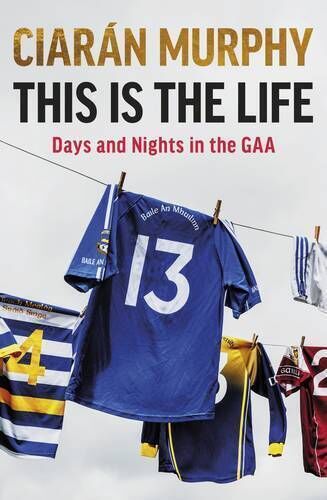
All of this underpins what the GAA is about. This is the Life indeed. “So many GAA books are written from the same perspective, which is, obviously, the intercounty superstar or the intercounty manager. And that's kind of it, really,” says Murphy, explaining the creative spark for the book. He’s almost awestruck thinking about the machinations behind, say, the first couple of weekends of club GAA this summer.
“How do you sum up a weekend of action where literally every single club is out in some way? Like, isn't that an amazing thing? Say the middle two weekends of August, when the All-Irelands are well over, every county championship was probably in action at that time - they're the best weekends of the GAA year, without a doubt, in that every single unit of the GAA was probably in action for one of those weekends in huge games that mattered deeply to everyone. They were the pinnacle of their years… they're the best weekends of the GAA year.
“They're also the weekends where people say, 'Oh, well, the GAA handed over August and September to other sports.' Well, yeah, they did, but they did it for exactly the right reason: So that all of their players could play at the peak time of year and they'd know they're playing at the peak time of year and they're not worried about fading light for training sessions and crappy pitches.
“That is the story. But it's a hard story to sum up… So the big thing for me was, what are those stories that aren't really told in many other GAA books and is there something in my experience that allows me to talk briefly about my own life in the GAA?”
Murphy wasn’t a great player. A full-forward, the highest level he got to was the Galway U21s. But he wasn’t - isn’t - a bad player either: How many people can say they’ve featured in a provincial U21 final (though he missed a late chance in that Connacht final against Mayo and Galway lost by a point)?
“That moment comes back to me time and time again,” he writes, almost 20 years later.
“It's hard to write about your own playing career because everyone knows a windbag, a blowbag,” he tells me. 'I could have been a contender' vibe is universal - like, Jesus, is there anything more boring? But as I say, is there anything more universal than some lad who played a bit of minor, played a bit of U21 for their county, ruminating on why it didn't happen?”
He admits it was difficult to look back and ponder why he didn’t go a step further, beyond county U21. “It's because I wasn't good enough,” he says plainly. “What I also didn't want to do [in the book] was say that I was terrible and just leave it at that. Because the whole point of it, and we talk so much about how the GAA is a community effort and it's volunteerism; I absolutely understand all that. None of that holds a candle to playing a game and playing well in a game and feeling like the game is in your hand.
“And I'm talking about the Templeogue Synge Street thirds, the Milltown national school team, like at any stage in your career, games sometimes go well for ya and you have this thing, 'If I can touch the ball again, things are gonna happen here'. For me to write a book about the GAA about my own experience in the GAA and not reference the fact that that happened a couple of times - like, I couldn't do that either. And it would have been actually dishonest.
“But that was really difficult because you're trying to hit the balance… You don't want to come across like you've got some inflated opinion of yourself. But I didn't want to do false modesty either. Because that's really annoying. I played for the Galway U21s when Galway were really good. They'd won the All-Ireland the year before and the senior team had won the All-Ireland the year before that, so, that's a good level. I'm talking about probably 12 months or maybe two years of being a good footballer. I reached that level. I'm under no illusions about why the level stayed at the level it was: Because I played with proper good ones and the difference is quite clear. They were killers.”

BLACK FRIDAY
Already a subscriber? Sign in

CONNECT WITH US TODAY



Be the first to know the latest news and updates