Talking points: An epic rivalry awaits another glorious chapter
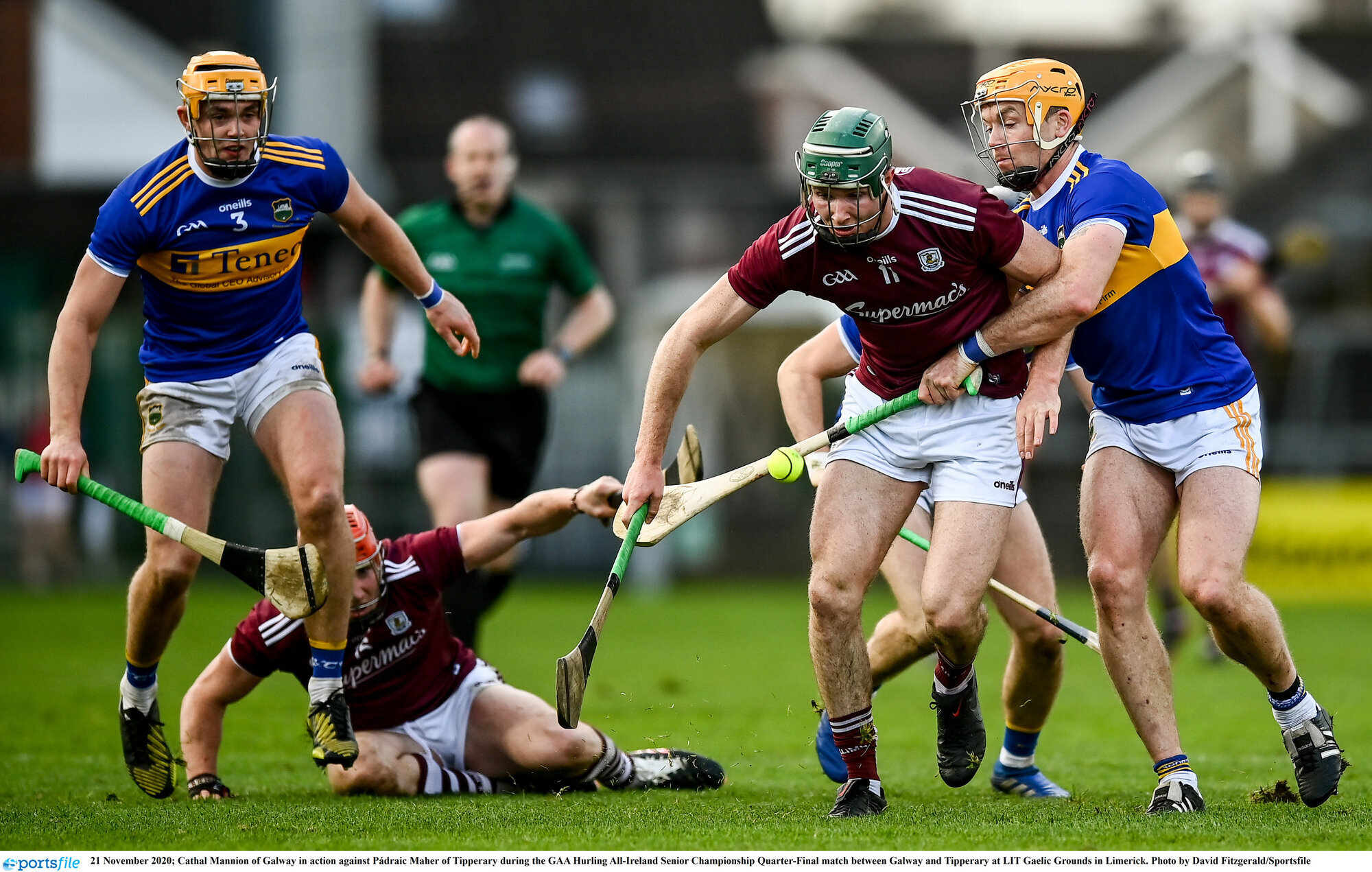
2020: Cathal Mannion of Galway in action against Pádraic Maher of Tipperary during the GAA Hurling All-Ireland Senior Championship Quarter-Final match between Galway and Tipperary at LIT Gaelic Grounds in Limerick. Pic:David Fitzgerald/Sportsfile
With 20 minutes remaining in a 2014 qualifier in Thurles, Galway led Tipperary by six points. Galway looked in control but then Tipperary exploded, outscoring their opponents by 2-10 to 0-1 down the home straight.
Tipperary managed to create an irresistible momentum against a tired team who were playing their third big championship game in 13 days, with Galway also having faced Kilkenny in a drawn and replayed Leinster semi-final over the two previous weekends.
It was an electric and enthralling match but it was still an anomaly in the modern history of the Galway-Tipperary rivalry because of the nine-point margin of victory. The defining trend between the counties this century is just how little there has been between them. The average margin of victory in their four championship games during the 2000s was two points. The games in the last decade though, were even tighter again; in 2010, 2015, 2016 and 2017 the winning margin was a solitary point.
When the rivalry was at its apex between 1987-89, the average margin of victory was just four points. Galway and Tipperary played out three epic matches between 1987-’91, but the relationship between the counties soured during that summer of 1989 when the “Tony Keady Affair” exploded like a powder keg. Galway even threatened to pull out of the game in the build-up to that semi-final, having felt that Keady was harshly suspended for playing a club game in New York without receiving proper clearance.
Keady had played for a Laois club against a Tipperary club and when the Tipperary club later raised their objection, it was automatically assumed they were doing so with the tacit approval of the Tipperary county board. Keady’s 12-month suspension ignited a conspiracy theory that was to pollute Galway relations with Tipperary.
In a fractious and incredibly tense match, Galway ended with 13 men in that 1989 All-Ireland semi-final as Tipperary won by three points. The enmity lasted for the next four years.
The only breakout result during that period was Tipperary’s ten-point win in the 1991 All-Ireland semi-final, but Tipperary were at their peak then and Galway were on the slide. When Galway caused a huge shock in the semi-final two years later, Galway won by just two points in another fractious match.
The teams didn’t meet again in the championship until 2000, by which stage the scar had healed. Galway beat Tipperary in that 2000 All-Ireland quarter-final before Tipperary defeated Galway in the final the following year. The rivalry was nothing like it had been during the previous decade but that generation of players had still grown up during that epochal period when Galway-Tipperary matches always meant something huge.
Bordering eight hurling counties always meant some other crowd always had an issue with Tipperary at some point or another, some of which were far more historical and sustained wars than any smouldering rivalry with Galway; Tipperary regularly fought skirmishes on the front line with Kilkenny, Cork, Limerick, Clare and Waterford.
Galway never had any truck with Clare along their southern border while Galway’s border with Tipperary was a small strip along the river Shannon, with Portumna as the gateway. The only time Galway enjoyed any sustained dominance in the rivalry was between 1987-89. Galway beat them in the 1987 All-Ireland semi-final (the best game played at Croke Park that decade), the final a year later, and the 1989 league final, another brilliant match.
Since 1989, the counties have played 12 championship matches, with the sides level on six each. The rivalry during the last decade though, went to a whole different level again in terms of quality and drama. When the sides last met in the 2020 All-Ireland quarter-final, in an empty Gaelic Grounds, Galway won by two points, with an Aidan Harte goal with three minutes remaining proving to be the decisive score.
Historically, the teams had never been that close because Tipperary had always dominated the relationship. The counties met in the very first All-Ireland final when Meelick clashed with Thurles Blues in the 1887 final (which was played in 1888) in Birr. Tipperary won, which largely set the trend for what was to follow. In their first 15 championship meetings, up until 1987, Tipp won 14 of those matches.
Galway’s sole victory was a one-point win in the 1924 All-Ireland semi-final but Tipp scolded Galway for their insolence by hammering them in the final a year later. When they next met in 1930, Tipperary wiped the floor with Galway in the All-Ireland semi-final.
The counties didn’t clash again in championship until 1950. They met once when Galway were in Munster during the 1960s before Tipp floored Galway in the 1971 All-Ireland semi-final. When they finally locked horns again, in 1987, the relationship changed dramatically, primarily because Galway got on top for the first time.
They have had each other by the lapels ever since. The counties have always been rivals and have always played out some epic battles. Galway may have won the last two championship matches but, since the rivalry ignited in 1987, no team has managed to win three successive games against the other.
Can Galway finally manage to do so now? Can Tipp get on top again? Whatever happens, Saturday’s game is set to be the latest instalment of a rivalry where neither wants to let the other out of their sight.
With 12 minutes of normal time remaining in last year’s Clare-Wexford All-Ireland quarter-final, it appeared as if the Leinster empire was emphatically about to strike back. For the first time since Galway entered the eastern provincial competition 15 years, Leinster looked set to have three teams in the All-Ireland semi-finals. There were a couple of occasions, in 2000 and 2001, when Galway were joined by two Leinster teams (Kilkenny and Offaly in 2000, and Kilkenny and Wexford in 2001) in the All-Ireland semi-finals. But Galway weren’t in Leinster at that time.
In any case, Leinster’s attempt to try and reclaim some lost ground on Munster still had a bit to go after Clare stormed back against Wexford to charge into the All-Ireland semi-finals. Kilkenny did beat Clare in the All-Ireland semi-final but Limerick took down Kilkenny in the final, which saw a Munster team win five All-Irelands in-a-row. That was the first time that happened in over six decades - between 1948 and 1954, Cork, Tipperary and Waterford shared seven All-Irelands between them.
In 2017, 2018 and 2021, three of the four All-Ireland semi-finalists were Munster teams. With Clare and Tipperary fancied now, will Munster make up three of the last four again by Saturday evening?
Leinster’s numbers haven’t been impressive when their sides have come up against their counter-parts in the other province. Outside of their preliminary quarter-final win against Kerry last year, Wexford haven’t beaten a Munster team in championship in their last eight meetings. Dublin haven’t beaten a Munster team since 2015. Kilkenny have only won four of their last ten championship matches against Munster sides since 2016.
Kilkenny were the last team to beat Limerick in a knockout championship match in 2019 but Kilkenny have been knocked out of the championship by a Munster team every year since 2016 – Tipperary, Waterford, Limerick, Tipperary, Waterford, Cork and Limerick.
Of all the Leinster sides, Galway have the best record against Munster opposition over the last ten years; Galway have won eight of their last 16 games against Munster sides, a 50% success rate. Yet they’ve only won two of their last six clashes against Munster opposition, All-Ireland quarter-final wins against Tipperary in 2020 and Cork last year.
So can Leinster strike back now?
When Galway and Mayo met in Limerick in 2019, it was the biggest qualifier game since the 2012 game between Kerry and Tyrone in Killarney in 2012. The mood surrounding the game beforehand was carnivalesque. The match was moved outside the province to cater for the anticipated huge crowd. The M18 motorway was clogged up as far back as Bunratty in south Clare – 10km from the Gaelic Grounds – four hours before the game.
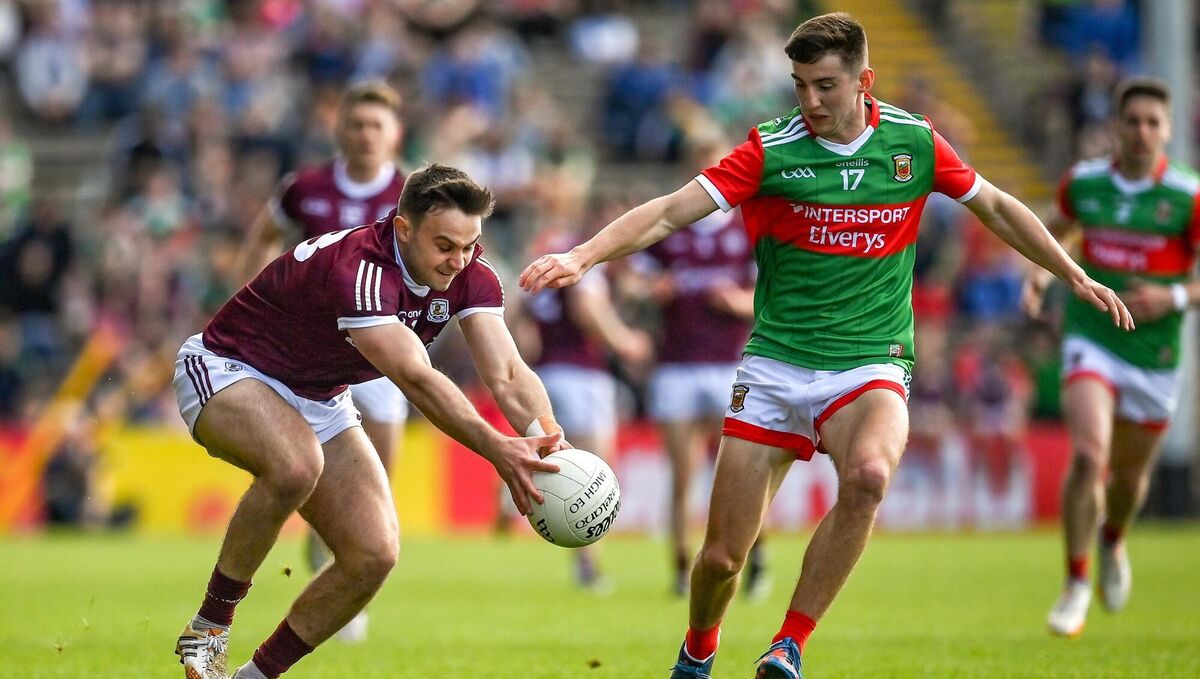
The qualifiers are gone now but, if the GAA were looking for a marquee knockout clash to really announce the new system, they’ve got it in the first go. For Galway and Mayo though, this is a game that both hoped might happen – but certainly not at this stage of the season.
Since the qualifier era began, Mayo and Galway have never been gripped as tightly together at a time when both are in such a strong position to win an All-Ireland.
In the last 20 years, Mayo and Galway have only reached the All-Ireland quarter-finals in the same year on five occasions. In each of those five seasons though, only one of the two counties advanced to an All-Ireland semi-final.
Prior to last year, Mayo were always a genuine All-Ireland force during those four seasons they and Galway reached the last 8 together, but Galway weren’t, losing those four quarter-finals between 2005-’17 by an aggregate margin of 27 points.
When Galway finally broke through that All-Ireland quarter-final barrier in 2022 (excluding their 2018 semi-final appearance through the Super 8s), Mayo were a pale shadow of themselves - despite having reached the two previous finals - being hammered by Kerry in the quarter-final.
At the outset of this championship though, there was the unimaginable but gripping prospect of both counties hurtling towards the finishing line neck-and-neck at the latter stage of the season. In the most open championship in decades, the question was asked – could Galway and Mayo meet in an All-Ireland final? How big would that be?
That can’t happen now. But Sunday’s game is as big as they come prior to that stage.


CONNECT WITH US TODAY



Be the first to know the latest news and updates