Six minutes that summed up modern Gaelic football
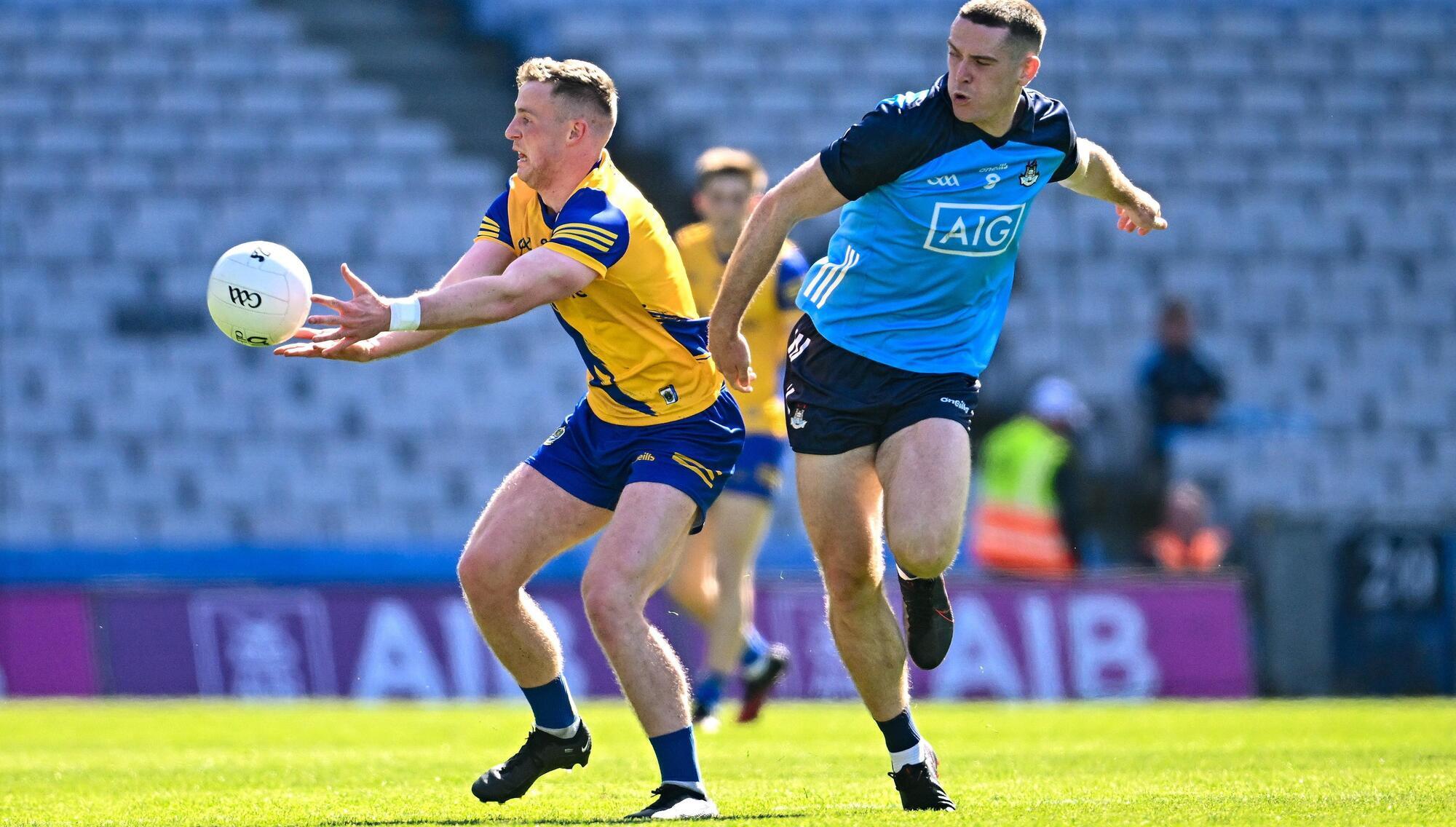
KEEPBALL: Eoin McCormack of Roscommon in action against Brian Fenton of Dublin during the All-Ireland SFC Round 1 match against Roscommon at Croke Park. Pic: Ramsey Cardy/Sportsfile
At the launch for the Munster championship in April, this writer sidled up alongside Kerry selector Diarmuid Murphy in search of some exclusive hot take on the shape of Gaelic football. Instead, he elected to slice right to the heart of it.
With a beady stare, Murphy swept aside trivial questions about the evolution of goalkeepers and whether styles make fights. Winners set trends, we submitted. Coaches copied Kerry’s direct approach with Kieran Donaghy and Donegal’s blanket defence. Where will it go next?
“This is the nature of the beast,” he replied. “Imitation is the best form of flattery. But look at what Dublin were doing over the last couple of years, teams have been trying to copy them and it hasn’t worked out great.”
Then he cut to the chase. What did Dublin do and why? What is the number one priority now versus what it was when he was an All-Star goalkeeper?
“The emphasis now is possession. Then it was all about territory. All kickouts went long. Get the ball into your forwards quickly regardless. Of course, ideally you wanted it to be good ball, but you had to get it in. Now retaining the ball is as important.”
As important. All important. In recent years frustration around the sport has sparked around the kickpass, or lack thereof. The GAA’s Standing Committee on Playing Rules fanned those flames with a blizzard of contextless data and trialled caps on the number of consecutive hand passes. This was their symbol of the ongoing conflict between risk and reward.
Is there anything that can neatly summarise the modern game, this championship and how supporters feel about it? A six-minute stretch on Sunday comes close.
Roscommon were three points up with 31.24 on the clock when goalkeeper Conor Carroll took a short kickout to Brian Stack. From there they went into clinical keepball for almost six minutes. 77 passes in all. Carroll was a constant outlet and racked up 19 possessions in that passage alone. A portion of Hill 16 onlookers jeered as the time ticked away and Roscommon kept recycling. The home side scarcely laid a hand on a man in possession. In fact, they only did so nine times in that entire period. Roscommon set the terms and were in total control until Ciaráin Murtagh scored. Dublin let them.
“That's what they do. They were playing against a breeze. They're a possession-based outfit so I'm not surprised that that was the case. You'd have to ask them about that to be honest,” replied Dessie Farrell when asked about that moment post-match.
They were once the masters of this tactic. It was widely accepted by coaches that if a ball stays in play for more than 90 seconds, players tire and make poor decisions. Dublin backed themselves to outlast that. Has Farrell ever practiced a six-minute keep ball period?
“I think we'd all get bored with that! But look, it's effective for them. They were playing down the clock, get in at half-time three points up with a breeze at their back. They probably would have thought it would have been enough. We changed things up at half-time and came out with a different mindset I think and got ourselves back into the game.”
Such spells generate a passionate response from pundits and supporters; some of it furious. Armagh were audibly rebuked by their own fans when they turned around and kicked backwards in the first half last Saturday. So many fixtures follow a similar pattern now. The numbers bear that out.
A quick review of the weekend. Armagh had 32 phases, Westmeath 34. What percentage of attacks ended in shots? 69% vs 74%. Now consider Healy Park. 84% vs 90%.
Roscommon and Dublin were at 69% and 65% respectively. The principle of play is near universal. Get hands on the ball, protect it at all costs, squeeze every drop out of every attack. That is the key now: control. How it is administrated is irrelevant. 30 of the passes during that particular Roscommon move before half-time were with the foot, almost a 1:1 ratio. Yet many are left feeling just as cold. It might be articulated as annoyance with the handpass, but really it is a lack of contests. Risk and randomness generate excitement. The same is true for sports all over. Turnovers add fuel to the fire. It opens up a match, causes more space and leads to most scores. John Small’s goal was the perfect example. Ben O’Carroll was forcefully tackled and then Dublin went for broke.
Trying to promote more of that is a worthwhile endeavour. Trials and gradual tinkering are no bad thing. This is not a zero-sums game, the intrigued chess enthusiasts on one side and those appalled by puke football on the other. Given the importance of turnovers, any ‘tactical foul’ after one should be severely punished. The AFL have a 50-metre penalty if the ball is not given straight back or it is knocked from a player’s hands after a free kick is awarded. Once again that can speed up play.
All that said, at its core the problem on Sunday was a tactical one. Dublin’s flaw was that they sat off and conceded a score.
“It is very passive. Even though they are man-to-man, there is no contact tackles,” explained Paddy Andrews on commentary. Doing the opposite in the second half dragged them back into it. Why did it take a half-time reflection to instigate such a shift? This is a team who responded to a red card by pushing Stephen Cluxton up to mark Tommy Walsh and pressed every Kerry opponent in the 2019 drawn All-Ireland final. Goalkeeper Carroll racked up a jaw dropping 53 possessions and is key to how the underdogs operate. They needed to disrupt that.
Watching how Davy Burke deployed his number one in Croke Park was utterly engrossing. At the same time, every stakeholder is entitled to their view. Can we find a middle ground that might satisfy all parties? Start at the stem and plant the seed accordingly.
Because while these rule and spectacle conversations may be agonising, they are also important for the future of the sport. One and all should have their say as we shape that. This is a changing game. This is everyone’s game.


CONNECT WITH US TODAY



Be the first to know the latest news and updates