Patrick Kelly: Not perfect, but when heat was on, Cork stood strong
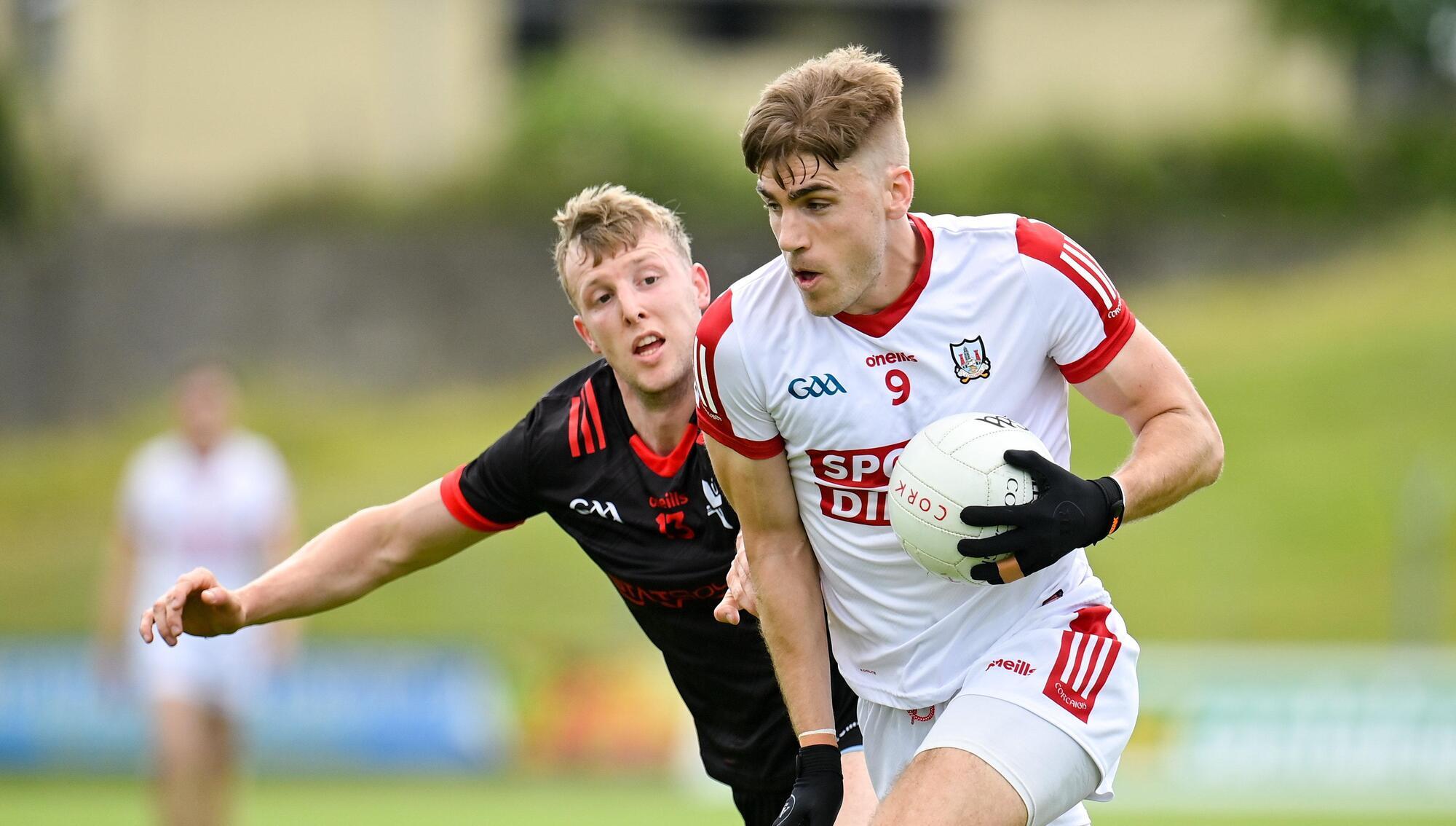
POWER RUNNER: Cork's Ian Maguire is pursued by Paul Mathews of Louth at Páirc Tailteann.

Once the Sam Maguire draw was made and the fixtures released, it was evident that Cork’s trip to Navan to face Louth was essentially knockout football.
This reality, aided by a scorching hot day and a very decent crowd, led to a cracking contest between two evenly matched teams. That Cork showed the quality and nerve to get over the line is a huge vindication of the work being done and should all but guarantee at least a preliminary quarter-final.
Rewind the clock two months and Cork came out on the wrong side of a similarly evenly-matched contest in Ennis which had the potential to be far more catastrophic than it turned out. Thankfully Cork found themselves in the hunt for Sam Maguire and while they don’t appear to have reinvented the wheel, there were a few key differences in what we saw on Saturday.
Firstly, Cork had a greater array of scoring threats as five of the starting six forwards scored from play, plus three of the attacking options used off the bench. Rewind the clock to Friday’s team announcement and I was certainly surprised and concerned that Cork’s primary scoring threat against Clare, Steven Sherlock, was not starting. A scoring return of 1-19 certainly makes those fears seem unfounded.
A major contrast in terms of performance can also be seen in scoring efficiency from open play; 31% against Clare, 56% against Louth. I still feel Cork could and should find space for either Sherlock or Conor Corbett to join Brian Hurley inside as a second scoring threat.
The most impressive aspect of Cork’s play was the pace at which they countered and punished the many Louth turnovers. Whether it was the heat or the intensity of the match, Louth were architects of their own downfall with poor decision-making in possession and poor execution of the basic skills. Sixteen times Louth turned the ball over. Compare this to the nine times that Clare coughed up ball in Ennis and it is easy to see why Cork’s running game was more effective.
The mantra of “show him the line” was used by Cork to great effect on several occasions as they bottled up and turned Louth over before injecting pace in their attacks.
These turnovers provided Cork’s midfield pairing of Ian Maguire and Colm O’Callaghan the opportunity to use their respective attributes; carrying and powering on to the ball with open space ahead. Both ended with 0-2 from play and were also very prominent in other attacks.
Cork appear more dangerous in the chaos with runners coming from deep in numbers. Facing a well-set defence, as with Clare in Ennis and Louth at times in Navan, Cork seem to lack the ability to probe and find their shooters around the D.
The midfield pairing was also to the fore in another deciding factor of the game - kickouts. Cork again went with the overload to Micheal Martin’s left-side when pressed. Against Clare, many identified this tactic as a key reason why Cork lost control of the second half with the towering Banner midfield destroying Cork in that area. On Saturday however, Maguire, O’Callaghan and Ruairi Deane (who also had a huge game in carrying ball and laying off scores) took control and won key clean and dirty ball when Louth had all the momentum midway through the second half.
One aspect of the visitors' tactics that surprised and disappointed me was the approach on Louth keeper James Califf’s kick-outs, with Cork winning just three of 29. Having watched Dublin annihilate the Louth kick-out in the first half of the Leinster final, I thought John Cleary's would look to do similar. Instead, Cork only pressed after placed ball efforts. From open play efforts Cork simply retreated to the 45 and applied pressure from there. The few times they did press they did so to decent effect, again utilising the aggressive three lines of four.
Cork appeared to change tack when they went six points up in the second half and clearly dropped the line of engagement to the 65m line. A small change but one which helped Louth develop a head of steam.
This spell of the game will be of most concern to Cork when reviewing it. Louth were able to pierce the heart of the Cork defence and kick scores too easily from around the D. Retreating runners began to look leggy and tackles became weak and lazy. As well as being porous through the middle, Cork also allowed Louth danger men Sam Mulroy and Ciaran Downey to cut in from the left sideline on to their favoured side to kick good scores that pushed Louth into a one point lead with all the momentum.
While I credit Cork’s scoring of 1-19, the concession of 1-17 to a team whose level Cork won’t face again this summer is of major concern.
That Cork managed to wrest back momentum is a huge credit to them. Championship games are decided and remembered for moments and a few big ones stand out in this crucial period. Firstly, Brian Hurley’s free from the sideline to level the game was as good as I’ve seen. Killian O’Hanlon making up at least five yards to win a bouncing ball in the corner which led to a Maguire fisted point. John O’Rourke diving on a breaking ball in midfield which led to a Conor Corbett point late on. Big plays when the chips were down.
For Cork, attention now turns to Kerry in the Pairc on Saturday. Given the heat and intensity of this game, and the short turnaround, Cork will have to shuffle the deck. A few injuries already guarantee changes but with a win in the bag I can see Cork changing it up more than expected. Kerry’s two-week break means they’ll be fresher and their need for a win is now greater. A tall order for Cork but they stood tall on Saturday when the need was most.

CONNECT WITH US TODAY



Be the first to know the latest news and updates