Eastern promise for growing GAA club in Cambodia
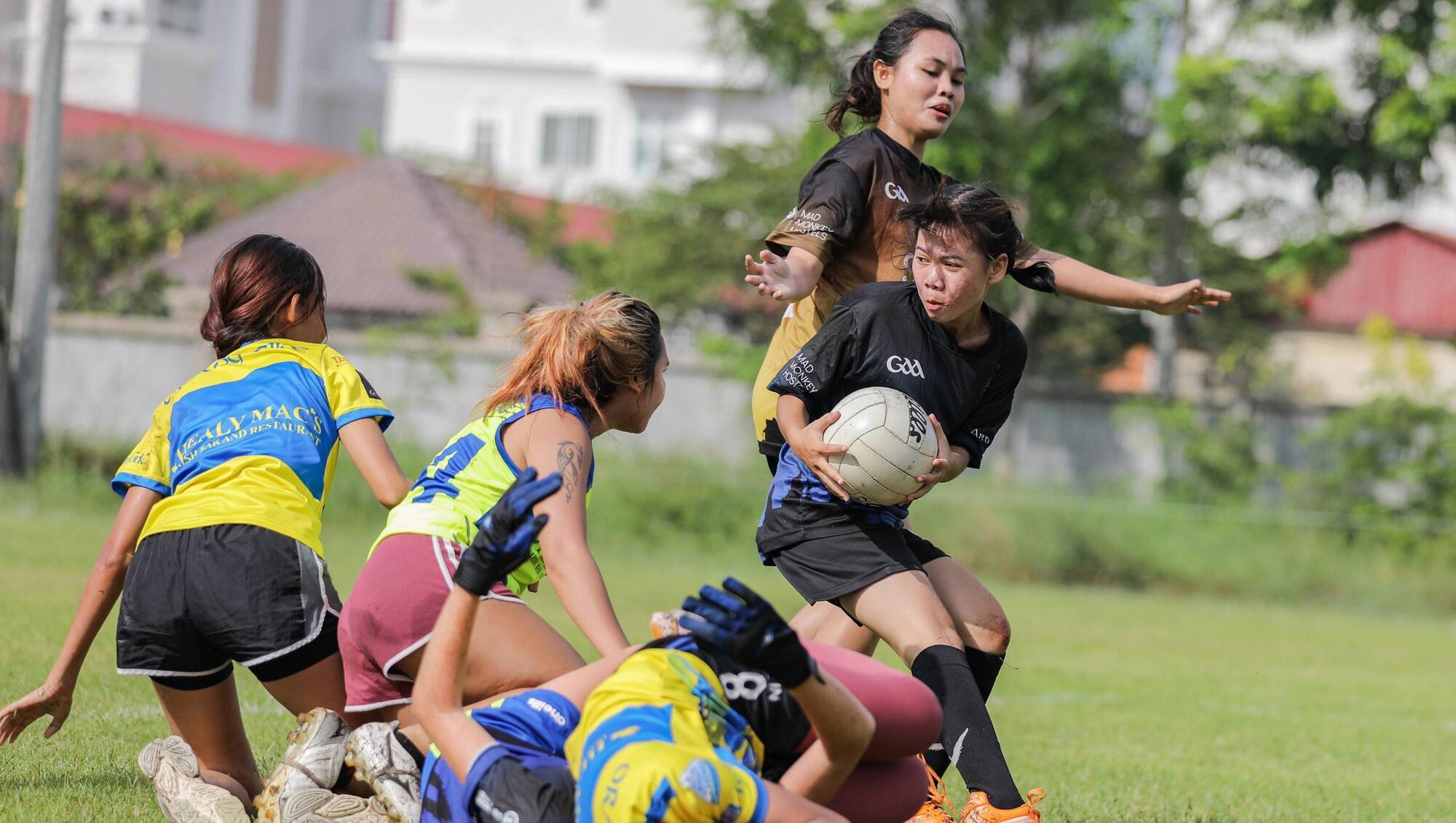
Yan Sokry, emerges with the ball against Orang Eire Malaysia in Phnom Penh last year.
Life has taken Rónán Sheehan in some unexpected directions.
He hadn’t the slightest intention of planting roots in Cambodia when he landed. A native of Kanturk, he had meandered his way through Europe before a fascination with Asia drew him eastwards. Now here he is, one year turning into two, three and the best part of a decade.
He’s well settled, embedded into the country and the culture thanks to a Cambodian partner, a job in student services at an international school and a fairly decent understanding of the lingo, even if, by his own admission, he wouldn’t be sitting the Leaving Cert with it.
The other curveball was more familiar but still unexpected.
It was 2017 when word arrived in Phnom Penh of a lad from Tyrone who, after time spent in Malaysia, had pitched up in Siem Reap. That is the country’s second largest city up north, near the famous Angkor Wat temples.
Paddy Campbell had spent five weeks in Mallorca during Covid a few years earlier and that was time enough to found a GAA club. The initial ambition was smaller in scale this time: get a team of Irish wanderers together for the upcoming Asian Gaelic Games.
That was it. Nothing more, nothing grander.
Six years later and what is now the Cairde Khmer GAA Club has weathered the pandemic and known success at the continental games. Now they’re raising €70,000, via gofundme and other means, to send a team made up of Cambodian players to Derry in the summer where they will represent the Asian county board in the non-Irish category at the World Games.
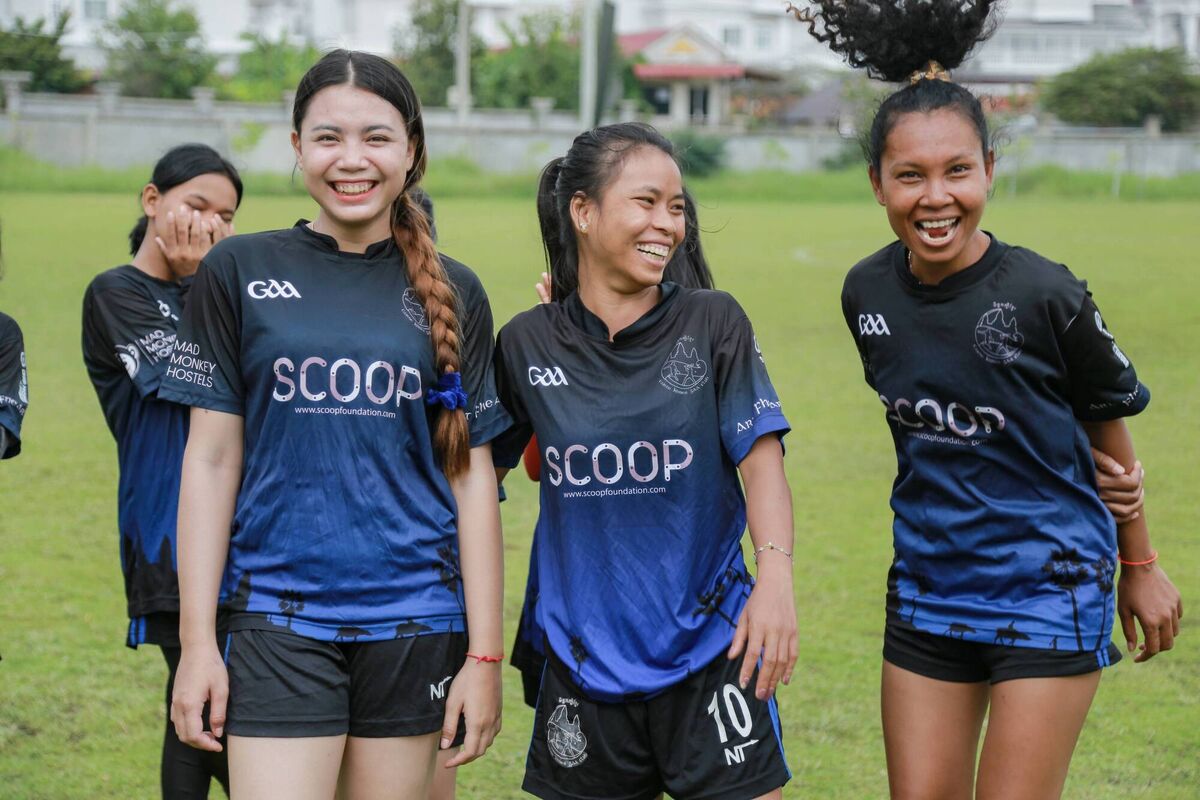
“Once these things start to take legs at all you get swept up in them,” says Sheehan.
He started out as a player, now he’s the chairperson, bound tightly into the fabric. Conor Wall, a Blarney man with three Sciath na Scoil medals from his days in Cloghroe National School, is a founding member. Peter Downey, a Bishopstown man and nephew of Kilkenny greats Angela and Ann Downey, is another man welded to the wheel.
The local influence has been organic.
The country has nothing like the numbers of Irish you would find in Thailand or Malaysia and there were Cambodians on board from the start, mostly teenagers who had been brought along by foster carers in different NGOs. They brought more friends, others migrated over from soccer and so it went.
The term ‘organised sports’ isn’t so embedded in Cambodia as elsewhere but the club has close to four dozen players at training now and somewhere north of 85% of the playing membership are Khmers. A good number of those are girls and women and this is more significant again.
“It’s not that it is banned," says Sheehan, "more that it is just highly unusual, but it is rare that women have any organised sports over here. You are starting to see shoots of it now, women’s grassroots football clubs popping up a little, maybe three or four clubs. It’s quite small and once you get outside Phnom Penh I’m not sure.”
The club brought 16 Cambodians to the 2022 Asian Games, in Kuala Lumpur last October, and the men’s and women’s sides both reached the finals, their heavy reliance on Cambodian players drawing in bigger and bigger crowds along the way as they faced sides made up mostly of Irish emigrants.
“Some of our girls hardly come up to the waist of some of the Irish girls and they were running rings around them, being absolute piranhas off the ball,” says Sheehan. “They’re absolutely vicious, like. They play right on the edge.”
Some of that seems to stem from their exposure to the AFL team in the Cambodian capital and the more committed nature of the tackle allowed in the Aussie sport, but the very presence of these players on a foreign field is a victory in itself.
Cambodia is a deeply patriarchal and poor society. The average monthly wage is just €200 so the GAA club has adopted a policy whereby locals train, play and travel to tournaments in other countries for no fee.
Sheehan and the other officers have already beaten the odds by establishing and maintaining the club. They have experience in organising everything from games and trips to clothes drives and blood drives, but getting to Derry in July is a different ball game.
They are looking at 30 return flights, 26 visas via the Irish embassy and a type of waiver that will be needed for their stay in the north. That’s the obvious stuff but even the food presents a challenge.
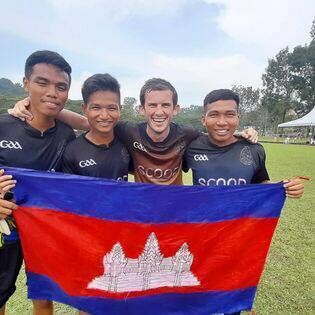
“They generally don’t tend to eat western food because they have a very rice-based diet here and a bag of Uncle Ben’s rice just wouldn’t do,” Sheehan explains, “so getting them fed in Ireland is another thing.
“Even the vegetables we would eat at home would be completely foreign to them so we are reaching out to Asian restaurants. All these things are popping up and making it more of a challenge but that’s part and parcel of what comes with it.”

BLACK FRIDAY
Already a subscriber? Sign in

CONNECT WITH US TODAY



Be the first to know the latest news and updates