'The job of the president is to protect the values of the GAA'
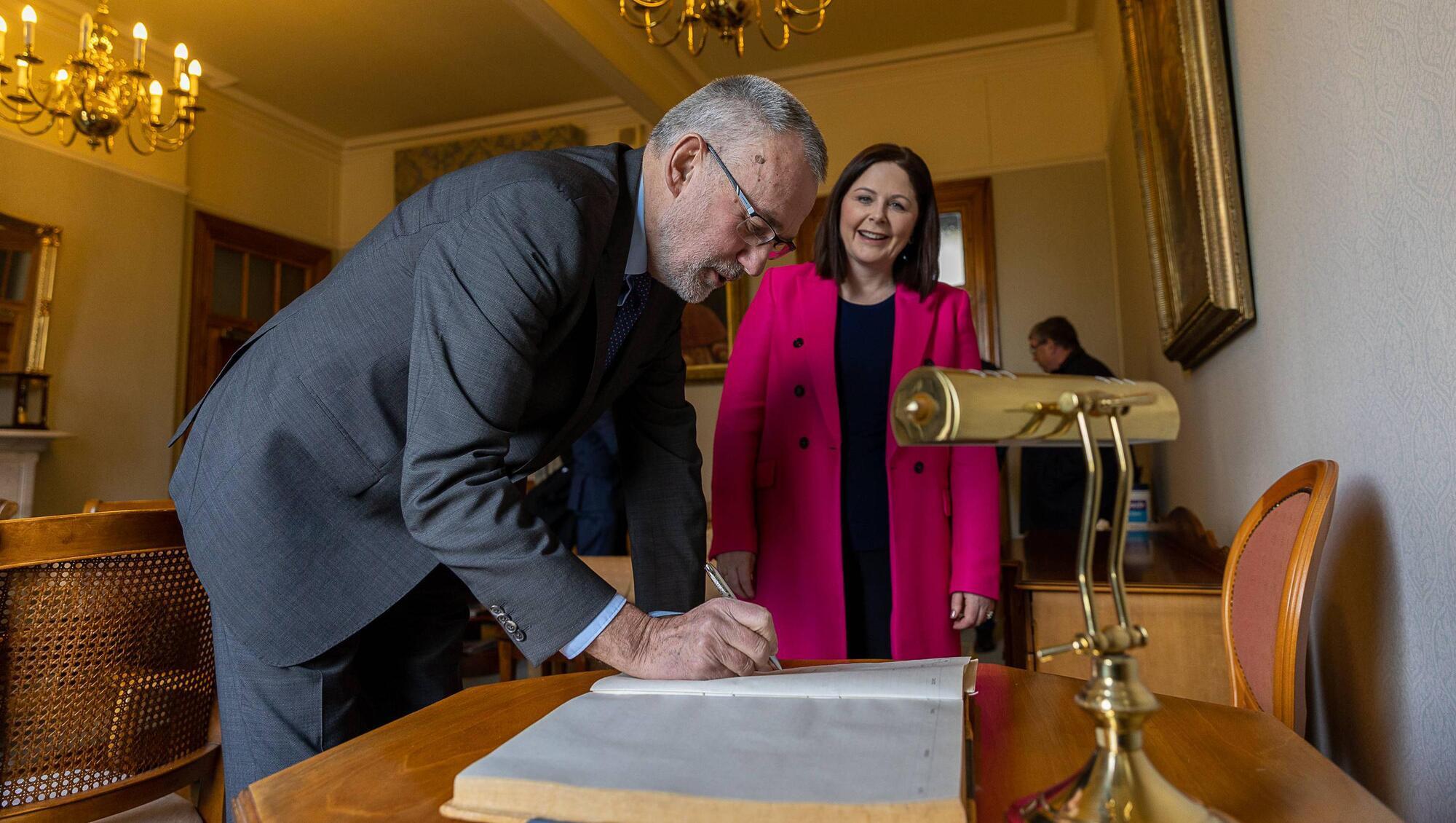
OUTGOING: GAA President Larry McCarthy pictured signing the visitors book with Professor Niamh Hourigan, Vice-President of Academic Affairs at MIC at the launch of the MIC Munster GAA Centre of Excellence in Child Coaching and Gaelic Games Promotion at Mary Immaculate College on Wednesday. Pic: Kieran Ryan-Benson
In four weeks’ time, Larry McCarthy’s successor will be revealed at Annual Congress in Croke Park.
Victory for Jarlath Burns or Niall Erskine and in 2024 an Ulsterman will take the office of GAA president for the third time since the turn of the century. Success for Pat Teehan and Leinster will claim it for a fourth time in 18 years.
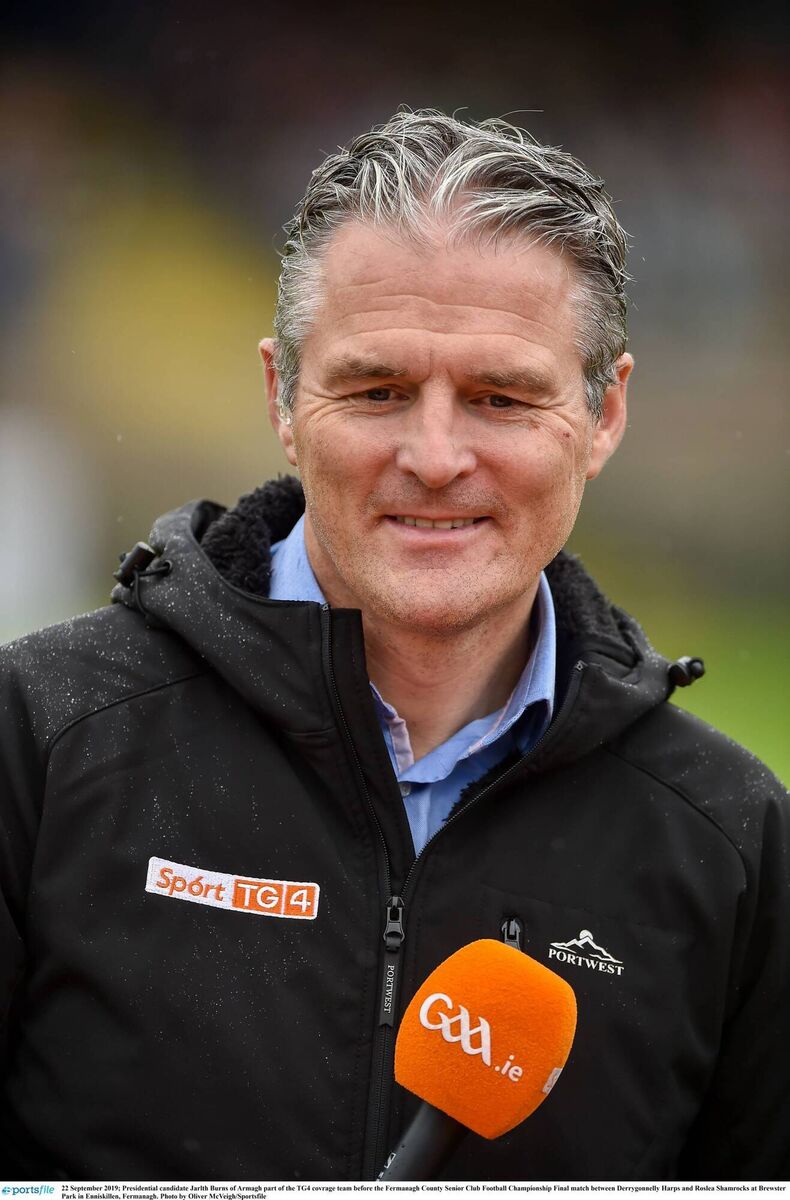
Burns (Silverbridge) has served on several national committees such as chair of the standing playing rules body. He is currently Armagh’s Ulster Council delegate and finished second to McCarthy in the 2020 election.
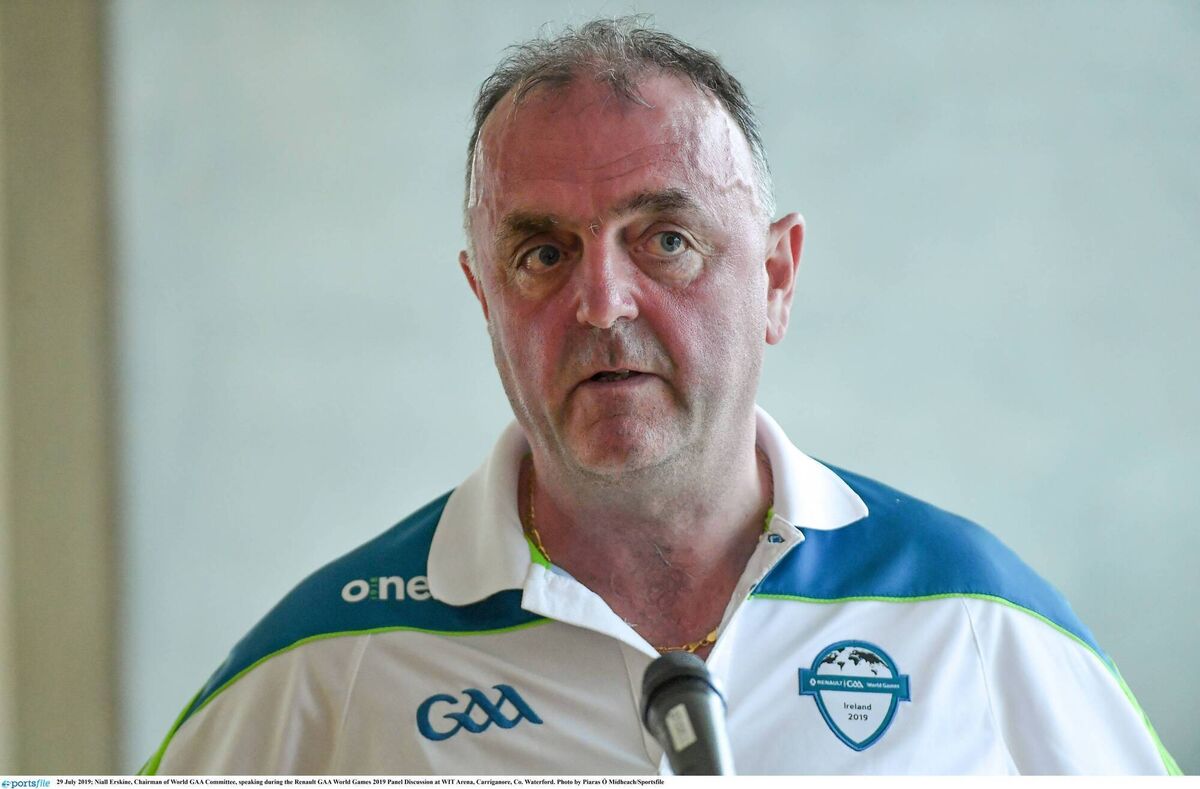
Erskine (Killybegs) has been chairman of the World GAA committee since 2017, having previously been a GAA trustee, Donegal secretary as well as secretary of London GAA.
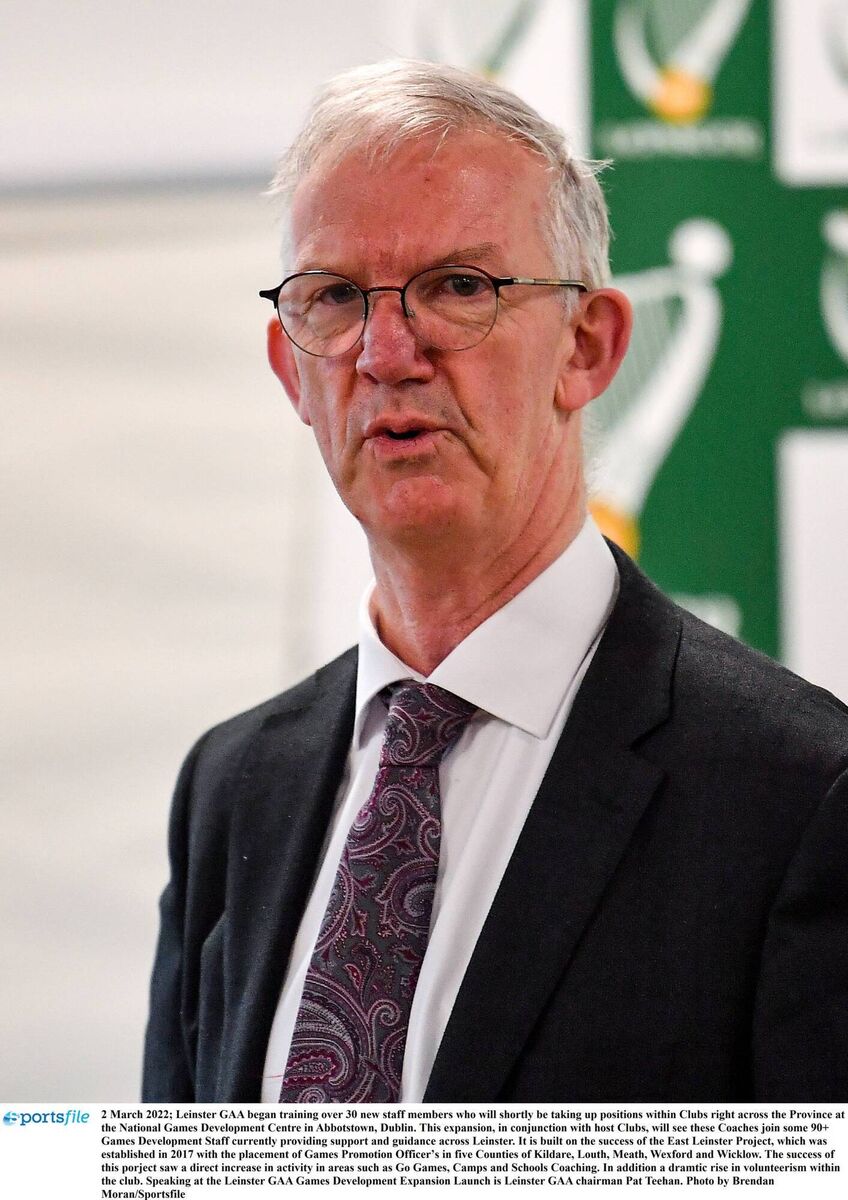
Teehan (Coolderry) completed his three-year term as Leinster chairman last weekend. Prior to that, he held several roles on national, provincial and Offaly executives.
Ranging from topical to ascertaining their aspirations as president, the Irish Examiner posed five questions to each of the three candidates:
I do support decoupling because it has made a difference to fixture-making, but the main reason we had to consider this move was to stem the burnout issue that was impacting on young, talented players. We never really addressed why we had burnout in the first place – clubs weren’t burning out players; it was the intolerable cardiovascular load being placed by underage county teams that was the problem. Training for four months for a knockout competition at county underage is not a solution. Taking U18 players away from smaller club senior teams has had a major impact on some clubs’ ability to field teams.
My personal preference would be for the even age grades 12-14-16-18 but the provision to allow each county to choose the age grades to be applicable in their county is both fair and practical in my view. I do not support the mandatory decoupling of 18-year-olds, and I believe that should also be subject to each county’s decision, which would take into account any potential ramifications for clubs if decoupling were to be applied. At inter-county level, I think that U20 or U21 would be preferable to U19. I think more debate and information would be required before I could give preference between U17 and U18.
I am a supporter of decoupling, to ensure young players are not overburdened with training and games as they prepare for adult competition. However, as a member of the Age Grades Review Committee, following consultation with clubs and counties, it is clear that one size doesn’t fit all. Therefore, I believe the proposals which give counties a choice of options, which included full decoupling or limiting the number of times a player can play within a specified timeframe, will work best.
It is too early to say after one year. However, in a Rugby World Cup year, we have to consider the law of unintended consequence when we make major departures away from our traditions in terms of handing the broadcasting summer to other codes for their big-ticket events. Personally, I believe if we are serious about catering for clubs, we have to allow them time and space to play their competitions, and there is no doubt that this happened this past year. The split season suits counties where hurling and football enjoy equal status and prestige and we should be proud of and cater for these counties as the ideal we should all strive to achieve.
I think the split season has been very successful and has found widespread support among our club and county players and officers. I attended a junior hurling championship game in Kilkenny during August and there was a very positive attitude from everyone that I spoke to, about the reality of playing club championship games in August. While it might be tweaked to some degree following a review after the conclusion of next year’s championships, I think this is a much better arrangement than anything that preceded it up to now.
While it is too early to declare emphatically as to its success or otherwise, I believe it has given stability to our games programme and certainty to our club players with regard to when they are going to play championship. Of course, there are also perceived shortcomings, with the early finish of the inter-county season often mentioned. However, the club and its players are at the core of our Association and that must always be the starting point. Future versions may well see minor changes to timeframes and other slight adjustments and this would be welcome if they are deemed to improve the existing system.
We need a proper development programme for club referees, a more straightforward classification or offence where our rules are easy to read, remember and apply. It’s 40 years since we reviewed our rules and part of the problem is the lack of understanding of our playing rules from those who shout most from the sidelines. Referees should be allowed to comment on the behaviour of supporters and managers by way of a ‘’conduct index”, which would identify those who have a culture of referee abuse with sanctions for chronic abusers of referees. This would put the responsibility of crowd and player behaviour back on the clubs and counties where it belongs.
At our last Central Council meeting, we agreed a strategy to promote and increase respect for our referees and to propose a huge increase in applicable suspensions in relation to abuse of referees. These measures should go a long way to resolve the current issues being encountered but a significant culture change is required into how we view our referees and officials. I don’t think any future president, myself included, would hesitate to propose further actions If any reprehensible treatment of our referees were to continue. Also, we should start to specifically record all the instances of referee abuse occurring at our games so that we know whether the problem is getting worse or declining from year to year.
At all levels of the Association, I would promote and adopt a zero-tolerance approach to any sort of physical or verbal abuse to our match officials. When such instances are reported, we must deal with them in a timely and effective manner through the disciplinary process. There are a number of motions coming before Congress which, if passed, will enhance our disciplinary system. I also believe we should adopt a fresh impetus in relation to silent sidelines at all games up to U13. Over time this will help to develop a culture of zero tolerance to all forms of abuse.
This is probably one of the most exciting prospects in store for the new President and we are lucky that the person steering the plan, Mary McAleese, has a unique understanding of all codes and a love of Gaelic games in general. It is our duty to ensure that full integration happens in a way which is fair, allows autonomy of decision making and rule changes to the codes, respects where each code is and ensures our games are organised efficiently and in a streamlined manner. Alongside any integration plan, there should be a massive government investment in new pitches for clubs who require them to cater for the full integration of all our codes.
The least important aspect of this amalgamation is a requirement to get it done by any anniversary or date. What is important is that all members of the three associations will be able to discern prior to voting whether to amalgamate, what the proposals will mean in terms of change for all the main areas – governance, finance, games calendars etc. In the majority of these areas, there will need to be shown an improvement on the present arrangements. We need to avoid a Brexit-type situation where it was not explained what Brexit would look like resulting in different people voting for something which didn’t reflect actual reality, resulting in the inevitable division and dissension.
The most important thing is to get it right and to the satisfaction of all parties. The integration of three independent organisations into one is obviously extremely complex and challenging. There are a number of complexities including fixtures, facilities, finance, rules and playing eligibility entitlements (parish rule in GAA, not in LGFA or Camogie). I believe we should not tie Mary McAleese and the committee she chairs to timeframes, but instead concentrate on reaching an outcome which will stand the test of time to the benefit of all three Associations, be it full integration or a federal structure.
I have no desire to leave a legacy. Three years is a short term and it is unreasonable to expect a GAA President to leave behind a nice shiny innovation that bears his name. The job of the president is to protect the values of the GAA, to provide leadership, to be a figurehead, to be visible and available to members, to ensure we have a proper strategic focus that is emblematic of the incredible organisation we are. To be able to articulate the views of the association when required, even if it goes against the prevailing narrative and to be understanding of and respectful to the grassroots of the GAA, those who make the organisation what it is.
To have commenced and progressed a process to establish why the Association is failing to retain the interests of players who decide to drop out after 17/18 age grades. To hopefully resolve the difficulties currently experienced by clubs in attracting members prepared to volunteer for all the required roles needed for clubs to thrive. Ensure the major decisions and policy directions are agreed after widespread and timely discussion by Central Council representatives who in turn will consult widely with their counties and clubs. To have helped to ensure that respect for referees has been further embedded in all our members and players. To have meaningfully tackled the very serious challenges presented to our clubs by current ongoing demographic changes.
1. Have a more robust structure in place for infrastructure projects, in the area of planning, finance and life cycle maintenance.
2. Continued investment in the Demographics Dashboard to deliver expansion of the tool, to make baseline demographic data available to all units to inform evidenced-based decision-making at all levels in the future planning of population trends in both rural and urban areas.
3. Our volunteers are the lifeblood of the Association and it is vital we continue to attract talented people to fill leadership roles, which have become more demanding. As president, I would closely analyse the burdens placed on them and ensure that appropriate support structures are implemented.
CONNECT WITH US TODAY



Be the first to know the latest news and updates