‘The hurling club was growing. The village was falling apart’: In Mayo hurling heartland
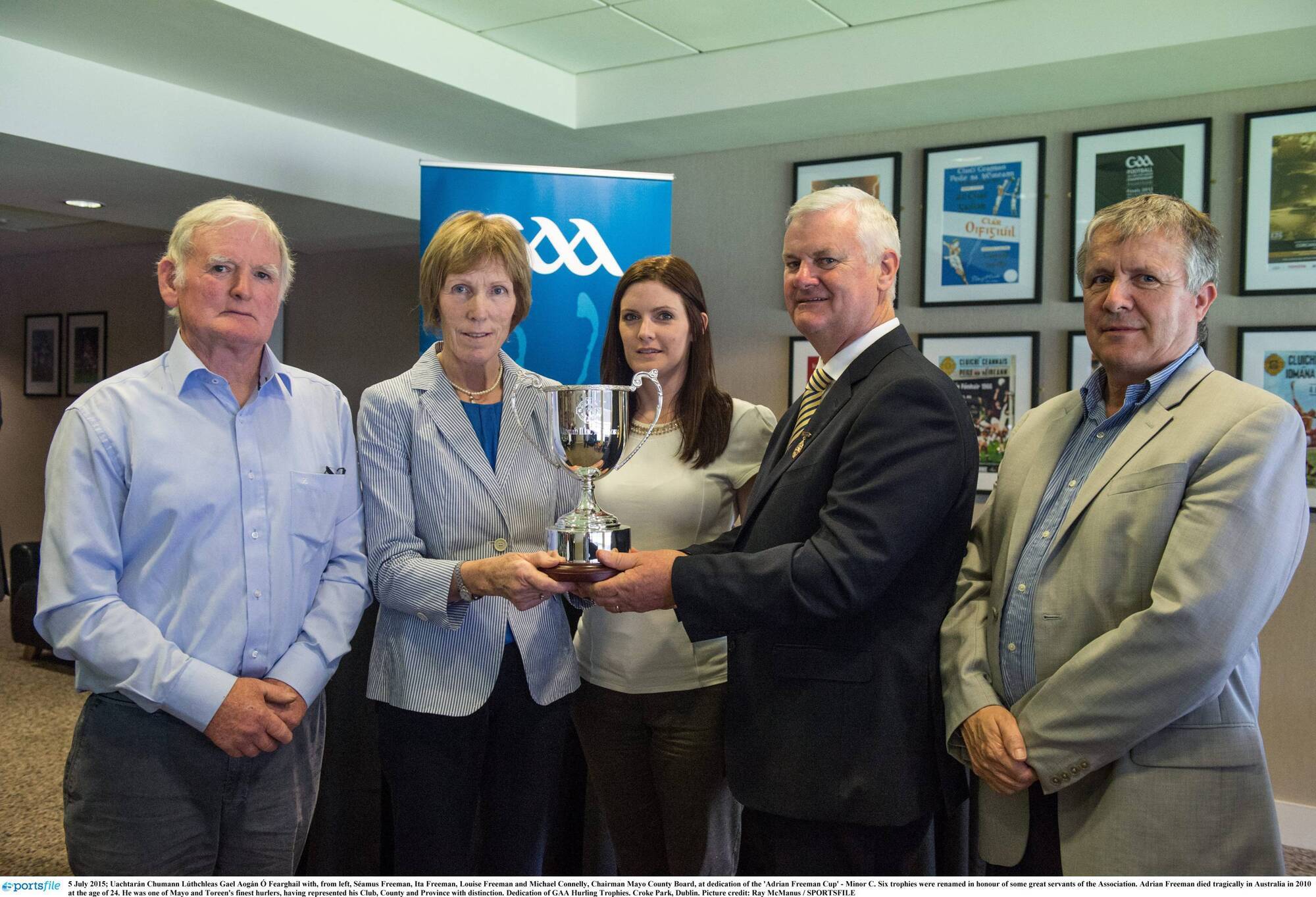
REMEMBERING 'TWINK': GAA president at the time Aogán Ó Fearghail with (from left), Séamus Freeman, Ita Freeman, Louise Freeman and Michael Connelly, then chairman of Mayo GAA at the dedication of the 'Adrian Freeman Cup'. Adrian Freeman died tragically in Australia in 2010 at the age of 24, and was one of Toreen's finest hurlers
Tooreen have made an offer we can’t refuse. Having recently lifted their third Connacht intermediate title in a row and their fourth in six years, the Mayo hurling club are once again striving to step out in the spotlight after decades of labouring in the dark.
In the build-to to Saturday’s All-Ireland club semi final, seven devoted clubmen sit in the community centre with their exhilaration. Come share in the fever. How could you not? This is the only dwelling available in the village to cater for the crowd. Its confines and stirring conversation combine to counter the chill.
Chairman Pat Freyne wheels around the room making introductions. Former players, current coaches, ex-chairmen, bound and beset by blue and white. Over the years Jackie Coyne fulfilled every role. His title now? “The Don Corleone of the club,” says Freyne with a smile.
At their core is a steadfast determination to defy the odds. It was always the way.
“I remember one of our players, Joe Henry, who was a replacement All-Star in the 70s,” recalls Coyne. “I went to Croke Park once and there was a lad from Tipperary working in Dublin at the time. Anyway, Limerick’s PE college Thomond were playing Maynooth. Seán Silke was centre-back for Maynooth. Joe Henry was centre-forward for Limerick. Joe scored 8 or 9 points off Sean. And the fella from Tipperary was shocked: ‘is he really from Mayo?’ There was a piece in the paper the next day about this mad thing, the Mayo hurler.”
John Cunnane is the sort of whiz every club sorely needs. A historian who produces printouts, DVDs and commemorative booklets at a moment’s notice. On the morning of one of the club’s greatest days, he was sat in the foyer of a Dungarvan hotel. Henry and 13 of his club-mates would later make up the Mayo team as they took on Waterford in the 1986 national league.
“This woman says to me, ‘where are ye from?’ I said Mayo. She asked what we were doing there and I explained we were playing Waterford. ‘Ah you’ll hammer them; they have a useless football team.’ No, I said. We are playing hurling. Oh! She said. And we beat them.”
How did a hurling hotbed emerge in a Gaelic football-fixated land? They give thanks to the naivety and irrational ambition of youth. Because it is irrational that they survived through such testing circumstances. This outfit was founded in 1957. Michael Henry was just a teenager when offered the opportunity to attend a Christian’s college in Dublin. He returned west with the gospel of the small ball.
On cycles home from Lynch’s garage in Ballyhaunis, a group of apprentices brainstormed and decided to form a hurling club. They approached the parish priest and sought permission. They pooled all their shillings and journeyed to Gurtymadden in search of hurleys.
Jerseys? That was a luxury unattainable even by their lofty aspirations. The first team took to the field against Swinford in matching white shirts instead.
Maggie Henry’s shop became their clubhouse. Her kitchen table was removed to make room when the exhilarating tones of Michael O’Hehir gave them reason to gather and stargaze. When Maggie obtained one of the first televisions in the area, the pull was only stronger. Where else could they consume ice lollies while watching hurling and ‘Tom and Jerry’? No one was over 18; everyone was committed to the cause.
They would be the players, the officers, managers, and only supporters. This was a tribe with only one sacred rule; no one was to sit in Maggie’s armchair. It was stacked with particular cushions and crucially was facing the shop, so she could sit until customers arrived at the door.
"We’d no managers or coaching in my day,” says Coyne. “At that time, we thought the coach was a bus! It wasn’t someone who trained us. I remember myself and Joe Henry got the bus to Gormanston in the 70s to go to a coaching course, the first time we ever thought of it. We just didn’t have the people. We had nothing.
“We had no pitch here in Tooreen until the 70s when we got a piece of land. We used to get a field off different farmers. We played up the road there in a field called The Turlough.
“Given the name, we could only play in summer because for the winter it was covered in water. Slowly it changed. For the final in ‘72, we did a few weeks training. The semi-final was 11 aside, the final was 13 aside. As the 70s went on, I saw a huge change coming. More lads getting interested and getting involved.
“From my point of view, the people who sat down in ’57, they had no idea that night what they were going to achieve but the seeds they have sown, it has grown into something wonderful. It has brought so much distinction and honour to our village.
“It has really given us an identity. Something we are proud of and known for far and wide. It has actually brought the community together. We now have a very successful camogie team which is fantastic. It has given us a real sense of place and that is something we can be proud of.”
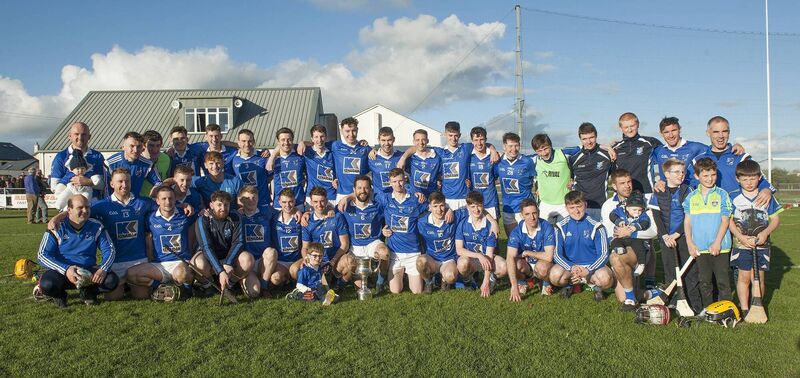
In rural Ireland, spots like Tooreen are typical and special. Hurling is the tentpole that holds up the town. Fuel for daily conversation, calendar centrepieces and a badge of honour. A form of therapy.
It is the wintriest of Wednesdays in Mayo. As the seven souls who braved the elements to reminisce on their rise converse, they gradually construct an epic monument in tribute to Tooreen. Every question feels like an intrusion. This is their realm. They prod and praise each other; unifying to give voice to a wonderous legacy.
“It is beyond the hurling,” says Freyne. “It is friendships. All my best friends are part of the hurling club. That is the reality.”
He nods to the man on his left: “Like Anthony here, he is a few years older than me. If there was no hurling, I might say hello to him or wave if we passed in the car. That’s it. But the reality is that if I’m in trouble in the morning, Anthony is the first person I would ring. It goes beyond sport.”
One half of the room is made up of the current chairman and stalwarts of the club. Three of the current management team sit opposite them. They take turns in praising each side, like partners pucking a sliotar over and back.
Eventually the incumbent nods to former chairman Dom Greally, now on the backroom team, and applauds his tendency to acknowledge those who went before whenever they enjoyed success. Brian Delaney is also a selector and doubles down. There was a time when Tooreen hurling was made up of just two people in his world: Jackie Coyne and Dom Greally. Dom reminds him that he used to pass the school every day and once a 12-year-old Brian flagged him down to ask if he could coach their U12 hurling side.
“If you hadn’t passed through Tooreen, you’d have no appreciation for the size,” says John Cunnane. “ I don’t think we are even sitting in Tooreen at the moment technically, village wise. It is literally nothing. But it has hurling and that is not just cos we are winning now. Even when we were losing, the community desperately wanted to be involved in the club.
“As the hurling club was getting a pitch and growing, the village was falling apart. No shop. No pub. No post office. A shared church. We had all those things. Back in the day there was a number of shops, we even had a petrol pump. A vibrant pub. All this was happening in the hurling club and the rest was crumbling.”
Their first county title was in 1963 and they lost by a goal. They were first victorious in ‘66. 1978 was the start of a stunning ten in a row. Cunnane points to his sheet and studies the tally. A one-point loss versus North Mayo in 1988 and defeat by the same margin against Ballina in 1996 was all that stood in the way of extending the streak. A total of two points denied a steak of 20.
Then he turns the page.
“This period,” he says with a sigh, “we couldn’t do anything. No county final success no matter what he did. Ballyhaunis took over, Belmullet beat us in a replay.”
Former chairman Dom Greally takes over. “Jackie spoke about the ten-in-a-row. I was there for the last five. Once you start going on a run like that, you are under pressure to keep going. It is only one or two games a year, but you are still under pressure to keep building on it. You didn’t want to be on the team that lost.
"We won ten, lost and won another seven. But when we lost after the seven, Ballyhaunis split away. Some lads from Ballyhaunis played with us at the time and then they formed their own club. A lot of people outside the area, and even in the area, thought we were finished as a club then. We actually won the next four. I think they were vital county titles. We were on our own. This little village totally on our own.
“They had their own underage for a few years and had numbers coming, three or four lads starting with us and four or five on the subs. That took a chunk but the way we recovered was so important.”
Dom Greally passes to Freyne. Solo on.
“Initially that improved us. It actually strengthened us. The following year we fielded two teams. It really galvanised the community. We put out a rallying call and lads came out of retirement; we fielded two teams which never happened before. A junior team and a senior team. It was incredible.
“At the same time lads were coming out of retirement, 16-year-olds were brought up to play. We won 97, 98, 99, 2000. Then we went through a lean period, Ballyhaunis got their act together and we’d a number of retirements. It really went down hill after 2000.
“What year did you retire Dom?” After a pause and a knowing grin: “2000.”
“Even when we got the quality coming through,” continues Freyne. “The likes of Jackie’s son, my brother, Stephen Lenihan, five or six core guys coming into their early 20s, but it was recession time. They went to Australia.”
Dom interjects once more: “Then we lost Twink.”
Adrian ‘Twink’ Freeman was a hurling prodigy; he played for his club’s senior side as a 16-year-old. He played for Mayo’s seniors as a minor. Their captain and shining light. In 2010, he died in a car accident in Australia. It was at once international and intensely local. His brother, Cathal, is a star on the team now.
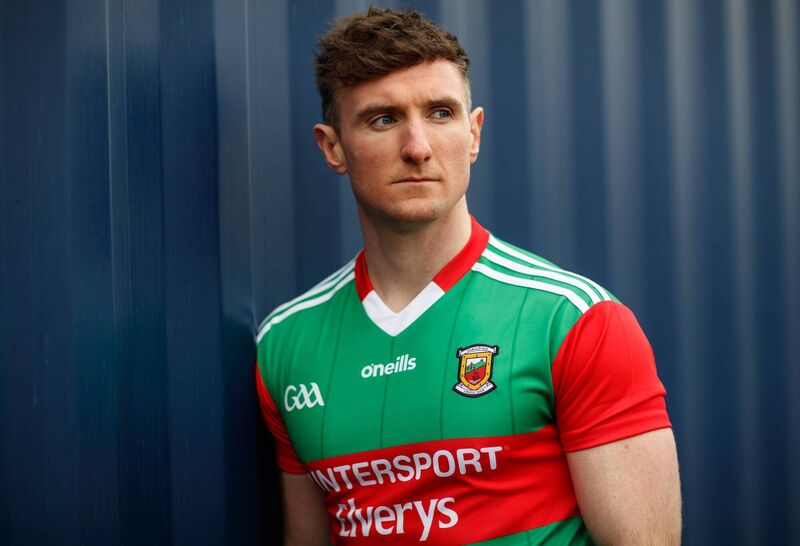
When the club were celebrating their 60th anniversary, the club named the field he graced so brilliantly Adrian Freeman Memorial Park. ‘Twink’ is embroidered on their jerseys.
“Twink was one of the guys who went to Australia. Unfortunately, he was killed in a car accident and never made it home. That was a tough period. Savage tough. In every way.
“We were really only hanging on. It was hard to see… We were left with young fellas and old fellas. We struggled. It was soul destroying. It would be different if you were getting beat by a different team every year, say you were in Galway and it was rotating around, but the fact it was your neighbours year after year…”
What changed? How do they explain this harvest after such fallow years? To a man, they stress these things happen. It goes in cycles. Life’s rhythms, rises and falls. At the same time, there is a template. The panel they submitted for the Connacht final victory over Galway’s Killimor was 32 strong. 95% came through the local national school. The game is part of the curriculum, churning out generations of gifted players.
In the 1990s, they set up Bord na nÓg and it helped establish even deeper roots in the soil of their homeplace. It was a coaching infrastructure and pathway for underage players, from the nursery up.
In 2007 the club produced a DVD, two disks containing twelve chapters, to celebrate 50 years of existence. ‘Heart and soul, the story of Tooreen hurling club.’ On the cover a rising 14-year-old prospect swings at a sliotar beneath a tree. That boy became a man and is now club and county captain Shane Boland.
Dreaming big was always the driving force. Every shoulder fastened to the wheel; every stone kicked over. Tooreen has notably impressive facilities including a clubhouse and a wall ball. They built it all without leaving a cent of debt.
Kilnadeema/Leitrim native Ray Larkin is manager now. After hurling with the Galway club until his late 30s, marriage brought him to Kiltimagh. Passion pulled him to Tooreen.
“It was one of the girls who was minding my kid at creche. As soon as she heard I played, she was constant: go over to Tooreen, go over, go over. Fortunately, I listened. It was one of the best things I ever did.”
He discovered a devotion and a creed that fit his way of life.
They run the team on a shoestring. Players drive themselves to games rather than booking buses. Management’s partners wash the gear. Their camogie side have featured in the Roscommon and Galway championship. Every single game is away. No one complains.
Now they stand on the brink of an All-Ireland final.
“Every club has a golden era. Athenry, Portumna, St Thomas’. What we do now will define the club for years to come.”
The provincial breakthrough came in 2018 and then Ballyragget dashed their dreams. In 2020, Cork’s Fr O’Neill’s edged past in a tense affair by four points. The urban powerhouse of Naas, 80 teams strong, downed the village club last year at this stage.
This Saturday it’s Liatroim of Down.
Evening is turning to night and the frost has set in. The summation now. After spending hours reflecting on where they’ve come from, Delaney runs a hand over his face and dares to think of where they could go.
“I don’t think so. A lot of them played in Croke Park before but it is still different. If we could make it… I would give anything, it all, to walk out for our club Tooreen in Croke Park. To think we could get there, I don’t know. Maybe I was pissed off at training last week or something, but I just said it to the lads one night, do not wake up Sunday morning thinking 'what if'? We have to take our chance. Don’t wake up thinking, why didn’t it happen?”
Lifetimes of service have built a path from Maggie’s shop to Croke Park. One step left.

CONNECT WITH US TODAY



Be the first to know the latest news and updates