Female GAA stars continue to be left out of pocket
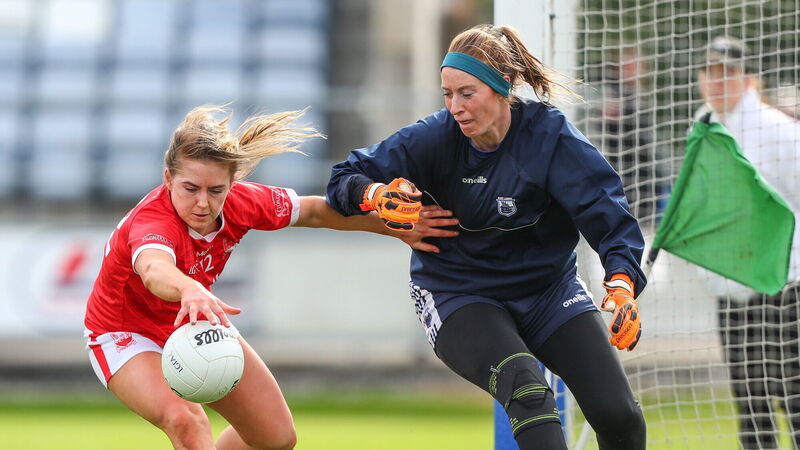
The maximum amount a female inter-county player received last year in Government funding was €950, the Irish Examiner can reveal, a figure that for many wouldn’t even cover one month of their fuel costs.
Female GAA stars continue to be left out of pocket

The difference between male and female players when it comes to travel expenses is that the GAA pays male players 65 cent a mile for training and matches, a payment that is separate to the €2.4m Government grant for male inter-county players, whereas female players are reliant solely on their Government grant as the Camogie Association and LGFA do not use their own coffers to help cover fuel costs.

Out of pocket female inter-county players urgently require the LGFA and Camogie Association to dip into their respective coffers to help cover soaring mileage costs as the €2.4m Government grant is falling short of adequately reimbursing players.

Government funding for female inter-county players more than tripled last year to ensure an equal allocation to male and female players, but despite the €1.7m increase in grant funding, female players continue to carry an unsustainable financial burden.


The Irish Examiner has learned that €700,000 of the €2.4m Government funding continues to be used as a team grant covering physio, strength and conditioning, nutrition, and other such costs associated with a high-performance environment.

Of the remaining €1.7m, approximately €1.4m is being used to reimburse 1,700 female players for travel costs built up across the inter-county season. It’s a pot, though, that is insufficient to properly reimburse players for the amount of money they are spending to get themselves to and from training each week.

The maximum amount a female inter-county player received last year in Government funding was €950, the Irish Examiner can reveal, a figure that for many wouldn’t even cover one month of their fuel costs.

Indeed, just take the player diaries published by The42 earlier this week which show Kerry footballer Anna Galvin’s monthly spend on fuel reaches €1,577, with Mayo’s Fiona McHale forking out €1,210.

The difference between male and female players when it comes to travel expenses is that the GAA pays male players 65 cent a mile for training and matches, a payment that is separate to the €2.4m Government grant for male inter-county players, whereas female players are reliant solely on their Government grant as the Camogie Association and LGFA do not use their own coffers to help cover fuel costs.

The LGFA and Camogie Association, in a historic development during the Covid-affected seasons of 2020 and 2021, introduced a mileage rate for journeys undertaken on matchdays, but this has not been continued by either association in 2022.

Both the Camogie Association and the LGFA recorded surpluses for 2021, with the LGFA books showing a €1.17m profit. And while there is an understanding among female inter-county players that neither association possesses the financial resources of the GAA to fully reimburse players, a small contribution would be as helpful as much as it would be an acknowledgement of the financial pressures female players must overcome to line out for their county.

McHale tweeted two months ago that if female players were paid the 65 cent mileage rate given by the GAA to the men, her weekly travel expenses would be €474.50. In the same tweet, she wrote: “Can confirm LGFA players DO NOT get expenses”.

On the GAA Social podcast, also in May, Armagh footballer Kelly Mallon revealed she received £600/£650 for approximately 50 training sessions and games in 2021. 

The Government grant is awarded to male and female players as recognition of their contribution to society. It was not designed to cover fuel costs, but in the absence of any other recompense for female players, this is where the money is being and will continue to be funneled.

More in this section

Cookie Policy Privacy Policy Brand Safety FAQ Help Contact Us Terms and Conditions

© Examiner Echo Group Limited