Mixed Ability Rugby: 'Regardless of how good you are, there will always be a spot on the pitch for you'
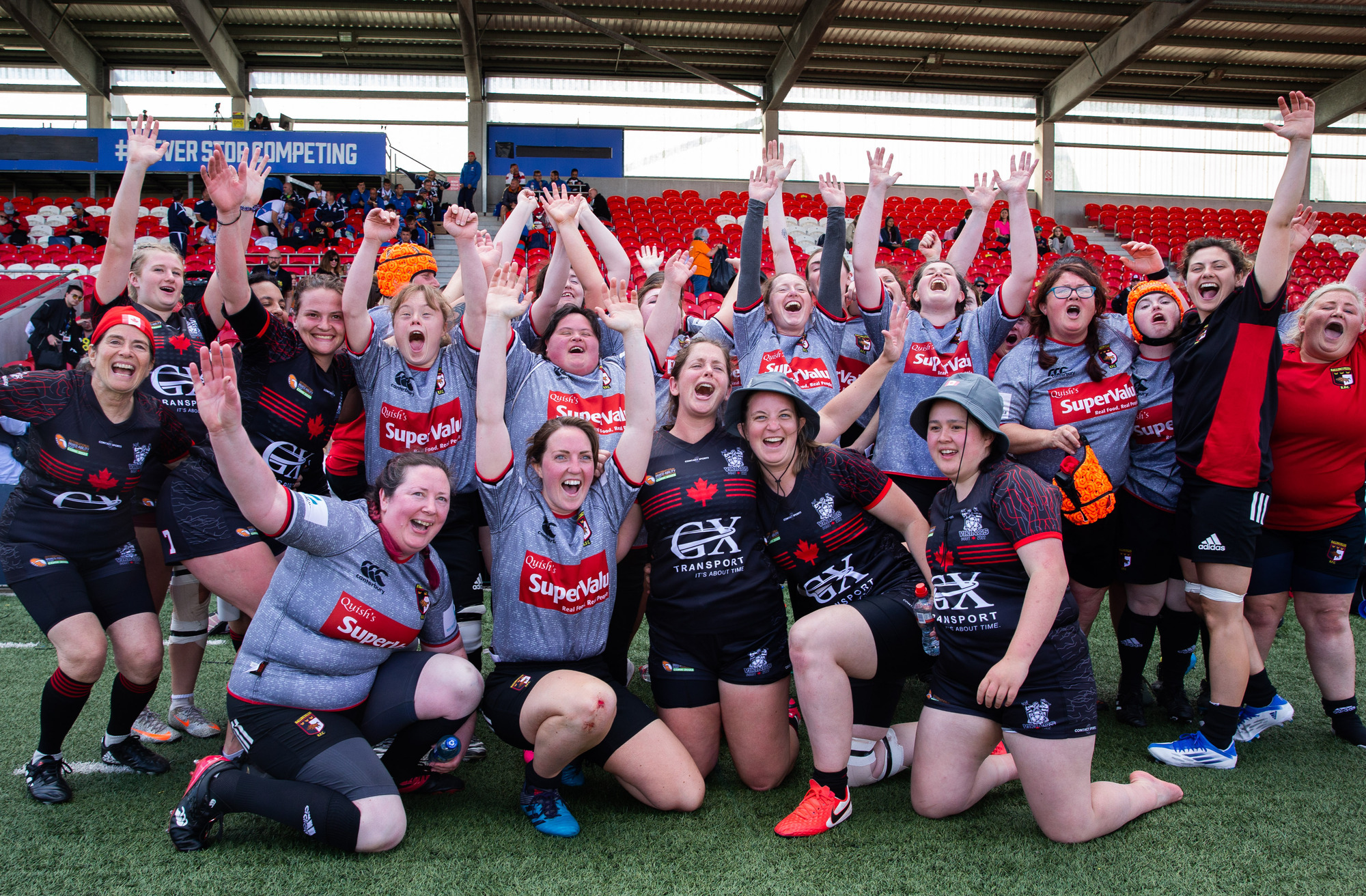
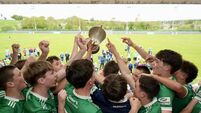
Ballincollig Trailblazers celebrate after the Mixed Ability Rugby Tournament World Cup tie against
When Marie Healy is out on the rugby field chucking a ball around with teammates, she forgets all about her disability. In fact, she feels as if she has no disability at all.
Healy played camogie and soccer into her teens but fell away from sport in the years after. And however strong the appetite might have been to pull the boots back out of the press, for someone with a disability, mild or otherwise, returning inside the four white lines is nowhere near as straightforward as simply falling in with the local GAA or soccer club.
Fully cognisant of such, Ciara Aherne founded the Ballincollig trailblazers mixed ability rugby team in November of 2019.
Aherne works in the disability services sector and after a conversation with colleague Alan Craughwell three years ago - the latter was a key driver behind the formation of Ireland’s first mixed ability rugby team at Sunday’s Well - she set about providing a similar outlet for women.
From an attendance of just six at their first get-together on a cold November’s night in Ballyanly, the trailblazing women are competing at this week’s Mixed Ability Rugby World Cup in Cork city.
Healy attends the COPE Foundation day centre where Aherne works and when the latter approached the former about joining the trailblazers, there wasn’t a hint of hesitation on Healy’s part.
Looking back now, Healy knows that if it was not for Aherne’s initiative, she would never again have laced a pair of boots.
“Everyone should be included in sport, regardless of their disability. We have opened the door to people with disabilities and people without disabilities, which is a huge thing,” says 32-year-old Healy, who describes herself as having a mild disability.
Mixed ability rugby is geared at breaking down barriers to participation in sport and promoting greater social inclusion, with this week’s World Cup drawing teams from all around the globe. The 2022 edition is also the first time there is a women’s tournament.
Closer to home, though, there is much progress still to be made given the Ballincollig trailblazers remain the sole women’s mixed ability rugby team in the country.
From that initial training of six, their panel is now almost 30-strong. Off the top of her head, Aherne reckons there are 10 or 11 players with disabilities. It’s a figure she is unsure of, though, simply because there is no distinguishing between able-bodied and disabled persons when they meet for training at Tanner Park - the home of Ballincollig RFC - each week.
“We all think of ourselves as the same,” team captain Healy explains.
“We don't think of anyone as having autism or Down syndrome. We don't think of anything like that. We just want to be involved in the game, train every week, and have the craic afterwards.”
Throughout the conversations with both Aherne and Healy, it is strikingly obvious the sense of belonging mixed ability rugby - and, by extension, the trailblazers - has given to its participants.

“Oh my God, it is massive,” replies Healy when asked about the importance of such an avenue being provided for persons of disability.
“I have a mild disability, but if you saw me, you wouldn't know I have a disability. It is there, but it is hidden.
“Being out on the pitch with my friends gives me a great feeling. I honestly think I don't have a disability when I am out there. I just think of myself as a sportswoman playing rugby with my teammates. That's what matters.
“I never thought in a million years that I would be involved in rugby, let alone a World Cup. That wouldn’t have been possible but for mixed ability sport. I have family and neighbours coming to watch me this week, which is great. I can't wait for them to experience mixed ability rugby.”
Given her line of work, Aherne has been advocating for greater inclusion for years. The beauty of mixed ability rugby, she says, is that integration occurs naturally. Next to no planning is required.
“One of the girls who I work with, who has a disability, she would never have made friends with some of these girls because they would never have met. There was never a place for them to meet in society, their paths would never have crossed. This is a great way for both sides to meet people from different backgrounds.
“I have never seen it work so well than when watching it happen on the team and just seeing relationships form so naturally.” Mixed ability rugby also offers an avenue for able-bodied women to step inside the whitewash, who might otherwise have never graced a field because of various consciousnesses related to body or ability.
Aherne herself testifies to such.
“Going back to sport, I hesitated for so many years. I was saying to myself, ‘I am not fast enough or strong enough, I will do it now when I get fitter’. Women can be really self-conscious about that.
“Mixed ability relieves the pressure of people having those thoughts of 'I am not good enough' because, for us, everyone's the same. No matter who you are or where you come from, everyone is the same.
“Regardless of how good you are, there will always be a spot on the pitch for you. You will always get game-time.
“Mixed ability can be adapted to any sport. The equation is so simple. Literally, just treat everyone the same.”

BLACK FRIDAY
Already a subscriber? Sign in

CONNECT WITH US TODAY



Be the first to know the latest news and updates