What really goes on in a huddle of hurling selectors?
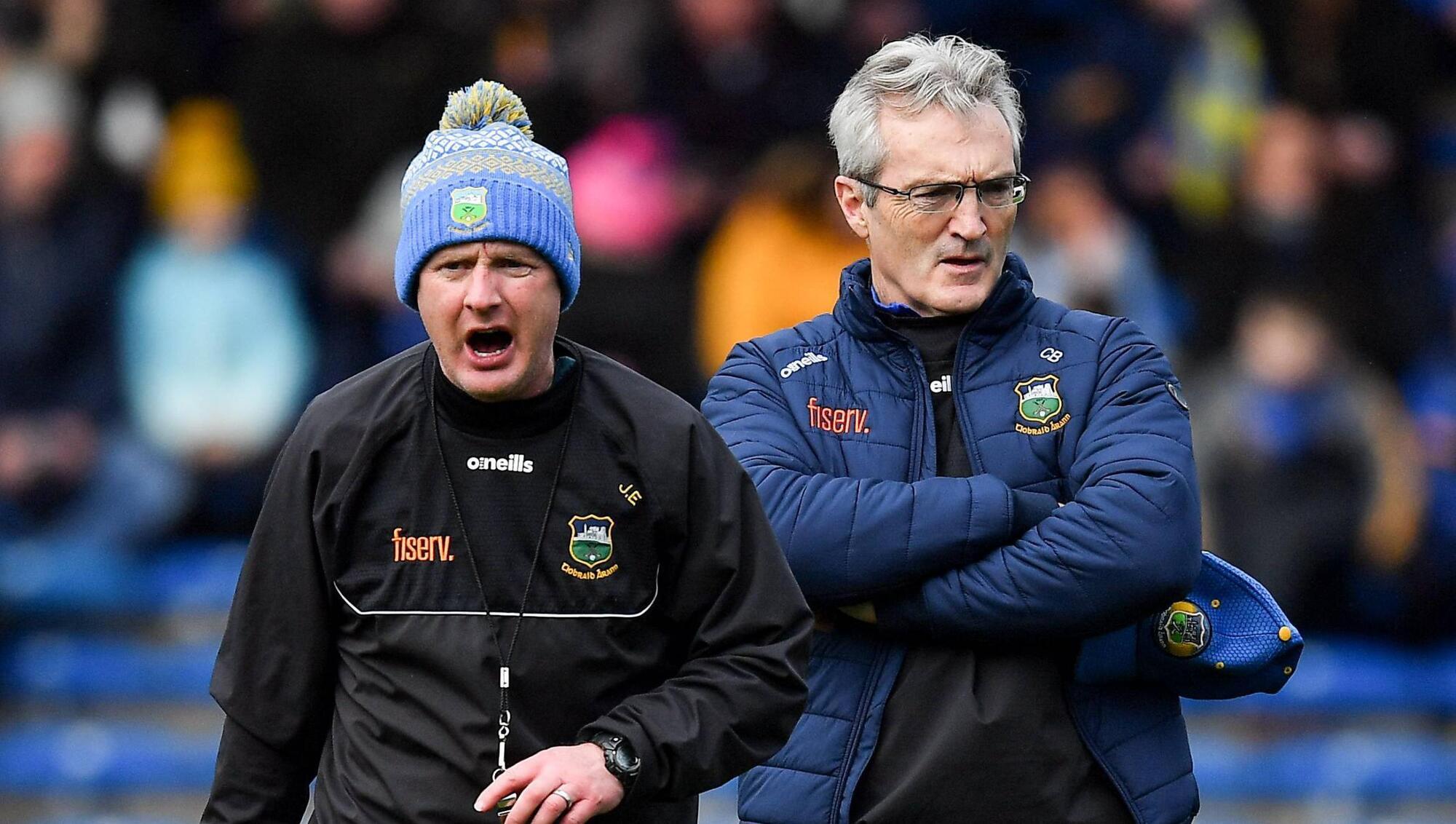
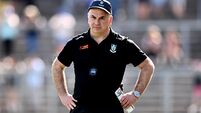
Tipperary selector Johnny Enright, left, and manager Colm Bonnar before the Allianz Hurling League Division 1 Group B match between Tipperary and Kilkenny at FBD Semple Stadium in Thurles, Tipperary. Photo by Brendan Moran/Sportsfile
Selectors and managers. What’s going on in those hurried sideline discussions? What are they talking about at half-time, that small group in bibs at the tunnel entrance? What are they deciding before they hit the dressing-room?
Who’s really making the switches when a championship game is going into the final ten minutes, and how are they decided?
All-Ireland-winning manager Micheál Donoghue of Galway begins with the basics.
“It starts with the people you pick. That might be the most obvious thing in the world, but if you get the right people in to work with you as selectors then everything leads on from that — the discussions about the team and picking the team and so on.
“There has to be an exchange in those discussions — if we’re picking a team and you say ‘we’ll go with X’ and I say ‘we’ll go with Y’, we can go with X this week but if that doesn’t go well then we’ll have to go with Y the next week.
“But I don’t think those discussions are ever an issue as long as you have respect on all sides. Which goes back to the people you pick.
“I’d have said it a thousand times that the team off the field was as important as the team on the field. Franny (Forde) Noel (Larkin), Damien Joyce, Dave Morris — I might have been out in front but we were very much a team.”
Former Limerick boss TJ Ryan echoes the Galwayman: “Micheál is right. Having the right people is the first step.
“I know the old school of thought was to have three or five selectors so there’d be a casting vote if there was deadlock picking a team, but really those days are gone.
“The manager and selectors are probably giving more time to working out the ‘what-if’ scenarios.
“These are game situations which are nearly all covered by the management group ahead of time — the manager, selectors and coaches.
“They might have a plan if the full-back is injured early on, for instance, it might be to slot a wing-back in there. But on the day that the full-back gets hurt maybe the wing-back is bombing up and down, flying, so the management goes to a plan B because they don’t want to lose the benefit the wing-back is giving the team where he is. There’s huge work involved in those plans.”
Donoghue is on the same page when it comes to that advance planning: “The ‘what-if’ scenarios you work on, that means when something happens it’s a split-second decision. If you’ve already discussed it then it’s in your head, it’s that bit easier.
“You still have to play it as you see it, whatever is happening in front of you, and I was big on going with the gut. There are games you’d feel you could have called yourself - but discussing games with the lads often led onto something else entirely, another angle that you mightn’t have hit yourself.
“And that part of it, getting past your own ego to see someone else’s point, is another key part.”
Ryan goes one step further when it comes to the manager parking his own ego.
“You see it in other sports, particularly with the most successful people. Willie Mullins took the prize as champion trainer recently but he gave huge credit to his team when he won it. Jurgen Klopp is getting a contract extension at Liverpool - but he’s making sure his staff are getting a raise, not him.
“Where the good managers really come to the fore is in sharing out the work.
“There’s a lot of data and analysis around, so that has to be organised for the benefit of the players, the medical stuff, all of that - the manager needs to allow the skilled people to do that.
“And that comes back to ego. The days of someone doing it all, and maybe trying to take the credit for it all as they go, are gone.”
As for the geography of where the decisions are made at a game, both men can see the appeal of being right there on the factory floor.
“Back in 2016 I remember thinking I’d go up to the stand to watch the game,” says Donoghue.
“It’s something I think it’s bound to come in eventually because the vantage point there is so much better — you have such a better view of the game compared to being on the sideline. When I finished managing I was in the media section of Croke Park and it’s like looking down at a tactics board.
“But we’re creatures of habit, I suppose, and it’s probably in the culture of the GAA that fellas want to be close to the action. And maybe the players want to see the manager close up as well, even at intercounty level.”
Ryan teases out the decision-making a little further: “From my experience on the sideline — at club or county level — there’ll always be situations that catch you and that you need others there for, to talk things through.
“Now whether that happens in front of the crowd at half-time or in a room under the stand, it happens.
“And you can be sure it happens in those other sports too: Jurgen Klopp and Andy Farrell are having those same conversations, they just don’t happen at the entrance to the tunnel at half-time where the crowd can see them.”


CONNECT WITH US TODAY



Be the first to know the latest news and updates