In coming of age, next Treaty generation prove a mirror of current one
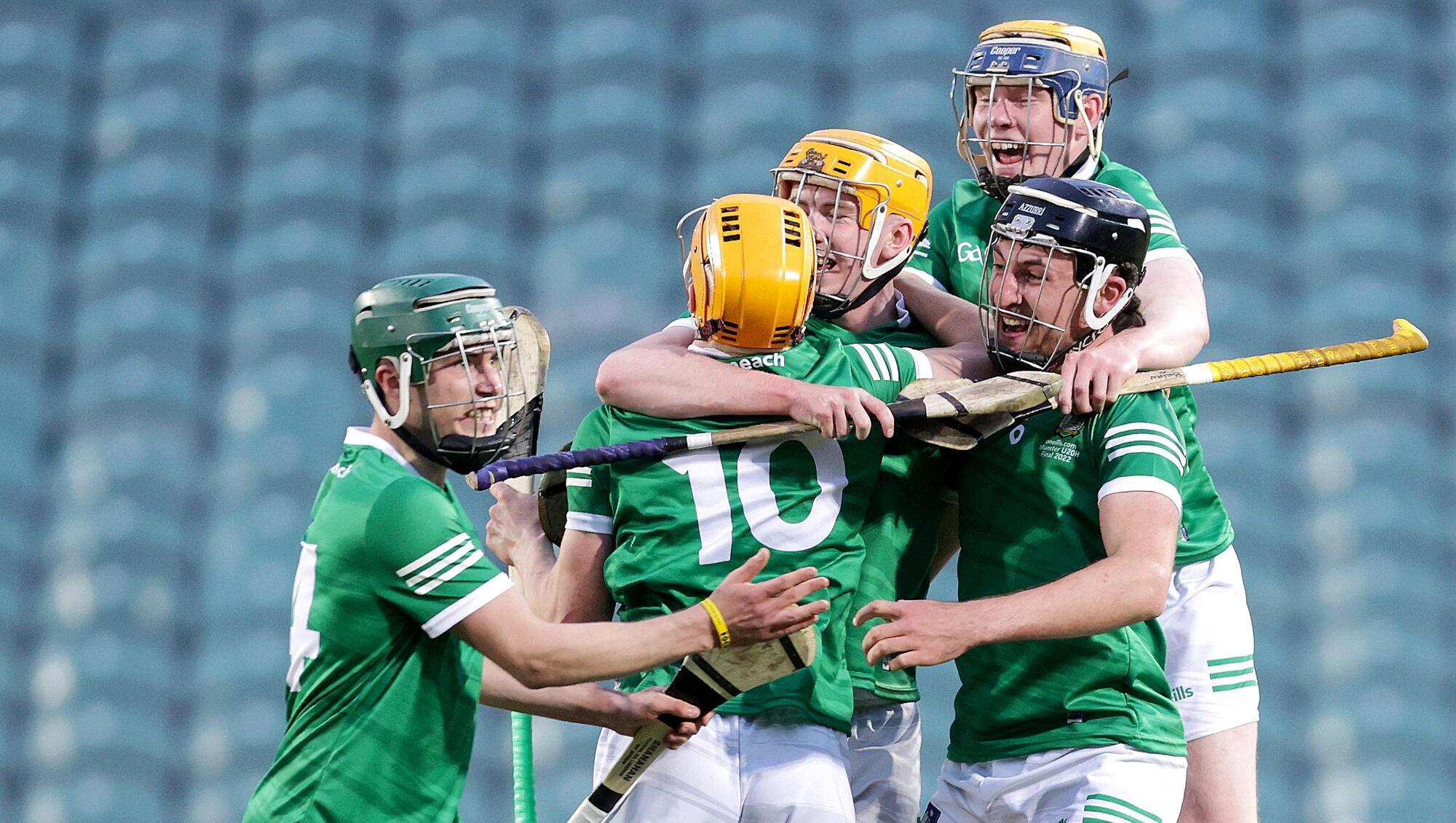
Toast of the town...and county: Limerick's Adam English celebrates at the final whistle with teammates. Pic: INPHO/Laszlo Geczo
Five minutes after the final whistle, as the Limerick players gathered in a scrum just in front of the Mackey Stand, a small Limerick crowd gathered around them, not in delirium or any visible sense of ecstasy but almost out of duty and protocol.
Some of the players were besieged by autograph hunters, family and friends but a sizeable portion of the squad were just casually shooting the breeze, inhaling the deep sense of satisfaction from another job well done than unleashing any outward explosion of emotion.
The mood encircling the players was calm and collected, composed almost. Eleven years ago, on the electric night Limerick defeated Cork after extra-time in an epic Munster U-21 final, the Gaelic Grounds detonated in a ball of happy chaos, the packed throngs flooding the field to bask in the warm afterglow. Limerick will never take success for granted but those days have long passed and nights like last night just bleed into the continuum of success and expectation that Limerick supporters have now become accustomed to.
The Limerick machine has become so powerful and clinical that the narrative defined by their senior dominance underpins their collective attitude and general view of the hurling world. Tipperary were talked up after dethroning Cork last week but the Gaelic Grounds has become such a sacred Cathedral now that Limerick hurlers everywhere see no other team as having the right to worship at their alter.
After the struggles of their senior team in recent weeks, Tipp had taken heart from a perceived underage renaissance. Six wins from six in the Munster minor and U-20 competitions had raised expectations, but Limerick reminded them – and everyone else - why they are ruling the hurling universe.
So much of this performance was a mirror image of how the Limerick senior team operate and function, which was perfectly encapsulated in the turnover stats. Tipp turned over the ball 37 times, most of which was sourced from incredible heat in the tackle and around the contact zone; Limerick sourced 0-11 from that possession.
Tipp still largely had a grip on possession. They could legitimately claim to have created eight goal chances, even if some of those were only half chances, but they still couldn’t get off enough clean strikes against a wall of green jerseys.
On two occasions either side of half-time, Limerick smothered Tipp players close to goal, just as they were about to pull the trigger, with Limerick translating that possession into points from Shane O’Brien and Eddie Stokes.
When Tipp realigned their formation and withdrew their lines deeper in the second half, they were able to create more space up front and open up the channels more for their runners. There were times when they needed to make that extra pass, but Limerick were always able to get a covering player back and make that extra tackle.
This was an excellent game. Tipp will be disappointed with their conversion rate and some of their decision making but Limerick were marginally the better side. Both sides created 39 scoring chances but Limerick were more economical. Moreover, they were always able to find that score anytime they could feel Tipp’s hot breath on their necks.
When Tipp had reduced the margin to two points with five minutes remaining, they had momentum and flow at just the right time, but Limerick stemmed that flow with two quickfire points.
Even when Limerick turned over the ball more often in the third quarter than at any other stage of the game, while Tipp also got on top of the Limerick puckout in that period, generating 1-2 off Limerick restarts, Limerick still led by five points at the end of that quarter. Tipp kept the pressure on but Limerick just kept their heads and protected the ball far better.
This is an experienced Limerick side, drawn from two of the last three Munster minor winning teams, with the majority of those players also having played in last year’s provincial U-20 final, which Limerick narrowly lost to Cork in Pairc Ui Chaoimh.
Five of that team, along with four more who came off the bench in that game last year, started here. The team would have been even stronger again if three more of last year’s starting side were available; Diarmuid Hegarty and Michael Keane were injured while Cathal O’Neill was ineligible.
Two more of John Kiely’s senior squad - Coughlan and English – are key players on this side but Limerick were still able to get by without them firing like they can. English looked like he was going to run the game when scoring 1-2 from his first four possessions but he only had the ball in his hand five more times after that early burst.
Tipperary had invested hugely in this competition under Brendan Cummins. They trained ferociously hard over the winter and that bank of work really stood to the team against Cork. It was evident against last night, but so was Limerick’s conditioning because they were able to match Tipp for every stride down the home straight.
Over 40 minutes after the final whistle, the squad and backroom team emerged from the dressingroom for a squad photo. The backroom team took out their phones and snapped away. There was no hollering or shouting from the players, just a light clap as they broke up.
That is how Limerick players think and operate now.
CONNECT WITH US TODAY



Be the first to know the latest news and updates