1600km in six days but just getting going: Inside Henry Shefflin's drive to thrive
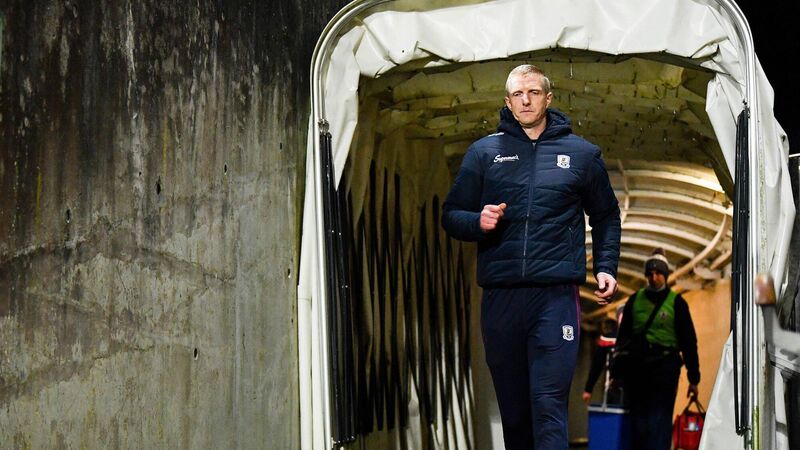
Galway manager Henry Shefflin before the Allianz Hurling League Division 1 Group A match between Limerick and Galway at TUS Gaelic Grounds in Limerick. Photo by Eóin Noonan/Sportsfile
On Monday evening just before 5pm, Henry Shefflin arrived in Loughgeorge in Claregalway. The extended panel had a field session while the main squad were in the gym. Shefflin was back in Galway again on Wednesday and Friday night before hitting the road again early tomorrow for Pearse Stadium. That will be 1600 kilometres clocked in six days. Relentless.
Despite the heavy toll and long-distance haul, Shefflin often turns up just for gym sessions. His great friend and Galway head coach Richie O’Neill does a lot of the driving, but that still doesn’t dull the ache of the near six-hour cross-country trip.
Both Shefflin and O’Neill have busy jobs but they make it work through sheer hard work. Often, they will leave Kilkenny together just after 5am arriving in Galway around 7.30, working there in a room for the day before heading to training. When the session is over and all the meetings and planning is done, Shefflin and O’Neill will head south, often arriving back home 19 hours after they left.
The workload of an inter-county manager now has never been more intense but Shefflin would never use the road or the constant grind as an excuse to reduce it. If anything, his application with Galway has just reaffirmed why he was the most decorated, successful and one of the greatest GAA players of all time. No stone is left unturned.
Shefflin has been energised and excited by the challenge, but dealing with the trauma of losing his brother Paul in March was bound to have a profound impact. Some of the players were concerned that Shefflin may not return afterwards, but the fact that such a possibility was never even entertained further underlined their manager’s mental strength and commitment to the cause.
When the players travelled down to Kilkenny for the funeral, they were taken aback by the distance involved, and what the journey entailed. Having a greater grasp and understanding of just how much Shefflin was putting into the job gave them and the backroom team an even greater appreciation for him.
When Shefflin was appointed last October, the shock factor was inflated because the decision had been so unexpected and so out of the blue. Shefflin had only been interviewed for the job just two days before his ratification was announced. It had all the appearance of an 11th hour arrangement, but it was anything but.
After Micheál Donoghue stepped away from the job in September 2019, the Galway players had a background role in sourcing the next manager. They compiled an exhaustive long list of potential candidates, but Shefflin was top of the short-list.
Shefflin was contacted but Ballyhale were in pursuit of more county, Leinster and All-Ireland titles and the timing wasn’t right. When the hurling board reached out to Shefflin a second time, more than a week before he was interviewed last October, they knew immediately that the tone was different.
Shefflin’s willingness to fully immerse himself in an inter-county job for the first time, especially a senior side so far away, but in the same province as Kilkenny, offered even more proof of how much he craved the challenge.
His aura and status preceded him through the dressing-room door, but inter-county environments are unforgiving places and Shefflin still needed to prove that he could do a job at the highest level.
Shefflin had led Ballyhale to successive All-Ireland club titles, but they had an outstanding group of players with a straight-forward gameplan. Taking on a Galway team that failed to win a game in last year’s championship was bound to be far more difficult and demanding.
Much of what is deemed to be cutting edge in the modern game is treated with suspicion in Kilkenny. Shefflin never really hid that scepticism as a pundit, both in print and TV, but he also knew that he needed to find a balance between core principles and modern demands.
After Galway beat Limerick in the league in February, Fintan Burke gave a revealing insight into Shefflin’s approach during his man-of-the-match interview with RTÉ. “Everybody knows what Henry has done as a player so all you can do is learn off him,” Burke said to Damian Lawlor. “There’s no stats, it’s just go out and hurl and enjoy yourself. Everybody loves that.”
Shefflin’s approach is very much based on that bottom line. That is his communication to the players but it would be a mistake to oversimplify that approach too; Shefflin is an analyst who understands data and who is willing to use it.
His approach to analysis is also probably in synch with how the absolute elite players in any sport think. They have a different level of insight and knowledge into how the game is played because of how they studied and analysed that technical and tactical detail throughout their playing career, in their own unique way.
Shefflin doesn’t do any on-field coaching with Galway but his one-on-one technical coaching detail is described as being on another level.
His coaching and guidance of how a player should position himself in a certain predicament, how they might hold off an opposition player, even how they should hold the hurley when trying to improve first touch in a certain scenario is described as being unlike anything the vast majority of hurling coaches would be able to impart.
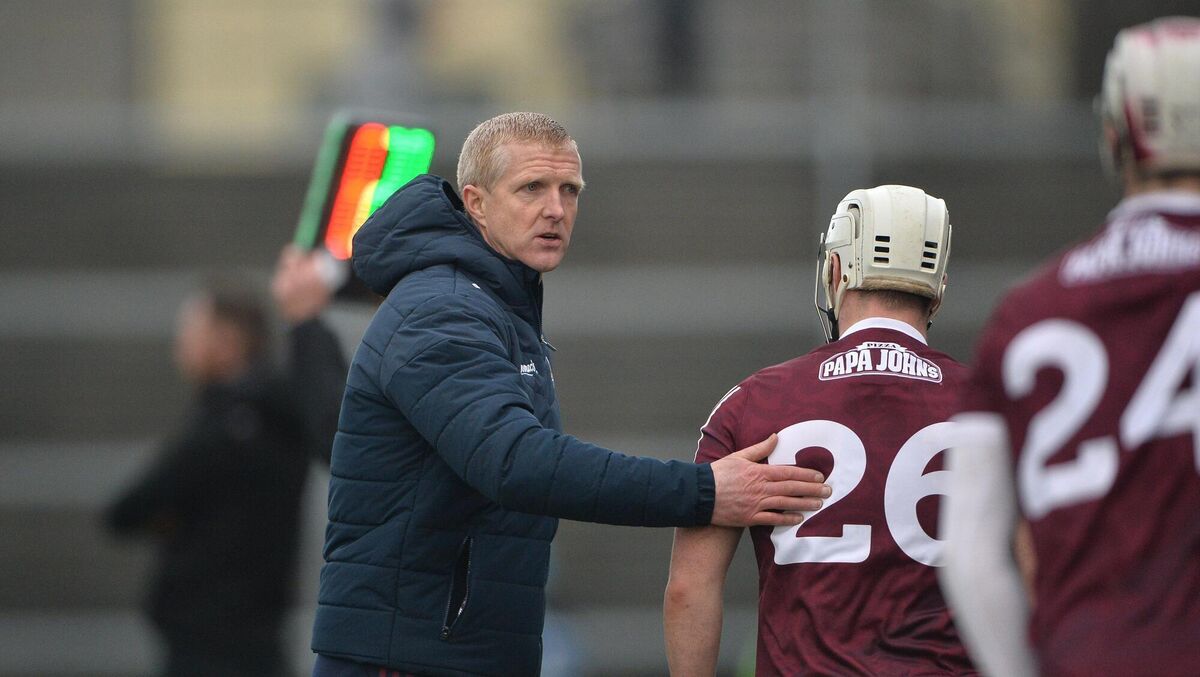
Shefflin doesn’t need to lean on analysis as much when he has a photographic memory. His recall of different plays in incredible. Ger Loughnane once told a story to illustrate how Shefflin sees the game differently to most people, especially former players.
As TV pundits sitting together in Croke Park for the 2018 drawn Galway-Kilkenny Leinster final, Loughnane noticed Shefflin get unusually animated after a Conor Whelan first-half point, before frantically asking the floor manager to hold onto that clip so Shefflin could discuss it at half-time.
Loughnane hadn’t noticed anything in the build-up to the score so he discreetly asked the floor manager to show him the clip during a break in play. It was only then that Loughnane saw it. As Joe Canning turned under pressure to hit the ball into the number 15 position, he somehow noticed that Paul Murphy was in that space. Canning instantly switched the play to the other corner and delivered a perfect ball for Whelan to run onto and score.
Only an exceptional talent like Canning could have combined such speed of thought and action in a fraction of a second. “And only an onlooker of similar quality could have spotted it in real time,” said Loughnane. “I just looked at Henry and thought, ‘He is different’.” The challenge for Shefflin now is to transform Galway into a team in his image. Already, there have been visible traits of his personality, which have naturally been picked up from having played under Brian Cody for so long.
One of Shefflin’s starting points was improving the team ethic and squad spirit. The form of Galway’s main players already this season has been better compared to the previous two years. Shefflin has given championship game-time to two U-20s, Gavin Lee and Tiernan Leen, something no other top side has done yet. After a few years in the wilderness, Shefflin has also completely resurrected the careers of Thomas Monaghan and Jack Grealish.
The overall challenge for the project is trying to blend it all together while also adding more steel and physicality to the side. The coaching structure within the set-up may not be the same game-based approach defined by other set-ups but the Kilkenny model has always been heavily game-based through 15-on-15 matches.
Players prove themselves in that crucible and there are lots of opportunities to win those battles in those games. That has already been evident in Galway’s breaking ball numbers, which have been much better than in the last two years.
Galway still have no concrete idea that the project is headed where Shefflin wants it to go. They did well against Wexford for 65 minutes before collapsing. There is a lack of pace in the team. The bench has only contributed three points in two games, against Wexford and Westmeath. As a comparison, Limerick have sourced 0-9 from their subs in two matches against Cork and Waterford.
Tomorrow is the acid test but the personal challenge is all the greater again for Shefflin considering the unique circumstances he finds himself in. As well as having to face down his former manager and a handful of team-mates he soldiered with, Shefflin is also going up against club-mates and friends, along with his nephew.
It’s strange for Kilkenny to see him on the other side too but there is also frustration in the county that Shefflin has been lost to Galway, and that he hasn’t been assimilated into the Kilkenny system, either at senior or underage level.
The word was that Cody asked Shefflin to get involved with the team in the past but that he declined the offer. Whatever Shefflin may or may not have been promised by Cody, he probably assessed the track record of coaches and selectors Cody had brought into the set-up over the last decade, none of whom were promoted to the top job as part of any succession planning.
Anyone with aspirations to be the next Kilkenny manager would need to spend time as a selector with Cody first, but Shefflin would never have included himself in that category.
The ambition Shefflin has already shown with Galway has underlined his willingness to do things his way. His commitment to the cause has been incredible but going up against his own people now will provide the most accurate gauge yet as to whether Shefflin’s journey is heading in the direction he intends it to go.
CONNECT WITH US TODAY



Be the first to know the latest news and updates