The big interview: Paul Flynn - Mastering the art of reinvention
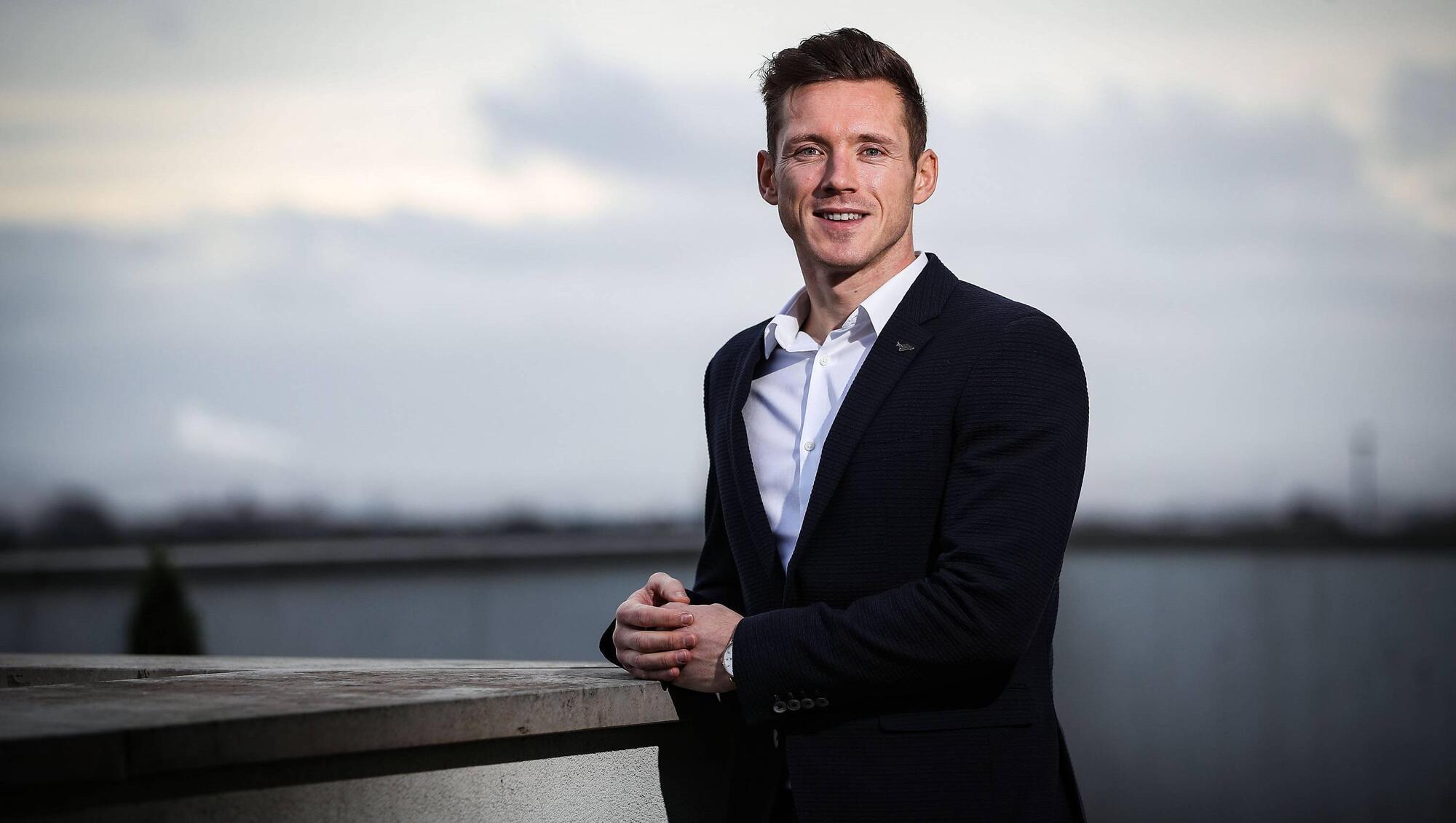
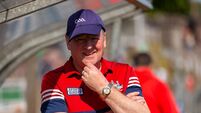
Paul Flynn on Dublin: ‘Sometimes things need to be almost broken to really look at yourself, otherwise you might only scratch the surface. There’s enough honesty in that group and enough of a core group for them to figure something out and have a good season.’ Picture: Bryan Keane/Inpho
Much has changed since Paul Flynn left the Dublin dressing room, yet he still finds so much of that place remains with him — and has helped him cope with that change. Three years ago when he was still part of the Drive for Five, he was chief executive of the GPA. He and Fiona had yet to start their family. Now he’s back working in the private sector where every week there are losses as well as wins. At home there are three kids 18 months or younger to feed, clean, manage.
“The best way I can describe it is organised chaos,” he smiles.
“We used to have this thing in Dublin that struck me whereby Jim [Gavin] and the management team would always eat after the players had. Jim’s line when asked about it was, ‘Leaders eat last.’ And that’s what it’s a bit like now at home.
“A few years ago when I woke up, the first thing I’d think about as an athlete was, ‘OK what can I do today to give me that extra 1% competitive edge? What food am I going to take to best fuel myself?’ Whereas now, it’s get the bottles ready, feed the kids. Only then might you grab something on the go for yourself! In this house the leaders definitely eat last!”
Not that he’s complaining, at least now. The arrival of the twins, Louis and Saibh, followed 13 weeks ago by little Noah, has been a blessing. “Phenomenal.”
He’s settled now into the new job. And he’s loving been back around the club a lot more. But, he’ll quickly qualify, this particular transition game wasn’t quite as smooth or as painless as the one Jim Gavin instantly had Dublin playing upon his appointment in 2013.
“It was tricky,” says Flynn. “It wasn’t straightforward. I had to tap into the words and support of good friends and good mentors to help guide me through it.
“I probably underestimated what that transition would be like initially. You often see that with high-performance athletes whereby you’ve invested so much of your time to your sport your identity becomes so attached to it, and it can be very hard when you leave the game to find a new identity and a new purpose.
“I think when I finished with Dublin it helped that I was still so involved with the GPA because it helped me hold on to that identity as a player. But when I stepped away from the GPA last year, there was definitely a period where I struggled. I was lucky from us having set up a career transition programme in my time in the GPA that I was aware of what was happening to me and had some tools to be able to cope, but it definitely hit home to me that if you didn’t that you could easily spiral.”
It wasn’t a form of depression he underwent as such. Flynn has served on various committees of Pieta House through the years to know the difference, so much so that he’s just been co-opted onto its main board. “The best way I can put it is that I just wasn’t myself. I’d usually be high energy, positive, and for a while there I wasn’t.
“I suppose it coincided with a new job and the first six months of any new job is challenging, trying to find your feet. On top of that then you were working remotely because of Covid. You were just trying to find yourself again.”
The club helped, providing that sense of connection and even family that playing with the Dubs and working in the GPA’s office in Santry would provide. Flynn had always viewed and prided himself as a good clubman, proud to be from Swords, but now he was simply able to be there more.
“It’s presence more than anything. I’d say I’m up in the club at least four times a week. I’m probably training three times a week and then at the weekend we’ll bring the kids down to just kick a ball around. It’s a great place to socialise as well with the setup and clubhouse we have, so we’ll go down for a bit of grub and get to see all the other club members, having little conversations here and there. You just can’t beat that. I just enjoy going through the gates of Fingallians.”
He’s steered away from the coaching for now; he’ll hold off on that until the kids are older and then give a hand out with their teams. His focus now is on being a mentor to the younger players on the senior team, guiding and inspiring them to elevate themselves and their club, along with simply enjoying what he has left playing the game.
Flynn’s no longer that tyro bombing up and down that wing and around that field where he won all those consecutive All-Stars and All-Irelands. These days he’s confined more to centre forward, or at times, even full forward — “a bear in the square,” he laughs.
“I’m happy enough with how I’m playing. The body is decent enough to do a job, so long as I don’t push it too hard and think I’m still a young lad.”
He’s learned to channel his competitive spirit into his new job, even if that’s meant absorbing some losses. The GPA was a project Flynn had long been passionate about, serving on its board and national executive for years before he was appointed chief executive in 2018. But it was always his plan to step away from it after three years having given it his all. He’d stay true to that commitment and timeline but finding a project that similarly stimulated him wasn’t easy.
His mentor, Fergus Clancy, who also served as the independent chairperson of the GPA, helped identify it for him. Mobile Medical Diagnostics was the brainchild of Mary Jones, who had the vision to realise that instead of patients, especially the elderly, having to go to a hospital for an X-ray, why couldn’t the X-ray come to the patient? Get a van, have an X-ray unit in the back of it, and let the radiographer drive to the nursing home or disability centre or even personal home of the patient and wheel it out.
For someone who always strove to serve a higher purpose and liked that Jim Gavin’s favourite word, ‘culture’, had its origins in the Latin word ‘cultus’ (to care) it was a natural fit for Flynn. But that didn’t necessarily mean the job itself came easy.
“The purpose of the business really appealed to me. It can be very distressing for people, especially the elderly or anyone with a form of dementia, to get to a hospital, especially if they’re living in a remote location. So this service makes it a much a better experience for the patient where if needs we can bring it into their own private dwelling.
“But like it is with almost any start-up, it was challenging. Even now we’re still dealing with setbacks. You might be working on a project with a potential client and it falls through, you don’t win the tender.
“I think that’s where you’ve to tap into the resilience you garner from playing sport. You realise it’s not a straight line from A to B. You might be playing really well and flying fit and then you pull your hamstring and suddenly you’re thinking, ‘God, we’re just five weeks out from championship.’ And then you rehab it well and you’re nearly back when you get another setback and you have to realign yourself again. And to me that’s right now where we’re at. I’m very confident we’ll get from A to B but I’m aware there’s going to be ups and downs along the way.”
The ups, the wins, are becoming more frequent now for Flynn, the company’s chief executive, with Clancy again serving as a non-executive chairperson. They’re well established now in Dublin and next month will be launching in Cork. The key is to look at it as — to borrow another favourite word of Gavin’s — a process.
“In sport, especially with Dublin, there’d be this mindset of seeking continuous improvement and reviewing performance whether you’ve won, drawn, or lost. Howe can we be better or do a couple of small things better? That isn’t as prevalent in business, but it’s something we’re really going after.”
It’s how Flynn approached his tenure as GPA chief executive. To again borrow a line from the dressing room as much as the boardroom, his intention was always to leave the jersey in a better place and he believes that was achieved by the time he stepped away last May.
A new four-year deal with the GAA was agreed at the height of Covid in November 2020, ensuring the players’ body would continue to receive 15% of the GAA’s net commercial revenue (“That was massive, because it not only provided long-term financial stability but a real credibility as partners with the GAA.”).
It merged with the WGPA and together in Flynn’s final month they negotiated a deal with the Government which has seen their Government grant increase to €5.4m a year, with female county players receiving equal funding to their male counterparts. Though it’s a word he’s not enamoured with, that’s quite the legacy.
He’s made a clean break from the GPA, but takes if not a fatherly satisfaction then a fraternal one in how Tom Parsons has already pushed the project on, especially in advocating for championship reform and full integration.
“I think Tom has been great. It’s funny, I remember before one All-Star trip saying to Fiona, ‘Oh Jesus, Tom Parsons is going to be on this trip.’ Dublin and Mayo were just after playing each other in one of those wars — I don’t remember even which one — and the two of us had had a real old battle with one another and I didn’t want to be talking to him on this trip.
“But then after the first night we ended up in the same bar and after a few drinks had the best craic ever. We just hit it off. And since then we’ve been really tight even though we’d still take lumps out of one another in a few further games. I think anyone who has had the opportunity to share some time with Tom will say the same thing; he’s just one of the most decent human beings there are in this world, phenomenally charismatic, and above all he’s a real doer. He gets things done. And you can see that already with the GPA.
“I used to always feel that there was unfair, excessive negativity around the GPA. But I think this past year most of that has dissipated. There’s an awareness that it’s a credible and honest player in the GAA ecosystem. It was a great period of my life and an honour to lead the players in that role for three years and it’s very satisfying to see the work Tom and everyone else in there is doing now.”
While undergoing his own transition game the last few years, Flynn has inevitably been keeping an eye on another. He’s writing now for The Currency, his own way of expressing his own views and keeping a link with the county game without being a prisoner to having to write something every week: He only writes when he feels he has something to say. When Armagh beat Dublin so convincingly in Croke Park a few weeks ago, he had something to say.
“You can see a team that could potentially drift away if they don’t try and reinvent themselves,” he expands during our chat. “You have all these players who have numerous All-Ireland medals but if there is a hint of complacency in their mindset, they’ll be undone. The trick almost is to remember all the stuff that you learned throughout that journey of success yet forget the fact that you have been successful so you can rekindle that hunger.
“For me it’s about the collective saying: The reason we’re going after this is because we want to build something new. We want to build a new team, a new identity. And I think that would excite some of these players who have multiple All-Irelands. It’d bring back that insatiable hunger you can see in this Armagh team.”
He lived through something similar. In 2011 the county won its first All-Ireland in 16 years but within 12 months needed a new stimulus. Their new manager provided it.
“When Jim came in back in 2013, we became a team that prided ourselves on transitioning the ball very quickly. Now, looking back on it, especially some of our games against Mayo and Kerry, we gave away so many turnovers. It wasn’t perfect. But it was quick and it was incisive and it was exciting. And it was all the more exciting because it was different. I loved being part of it. We pressed really high up the field and sometimes we got caught out at the back but we just had that attitude, ‘Let’s go for it.’ And I think something along those lines would definitely excite this group.
“Whether that’s the most suitable game plan for them, I don’t fully know, but I think there are enough good football people in that management team and on that panel of players to figure out what is. They’re the ones seeing up close every day what they are now faced with: Teams pressing higher up the field against them, more intelligent defensive systems that need to be broken down, goalkeepers coming out and acting as an extra attacker.
“The one thing we used to do very well was to continuously innovate and tweak our system to become better every year and stay ahead of the pack. Over the last couple of years I’ve yet to see that shift. But I definitely think a shift like that would excite the players.”
Flynn thinks the last couple of weeks will have given them the time as well as cause to identify the problems as well as solutions. The conveyer belt may not be as relentless and automatic as people once thought, where a Niall Scully and Brian Howard gradually began getting some, and then eventually all, of Flynn’s minutes. Now there doesn’t seem to be another Flynn coming up behind a Scully or Howard. As Flynn put it in his column, “The gulf between the minor and senior team has got wider.”
But still he trusts in the brain trust over the team; someone like Farrell or Darren Daly who is married to Flynn’s sister. “Sometimes things need to be almost broken to really look at yourself, otherwise you might only scratch the surface. And I think there’s enough honesty in that group and enough of a core group for them to figure something out and have a good season.”
Having Mayo in their sights will likely stoke a reaction. It’s 10 years next month since Mayo last beat Dublin in the league. Flynn remembers it well as that night in Castlebar he was shown a rare red card. “The previous week I lost a close friend [Alan Leetch] to suicide. I went back on training on the Tuesday after the funeral and it was too early and in the game I lashed out and got put off. I just wasn’t in the right headspace.”
Afterwards he opened up to Pat Gilroy who pointed him in the direction of a counsellor. He and his friends fundraised for Alan and Flynn became aware of the work of Pieta House, how it helped those suffering with suicidal thoughts and those who have been left behind. He’s now on the board of Pieta, on top of all else he has on, but he’ll make time to go along to Croke Park this weekend to check out the Dubs for himself.
He’ll likely meet up with an old friend or two. He still talks to Bernard Brogan and Michael Darragh Macauley a couple of times a week. He met them all at Paddy Andrew’s wedding before Christmas where he and Daly were the groomsmen. It was like old times with old friends. Even, especially, Gavin.
“We’d met for a coffee a week prior to that and had another great conversation at the wedding. It’s funny, when you go through a journey like we had with someone like that as your leader, you’ll always see them as a leader in your life. It’s a bit like meeting an old school teacher 10 years later and you still have that reflex to call them and view them as ‘Sir’! Only he was probably a little bit softer.”
And he ate at the same time as the rest of them.
CONNECT WITH US TODAY



Be the first to know the latest news and updates