Sambo McNaughton: 'Asking a girl out in public? That was like climbing Everest'
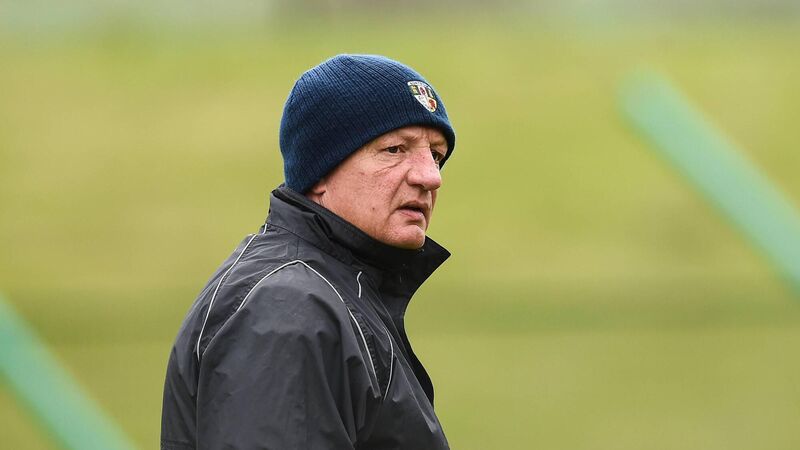
Terence "Sambo" McNaughton
Now in series 21, TG4’s Laochra Gael is developing an incredible record of challenging taboos in society than most other sports-oriented programmes.
Leading off with Terence ‘Sambo’ McNaughton this Thursday to start the new series, it might have been thought to be somewhat of an off-beat choice for a national audience.
That is until he takes you back into his world at Primary school. Mercilessly abused, struck, ridiculed and finally ignored by teachers because of his stammer. Isolated among his peers and incapable of speaking to anyone, seeking solace in a hurley, a wall and a ball.
At one point in the programme, McNaughton is recalling a teacher keeping him at the front of the class, striking him with a book on the back of the head every time he stammered, when the memory triggers his tears.
“To be honest, my Primary School was just yards away from the hurling field. You talk about chalk and cheese,” he states now.
“I hated every minute of school. I loved going to the hurling field. From during the day, being at school, being an outsider and laughed at, to going to the hurling field where I had a purpose.
“You didn’t have to communicate there. That was the beauty of the game for me. You could play about on your own.
“I am under no illusion. I needed Cushendall hurling club far more than they ever needed me. It saved me.” He adds, “To be honest, I don’t know where I might have ended up without Cushendall hurling club. I don’t know what my life would have been like and I am scared to think what it might have been. I believe that with every fibre of my body.
“I had no education. No confidence. No communication skills. Like, what was my future without hurling?”
His first encounter with his wife Ursula is touching. She was at a dance in Cushendall. He couldn’t bring himself to ask her for a dance. Fortunately, his niece went over and performed the introductions.
“I couldn’t speak to her. If somebody asked me the time, I used to walk on by them. I could have been on my own in the house and when the phone rang, I couldn’t answer it,” he explains.
“Asking a girl out in public? That was like climbing Everest. It was never going to happen. It’s not a question of would I, or wouldn’t I?
“People don’t understand that whenever you have a stutter, some people shake their heads, others tap their foot. Some play with their hands in their pockets. You have to do that, all these thoughts are going through you, the emotion is building up and then… I would be in tears with the frustration of it.” He adds, “I remember my mother finding about £1.50 in my drawer. That was money back then. She thought I stole it.
“There was a hullabaloo at the time and I got slapped across the ear, where did I get the money from?
“That was people giving me money to go to the shop, and I couldn’t go to the shop. I couldn’t go. I couldn’t go get an ice cream. Money was absolutely no use to me.” In time, he would go on to become one of the most recognisable hurlers to ever emerge from Ulster, helped by the unusual nickname on a team of unusual nicknames and characters.
But in his own environment, that wasn’t a blessing. He reveals how he was threatened by the UDA who left a bullet for him on his windscreen with his name on it, and how the RUC tipped him off to get out of Belfast as his name was on a hitlist of Loyalist paramilitaries.
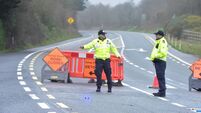
Contemporaries of his such as Dáithí Regan express their disbelief that their opponents would ever have to go through such hardships as being stopped and pulled over for hours at a time by army or police checkpoints.
“I honestly thought about notes left for me, and my name on a bullet, I thought it was just some dick where we were working,” he said of the time.
“But that was the time when Sammy Wilson was going round saying the GAA was the sporting wing of the Provos, the IRA at play, all that shit. It was a different world. It really, really was. Thank God it is gone."

CONNECT WITH US TODAY



Be the first to know the latest news and updates