Fifty years of Féile: Patrick Horgan, Jackie Tyrrell and Frank Lohan on what makes it so special
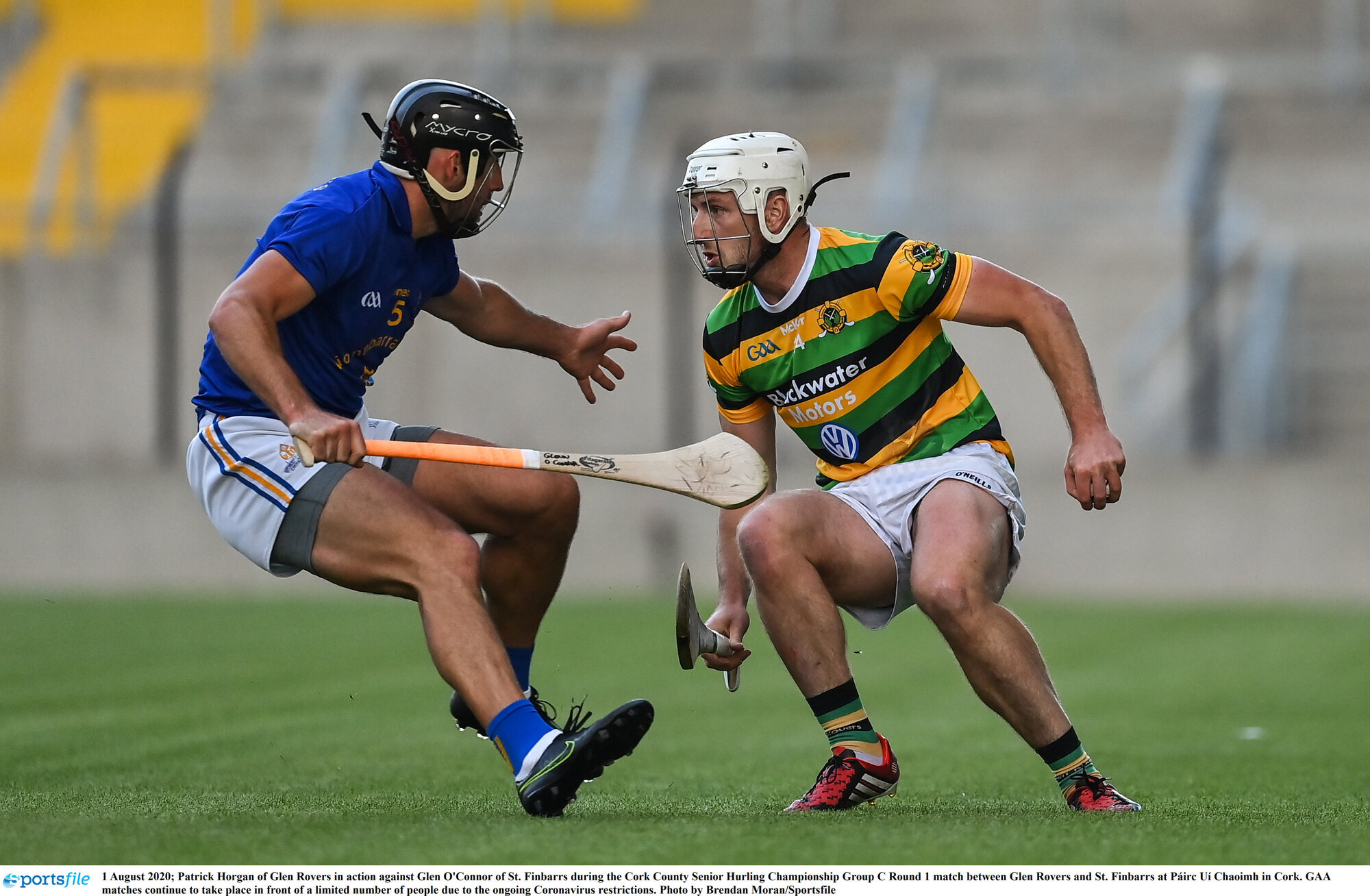
Patrick Horgan of Glen Rovers in action against Glen O'Connor of St Finbarrs during the 2020 Cork Premier SHC. Picture: Brendan Moran/Sportsfile
Fifty years ago Féile na nGael began in Thurles, a competition envisaged by founders such as Tommy Barrett and Seamus Ó Riain as a way to promote Gaelic games among teens.
It quickly evolved into a de facto All-Ireland club championship for U14 hurlers, however.
Consulting the roll of honour offers a window into the rise and fall of clubs (and counties) in the power rankings, while it also offers an early glimpse of players destined to light up Croke Park a few years later.
Take former Clare defender Frank Lohan, who collected a Féile title in 1988: “It was a big thing in our town, Shannon, we were a young town and a young club (Wolfe Tones) with a lot of kids coming through.
“In 1986 we’d won it with a brilliant team, and Ger Loughnane was the coach. It was held in Clare that year, which added to the whole thing and you’d meet people who still talk about it, the memories stayed with people for years.
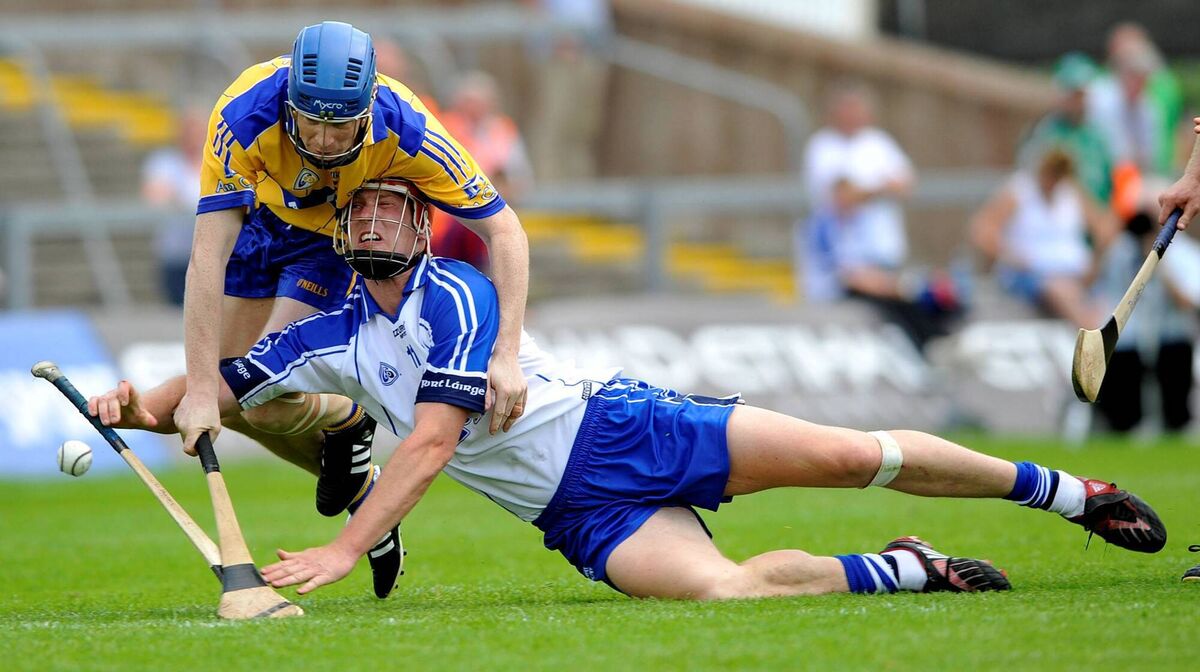
“In 1987 I was a sub and we won it again, though the team wouldn’t have been as fancied as the previous year’s.”
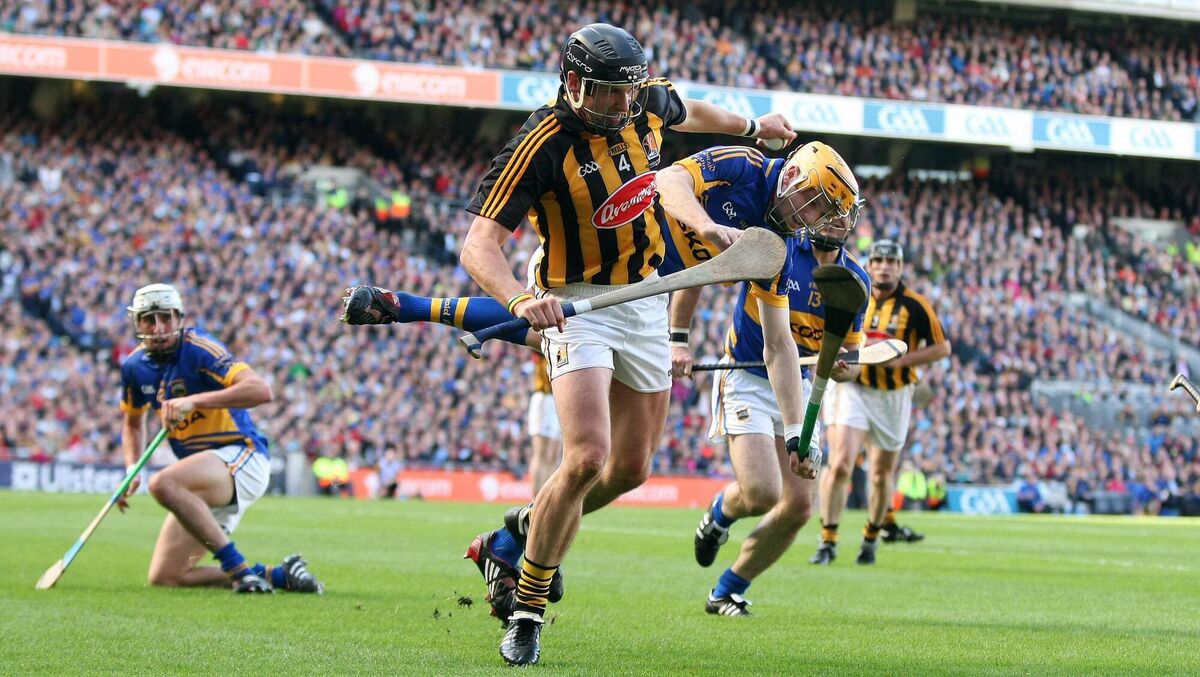
Jackie Tyrrell of Kilkenny won his Féile in 1996 with James Stephens, who took the competition every bit as seriously as Wolfe Tones.
“It would be huge in our club, you could only bring 20 players and even announcing the 20 was a big deal within the club, an event.
“The lads who didn’t make it were gutted for weeks, you could see it in them when we were in school, though we always sneaked 21 players because you’d always expect an injury or two.
“We looked on it as a club All-Ireland, and even in the club today those team photographs would all hang together on the wall. The support from the club — from parents, officers, supporters —would always be huge for the competition.”
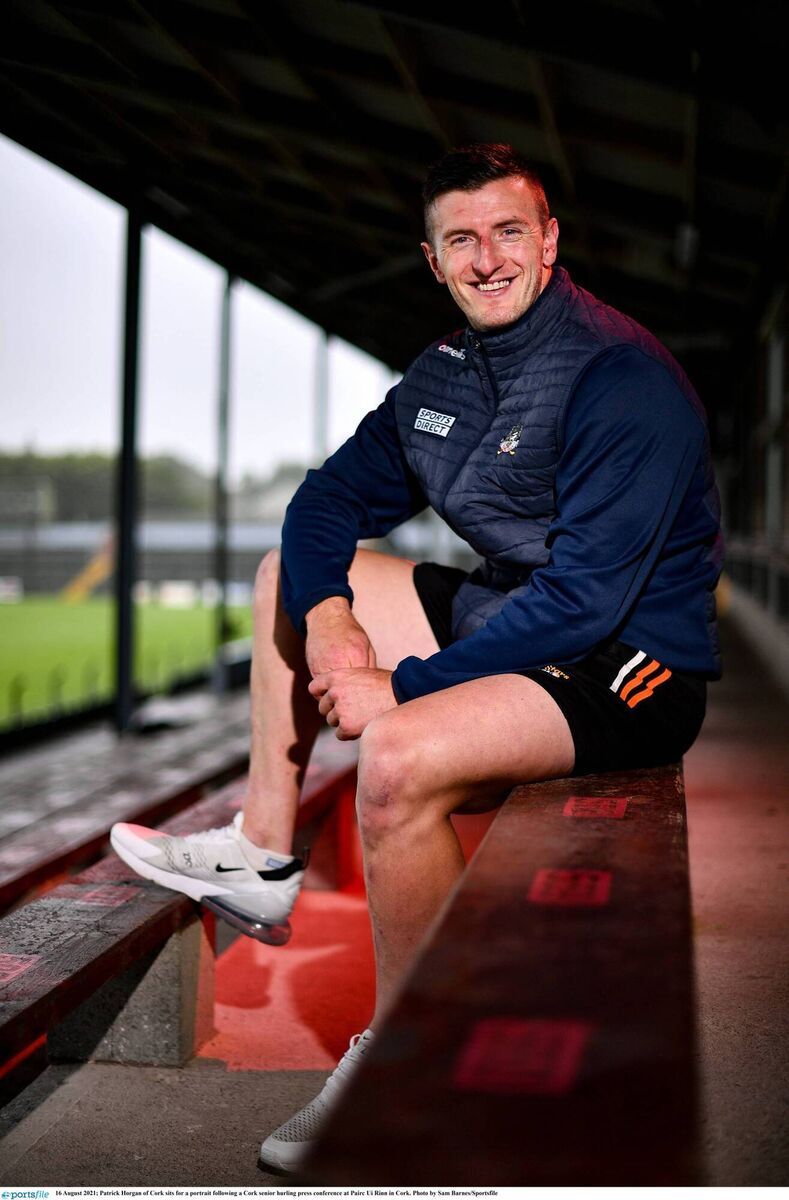
Cork’s Patrick Horgan echoes those two: “I suppose from the age of around 10 or so, when a bunch of us as close friends would have been around the club (Glen Rovers), the Féile was nearly the target for us; it was what we were aiming for.
“At that stage, hurling didn’t really get competitive until around U13, so we didn’t know if we were good or bad as a team, but as it turned out we had a pretty good team. We came out of Cork cosy enough and qualified for the Féile itself, which was held up in Belfast that year.”
That was 2002. Like the others, Horgan can recall some parts of the weekend more sharply than others.
“Obviously it was a big trip, our first time away as a group, and the big one in our group was the game with Kilmallock, who had an unbelievable team.
“We beat them and played Castlegar from Galway in the semi-final — they had a couple of monsters in their team, huge players. I still don’t know how we managed to beat them.
“It was O’Loughlin Gaels in the final and we won that by four points, I think.
That trophy is named after a Glen Rovers player, of course.
“There would have been a lot of talk about that at the time, about bringing the Christy Ring trophy home.
“Did it make the whole experience more special? It probably did.”
For Lohan the dynamic was slightly different. In 1988 Wolfe Tones were going for three in a row, after all.
“We had a strong team (in 1988). I remember we beat Bishopstown in the final — Donal O’Mahony (Cork U20 selector) was playing for them, we got to know each other later in college.
“It was played in the middle of June, perfect conditions, perfect pitches up in Offaly. We stayed with families in Kilcormac Killoughey, outside Birr, and we had a great time.
“Alan Cunningham (now a Limerick senior selector) was over us that time, so it shows the level of coaching we had. I just about made the team — I developed later as a player —but we had good players, lads who were on the Tony Forrestal team and who went on and played for the club for years.
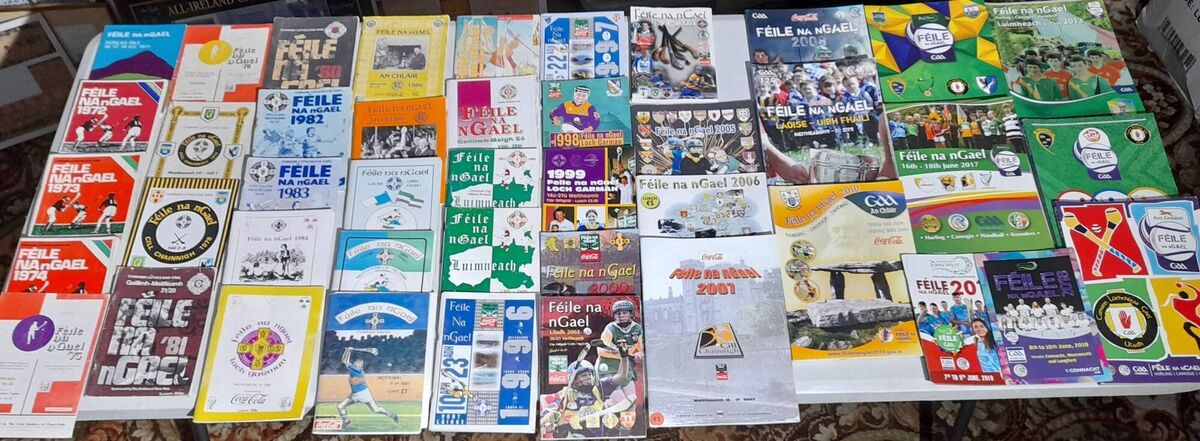
“I remember the trophy for the winners, for instance, it was so beautiful. That made an impression.”
Tyrrell and his teammates didn’t have to travel that far but it was still a big weekend for the James Stephens crew.
“In 1995 we got to the semi-final,” he says.
“Drom and Inch beat us and went on to draw the final — and share the trophy — with Sixmilebridge.
“We had 10 of the panel the following year and were favourites to win the Kilkenny Féile. We won through and I can remember the parade of the teams around Waterford on that Saturday. We got sponsored runners — Touchdown runners from Dunne Stores —and the club bought us each a second hurley to bring to the tournament in case you broke one.
“I remember the big bag of hurleys from Dowling’s being brought in for us to pick one out. That really signalled it was an important occasion.
“We stayed with Mount Sion players for the weekend, I was in with Kenneth Grogan, the wing-back’s family. We played three games on the Friday — including against Mount Sion — and St Vincent’s in the semi-final on the Saturday, the first time I’d say we played a team that was bigger than us.
“We played Kilmallock on the Saturday in Walsh Park, and Andrew O’Shaughnessy was playing for them. They got an early goal but we got on top and won, 4-3 to 2-2.”
Tyrrell points out that the Féile is usually a player’s first venture outside his own borders.
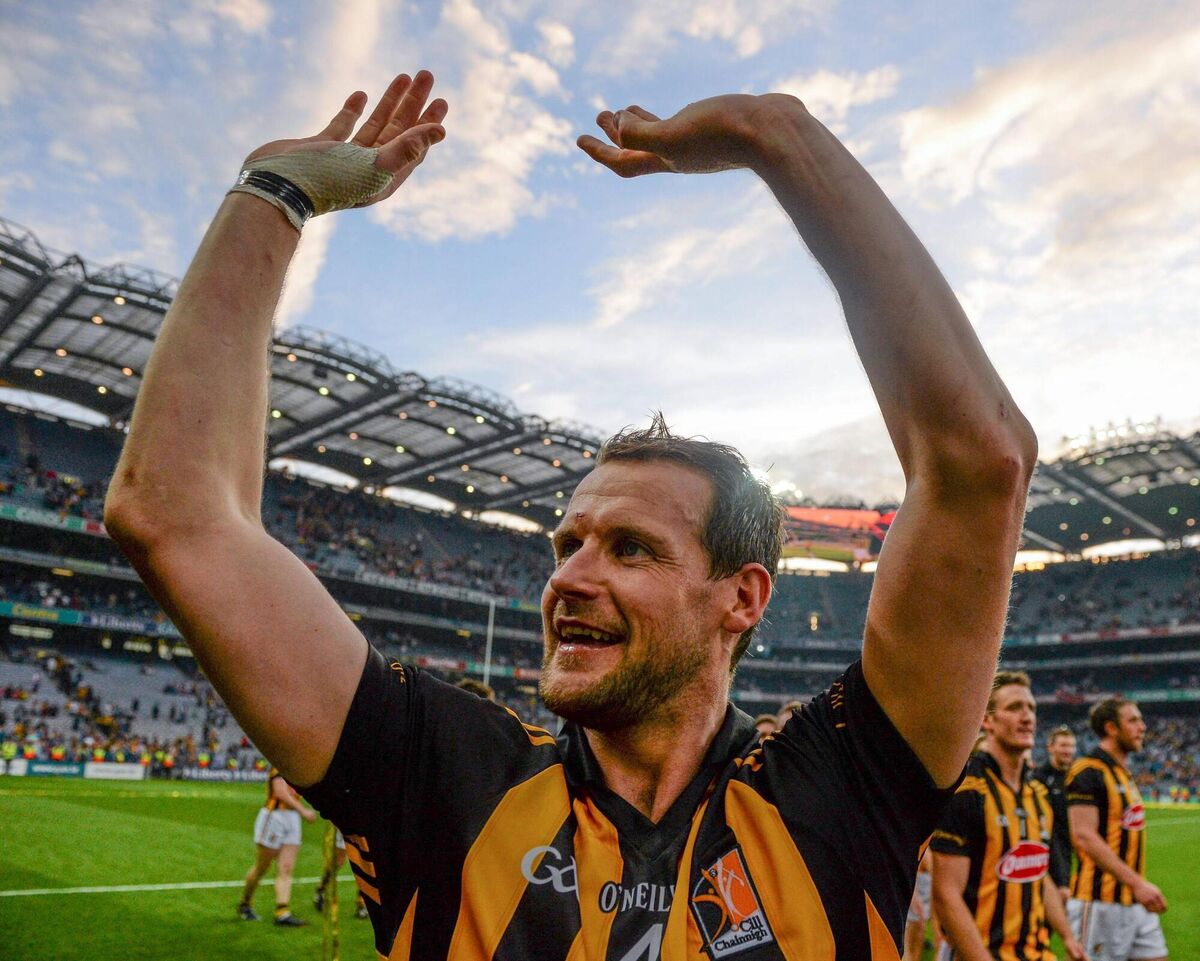
“It’s different for that reason — it’s your first time playing teams from other counties, travelling to play teams from Cork and Tipperary and Waterford, so it opened your eyes to the world of hurling.
“Our hub was Kilkenny, obviously, and our rivalry with O’Loughlin’s (Gaels) was the big thing, but this showed something much bigger.
“Even at that time there’d be stories circulating on the grapevine — the parade was on the Saturday, the day before the final, and there’d be rumours that some teams, if they got to the final, would rest their players and send out subs or other kids to march in the parade. So you were wondering if other teams were trying to get the upper hand on you before the game even began.”
Lohan says the age group involved means that as a competition, it’s “a good balance of being serious but also enjoyable”.
“My eldest is 12 so he’s getting into his sport and I see it now from a different perspective, but it’s a lovely competition.
“I think the model of more teams from each county is good too, because it’s a good experience for kids that age to play outside their own county, to have that different playing experience for the weekend.
“I presume the idea behind moving it to U15, up from U14, is to keep kids playing as long as possible — and I can understand that.
“I’d say there were lads with us on our Féile team who didn’t play much after that, though most of the players stayed hurling until minor at least. But keeping players involved is a challenge generally, so I see the logic there.”
“It’s always meant a lot in Kilkenny, certainly,” says Tyrrell.
“Tommy Walsh would have won one with Tullaroan after us, and Cha Fitzpatrick with Balllyhale, so Kilkenny were going well in the 90s in the competition and a lot of those lads came through to the county team over the following years, into the 2000s.
The day before you rang I was in touch with a couple of the lads from the 1996 team.
“We’re organising a reunion because it’s 25 years — we’re trying to unearth a video of the game if anyone has one, but it was a good bit before YouTube, so I doubt there’s anything around.
“It’ll probably be after Christmas but I’m already looking forward to it, to seeing everyone who was involved in the win.”


CONNECT WITH US TODAY



Be the first to know the latest news and updates