I spent most of August back home in Ireland, splitting time between Cork, Ardmore, and a little bit of Dublin.
It was the first trip in 18 months and I got the chance to make up for lost time in all sorts of ways including enjoying two trips to Turner’s Cross interspersed with a pair of Cork hurling clashes at Croke Park.
Each time, I was a wide-eyed tourist. It didn’t matter if it was a dismal draw at home to UCD, an extra-time thriller that shouldn’t have gone that far against Kilkenny, a facile win over Cobh Ramblers or a loss for the ages against Limerick, I found something to savour on each occasion.
When I left these pages a few years back to focus on life in New York, I had lost a bit of love for professional sport. I easily convinced myself that no one needed to read my stuff.
But in the four or five years that I’ve been off in a huff, many modern sporting heroes, future prospects and all the ones in between have brought some meaning back to what they do best. And in so doing, they have shaken off my cynicism.
Enough of them signed on to join or lead the fight for social change and more than enough of them realised that their stage will always thrive most in front of a full house.
It didn’t matter if I was surrounded by 15,000 demoralised Cork hurling fans fearing another Cats revival or by 150 exasperated Cork City supporters dreading the prospect of fresh new lows, I just wanted to be there and I wasn’t afraid to admit it.
It is in this spirit of discarding fear that this first column back will be unashamedly parochial.
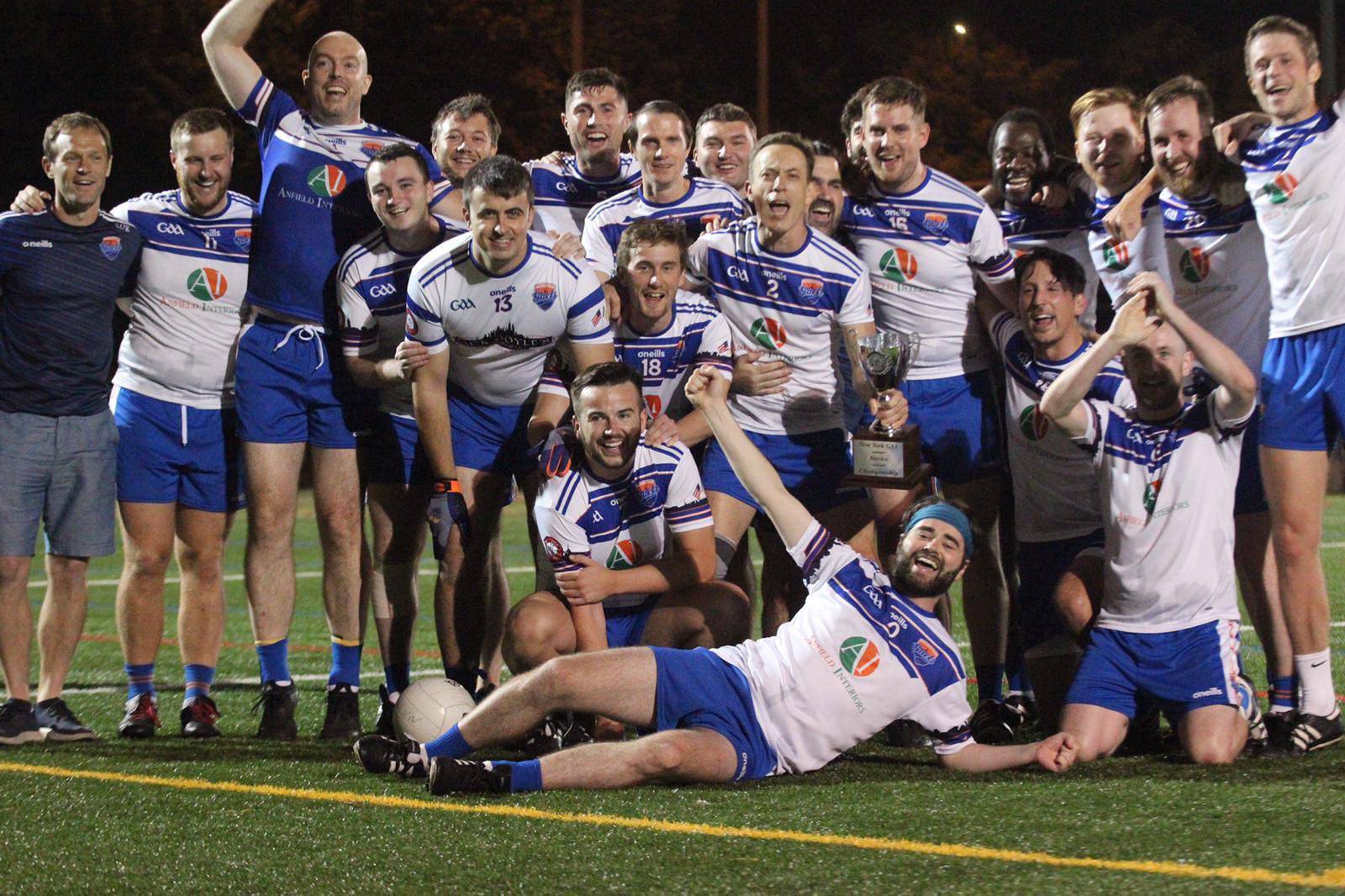
It is motivated by overlapping loyalties towards Blackrock over there and the Manhattan Gaels over here. These tribal concerns happily conflated on Sunday night. That was when my fellow Rocky Cormac O’Keeffe guided the Gaels to a county final victory at Gaelic Park in the Bronx.
It wasn’t the highest level of competition on offer in New York but it was the culmination of almost a decade of effort. O’Keeffe turned out to be the ideal man to take the anchor leg as the Gaels and the GAA at large sought to extricate themselves from a woeful 2020.
O’Keeffe first got to New York in late 2016. Five years ago almost to the day, another Cork expat Niamh Long convinced him to come along to an All-Ireland football final replay viewing party in Manhattan (Mayo lost).
Next year will be the 10th anniversary of the Gaels. It was a wholesome idea hatched by several Manhattan Irish expats looking to go against the grain of the prevailing Gaelic Park culture of summer mercenaries and committee room bickering.
In hindsight, it was partly forged out of an unfair prejudice that didn’t take into account a lot of the nuance that goes along with Irish-American culture. But there was also a strong ambition to develop teams of players taking part for the love of the game and maybe even to bring through the offspring of those players, Irish and non-Irish alike.
Manhattan wasn’t built in a day but the framework was in place — the colours were proposed by Ger Shivan to match the official New York City flag and the name was suggested by the then Irish Deputy Consul General, Peter Ryan, who had previously helped set up a similar GAA outpost in Singapore.
The second chapter of the club saw Andy Collins deliver a long awaited Junior A Championship in 2018 and an intermediate semi-final appearance a year later. The ladies team, meanwhile, was consistently the backbone and they lifted a trophy in late 2020 to shake off seasons of near misses.
Although O’Keeffe missed the historic 2018 season, he played junior in 2017 and intermediate in 2019 and 2020. Covid took away their second men’s team and when he was drafted onto the committee at the beginning of 2021, a job fell immediately into his lap: the revival of the Junior Bs.
“I wanted it to be a social team, aimed at people like me: mid to late 30s or completely new to the game. With Covid, we had no J1ers coming out from Ireland so the second team fell away.”
The New York County Board told him that the Junior B grade was oversubscribed. “But,” chairperson Joan Henchy continued, “we are starting up a novice grade — would you like to be a part of that?”
To be eligible for this level, you had to fit at least one of three criteria: Over 35, US-born/non-Irish or if you were Irish, you were new to the sport.
O’Keeffe had never crossed paths with the aforementioned founding member Shivnan until this year. O’Keeffe needed a goalkeeper with a solid kick out but Shivnan needed to stay retired from Gaelic football. The big Roscommon man was at pains to point out that the modern Junior B grade bore no relation to seasons past when there was a level playing field in terms of waning talent and expanding waistline. These days at Gaelic Park, immobile GAA veterans are large and tempting targets, easily torpedoed by overly athletic college kids with shoulders as wide as their egos and a distinctly Irish-American chip on each one.
But O’Keeffe wasn’t pitching Junior B, he was pitching Junior C. A smile broke across Shivnan’s face. “Now you’re speaking my language.” The panel began to crystallise around the original vision of the Manhattan Gaels and all of a sudden they found themselves winning a semi-final against the NYPD team.
The final brought Hibernians over from Long Island and although they had enjoyed a perfect season up until that point, it was the Manhattan Gaels who emerged on top courtesy of a very Junior C scoreline of 5-3 to 1-7.
“My mantra to the players was the same on day one as it was before the final on Sunday: this team is about encouragement and enjoyment. It’s junior football — it’s not if mistakes happen, it’s when mistakes happen, and how we react to those mistakes.
“I’ve played in Cork, Dublin, China, Australia, Chicago, San Francisco, The closest I ever got to playing in a county final was standing on the sideline in the Intermediate championship final in Gaelic Park a month ago.
“I told them that we can all take the piss out of it, we can call it Junior C or Novice or whatever you want to call it. At the end of the day, it’s an adult county final. It came around this year, it might never come around again. It’s an opportunity — grab it.”
In front of Shivnan stood an incredibly unique full-back line.
Corner back and captain, Dominic Mills, grew up playing Aussie Rules in the remote New South Wales city of Wagga Wagga.
He discovered football in China and he was one of the founding members of the Suzhou GAA Club. Mills met New York-born full-back Kevin Shroff in Singapore where they played football together. Shroff picked up the game in Amsterdam having been born in Queens to an Indian father and an Irish mother.
And in the other corner was Liberty Mthunzi whose family moved from Zimbabwe to Kildare when he was eight. His first experience with an O’Neills ball was earlier this year after he found the Manhattan Gaels Run Club and subsequently the novice team.
“Stick us in the back where we have a clear job to do,” laughed Shroff. “Keep it simple and stick to the handpassing.”
Another true novice, Ian Plunkett, was surrounded by GAA excellence in Castleknock but never got around to playing until after his career took him to New York two years ago.
“The culture of the team is so strong,” he told me. “Everyone looked out for each other. There was no demarcation line for experience. The majority of us are immigrants and we have been cut off from seeing family so the bonds deepened during Covid and we all discovered that we needed this more than we thought we would. Cormac was great at fostering a positive culture and creating space for people to enjoy the game and the camaraderie,”
When we started the Gaels almost 10 years ago, this was what we desperately hoped would one day happen. We could never have foreseen the adversity which would ultimately inspire O’Keeffe and his team to finally achieve it.
CONNECT WITH US TODAY



Be the first to know the latest news and updates