Why Cian Lynch puts a lot of talented hurlers to shame
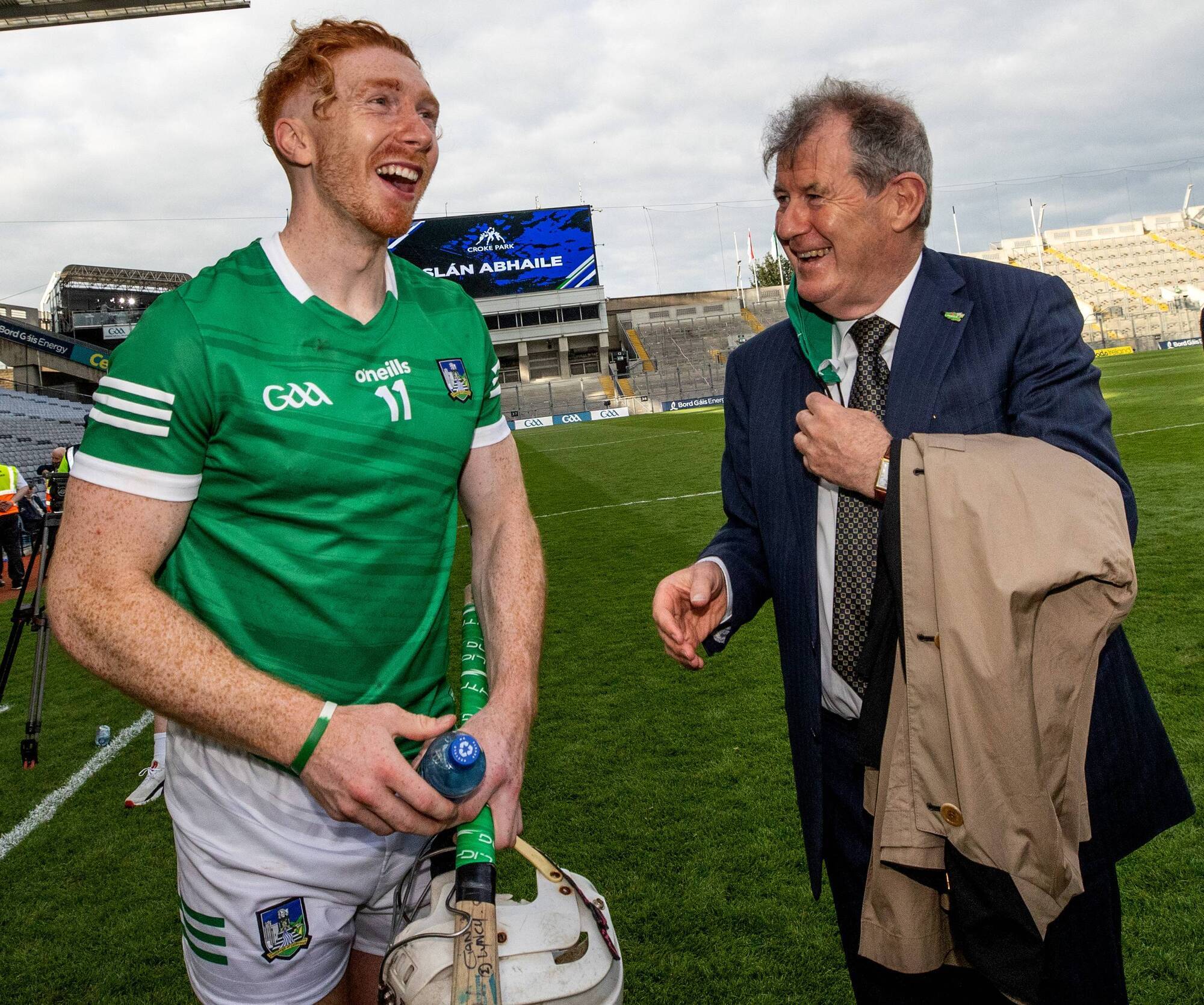
Cian Lynch was on the ball 21 times and he gave a performance for the ages, scoring 0-6 from play and providing the assist for 2-5. It was extraordinary to watch
Why Cian Lynch puts a lot of talented hurlers to shame

Cian Lynch and JP McManus after the game. Picture: INPHO/James Crombie

If Cian Lynch works this hard, what’s your excuse? The hurler of the year must be the Patrickswell man — Lynch is the most influential player on the best team in the country. Let there be no mistake. Crown him, again.

In Sunday’s final, Cian Lynch was on the ball 21 times and he gave a performance for the ages, scoring 0-6 from play and providing the assist for 2-5. It was extraordinary to watch.

Those headline figures, however, do not illustrate the complete impact of Lynch.

Cian is the quintessential player who can be found at the very heart of a game which is now defined by the counter-attack, or rather what you (should) seek to achieve during that precious moment when possession changes hands.

The game of hurling is not won when the players are lined out neatly in their positions — the game of hurling is won when that structure breaks down. Indeed, the turnover in possession is the best playmaker there is and that assertion has important implications for how we should think about the sport.

Delivering quality ball to the forward line is the main objective, but you must plough through some unglamorous work before you can crack the opposition open — this is Cian Lynch’s speciality. Lynch knows how to win the ball in traffic, how to make himself available for passes, how to move, to where, and when during that precious moment.

Lynch is the concept which governs success in modern hurling made flesh.

SIMPLE PASSES

Once on the ball, Lynch is prepared to take punishment —the centre-forward registered four line breaks against Cork and completed 100% of his passes (three stick and eight hand passes). Indeed, in the most congested area of the field Lynch has completed 45 of his attempted 48 passes during the championship (94% success rate).

Lynch’s simple passes out of the contact area may not find their way onto the scoreboard, but they are absolutely precious — the better the quality of the approach play, the simpler the shot.

During the 1980s Dutch man Hans van der Meer adopted an unorthodox approach to sports photography — van der Meer had little interest in the brand of close-up action shots which many would associate with the coverage of sport. Instead, van der Meer positioned himself as high as possible in an effort to fit as large an area as possible into the frame.

He wished to capture the pivotal moments in the game and to identify what he called the “moment of tension” when a team managed to crack the opposition open — van der Meer did not find goal-scoring nearly as interesting as what occurred moments previously in midfield when the key transaction took place; the moment which made the shot inevitable.

This is where Cian Lynch comes in; he cracks the opposition open. Lynch dedicates himself to providing for others and his numbers in that regard are startling. In the first half of the All-Ireland Lynch was on the ball seven times; he provided the assist for 2-4 (and also scored a point) — during the championship as a whole he has provided the final pass for 4-12.

WORK RATE

Any coach will tell you that there can be a significant difference between a talented and an effective player. Indeed, players who self-identify as forwards can often present a practical problem. Given the transformation of the game forwards can no longer argue they are there to do the scoring and others to do the work. In such circumstances, a player’s output can drop to zero when you do not have the ball. In this regard, Lynch sets a standard. Essentially, when you have the ball you have Cian Lynch and when you do not have the ball you also have Cian Lynch.

Check out the defensive contribution: on Sunday Lynch registered nine tackles (three turnovers), won a ruck ball and intercepted an opposition delivery. And, that does not include the dog that does not bark — we have not counted the runs that Lynch tracked, his ruck involvement nor the pressure he applied on opposition players without making physical contact with the ball carrier.

Note: in the championship Lynch has averaged six tackles per game, almost two turnovers per game, two interceptions, a ruck ball won and a breaking ball won per match.

You can even puck the ball out to the guy: against Cork, Lynch was targeted by Nickie Quaid on three occasions, one of which he won. This season 17 Limerick puck-outs were dropped on his head and he won eight of them (five via contested catches).

From a player identity point of view, Cian Lynch makes for an interesting case study — he is an extraordinary talent and yet he works hard.

Indeed, it would be more than interesting to study in detail the influences on his life in terms of his family, his friends, his coaches, and his role models. The manner in which Lynch behaves is a compliment to the player himself and to the people who have had a direct influence on him.

Simply, Cian Lynch puts a lot of talented hurlers to shame — he is doing more in a game in terms of work rate that many forwards are getting through in a season.

So, tell us, if Cian Lynch works this hard what’s your excuse?

More in this section

Cookie Policy Privacy Policy Brand Safety FAQ Help Contact Us Terms and Conditions

© Examiner Echo Group Limited