Bríd Stack returning to AFLW: ‘I wanted to give it one more shot. I have everyone’s blessing now’
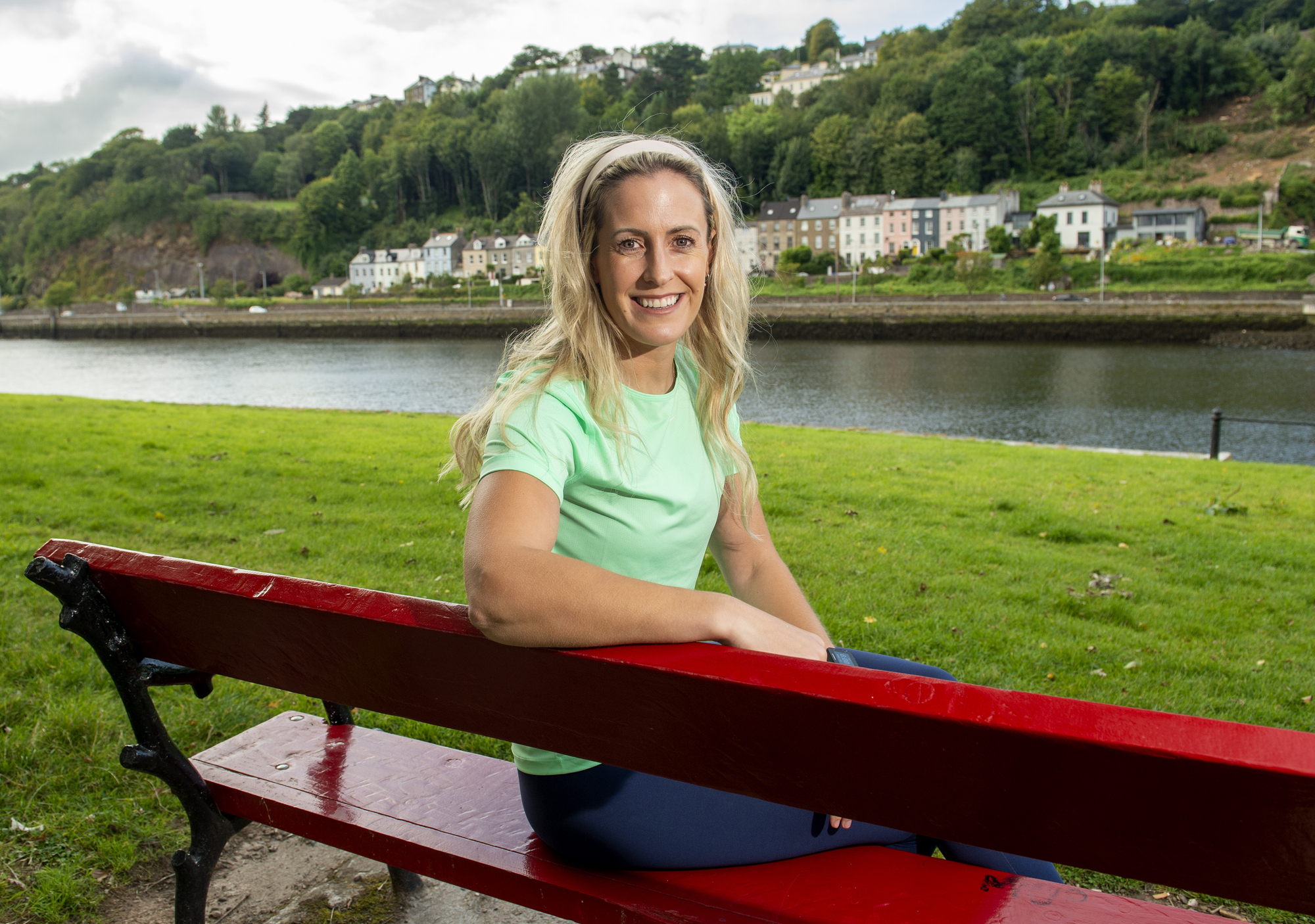

Bríd Stack’s dream move to the Greater Western Sydney Giants quickly turned into a nightmare after she sustained a neck fracture in a pre-season game last January. Despite being within millimetres of paralysis, Stack’s desire to play professionally remains as powerful as ever — and it is why she plans to return to Australia next month
Bríd Stack returning to AFLW: ‘I wanted to give it one more shot. I have everyone’s blessing now’

Bríd Stack: ‘I took everyone’s thoughts and feelings into consideration but at the end of it all, I had to make that decision for myself. I wanted to go back and give it one more shot.’ Picture: Dan Linehan

Three days after Bríd Stack returned from Australia in June, she was flicking through the TV channels when she stumbled upon an old episode of the TV show ‘DIY SOS’ on BBC1, where Nick Knowles performs the same lead role as Baz Ashmawy does on the Irish version of the show.

Knowles and his team set out to renovate a house in Avening so that Ben Wernham could return to his family home in the Cotswold’s. Wernham had suffered a life-changing accident in 2016; after slipping while walking alongside a pool in Spain and landing in the shallow end, Wernham broke his neck in three places, which left him paralysed from the neck down.

For the previous year, Wernham had been forced to live away from his wife and two young kids as he received treatment in Cyprus, Germany, and at a spinal unit in Salisbury.

Stack has always loved the show but as she watched Knowles and his team of community workers carry out their renovations, she burst into tears. In her mind, the apocalyptic vision of almost suffering a similar injury, and the wider implications that could have had for Stack and her family, began formulating in her mind.

“It was absolutely heart-breaking,” says Stack now. “I could empathise with everything I was watching, how that man’s life had changed dramatically, how his family’s lives had been turned upside down. How his interactions with his partner and his two girls have now changed made me so aware of how lucky I am. I was shaking my head thinking ‘That could have been me’. And every day, I thank God so much that that wasn’t my outcome.”

June 13th 2021 — The courtyard of The Silver Key in Cork

The journey home from Australia was long and difficult and draining. The flights took 27 hours. After finally landing in Dublin, Stack and her husband Cárthach and young son Cárthach Óg boarded the Aircoach bus to Cork.

When they finally arrived home, the reunion with their families, especially Cárthach Óg’s four grandparents, was magical. “We were just so elated to be back,” says Stack.

The family had to isolate for a week. Stack had been used to that process in Australia but the targets at the end of those periods were no longer as visible and the fizz of initial elation had soon gone flat.

Jet lag had kicked in. Sleep was fitful. There seemed to be no end to the mountain of luggage Stack was trying to unpack. Trying to find a place for everything had at least occupied her mind, but when everything was packed away and boxed off, and Stack finally had time to reflect, she hit the wall.

“On that third day, I was so, so low,” she says. “The whole thing really hit me hard. I had an overwhelming sense of failure. I shouldn’t have felt like that, but I did because I started thinking of what I put Mam and Dad through.

“Everything was running through my head. The fear of what could have happened was right there at the front of my mind. I was even asking myself ‘What are the chances of me watching this TV programme? Is that telling me something?”

The following day, Colin O’Shaughnessy from Elite Fitness called. A former World Kickboxing Champion, O’Shaughnessy had worked with Stack in the past couple of years as a personal trainer. Before she left for Australia last winter, Stack had entrusted O’Shaughnessy with getting her ready for a completely new physical challenge.

He wanted to catch up. O’Shaughnessy asked if she was interested in coming in for a fitness session. Stack tried to put it off. She joked that she had put on half a stone. In her own mind, she wasn’t there yet. She wasn’t anywhere.

As soon as I walked in the door, I broke down. I had worked so hard inside in that gym before I left and that feeling of failure hit me as soon as I was back there. ‘What was the point of it all?’ I was asking myself.

“Yes, I had gone out in great shape. The Australian experience didn’t go to plan. I was very proud of how I responded to the injury, but I still didn’t achieve what I set out to do when I left — to play AFLW, even just one championship game. It was silly of me to think that way but that was how I was feeling. I was so, so low.”

There is often a brutality to elite sport that is never highlighted in the brochure. The colour can gloss over the fine print of reality, where the distance between the start and finishing line can be littered with a minefield of disappointment and disillusionment.

The emotional drop back into routine and normality for elite sportspeople is sometimes called an under-recovery. Sports psychologists often compare it to the comedown after a rollercoaster ride, where a 100-mile-per-hour spin comes to a screeching halt, and the athlete is emotionally exhausted because the ride has been such an onslaught to their system.

Stack felt wiped out, emotionally as much as physically. “Thankfully, I got to experience many highs in my playing career, but I’ve never had a comedown like this,” she says. “I just felt flat. I didn’t know whether I was coming or going.

“I was so glad that I didn’t have a life-changing injury, but I still had to process that in my own head. The biggest hurdle now is to get the body into the gym and get moving again. Once I get the body moving, hopefully, the mind will follow.”

It still wasn’t that simple. Big decisions had to be made in the middle of that psychological war. Ending what she started in Australia was always going to be central to resolving that mental battle. She was familiar with the struggles that went with that quest, but did Stack want to commit her heart and soul to the same perils again?

It was easier to make that commitment while Stack was still in Australia. Before the family went travelling, Stack trained hard for five weeks with Giants head coach Alan McConnell. When she returned, she trained harder again for her remaining few weeks in the country. She was still in the bubble.

“I definitely utilised as much time as I could with Alan,” says Stack. “He was teaching me from the very start how to fall again, which is something you take for granted in the AFLW.”

Before she left, Stack sat down with McConnell and Bri Harvey, Head of Operations. The contract they offered her was far better than last year.

“It was only when it was put in front of me that I understood how much they wanted me,” she says. “I wasn’t driven by monetary means at all when going over in the first place, but they have given me a massive opportunity to come back over, in terms of making it a lot easier childcare wise. They’re trying to take as much of the hassle out of it for me, which is lovely and very appreciated.”

Stack didn’t give it a second’s thought. “I was thinking, ‘Great, sign me up straight away’,” she says.

Her mindset shifted after she returned. Stack was stalling on signing. She needed more time, but the Giants didn’t have it. Their roster for the 2022 seasons had to be submitted by mid-June. They agreed on an interim compromise; Stack committed in name but with a private clause between both parties; if she wasn’t feeling it over the coming weeks, she would pull out. The Giants agreed. It was easier to take her off the list than try and get Stack back on at a later stage.

“After I hit that low, this feeling of contentment and safety came over me,” says Stack. “Just coming home and knowing everything here made it feel so much easier for me.

“I know the game of football inside out. I know all the girls. I know where all the pitches are, I don’t even need to think about things. I don’t have to worry about six-hour flights and who will look after Ogie.

“Having the huge family support network here really added to that contentment. Watching that TV programme really got inside my head. I was asking myself, ‘Can I get lucky twice? Should I just stay at home? The whole thing really began to weigh on me, especially when I now had time to think about it all.

“When I was in Australia, I’d say I thought about nearly being paralysed for about two or three days. When you’re in a professional environment, all you’re thinking about is your next target. It’s all goal driven but when I came home, reflection was far different.

“It was hard but I knew that if I kept reflecting back on that incident, and on what could have happened, that I’ll never move forward from it. You just can’t live retrospectively either. It didn’t happen. I’m so thankful that it didn’t happen, but there is also a large part of me that definitely doesn’t want to leave it as it finished last year.

That is massively driving me but I’m extremely family orientated and seeing Mum and Dad upset, especially when I came home first that it could have been a very different outcome. That was tough for them so that that definitely weighs heavy on my decision. Seeing how much the grandparents miss the small fella is very difficult for me. I’m like an emotional wreck half the time.”

Returning was never going to be a linear process. She knew the terrain, but the ground had still shifted. The AFLW have brought forward their season in 2022, which means there is no overlap with the AFL. It increases the AFLW’s autonomy with the TV companies, but it has made the decision harder for Irish girls to go to Australia.

“It’s a headache for all of us,” says Stack. “There is an overlap between the inter-county and club seasons here now and the AFLW. So a lot of hard decisions will have to be made by girls to leave their clubs and head over there a bit earlier. So, you’re talking about pre-season starting in September, with the season starting in December and finishing in March.

“I’m very committed to my club St Val’s, but I would definitely need to avail of a full pre-season. Having missed a full pre-season last year, it was a big thing for the Giants to get me over as early as possible for next season. That would mean leaving in September and coming back in March.

“I’m still not sure about going back. There is that competitive side to me and all I can hope for now is that I get fitter, faster and stronger and see where that takes me.”

August 12th 2021 — Bishopstown

Brid Stack with her husband Cárthach, and their son, Cárthach Óg.

When Stack went back to club training with St Val’s in the middle of June, she felt liberated. Free. She didn’t have any targets to hit. GPS numbers were irrelevant. Kicking wides was even enjoyable.

“Just to get out and play with the girls again, and not get worked up about silly things was brilliant,” says Stack.

“It was so enjoyable to be able to run around the pitch again and not be on the clock.”

The clock had been ticking against Stack from the moment Ebony Marinoff’s challenge fractured her neck in a pre-season game in January. Even after Stack found out that not being paralysed came down to a matter of millimetres, she had to deal with a tsunami of stress before she could even plan her rehab.

The emotional trauma of dealing with such a serious injury was exacerbated when the blame for what had happened suddenly seemed to be lying at her door; some in the Australian media said the incident was down to a rookie not knowing how to protect herself.

Time presented the opportunity for reflection, but it also granted Stack with the opportunity to view something through every possible prism, which refracted every kind of pain. The trial by social media in Australia was hurtful. 

“It was very hard, very difficult,” she says now. “I was just so lucky that I had such incredible support from Cárthach and Cora (Staunton — team-mate) and everyone at the Giants.” The glorious potential of her Australian odyssey often felt so empty and vacant, but Stack repeatedly pushed on to try and defy science and convention and make it happen on the field.

“I never trained harder. I was in the gym one day and one of the girls came up to me afterwards and said I was like a mad woman training. When I look back now, I often think ‘What was I thinking, there was no way I could get back’. But you have to have goals and you have to have something to aim for. If you just work on the small goals, they’ll make the bigger goals achievable.”

The constant chase for something that was always running away from Stack gradually forced her into accepting that reality by just living in the moment. She had emptied herself but when Stack finally realised the dream of playing was out of her reach, there was a deep inner satisfaction in how she had so relentlessly pursued her dream.

If she had accepted what so many people told her, if Stack had listened to what medical evidence and opinion had loudly declared, she might have spared herself a tonne of heartache and effort. But adopting that attitude would have only hitched an even heavier load of regret to a carriage already full of it.

She was true to herself. And acceptance has come a lot easier to Stack since she has processed it all. 

“What I’ve found out in the last two months is, without even realizing it, I had put myself under massive pressure to make it a success,” she says. “Looking back on it, the biggest success was putting myself in a position to get over there in the first place.

“When it didn’t go to plan, I was chasing the year and when I didn’t catch up with it in time, that’s why I had this massive feeling of failure a few days after I got home.

“What I really realised over the summer is that it’s perfectly fine to fail every now and again. It’s probably important to fail because it keeps you sharp and keeps you striving for improvement in yourself.

“That’s the biggest realisation I’ve had over the last two months. We were all further reminded of that by Kellie Harrington, and how important it is to look after yourself and your people. Failure does happen so the most important thing is to embrace it, park it and move on and always drive forward.”

Moving forward was all she ever knew throughout her Cork career. Time has also given Stack the opportunity to reflect more on that entire career, and to appreciate how much all those experiences poured the steel into her soul that enabled Stack to believe that she could do nearly anything.

Another one of the reasons she wants to go back to Australia is because McConnell reminds her so much of Eamonn Ryan, the remarkable man who shaped Stack and a generation of Cork players into believing that anything and everything was possible.

And while she still can, Stack wants to continue trying to honour Ryan’s memory on and off the playing fields through the deeds and actions of how he taught her.

The contract is signed. Preparations have been ramped up. Some of her bags are already packed. Stack is returning to Australia next month for one more shot at her Aussie dream to play AFLW.

It wasn’t an easy decision, especially around her family. She knew it would be tough on her parents. Before she initially left at the end of 2020, Stack had spent the best part of a year convincing her parents that she would be fine, and that she would be able to protect herself in a new sport. Stack could only imagine the horrors they went through at home after nearly being paralysed.

Did she want to put them through that trauma again? She knew Cárthach Óg’s grandparents would miss him even more after getting to spend so much time with him over the summer. Stack was still on a career break from teaching. She and her husband had a family business to run here.

“I took everyone’s thoughts and feelings into consideration but at the end of it all, I had to make that decision for myself,” she says. “I wanted to go back and give it one more shot. And I have everyone’s blessing now.

The biggest thing for me is to enjoy it and embrace it and be present in it and not be always chasing it like I was last year. And I really want to enjoy the whole experience with the two lads.”

Pre-season training is starting in the first week in September. Stack’s initial aim was to be over there in mid-September but the current hard lockdown in Sydney has pushed everything back. The AFLW hasn’t yet given the Giants a set date yet for when Stack can travel but she is hoping it will be the third week in September at the latest.

She will have to quarantine for two weeks, which would mean Stack wouldn’t be able to fully train until early October. That will shave more time off her pre-season, but she has offset the negatives with positives; Stack will be around for more club games with St Val’s.

There is also far less of the unknown this time around. The family know the terrain well by now. They are ready. Going through what they did the first time around has made them stronger and more resilient as a family.

“When I got injured first, Cárthach got an unmerciful shock but he never faltered,” says Stack. “Having him so strong was remarkable for me. He was so strong for me the whole way through. He kept pushing me every day.

“As for the small fella, it’s only when he’s older that I’ll tell him how much he actually helped me. He didn’t care that I was injured — I just had to get up with him and drive on.

“Even now, the thought of him watching me playing a match, and me seeing him on the sideline, we are really looking forward to all that so much.”

Elite sport can often feel like a strange kind of prison: nobody can keep you there against your will but getting out of that prison is a worthless release if your time isn’t done.

And Stack still has time to do in Australia.

x

More in this section

Cookie Policy Privacy Policy Brand Safety FAQ Help Contact Us Terms and Conditions

© Examiner Echo Group Limited